ARMSNET
Military Equipment Database
Initializing 0%

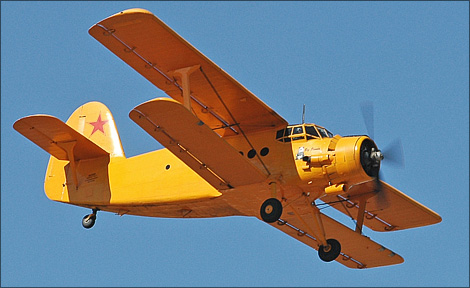
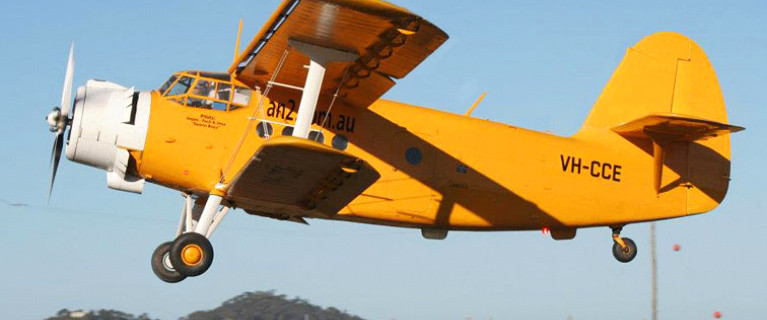
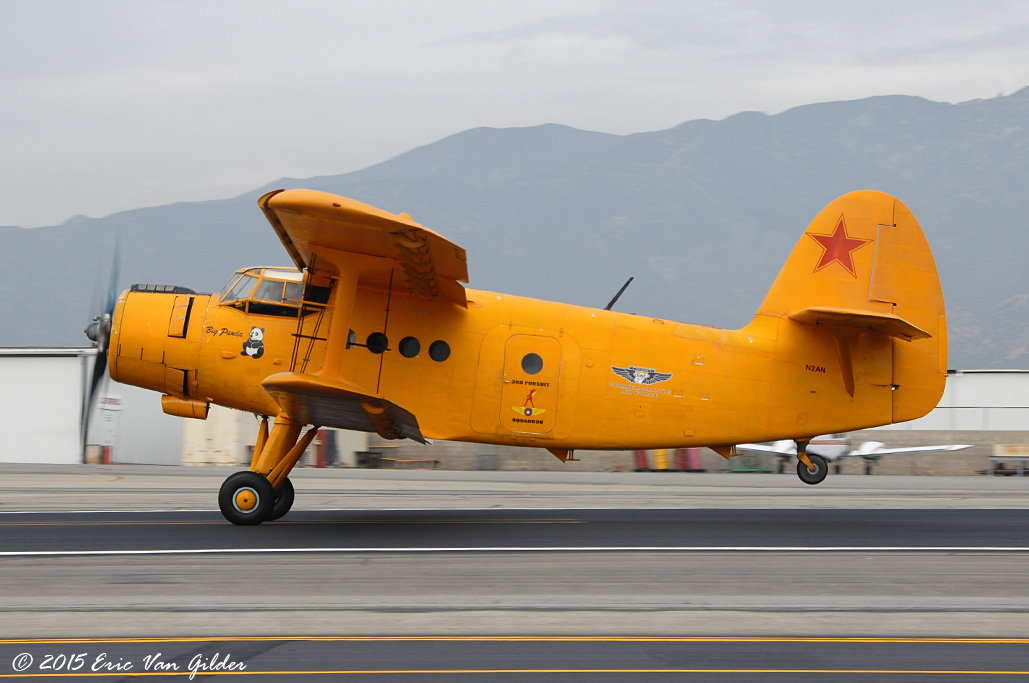
An-2 (Colt) Russian Single-Engine Biplane
Spotted an error? Sign in to suggest an edit.
Basic Information
Name
An-2 (Colt) Russian Single-Engine Biplane
Designation
Alternate Designation
Equipment Type
Manufacturer
Antonov
Date of Introduction
1947
Description

The Antonov An-2 (Russian nickname: "Annushka" or "Annie"; "kukuruznik"—corn crop duster; USAF/DoD reporting name Type 22, NATO reporting name Colt) is a Soviet mass-produced single-engine biplane utility/agricultural aircraft designed and manufactured by the Antonov Design Bureau beginning in 1946. Its remarkable durability, high lifting power, and ability to take off and land from poor runways have given it a long service life. The An-2 was produced up to 2001 and remains in service with military and civilian operators around the world. The An-2 was designed as a utility aircraft for use in forestry and agriculture. However, the basic airframe is highly adaptable and numerous variants of the type have been developed; these include hopper-equipped versions for crop-dusting, scientific versions for atmospheric sampling, water-bombers for fighting forest-fires, flying ambulances, float-equipped seaplane versions and lightly armed combat versions for dropping paratroops. The most common version is the An-2T 12-seater passenger aircraft. All versions (other than the An-3) are powered by a 750 kW (1,010 hp) nine-cylinder Shvetsov ASh-62 radial engine, which was developed from the Wright R-1820. The An-2 typically consumes 2.5 l/min (0.66 US gal/min; 0.55 imp gal/min). The Antonov An-2 is a mass-produced single-engine biplane that has been commonly used as a utility and agricultural aircraft. It is deliberately furnished with a minimum of complex systems. The crucial wing leading edge slats that give the aircraft its slow flight ability are fully automatic, being held closed by the airflow over the wings. Once the airspeed drops below 64 km/h (40 mph), the slats will extend because they are on elastic rubber springs. Under typical conditions, the take-off is complete within 170 m (560 ft) while the landing run requires 215 m (705 ft); these figures will vary dependent upon various factors, such as the aircraft's take-off/landing weight, the external air temperature, surface roughness, and headwind. The An-2 is equipped with various design features which make it suitable for operation in remote areas with unsurfaced airstrips. It is fitted with a pneumatic brake system (similar to those used on heavy road vehicles) to stop on short runways, along with an air line attached to the compressor, so the pressure in the tires and shock absorbers can be adjusted without the need for installing specialised equipment. The batteries, while sizable, are relatively easy to remove, so the aircraft does not need a ground power unit to supply power for starting the engine. Likewise, there is no need for an external fuel pump to refuel the aircraft as it is provided with an inbuilt onboard pump, which allows the tanks to be filled from simple fuel drums. The An-2 has no stall speed, a fact which is quoted in the operating handbook. A note from the pilot's handbook reads: "If the engine quits in instrument conditions or at night, the pilot should pull the control column full aft and keep the wings level. The leading-edge slats will snap out at about 64 km/h (40 mph) and when the airplane slows to a forward speed of about 40 km/h (25 mph), the airplane will sink at about a parachute descent rate until the aircraft hits the ground." As such, pilots of the An-2 have stated that they are capable of flying the aircraft in full control at 48 km/h (30 mph) (as a contrast, a modern Cessna four-seater light aircraft has a stall speed of around 80 km/h (50 mph)). This slow stall speed makes it possible for the aircraft to fly backwards relative to the ground (if the aircraft is pointed into a headwind of roughly 56 km/h (35 mph), it will travel backwards at 8.0 km/h (5 mph) whilst under full control). The An-2's ability, looks and flying characteristics, and its status as one of the world's biggest single-engined production biplanes, mean that demand for the An-2 is increasing in Western Europe and the United States, where they are prized by collectors of classic aircraft, making it an increasingly common sight at airshows. Many western countries prohibit the use of the An-2 commercially because the aircraft has not been certified by the relevant national aviation authorities. These restrictions vary by country, but all prevent the An-2 being used for any 'for profit' purpose, with the exception of the United States, where An-2s imported since 1993 are limited to experimental certification, but PZL-built An-2s are exempt from this restriction due to a bilateral agreement with Poland.

Air & Air Defense Specifications
Crew 1
Engine 9-Cylinder Radial Piston (1010 hp)
Max Speed 258.0 km/h
Cruise Speed 190.0 km/h
Range 845.0 km
Service Ceiling 4500 m
Variants
Soviet / Polish production Izdeliye F – The in-house designation for the An-2NAK observation aircraft which was later re-designated An-2K and/or An-2F. Izdeliye K – A prototype weather reconnaissance/research aircraft with an observers cockpit immediately forward of the fin above the rear fuselage. First flown on 21 March 1948 'Izdeliye K' was found to be under-powered and unable to carry out its intended mission at high altitude, the aircraft was abandoned after a landing accident in October 1948. The concept was resurrected in 1954 as the 'An-2ZA' / 'An-6 Meteo'. Izdeliye T – The original design concept originated at OKB-153 in Novosibirsk. Izdeliye Sh – The in-house designation for the 'Izdeliye T' (presumably to confuse spies or infiltrators) design project at Novosibirsk. SKh-1 – the original designation of the An-2 used during the design phase of the project before the OKB had been named after Antonov. An-2A – Developed from the An-2A for use as a Balloon interceptor to intercept reconnaissance balloons from, US intelligence assets, over-flying the USSR. The prototype was converted from a Kiev built An-2 (c/n 110347315) using the Turbo-charged Ash-62IR/TK of the 'An-6 Meteo' and a combined searchlight/gun turret mounted on top of the rear fuselage, which mounted either a single Gryazev-Shipunov GSh-23 23 mm calibre twin-barrelled cannon or a single Afanas'yev A-12.7 12.7 mm calibre heavy machine-gun. An-2E (Ekranoplan – wing in ground effect) (first use of the designation) – One of a series of projects from the early 1970s for WIG (Wing In Ground effect) derivatives of the An-2, designed at the TsLST (Tsentral'naya Laboratoriya Spasatel'noy Techniki – central laboratory for new types of rescue equipment). An-2E (second use of the designation) – An Ekranoplan conversion (Russian: Ан-2Э) of an An-2P (RA-84692). The fuselage was retained and a large trapezoidal monoplane wing having extended wingtips with approx 45° dihedral, attached to the lower wing attachment points. The prototype conversion was intended to be a floatplane; however, its first public appearance was as a landplane with the standard An-2 undercarriage. Jointly developed by the Moscow Aviation Institute, MARZ (Moskovskiy Aviaremontnyy Zavod – Moscow Aircraft Overhaul Plant) and The TSZP-Saturn research institute the An-2E was also known as EA-00078. Power was supplied by the standard ASh-62IR radial engine with AV-2 propeller, but production versions were intended to be powered by automotive diesel engines of around 430 kilowatts (580 hp). An-2F – Developed concurrently with the An-2 prototype, 'Izdeliye F' was an experimental artillery-observation aircraft with a twin-tail, ventral observer's position and dorsal defensive machine-gun position. The initial service designation of An-2NAK was changed to An-2F once post test flight modifications had been carried out. Two prototypes were built, with the first completed in the summer of 1948, but flight testing was delayed to April 1949 due to the need to incorporate modifications called up from the standard An-2 flight test programme. The flight test of the An-2F showed that the aircraft met all the requirements of the specification, but helicopters were demonstrating that they could perform the artillery correction role without the need to provide fixed base airstrip for them to operate from, thus the An-2F was not proceeded with and the two prototypes were retained by the Antonov bureau for hack duties with one later serving as a flying wind tunnel to investigate para-dropping from the Antonov An-8 twin-turboprop transport. An-2F (second use of designation) – A VTOL project with vertical thrust to be provided by a Mikulin AM-9 turbojet in the rear fuselage. An-2F (third use of the designation) – A proposed photo-mapping aircraft project, from the early 1990s, similar to the An-2PF equipped with one of five alternate cameras. Overall control was to have been by IBM 286 computer and the camera could be augmented or replaced by a thermal imaging system, Infra-Red imaging system, AP-6E autopilot,LDI-3 laser rangefinder and/or a GPS global positioning system. An-2G (a.k.a. An-2Geo) – During 1974 WSK-Mielec developed a geo-physical survey aircraft for the Polish State Geophysical Survey Agency (Państwowe Przedsiębiorstwo Poszukiwań Geofizycznych), with equipment for measuring magnetic fields, radiation and other instruments for prospecting. Adapted to fly in tropical latitudes at low altitude the 'An-2G' could fly for six hours and two were used for survey work in Nigeria in 1974. An-2L (Lesozashchita – forestry protection) – A fire bomber variant with three cassettes each holding 120 ampoules, containing 1litre (34 fl.oz.) of fire-retardant which were dropped as required. Trials revealed that this system was inefficient and further work was abandoned. An-2LL (Letayuschaya Laboratoriya – flying laboratory) – Any of a number of An-2s used as testbeds for various equipment. One An-2SKh (RA-70547), modified by the State Research Institute of Aircraft Systems. (GosNII AS – Gosudarstvennyy Nauchno-Issledovatel'skiy Institut Aviatsionnykh Sistem), for environmental research, had a lateral observation blister which has often caused the aircraft to be misidentified as an An-2PF. An-2LP (Lesopozharnyy – forest firefighter) – A single prototype converted from an An-2V floatplane, with 630 litre(139 Imp.Gal.) water tanks in each float for dropping on fires. The water tanks could be re-filled in flight, as the aircraft skimmed the surface of suitable bodies of water. Prior to dropping an alkaline wetting agent (NP-1 Sulphanol) was added to the water which was released through the scoops which also picked up the water to refill the tanks. Ten production aircraft were built seeing service in the Siberian and Far East regions of the USSR. An-2LV (Lesnoj Vodnyj – forest hydroplane) – A firefighting waterbomber. An-2M (Polish:[samolot] Morski – seaplane) – Polish production of the An-2V floatplane, designated An-2M, (not to be confused with the Soviet designation An-2M). Also known as the An-2W. An-2M (Modifitsirovannyy – modified) – The designation An-2M was also used in the USSR for a much improved agricultural crop-sprayer/duster. The An-2M featured an all-duralumin welded and bonded fuselage, lockable tailwheel, enlarged fibre-glass hopper, Shvetsov ASh-62 radial engine with power take off to an auxiliary gearbox to drive the dusting/sprayignequipment, an angular fin of increased area and a hermetically sealed cockpit with no access to the cabin/hopper area. The hopper capacity was increased 42% to 2,000 litres (440 Imp.gal.) delivering product through an outlet enlarged to 400 mm (15 1⁄2 in) with dry product being fed to two dusting outlets at the tips of the lower wings. Due to lack of capacity at the Kiev factory and WSK-Mielec the An-2M was manufactured at DMZ N0.464 (Dolgoproodnyy Machinery Factory No.464) to the north of Moscow. An-2P (Polish: Pasażerski – passenger) (Russian: Passazhirskiy – passenger) – Soviet and Polish production of a standard passenger variant. Soviet production An-2P's had 10 permanently installed seats in a heated insulated cabin. Polish production aircraft had 12–14 seats, two jump seats for children and a baby cot. A total of 837 An-2P's were built. An-2P (Protivopozharnij – fire-fighting with water) – A fire-fighting aircraft with a dumpable hopper filled with water and/or retardant. An-2PD-5 (Polish: Pasażerski [samolot] Dyspozycyjny – executive aircraft's) – The production version of the 'An-2PD-6', featuring almost identical interior furnishings with a work table and reading light replacing one of the chairs. An-2PD-6 (Polish: Pasażerski [samolot] Dyspozycyjny – executive aircraft's) – A prototype six seat VIP variant of the An-2P produced at WSK-Mielec in 1970, featuring a folding table, mini-bar, pantry and toilet. An-2PF – Soviet production An-2 aircraft configured for photo-mapping/survey tasks with camera hatches protected by sliding hatches on the undersurface of the fuselage. An-2PF – A joint request from the Polish State mapping Agency (Państwowe Przedsiębiorstwo Kartografii) led to Polish production of eight 'An-2PF' aircraft configured for photo-mapping/survey tasks with camera hatches protected by sliding hatches on the undersurface of the fuselage. An-2PK – A polar research aircraft developed by WSK-Mielec with heated skis, insulated cabin and an additional cabin heater. An-2PRTV – A single Polish production An-2, (SP-TVN, c/n1G 15944), modified as a television broadcast relay aircraft for the Polish Radio and Television Co. (Polskie Radio i Telewizja). An-2R (Polish: Rolniczy – agricultural) – WSK-Mielec manufactured agricultural variant with tank for 1.300 kg of liquid or powdered chemicals. An-2RA – A projected up-graded Agriculural aircraft, based on the An-2R, developed at WSK-Mielec. An-2RT (ReTranslyator – relay installation) – A single An-2 was converted to a telemetry relay station, for missile development work, relaying telemetry from test missiles to a ground station. An-2TPS (Transportno-Passazhirskiy Sanitarnyy – cargo/passenger medical) – Polish production of ambulance aircraft derived from An-2TP aircraft with three stretchers each side and two medical attendants. An-2S (Sanitarnyy – medical) – The An-2S was an adaptation of the standard An-2T cargo plane with up to six stretcher patients or three stretchers and six walking wounded along with attendants and support equipment. An-2SKh (Sel'skoKhozyaistvennyy – agricultural) – The agricultural version optimised for crop-spraying and crop-dusting. A metal construction chemical hopper was installed in the cabin near the centre of gravity, feeding a spreader through a 300mm orifice. The original spreader was replaced in 1975 by a standardised RTSh-1 three channel spreader which increased distribution width from 18–22 m (59–72 ft) to 34–36 m (112–118 ft). Liquid chemicals could be sprayed using an interchangeable system which delivered chemical to spraybars via a ram air turbine driven regulator pump to give coverage 30 m (98 ft) wide. Powdered or granulated chemicals were loaded through a hatch in the roof of the cabin and liquid chemical through a special connector on the port side of the fuselage. Early An-2SKh's were typically limited to a 6,000-hour life, as opposed to a normal life of 12,000 hours, due to the corrosive effects of the chemicals. The introduction of epoxy based corrosion protection systems partly alleviated the situation, allowing the agricultural An-2s to continue flying for much longer. Five An-2SKh aircraft were converted to firefighters, from 1954, by pressurising the hopper filled with water and/or retardant and ejecting it from a nozzle in place of the dusting/spraying equipment, single aircraft were allocated to Civil Air Directorates across the country but proved relatively ineffectual. An-2T (Transportno – cargo) – The baseline first production model for cargo and mail carriage. An-2TP (Transportno-Passazhirskiy – cargo/passenger) – A convertible passenger/cargo version, with tip-up seats for ten, released in 1949. An-2TD (Transportno-Desantnyy – cargo/paratrooper) – paratrooper version with 12 seats, static line attachment cables and drop signalling lights. An-2V (Vodnyy – water-based) – A seaplane version of the baseline An-2 fitted with twin floats supported on wire-braced struts at the undercarriage attachment points and rear fuselage. Floatplane An-2s manufactured in Kiev were designated An-4 but there is little evidence that this designation was widely used. At least one An-2V. AN-2V Video An-2V (Vysotnyy – high altitude) – Six aircraft were built, at the Kiev factory, as weather reconnaissance An-2V's for use at high altitude. Powered by the ASh-62IR/TK turbo-charged engine, they differed from the 'An-6 Meteo' by not having the observers cockpit forward of the fin.
System
Alternate Designation(s) Antonov An-2 (Colt); Type 22
Primary Function / Type Single-engine biplane utility/agricultural aircraft
Manufacturer Antonov
Crew 1-2
Number of Engines 1
Dimensions
Length 12.4 m
Upper Wingspan 18.2 m
Lower Wingspan 14.2 m
Height 4.1 m
Wing Area 71.52 m2 (769.8 sq ft)
Airfoil TsAGI R-11 (14%)
Empty Weight 3,300 kg
Gross Weight 5,440 kg
Fuel Capacity 1,200 l (320 US gal; 260 imp gal)
Automotive
Engine Name 1 × Shvetsov ASh-62IR
Number of Engines 1
Engine Type 9-cylinder air-cooled supercharge radial piston engine
Engine Power 1,010 hp
Maximum Range 845 km (525 mi, 456 nmi)
Maximum Speed 258 km/h (160 mph, 139 kn)
Cruise Speed 190 km/h (120 mph, 100 kn)
Stall Speed 50 km/h (31 mph, 27 kn) circa
Service Ceiling 4,500 m (14,800 ft)
Rate of Climb 3.5 m/s (690 ft/min)
Fuel Consumption 185–200 l/h (49–53 gal/h; 41–44 imp gal/h)
Protection
Stealth Properties No
Heat Signature Reduction No
Add on Armor INA
NBC Protection INA
EW Counter Measures INA
Chaffs/Flares INA
Details
Country of Origin Russia
Category Multirole Aircraft
Air > Multirole Aircraft
Filter Label
A
Classification
Domain
Air & Air Defense
Equipment Status
Active
Dimensions
Length
12.4 m
Width
Height
4.1 m
Weight
5440 kg
Operators (38)
Russia
China
Germany
Ukraine
Poland
North Korea
Serbia
Belarus
Afghanistan
Albania
Angola
Armenia
Azerbaijan
Bulgaria
Cambodia
Croatia
Cuba
Egypt
Estonia
Georgia
Hungary
Iraq
Kyrgyzstan
Latvia
Lithuania
Mali
Mongolia
Nicaragua
Romania
Somalia
Sudan
Syria
Tajikistan
Tunisia
Turkmenistan
Uzbekistan
Vietnam
Yemen
Something went wrong. Please reload the page. Reload