2S6M1 Tunguska-M1 Russian 30mm Self-Propelled Anti-Aircraft System
2S6M1 Tunguska-M1


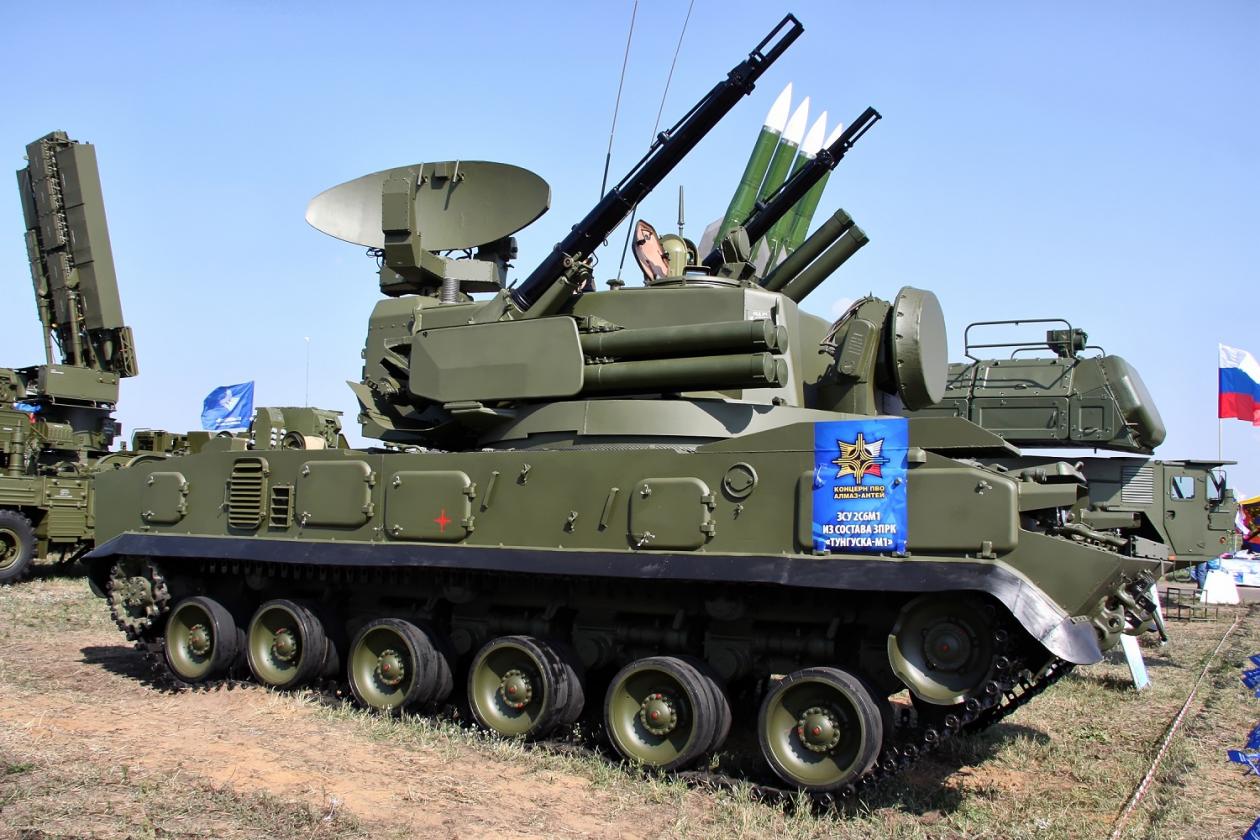

2S6M1 Tunguska-M1 is a further improved variant with the improved fire control system. It is based on a GM-5975 special tracked chassis and uses new 9M311-M1 missiles. These have a range of 10 km. These missiles have improved optical tracking and accuracy. Laser proximity fuse was replaced by a radio proximity fuse. The new missiles can engage small targets, such as cruise missiles. The Tunguska-M1 is much more effective than the previous Tunguska-M. All previous Tunguskas can be upgraded to this standard. The 2S6M1 entered service with the Russian Army in 2003. A total of 21 Tunguska-M1 systems were delivered in 2012-2017. The is a modernized variant of the basic 2K22 Tunguska system that was introduced in 2003. It features a digital interface for the Ranzhir automatic command-and-control system, which enables remote, automated target designation for any Tunguska launch vehicle from higher echelons; modernization of the fire-control radar; improved fire-control software, which increases engagement capability against fast-moving targets in the electro-optical mode; new 9M311M or 9M311-1M missiles; and upgraded target angular speed-measuring devices, which increases accuracy for both the missiles and guns. Other improvements included automatic external target designation, reception and transmission, and processing equipment by radio with the battery command post. This allows the command post to automatically distribute targets among the battery; the gunner's assistance system, which performs automatic high-speed, two-coordinate optical tracking; upgraded missile coordination calculation equipment that improves jamming resistance; and modified heading and roll/pitch control system that reduces disturbances to gyros while the system is moving, reducing line of sight stabilization errors and enhancing the stability of the 30-mm cannons.