ARMSNET
Military Equipment Database
Initializing 0%

Type 093 Class (Shang Class) Chinese Nuclear-Powered Attack Submarine

Type 093 Class

Nuclear-Powered Attack Submarine
Spotted an error? Sign in to suggest an edit.
Basic Information
Name
Type 093 Class (Shang Class) Chinese Nuclear-Powered Attack Submarine
Designation
Type 093 Class
Alternate Designation
Type 093 Class; Shang Class
Equipment Type
Nuclear-Powered Attack Submarine
Manufacturer
Date of Introduction
2006
Description

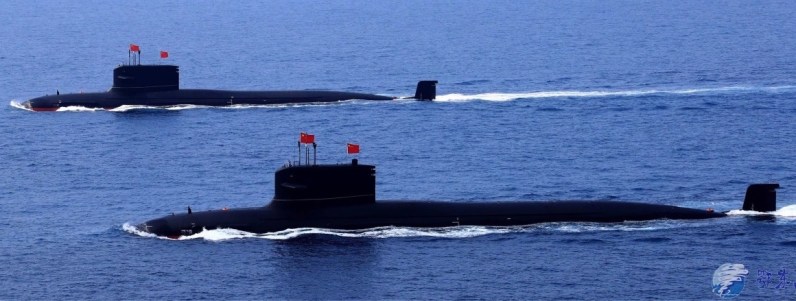
The Type 093 (or Type 09-III, NATO codename: Shang class) is China’s 2nd-generation nuclear-powered attack submarine (SSN) introduced in the early 2000s. It represents a significant improvement over the 1st-generation submarines in performance and capability. At least six hulls have already been commissioned into the PLA Navy as of 2015, and the construction programme continues. The improved Type 093B (Shang-III class) SSGN is capable of carrying log-range cruise missiles for anti-ship and land-attack. The PLA Navy initiated the development of its next-generation Type 093 nuclear attack submarine in the mid-1980s as a successor to its 1st-generation Type 091 (Han class). However, little progress was made until the mid-1990s, when Russia agreed to transfer its nuclear submarine technology to China in exchange for urgently-needed cash. The St. Petersburg-based Rubin Central Design Bureau for Marine Engineering, one of Russia’s primary centres for submarine design, offered consultation to the Type 093’s development, including overall hull design, engine and machinery quieting, combat system, weapon system, and countermeasures outfit. The existence of the submarine programme was first reported by the Pentagon in 2003. The U.S. Navy intelligence and Pentagon suggested that 2 hulls in the basic variant Type 093 and 4 hulls in the improved Type 093A variant had been constructed by 2017 ((Annual Report to Congress: Military and Security Developments Involving the People’s Republic of China, 2017, page 24.)). While the basic variant Type 093 is only comparable to the 1970s U.S. and Russian designs such as the early variant Los Angeles (688) class and the Victor-III class, the improved Type 093A/B is believed to be approaching the later variant Los Angeles class and the Akula class in quietness and overall capability, though they still cannot match the more advanced Seawolf and Virginia class. Type 093 Shang-I class Construction of the Type 093 reportedly began in the late 1990s at the Huludao-based CSIC Bohai Shipbuilding Heavy Industry Co., Ltd. The first-of-class Boat 407 was launched sometime in 2001 to 2002. After a sea trial that lasted for four years, the submarine was finally commissioned by the PLA Navy in 2006. The second hull Boat 408 was launched in late 2003 and commissioned around 2007. The production then stopped and replaced by the follow-up variants. The basic variant Type 093 (Shang I class) was said to have been partially based on the Russian Victor III class in design, though the two submarines bear no resemblance in appearance. The submarine is estimated to have 6.000 to 7,000 t displacement when dived. It features a water-drop shape hull, with a pair of fin-mounted hydroplanes and four diving planes. Six (three on each side) flank-mounted sonar arrays are clearly visible on the hull of the submarine. There are six 533 mm bow torpedo tubes (4 above, 2 below), capable of carrying the various anti-submarine/surface torpedoes of wire-, acoustic- and wake-homing, as well as the YJ-82 anti-ship cruise missile (ASCM). Type 093A Shang-II class This is an improved variant with a redesigned sail with a tapered front (similar to that of the Seawolf class and Virginia class) and all windows removed. Type 093B Shang-III class The improved Type 093B nuclear-power guided missile submarine (SSGN) was launched n 2012 and commissioned in 2015. This variant features some redesign to the sail, with the tapered front retained but all windows removed. There is a mysterious hump located immediately behind the sail, which is believed to accommodate a missile vertical launch system (VLS). The VLS is said to be used for carrying and launching the YJ-18 ASCM, the Yu-8 rocket-propelled torpedo, and the CJ-10 land-attack cruise missile (LACM). The YJ-18, a Chinese copy of the Russian 3M-54 Klub (SS-N-27 ‘Sizzler’), is capable of attacking surface and land targets to a maximum range of 650 km. The CJ-10, rumoured to have been developed from the Russian Kh-55 (AS-15 ‘Kent’), employs a combined inertial navigation system (INS), satellite, and terrain contour matching (TERCOM) navigation to a maximum range of 1,500 km. These missiles allow the Type 093B to project power ashore over long distance – a capability not previously possessed by Chinese SSNs.

Naval & Littoral Specifications
Crew 100
Beam 11.00 m
Variants
Type 093 Shang-I class Construction of the Type 093 reportedly began in the late 1990s at the Huludao-based CSIC Bohai Shipbuilding Heavy Industry Co., Ltd. The first-of-class Boat 407 was launched sometime in 2001 to 2002. After a sea trial that lasted for four years, the submarine was finally commissioned by the PLA Navy in 2006. The second hull Boat 408 was launched in late 2003 and commissioned around 2007. The production then stopped and replaced by the follow-up variants. The basic variant Type 093 (Shang I class) was said to have been partially based on the Russian Victor III class in design, though the two submarines bear no resemblance in appearance. The submarine is estimated to have 6.000 to 7,000 t displacement when dived. It features a water-drop shape hull, with a pair of fin-mounted hydroplanes and four diving planes. Six (three on each side) flank-mounted sonar arrays are clearly visible on the hull of the submarine. There are six 533 mm bow torpedo tubes (4 above, 2 below), capable of carrying the various anti-submarine/surface torpedoes of wire-, acoustic- and wake-homing, as well as the YJ-82 anti-ship cruise missile (ASCM).
Type 093A Shang-II class This is an improved variant with a redesigned sail with a tapered front (similar to that of the Seawolf class and Virginia class) and all windows removed.
Type 093B Shang-III class The improved Type 093B nuclear-power guided missile submarine (SSGN) was launched n 2012 and commissioned in 2015. This variant features some redesign to the sail, with the tapered front retained but all windows removed. There is a mysterious hump located immediately behind the sail, which is believed to accommodate a missile vertical launch system (VLS). The VLS is said to be used for carrying and launching the YJ-18 ASCM, the Yu-8 rocket-propelled torpedo, and the CJ-10 land-attack cruise missile (LACM). The YJ-18, a Chinese copy of the Russian 3M-54 Klub (SS-N-27 ‘Sizzler’), is capable of attacking surface and land targets to a maximum range of 650 km. The CJ-10, rumoured to have been developed from the Russian Kh-55 (AS-15 ‘Kent’), employs a combined inertial navigation system (INS), satellite, and terrain contour matching (TERCOM) navigation to a maximum range of 1,500 km. These missiles allow the Type 093B to project power ashore over long distance – a capability not previously possessed by Chinese SSNs.
System
Alternative Designation Type 093 Class; Shang Class
Total Built 6 Type 093 Class Attack Submarines Built.
Type Nuclear-Powered Attack Submarine
Builder China Shipbuilding Industry Corporation Bohai Shipyard, Huludao
In Service 2006-Present
Crew 100
Dimensions
Length 107 m
Beam 11 m
Draught 7.5 m
Displacement, Submerged 7,000 tons
Displacement, Surface INA
Draft INA
Propulsion System
Engine Name INA (Nuclear with turbo-electric arrangement)
Engine Type Pressurized water Nuclear Reactor
Engine Power INA
Shafts 1
Maximum Range Unlimited
Maximum Speed 30 knots; 56 km/h
Endurance INA
Propeller 7-blade propeller
Auxiliary Armament
Torpedo Tube 6x 533mm torpedo tubes
Torpedos
Note The Shang class nuclear-powered attack submarine is armed with six 533 mm torpedo tubes. These can be used to launch a range of indigenous and Russian anti-submarine and anti-ship torpedoes with wire-, acoustic- and wave-homing. Torpedo tubes can also be used to launch Chinese YJ-82 anti-ship missiles.
Basic Load 20 Torpedos
Mines
Note The Type 093 can carry either 20 Torpedoes or 36 Mines
Fire Control System
FCS Name INA
Computerized FCS Yes, Multi-purpose combat data and command system for submarine control and weapon firing.
Radars
Surface Search Radar Yes, (Name: INA)
Sonar Systems
Bow-Mounted Sonar H/SQ2-262 bow-mounted, medium-frequency sonar for active/passive search and attack
Flank-Mounted Sonar H/SQG-207 flank-mounted sonar (3 sonar arrays on each side)
Additional Sonar Systems Low frequency sonar, passive ranging and intercept and a Towed array sonar for active search and attack
Protection
Active Protection System INA
Electronic Warfare INA
Decoys INA
Radar Warning Radar warning receiver and direction-finder
Details
Country of Origin China
Category Submarines
Naval > Submarines
Filter Label
T
Classification
Domain
Naval & Littoral
Equipment Status
Active
Dimensions
Length
107 m
Width
Height
Weight
Operators (1)
China
Something went wrong. Please reload the page. Reload