ARMSNET
Military Equipment Database
Initializing 0%

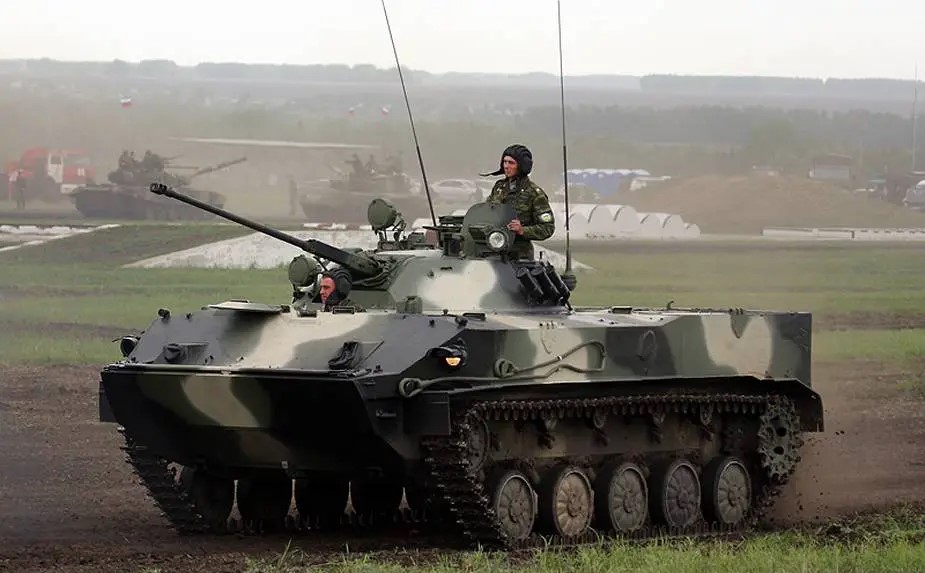
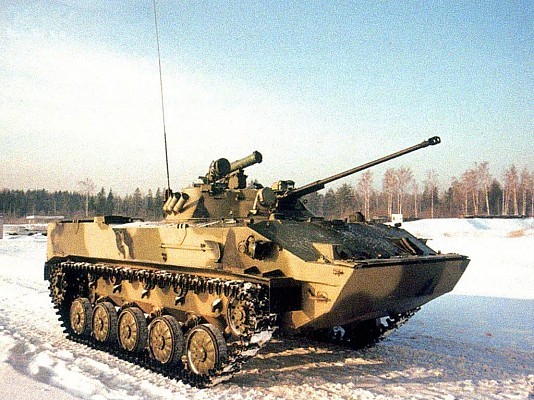
BMD-3 Russian Airborne Amphibious Infantry Fighting Vehicle (IFV)

BMD-3

Amphibious Infantry Fighting Vehicle (IFV)
Spotted an error? Sign in to suggest an edit.
Basic Information
Name
BMD-3 Russian Airborne Amphibious Infantry Fighting Vehicle (IFV)
Designation
BMD-3
Alternate Designation
BMD-3
Equipment Type
Amphibious Infantry Fighting Vehicle (IFV)
Manufacturer
Volgograd Tractor Plant
Date of Introduction
1990
Description

The BMD-3 (Boyevaya Mashina Desanta, Russian "Боевая Машина Десанта", literally "Combat Vehicle of the Airborne") is an infantry fighting vehicle (IFV) originating from the former Soviet Union. The BMD-3 was designed to address the flaws in the BMD-1 and BMD-2 designs. This armored fighting vehicle is one of the lightest in its class and is intended to be a fire support platform for use by airborne and air assault units. The primary armament is a 30 mm 2A42 autocannon capable of firing different types of ammunition which include high-explosive and armor-piecing. The BMD-3 possesses multiple secondary weapons such as the 9M113 Konkurs missile and the AGS-17 grenade launcher to defeat a wide range of targets from enemy infantry to other armored fighting vehicles.

Ground Specifications
Crew 3
Engine Diesel (450 hp)
NBC Protection Yes
Variants
BMD-3K The commander variant of the BMD-3 adopted by the Russian Army in 1996. Mass production of this vehicle was never initiated.
2S25 Sprut-SD (Object 952) A self-propelled anti-tank gun that entered service in 2005. This vehicle has the chassis of the BMD-3 and is operated by a crew of three. The main armament is the 125 mm 2A75 smoothbore gun which is a variant of the 2A46 smoothbore gun series used by Soviet main battle tanks since the T-64. It can fire the ammunition of the 2A46 including the 9M119 Svir. The chassis has seven road wheels on each side instead of five and the engine is now the 2V-06-2S with a power of 510 hp.
BTR-MD “Rakushka” (Object 955) A multi-role transport vehicle with bigger hull and no turret. This type can be used to transport troops, fuel, ammunition and wounded personnel. It also serves as the basis for a new range of specialised vehicles for the Russian airborne forces, including a mortar platform and an ambulance.
BTR-MDM A modernized version with the same improvements as the BMD-4M.
RKhM-5 (Object 958) A chemical reconnaissance vehicle introduced in 2011 and is fitted with the same specialized equipment as the BTR-80 version known as the RKhM-4. The turret has been removed; the RKhM-5 has a fixed superstructure with a machine gun turret. The hull is larger allowing it to transport troops, fuel, ammunition and wounded personnel
BMD-4 (Object 960) Originally designated as the BMD-3M, this vehicle has a modified chassis with new turret known as the "Bakhcha-U". The weaponry bears greater similarity to the BMP-3. This new armament consists of: a 100 mm 2A70 rifled main gun, a 30mm 2A72 autocannon, a 7.62 mm coaxial machine gun, and new "Ramka" fire control system. The bow-mounted AGS-17 has been removed and is replaced with an AGS-30. BMD-4s are newly built or upgraded BMD-3s. The BMD-4 is no longer being purchased for the Russian troops, in favor of the BMD-4M.
BMD-4M The upgraded variant with a new chassis and the 500 hp UTD-29 engine of the BMP-3. This version will be produced by Kurganmashzavod (KTZ) instead of VgTZ. The vehicle was presented to the VDV in March 2008. According to KTZ, series production could have started in 2009. The BMD-4M was evaluated by the VDV
BMM-D A command post vehicle and a recovery vehicle. Some variants will have a longer chassis with seven road wheels and probably the same 510 hp engine as the 2S25.
System
Alternative Designation BMD-3
Type Airborne Infantry Fighting Vehicle
Manufacturer Volgograd tractor factory
Family BMD-3
Crew 3 ea
Passenger Capacity 4 ea
Amphibious Yes, The BMD-3 is amphibious and propelled in the water by two water-jets mounted on both sides at the rear of the vehicle
Buoyancy Reserve More than 30% of its own displacement
Dimensions
Length, Overall 6.36 m
Length, Hull 6.00 m
Width 3.134 m
Height 2.17 m
Weight 13,200 kg
Ground Clearance 0.45 m
Ground Pressure 0.54 kg/cm² (52,956 Pa) (7.68 psi)
Automotive
Engine Name 2V-06 (Some models have been replaced with the BMD-4M Engine)
Engine Type Diesel
Engine Power 450 hp
Fuel Capacity 450 liters
Range, Land 500 km
Range, Water 80 km
Speed, Maximum Road 71 km/h
Speed, Average Cross 40 km/h
Speed Maximum Swim 10 km/h
Gradient 60%
Side Slope 30%
Vertical Step 0.8 m
Trench 1.8 m
Fording Depth Amphibious
Communications
Primary Radio R-173
Secondary Radio Digital R-168
Main Gun
System
Name 1 × turret-mounted 30 mm 2A42 Autocannon
Type Autocannon
Caliber 30 mm
Manufacturer Tulamashzavod
Length (Total) 3.02 m
Barrel Length 2.4 m
Weight 115 kg
Action Gas-operated
Barrels 1 ea
Max Rate of Fire (Low) 200-300 rds/min
Maximum Elevation +75 deg
Minumum Elevation -5 deg
Traverse Range 360 deg
Traverse Left 180 deg
Traverse Right 180 deg
Max Rate of Fire (High) 550-800 rds/min
Effective Firing Range 2,000 m
Maximum Firing Range 4,000 m
Feed System Twin Feed
Ammunition (Option 1)
Name 3UOF8
Type HEI
Caliber 30 mm
Cartridge 30 × 165 mm
Projectile Weight 389 g
Bursting Charge 49 g
Muzzle Velocity 960 m/s
Basic Load 860 Rounds
Note A high-explosive incendiary round with A-670M nose fuze.The fuze produces a 0.15 millisecond delay on impact, and a self-destruct mechanism detonating the projectile after 7.5 to 14.5 seconds of flight (3900–5300 m distance from muzzle).
Ammunition (Option 2)
Name M929
Type APFSDS-T
Caliber 30 mm
Cartridge 30 × 165 mm
Muzzle Velocity 1,260 m/s
Projectile Weight 235 g
Bursting Charge None
Basic Load 860 Rounds
Note A sub-caliber fin-stabilized discarding sabot round with tracer from Belgian Mecar, with tungsten alloy penetrator. Penetration: 50 mm RHA steel at 60 degree impact at 1,000 m range
Ammunition (Option 3)
Name 3UBR8
Type APDS
Caliber 30 mm
Cartridge 30 × 165 mm
Projectile Weight 304 g
Bursting Charge None
Muzzle Velocity 1,120 m/s
Basic Load 860 Rounds
Note A sub-caliber discarding sabot. No tracer. Penetration: 25mm RHA at flat angle of impact, 1500 m range 25mm thick plate at 60 degree impact, 1500 m
Grenade Launcher
System
Name 1 x AGS-17 Plamya, 30mm Automatic Grenade Launcher
Type Automatic Grenade Launcher
Caliber 30 mm
Manufacturer Molot plant
In Service 1970-Present
Proliferation Widely Proliferated
Variants AG-17A helicopter-mounted version
Length 840 mm
Weight 31 kg
Rate of Fire 400 rds/min
Effective Firing Range 8,00 - 1,700 m
Maximum Effective Range 1,700 m
Action Blowback
Feed system 29 grenades belt
Sights Adjustable iron sights, optional mount required for optical sights
Ammunition (Option 1)
Name VOG-17M
Type 30mm Grenade
Cartridge 30×29mm grenade
Warhead High explosive fragmentation warhead.
Muzzle velocity 185 m/s
Effective Firing Range 8,00 - 1,700
Basic Load 40 ea
Ammunition (Option 2)
Name VOG-30
Type 30mm Grenade
Cartidge 30×29mm grenade
Muzzle velocity 185 m/s
Effective Firing Range 8,00 - 1,700 m
Basic Load 40 ea
Coaxial Weapon System
System
Name 1 x PKT 7.62mm (Kalashnikov's Machine Gun) General-Purpose Machine Gun
Caliber 7.62 mm
Type General-Purpose Machine Gun
Function In use as a front-line infantry and vehicle-mounted weapon with Russia's armed forces.
In Service 1961-present
Manufacturer Degtyaryov plant
Proliferation 1 Million +
Length (Overall) 1,203 mm
Length (Barrel) 605 mm
Weight (Gun Only) 9 kg
Weight (Tripod Only) 7.7 kg
Max Rate of Fire 650 rds/min
Effective Rate of Fire 250-300 rds/min
Action Gas-operated, open bolt
Feed System Non-disintegrating metal 50 round belts in 100 and 200/250 round ammunition boxes
Effective Firing Range (With Sight Adjustments) 100-1,500 m
Maximum Firing Range 4,000 m
Sights Iron Sights
Note The 7.62 PKT can be controlled remotely and is slaved to the main gun,
Ammunition (Option 1)
Name 57-N-323S
Type Rifle
Caliber 7.62 mm
Cartridge 7.62×54 mm
Muzzle Velocity 855 m/s
Accuracy of fire at 300 m 90 mm
Basic Load 2,500 ea
Ammunition (Option 2)
Name 7N13 (AP)
Type Rifle
Caliber 7.62 mm
Cartridge 7.62×54mmR
Muzzle Velocity 855 m/s
Basic Load 2,500 ea
Accuracy of fire at 300 m 90 mm
Ammunition (Option 3)
Name 7BZ3 (API)
Type Rifle
Caliber 7.62 mm
Cartridge 7.62×54mm
Muzzle Velocity 834 m/s
Basic Load 2,500 ea
Accuracy of fire at 300 m 150 mm
Tank Commander's Weapon System
System
Name 1 x RPK-74 (AK-47) General-Purpose Machine Gun
Type General-Purpose Machine Gun
Caliber 5.45 mm
Manufacturer Vyatskiye Polyany Machine-Building Plant
In Service 1974-Present
Proliferation Widely Proliferated
Length 1,060 mm
Barrel Length 590 mm
Weight (RPK) 4.7 kg
Weight (RPKS) 5.1 kg
Max Rate of Fire 600 rds/min
Action Gas operated, rotating bolt; closed bolt
Effective Firing Range (with sight adjustments) 100-1,000 m
Maximum Firing Range 3,150 m
Feed system 30-, 45-round box magazine, 100-round plastic drum magazine, belt ammunition (with side mounted belt feed device)
Sights Iron sights: semi-shrouded front post and rear sliding tangent with an adjustable notch Sight radius: 555 mm (21.9 in)
Ammunition
Type Rifle
Caliber 5.45 mm
Cartridge 5.45×39mm M74
Muzzle Velocity 960 m/s
Basic Load 2,500 ea
Anti-Tank Guided Weapon (ATGW)
Name 1 x 9M113 Konkurs (AT-5 Spandrel)
Type Soviet SACLOS wire-guided anti-tank missile.
Manufacturer Tula Machinery Design Bureau (Tula KBP) – Tulsky Oruzheiny Zavod
In Service 1974-Present
Proliferation Algeria– used by mechanized infantry units Armenia Azerbaijan Egypt – mounted on Fahd armoured personnel carriers purchased in 1990s Belarus The launcher is been locally produced and upgraded. Bulgaria Croatia Cuba – not confirmed Czech Republic Eritrea[ Finland – known as PstOhj 82M, fired from 9P135M-1 launchers (withdrawn from service) Georgia Guinea Hungary Indonesia – mounted on BVP-2 infantry fighting vehicles operated by the marine corps India – 15,000 Konkurs-M, ordered in 2008 for Rs 1,380-crore. Another 10,000 Konkurs-M ordered for US$250 million in 2012. A new contract was signed in 2019 for USD 110 mln. Iran– produced domestically as Tosan-1 Iraq Ivory Coast (reported) Kazakhstan Kyrgyzstan Morocco[ Mongolia Moldova– used on BRDM-2 North Korea – produced domestically Pakistan – Used on Viper infantry fighting vehicle Peru Romania Russia – about 300 Konkurs-M complexes delivered annually in the last years (2014) Slovakia Turkmenistan Turkey Syria Ukraine Houthis – Tosan version
Varaints 9M113M,Towsan-1, Tosan, Towsan, or M113, 9N131M1, 9N131M2-1
Length 1,150 mm
Diameter 135 mm
Weight (Missile) 14.6 kg
Weight (9P135 Launching Post) 22.5 kg
Warhead Weight 2.7 kg
Detonation Mechanism Contact
Engine Solid-fuel rocket
Wingspan 468 mm
Maximum Operational Range 4 km
Minimum Operational Range 70 m
Speed 208 m/s
Guidance system Wire-guided SACLOS
Steering system Two control surfaces
Launch platform Individual, vehicle
Penetration 600mm of RHA
Basic Load 1 x 9M113 Konkurs (AT-5 Spandrel)
Fire Control
Name INA
Computerized FCS INA
Thermal Sight Vehicle Commander Yes, 1PZ-3 with a TNP-165A designator
Thermal Sight Gunner Yes, BPK-1-42 with a TNPT-1 designator and a TKN-3B binocular sight
Main Gun Stabilization Yes, 2E36-5
Periscopes TNPO-170A periscopes and the TNPO-350B night vision periscope.
Protection
Hull Armor The protection offered is thought to be sufficient to stop up to 12.7 mm rounds fired at the front of the hull and at least 7.62 mm rounds fired at the sides.
Turret Armor INA
Applique Armor Available
Explosive Reactive Armor No
Active Protection System INA
Mine Clearing No
Self-Entrenching Blade No
NBC Protection Yes
Smoke Equipment Yes, three 81 mm electrically-operated smoke grenade dischargers. The BMD-3 ACV can lay its own smoke screen by injecting diesel fuel into the exhaust.
IR Signature INA
Fire Suppression System Yes
Details
Country of Origin Russia
Category Land
Land
Filter Label
B
Classification
Domain
Ground
Equipment Status
Active
Dimensions
Length
6.36 m
Width
3.13 m
Height
2.17 m
Weight
13200 kg
Operators (4)
Russia
China
Angola
CFE Treaty
Something went wrong. Please reload the page. Reload