Shahab-3A Iranian Medium-Range Ballistic Missile
Meteor-3, Shooting Star-3, Shahab-3A
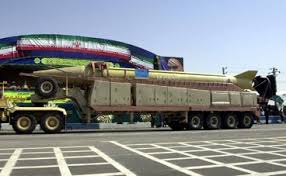
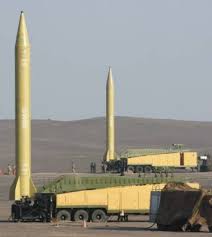
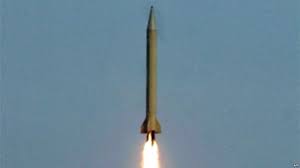
The Shahab-3 (Persian: Šahâb 3; meaning "meteor") is a medium-range ballistic missile (MRBM) developed by Iran and based on the North Korean Nodong-1. The Shahab-3 has a range of 1,000 kilometers (620 mi); an MRBM variant can now reach 2,000 kilometers (1,200 mi) (and can hit targets as far as Israel, Egypt, Romania, Bulgaria, and Greece). It was tested from 1998 to 2003 and added to the military arsenal on 7 July 2003, with an official unveiling by Ayatollah Khamenei on July 20. With an accuracy of 140 m CEP, the Shahab-3 missile is primarily effective against large, soft targets (like cities). Given the Shahab-3’s payload capacity, it would likely be capable of delivering nuclear warheads. According to the IAEA, Iran in the early 2000s may have explored various fuzing, arming, and firing systems to make the Shahab-3 more capable of reliably delivering a nuclear warhead. The forerunners to this missile include the Shahab-1 and Shahab-2. The then-Iranian Defence Minister Admiral Shamkhani has denied that Iran plans to develop a Shahab-4. Some successors of the Shahab have longer ranges and are also more maneuverable. Operating under the Sanam Industrial Group (Department 140), which is part of the Defense Industries Organization of Iran, the Shahid Hemmat Industrial Group (SHIG), led the development of the Shahab missile. The US Air Force National Air and Space Intelligence Center estimates that fewer than 50 launchers were operationally deployed as of June 2017.