ARMSNET
Military Equipment Database
Initializing 0%

Robot Wolf Chinese Unmanned Ground Vehicle (UGV)

Robot Wolf

Unmanned Ground Vehicle (UGV)
Spotted an error? Sign in to suggest an edit.
Basic Information
Name
Robot Wolf Chinese Unmanned Ground Vehicle (UGV)
Designation
Robot Wolf
Alternate Designation
Robot Wolf; Q-UGV Wolf (Quadrupedal Unmanned Ground Vehicle)
Equipment Type
Unmanned Ground Vehicle (UGV)
Manufacturer
China South Industries Group Corporation
Date of Introduction
2024
Description

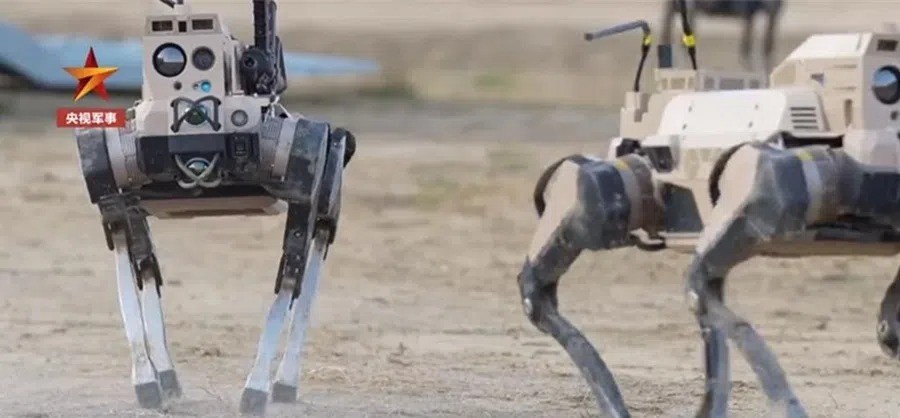
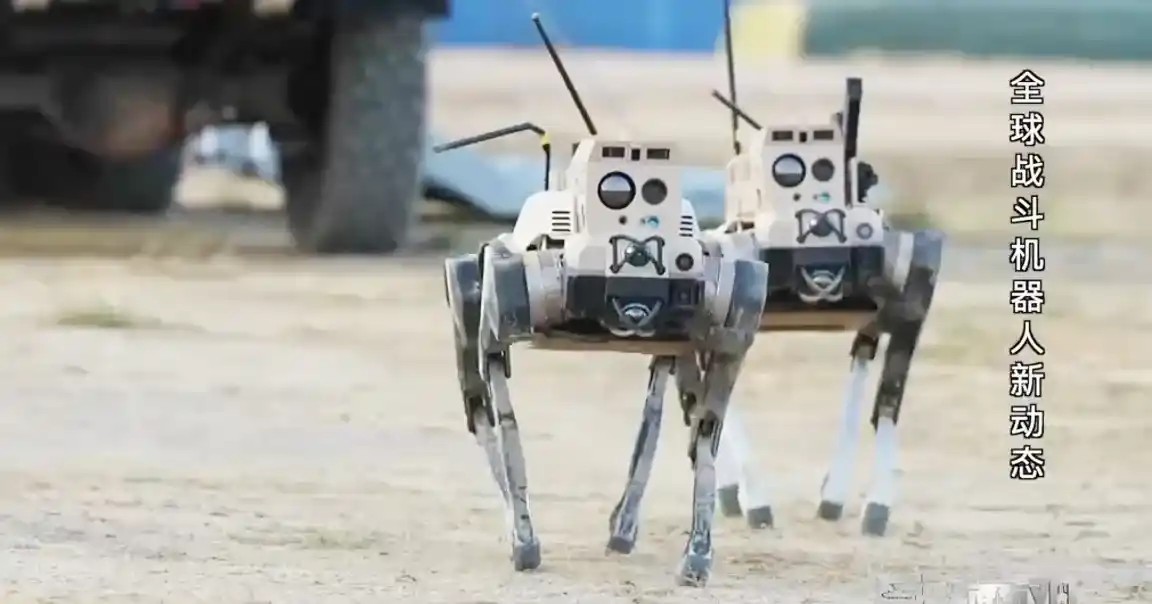
The Robot Wolf Chinese Unmanned Ground Vehicle (UGV) marks a significant advancement in military robotics, signifying the shift from experimental concepts to active deployment within frontline People’s Liberation Army (PLA) units. These platforms, equipped with comprehensive sensor suites and AI-enabled autonomous capabilities, reflect China's commitment to intelligent warfare and human-machine collaboration. Incorporating robot wolves into the PLA's traditional "three-three system" infantry formation, the strategy involves two units advancing in front while one follows behind. This configuration facilitates coordinated movement during leapfrogging maneuvers and assault operations, ensuring organic robotic support at the squad level. Multiple robot wolves can operate as coordinated "packs," each with specific roles: the lead "pack leader" unit conducts reconnaissance and transmits target data; the follow-on "hunter" units provide direct fire support; and the rear "support" units transport ammunition and supplies. Their networked coordination allows for adaptive tactics without needing centralized control. In October 2025, the PLA's 72nd Group Army showcased the first public demonstration of the robot wolf's amphibious capabilities. During the landing sequence, eight camouflaged robot wolves were deployed from Type 726 air-cushion landing craft. Upon reaching shore, the units entered shallow seawater and advanced across the beach, covered by fire from amphibious assault vehicles. They navigated anti-landing obstacles, including barbed wire and dragon's teeth, and engaged simulated defensive positions with a remarkable 92% first-shot accuracy. The amphibious-specific capabilities of the robot wolves include a 30-minute submersion tolerance in seawater without system failure, continued operation after water exposure with minimal maintenance, and a 10 km operational range that is sufficient for advancing from the beach to the beachhead. Additionally, they can breach obstacles rapidly, taking only 3 to 5 minutes for prepared defenses. This capability addresses one of the most perilous phases of amphibious warfare—the initial 200 meters from the water's edge to the first cover, which has historically been characterized by extremely high casualty rates.

Ground Specifications
Mobility Type Quadrupedal
Main Weapon 1 x QBZ-191 Assault Rifle
Engine Electric
Max Speed 40.0 km/h
Range 10.0 km
Variants
Attack Variant Armed with QBZ-191 rifle or rocket launcher; Lead assault elements through contested terrain; Provide suppressive fire for advancing infantry; Absorb initial enemy fire reducing human casualties.
Reconnaissance Variant Unarmed configuration maximizing sensor payload; Forward observation and target acquisition; Real-time intelligence transmission to command elements; Chemical/biological/radiological detection capability.
Transport Variant Carries 20 kg of ammunition, medical supplies, or communications equipment; Reduces soldier combat load by approximately 50%; Enables sustained operations without resupply convoys; Can conduct autonomous unmanned resupply runs.
Support Variant Mine clearance and explosive ordnance disposal; Engineering support for obstacle removal; Communications relay node; Casualty evacuation assistance (limited to equipment, not personnel).
System
Alternative Designation Robot Wolf; Q-UGV Wolf (Quadrupedal Unmanned Ground Vehicle)
Type Robot Wolf Chinese Unmanned Ground Vehicle (UGV)
Manufacturer China South Industries Group Corporation
Configuration Quadrupedal
Crew Unmanned
Payload Capacity 20 kg
Operation Modes Manual Remote Control: Operator directs all movement and weapon employment. Semi-Autonomous: Robot navigates independently while operator controls weapons. Autonomous Patrol: Pre-programmed route with human intervention for engagements.
Processor The Robot Wolf is powered by the Huawei Ascend 310B AI processor, part of China's domestic semiconductor ecosystem designed to circumvent U.S. export restrictions on advanced chips. The Ascend 310B provides: Real-time target detection and tracking; Autonomous navigation in GPS-denied environments; Swarm coordination with multiple units; Voice command recognition and response.
AI-Enabled Functions Autonomous target acquisition using electro-optical and infrared sensorsfdd+1​; Coordinated swarm operations (1 operator can control 8 robot wolves + 6 drones simultaneously); Real-time data sharing across human-robot-vehicle networks; Adaptive terrain navigation and obstacle avoidance.
Electro-Optical Systems Minimum of 5 cameras for complete spherical coverage; High-definition daylight optics for target identification; Real-time video feed transmission to operators.
Infrared and Thermal Imaging Dedicated thermal sensors detect enemy troops behind cover and in trenches; Night vision capability for 24-hour operations; Heat signature tracking for personnel and vehicle detection.
LiDAR Systems Front and rear-mounted LiDAR units; 3D environmental mapping for autonomous navigation; Obstacle detection and avoidance; Enables operation in GPS-denied urban environments.
Dimensions
Length INA
Width INA
Height INA
Weight, Combat 70 kg
Automotive
Engine Name INA
Engine Type Electric
Engine Power INA
Standard Walk Speed: 4.34 km/h
Maximum Sprint Speed 30-40 km/h
Operational Range 10 km per charge
Communication Range 2.0 km
Obstacles 80 cm
Slope 50 deg
Amphibious Operations with 30-minute seawater submersion capability
Continuous Combat Operations 2 hours
Standby Time 4 hours
Recharge Time 90 minutes with self-recharge capability
Main Weapon System
Type 1 x QBZ-191 Assault Rifle
Caliber 5.8 mm
Mount Type The QBZ-191 is mounted dorsally with stabilized gimbal allowing independent aiming from platform movement.
Engagement Modes Remote operator fire control via tablet interface; Semi-autonomous targeting with human approval required for firing; Coordinated fire with multiple units engaging single target.
Effective Engagement Range 100 m
Target Detection to Engagement 10 seconds
Target Lock Autonomous target lock using onboard AI processing
Auxiliary Weapon System
Note Man-portable rocket launchers for anti-structure/anti-vehicle missions; Belt-fed automatic weapons (configuration dependent); Explosive charges for demolition and breaching operations.
Protection
Armor INA
Applique Armor INA
Details
Country of Origin China
Category Unmanned Ground Vehicles (UGV)
Land > Unmanned Ground Vehicles (UGV)
Filter Label
R
Classification
Domain
Ground
Equipment Status
Active
Dimensions
Length
Width
Height
Weight
70 kg
Operators (1)
China
Something went wrong. Please reload the page. Reload