HQ-6D Chinese Surface-to-Air Missile System
HQ-6D
Surface-to-Air Electronic Jamming System
Spotted an error? Sign in to suggest an edit.
Other
Basic Information
Name
HQ-6D Chinese Surface-to-Air Missile System
Designation
HQ-6D
Alternate Designation
HQ-6D
Equipment Type
Surface-to-Air Electronic Jamming System
Manufacturer
Shanghai Academy of Science and Technology
Date of Introduction
1989
Description
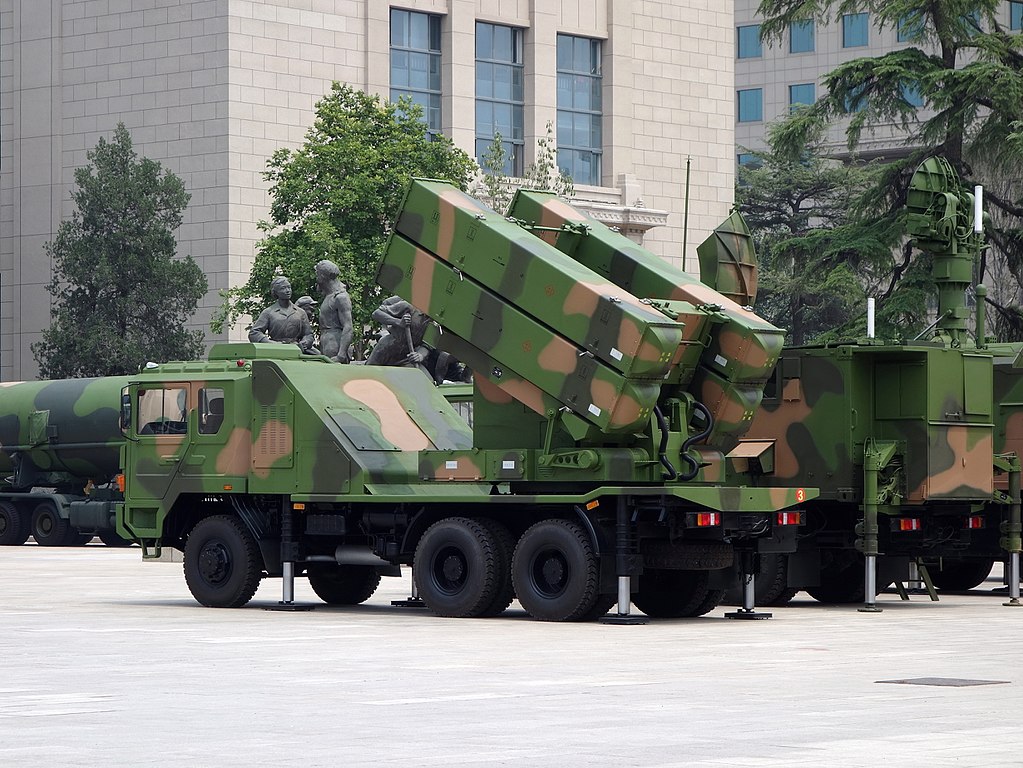
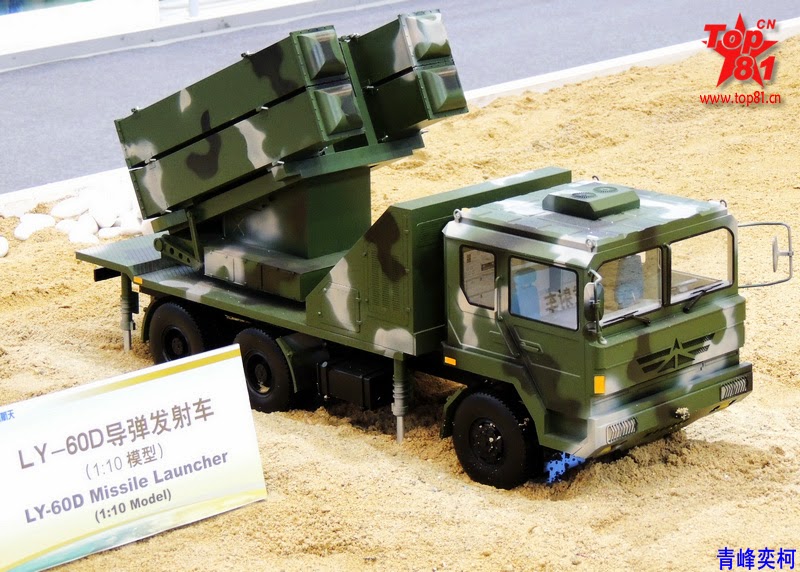
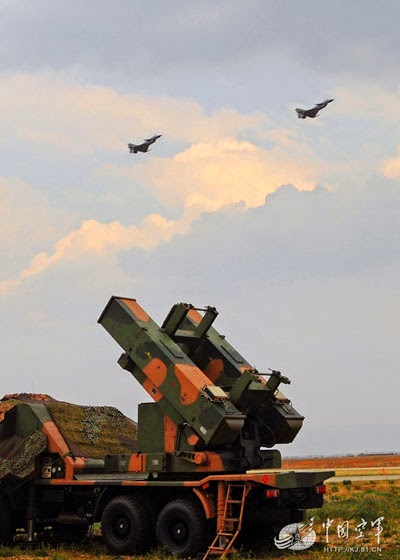
The HQ-6D is the latest development of the family, and it is basically an HQ-64 system with an addition of a command vehicle. Each command vehicle is able to command & control up to four HQ-64 batteries, thus linking up independent HQ-64 batteries to form an integrated air defense network, and each HQ-6D network can, in turn, be integrated into a larger air defense network. The standard time that the HQ-6D SAM system takes from traveling orders to being ready to fire is less than 15 minutes, but a highly skilled crew can reduce this time to just 9 minutes.
Ground Specifications
Mobility Type
Towed
Active Protection
None
Variants
HQ-6
The HQ-6 ("Red flag-6") was the second member of the LY-60/PL-10/HQ-6/6D/64/DK-10 family developed, but it entered service before the air-to-air version PL-10, despite an earlier start by the PL-10. The entire SAM system consists of four truck mounted radars (one search/surveillance radar and three tracking/fire control radars), one power supply truck, and six transporter erector launchers (TEL)s. The missile itself is directly derived from the air-to-air version PL-11. Unlike the Italian Aspide which uses containers as launchers, HQ-6 uses missile launching rails (MLR) instead, and each truck-mounted launcher has two MLRs/missiles.
K/AKK-10
During the mid-life upgrade of PL-10, the semi-active radar homing (SARH) seeker was replaced by active radar homing (ARH) seekers, resulting in two versions, one with a Russian ARH seeker, the other with a domestic Chinese ARH seeker. The K/AAK-10 is the version with an active seeker, but it's not clear if it is the one with a foreign ARH seeker or a domestic seeker.
In October 1994 the new medium-low-altitude surface-to-air missile system, the "Lieying (Falcon)-60," was deployed to China's air defense troops. The system is mainly intended for the interception of military aircraft and missiles flying in medium-low altitude. It a command control system with artificial interference capability thanks to the use of microprocessor intelligent module technology. This technology is not found on existing medium-low-altitude air defense missiles of other countries. The "Lieying-60" search radar can can simultaneously track up to 40 targets, and the tracking radar is able to simultaneously track 12 targets, and engage three targets at once. The use of the moving target tracking processing system and frequency agility technology also gives the system good anti-jamming capability.
The LY60N SAM is being deployed in place of the HQ61 SAM used in the Jiangwei-class frigates. Compared with the HQ61 with a range of 12 kilometers and maximum altitude of 10 kilometers, the LY60 has a range of 18 kilometers and reaches a maximum altitude of 12 kilometers. The LY60N is installed in Jiangwei B-class frigates that have recently been placed in service. Every launch system features a sextuple launchers and each launcher contains four LY60N missiles, for a total of 24 missiles. The wings of the LY60N are foldable. In comparison, the LY60 of the ground army version features a quadruple launchers, each of its launcher contains one missile, and its missile wing is not foldable.
The system will be adopted as the shipborne vertically-launched air defense system of the Chinese Navy's "Luhai"-class missile destroyers, with at least eight vertical launch barrels with a total of 32 missiles.
China initially tried to address its beyond visual range [BVR] needs by reverse-engineering the semiactive AIM-7 Sparrow, in a program designated PL-10. This effort proved unsuccessful. China then purchased around 100 Aspide missiles from Italy--the eventual intent being the license-manufacture of the missile, to be known as PL-11. This deal collapsed as a result of the 1989 Tiananmen Square massacre.
The Air Force version of the LY-60 is the FD-60 semi-active radar-guided air-to-air missile carried by the J8B fighter plane, which is very similar to the Aspide AAM of Italy in appearance. This missile, which is evidently also known as the PL-10 [Pili = Thunderbolt, or Pen Lung = Air Dragon] medium range air-to-air missile is a Chinese copy of the Italian Aspide, which was developed from the American AIM-7E Sparrow. The bodies of the two missiles are generally similar, though the wings of the air-to-air PL-10 mirror those of the Sparrow, while the LY-60 wings have evidently been truncated to improve storage. The application of the same missile to both air-to-air and ship-to-air applications emulates the American practice with the Sparrow, which started life as an air-to-air missile with subsequent shipboard deployments.
In addition, the Shanghai Academy has also developed a portable ground-to-air version called the FY-60.
HQ-64
The HQ-64 is an improved version of the HQ-6, utilizing experience gained from LY-60, with firepower doubled by increasing the number of missiles for each truck mounted launcher from two to four, and by replacing the MLR mounting by missiles in container box launchers. Both the missile and TELs are directly developed from the LY-60. Although the missile is smaller than that of the HQ-6, the performance actually improved due to technological advances. HQ-64 passed state certification test and was accepted into Chinese service in 2001. The reaction time for the system in fully automated mode is 9 seconds and the maximum speed of the missile is increased to Mach 4. Other improvements is mainly concentrated on ECCM capability, and many Chinese internet sources have claimed (yet to be confirmed) that the HQ-64 is derived from HQ-6-4, meaning 4 missiles (for each launcher) version the HQ-6.
HQ-6D
The HQ-6D is the latest development of the family, and it is basically a HQ-64 system with an addition of a command vehicle. Each command vehicle is able to command & control up to four HQ-64 batteries, thus linking up independent HQ-64 batteries to form an integrated air defense net work, and each HQ-6D network can in turn be integrated into larger air defense network. The standard time that the HQ-6D SAM system takes from travelling order to being ready to fire is less than 15 minutes, but a highly skilled crew can reduce this time to just 9 minutes.
System
Alternative Designation
HQ-6D
Type
Surface-to-Air Missile System
Manufacturer
Shanghai Academy of Science and Technology
Crew
INA
Chassis
INA
Displacement Time
Less than 15 minutes
Emplacement Time
Less than 15 minutes
Note #1
The entire SAM system consists of four truck mounted radars (one search/surveillance radar and three tracking/fire control radars), one power supply truck, and six transporter erector launchers (TEL)s.
Note #2
The HQ-6D is the latest development of the family, and it is basically a HQ-64 system with an addition of a command vehicle. Each command vehicle is able to command & control up to four HQ-64 batteries, thus linking up independent HQ-64 batteries to form an integrated air defense net work, and each HQ-6D network can in turn be integrated into larger air defense network.
Dimensions (Transporter Erector Launcher)
Note
There is no unclassified information available that list the name of the The entire SAM system consists of four truck mounted radars (one search/surveillance radar and three tracking/fire control radars), one power supply truck, and six Transporter Erector Launchers (TEL).
Automotive (Transporter Erector Launcher)
Note
The entire SAM system consists of four truck mounted radars (one search/surveillance radar and three tracking/fire control radars), one power supply truck, and six transporter erector launchers (TEL)s.
Missile
Name
HQ-6D
Type
Surface to Air Missile
Manufacturer
Shanghai Academy of Science and Technology
Length
3.69 m
Diameter
203 mm
Weight
220 kg
Engine
Rocket motor
Propellant
Solid Fuel
Warhead
33 kg
Detonation Mechanism
Impact / proximity
Operational Range
18 km
Guidance System
SARH / ARH
Fire Control
FCS Name
INA
Computerized FCS
Yes
Direct Fire
Yes
Indirect Fire
Yes
Position Location System
Yes
Protection
Hull Armor
INA
Applique Armor
INA
Explosive Reactive Armor
No
Active Protection System
No
NBC Protection
INA
Smoke Equipment
INA
Details
Country of Origin
China
Filter Label
H
Classification
Domain
Ground
Equipment Status
Active
Dimensions
Length
—
Width
—
Height
—
Weight
220 kg
Operators (5)
China
Pakistan
Ethiopia
Morocco
Sudan
Something went wrong. Please reload the page.
Reload