NASAMS Norwegian National/Norwegian Advanced Surface to Air Missile System
NASAMS
Mobile Air Defense Missile System
Spotted an error? Sign in to suggest an edit.

Other







Basic Information
Name
NASAMS Norwegian National/Norwegian Advanced Surface to Air Missile System
Designation
NASAMS
Alternate Designation
NASAMS
Equipment Type
Mobile Air Defense Missile System
Manufacturer
Kongsberg
Date of Introduction
1998
Description
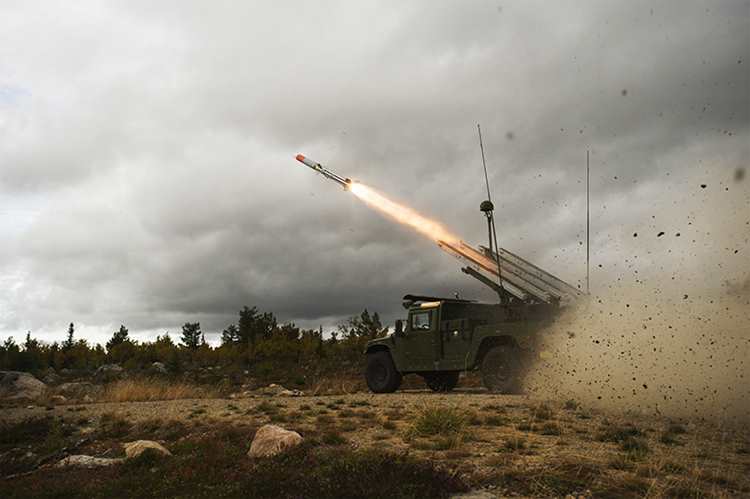
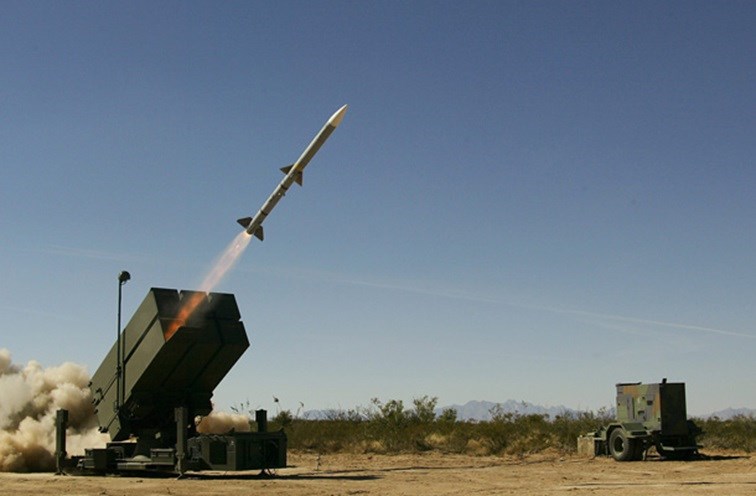
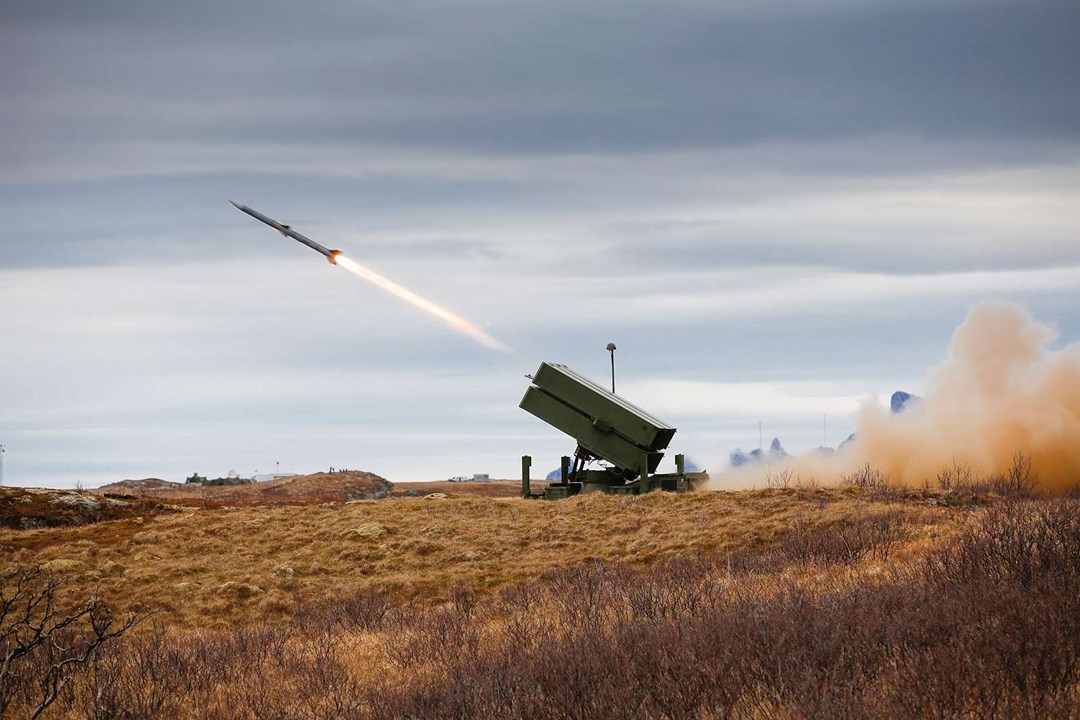
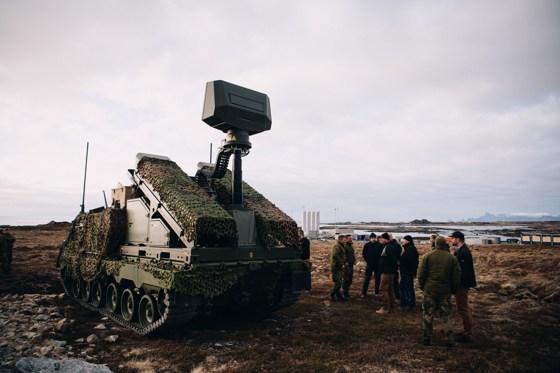
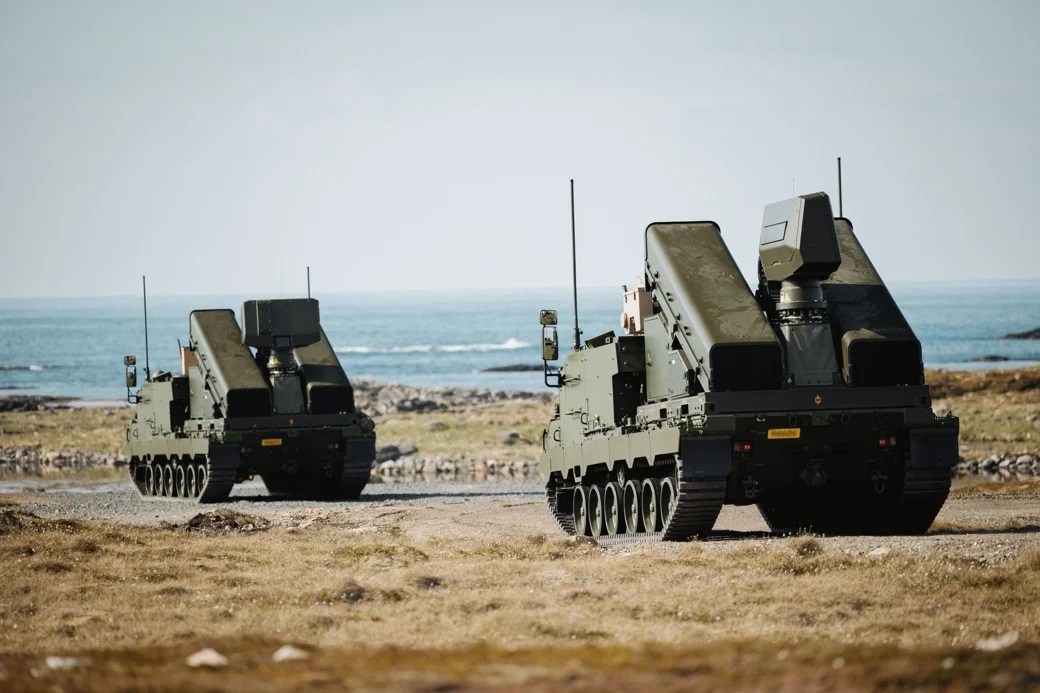
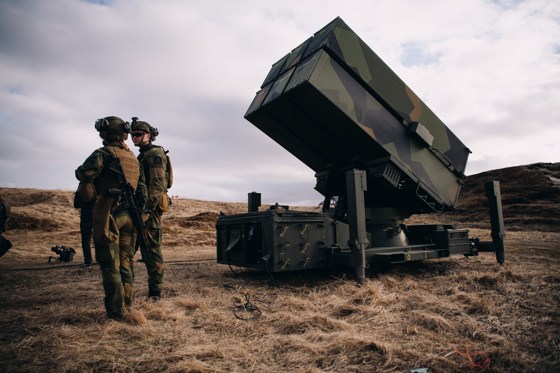
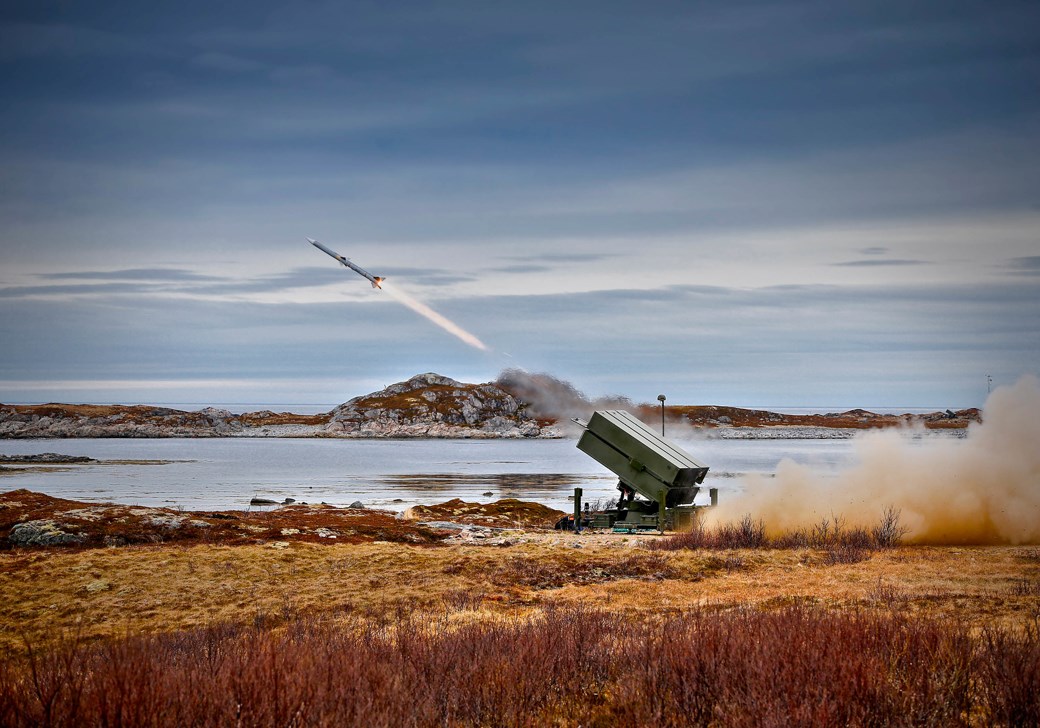
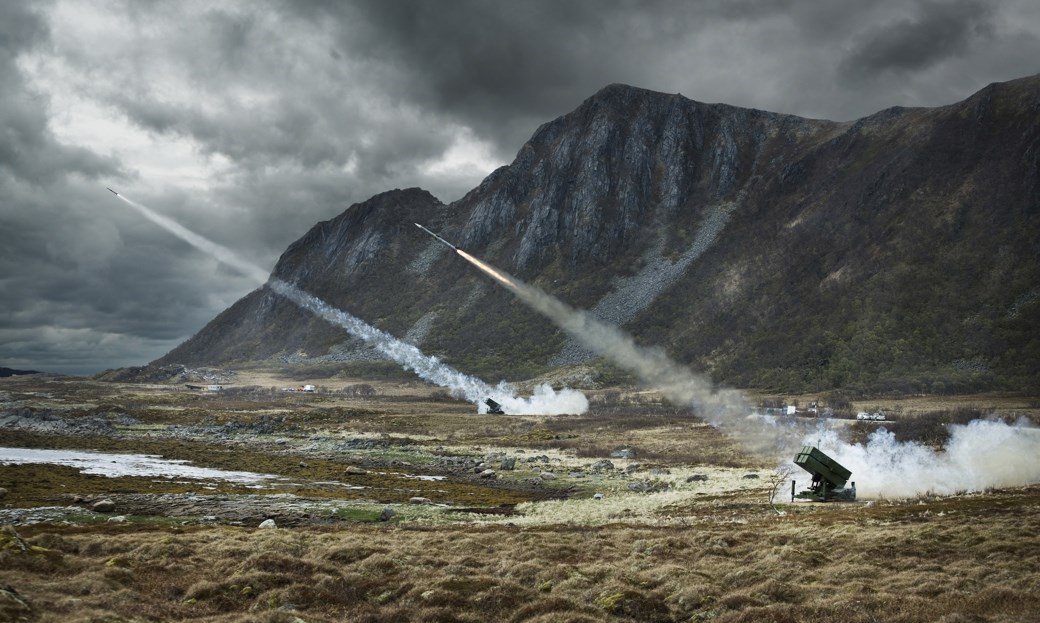
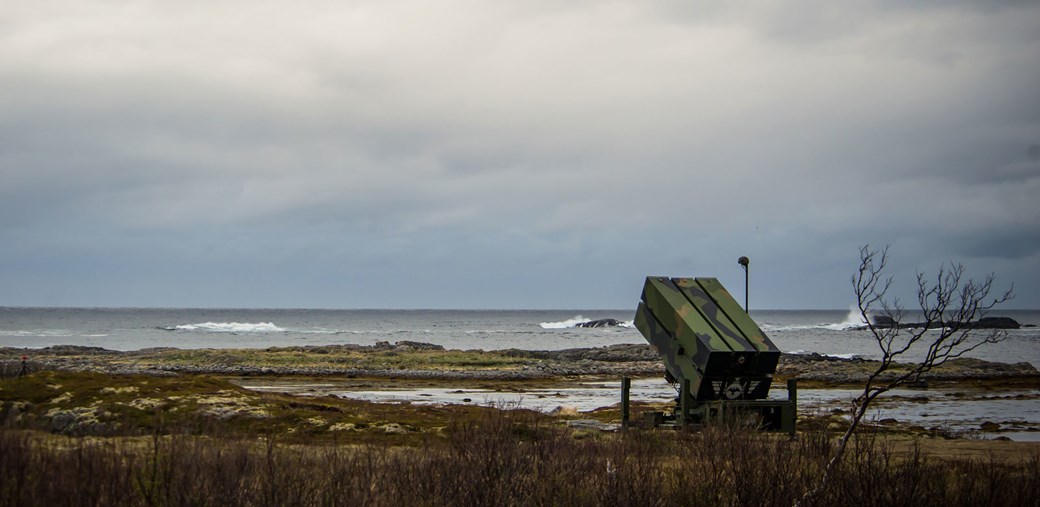
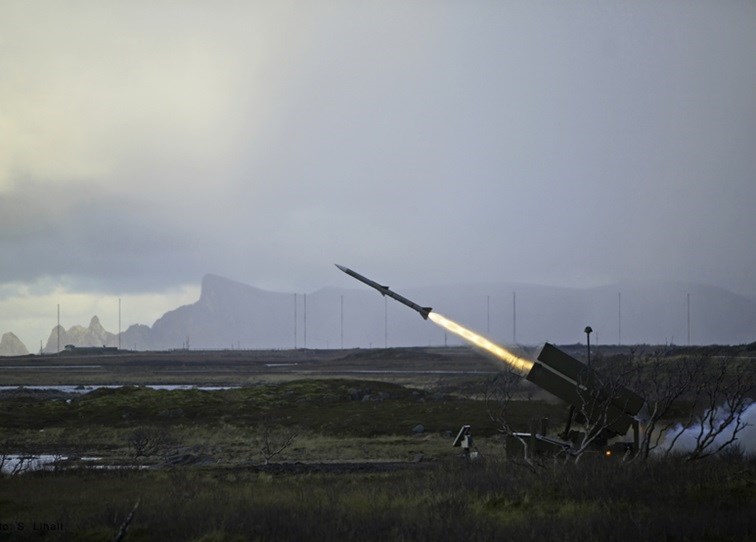
NASAMS (National/Norwegian Advanced Surface to Air Missile System) is a distributed and networked medium to long range air-defense system. NASAMS was the first surface-based application for the AIM-120 AMRAAM (Advanced Medium Range Air-to-Air Missile).
Ground Specifications
Mobility Type
Towed
Main Weapon
AIM-120 AMRAAM
Active Protection
None
Range
33.0 km
Variants
NASAMS 2
An upgraded version of the system called NASAMS II has been in service since 2007 and is equipped with new radar and 12 missile launchers for quicker identification and target destruction.
NASAMS 3
In April 2019 RNoAF upgraded to NASAMS 3, and in May 2019 the first live firing test were conducted.
System
Alternative Designation
NASAMS
Type
National/Norwegian Advanced Surface to Air Missile System
System Description
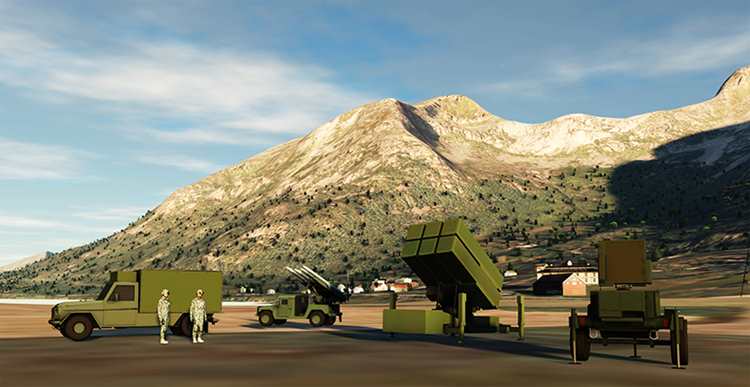
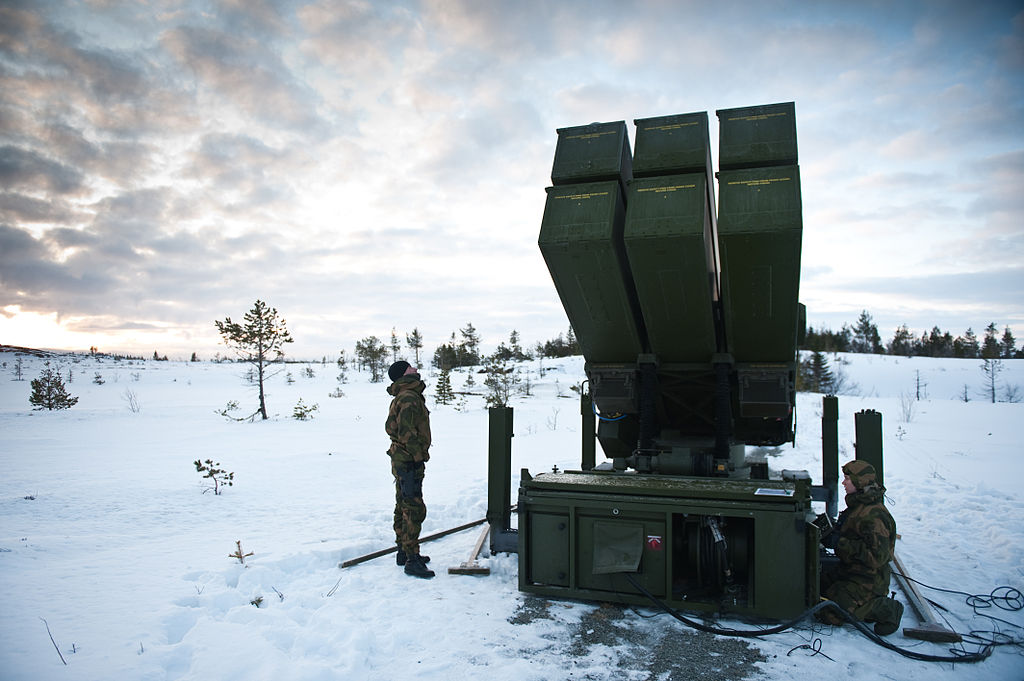
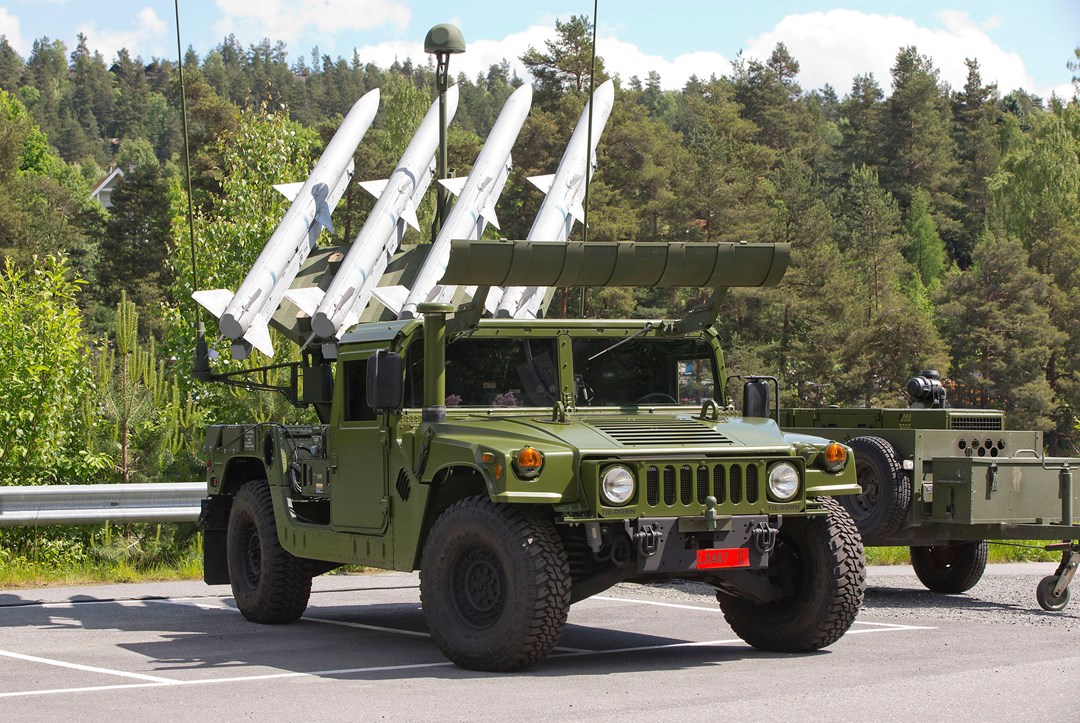
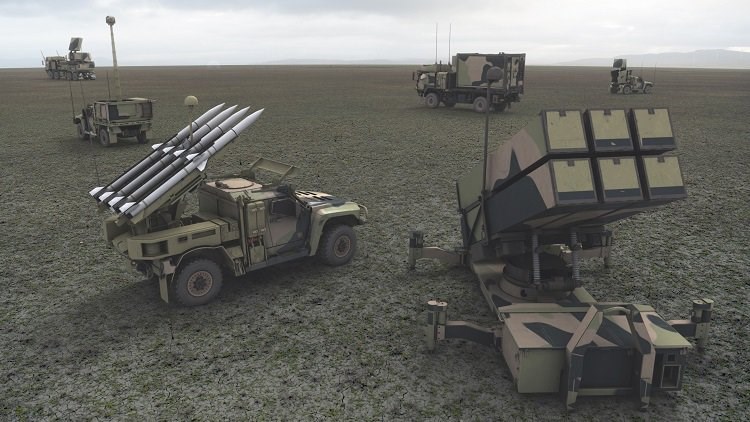
A standard NASAMS unit has a modular design
comprising a command post the FDC, an active 3D
radar AN/MPQ-64F1 Sentinel, a passive electrooptical and infrared sensor and a number of missile
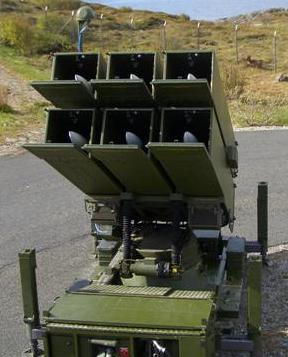
canister launchers with AMRAAM missiles. Normally, a number of NASAMS fire units are
netted together in a uniquely designed ”hard-realtime” communication network to ensure minimum
latency over large distances for maximum system
performance utilizing the unique capabilities of the
AMRAAM missile.
Target Sets
UAVs, Helicopters, Cruise Missiles, UCAVs, Aircraft
Features
NASAMS features net centric architecture, multiple
simultaneous engagements and beyond visual range
(BVR) capabilities, closely integrated and adapted
to a country’s adjacent weapons and command and
control systems. The NASAMS network expands the
defended area and enhances the total fighting capability
of the armed forces.
Mission Configuration
NASAMS is by nature a highly mobile system designed
with focus on operational flexibility for protection
of Air Bases, Sea Ports, Populated Areas, other High
Value Assets and Army Forces. NASAMS has proven
interoperability with Higher Echelon units and longer
range systems, such as Patriot. The modular design
permits mission oriented task force organization of
NASAMS, allowing the operators to maximize the
effect of the components and tailor the system to the
task.
Geographical Area
The radar and launcher elements can be deployed over a large area separated by
more than 20 kilometres from the FDC, providing an extended coverage
with few elements. Dispersed elements increase its survivability against
enemy air and ground attacks.
Simultaneous Targets
The system can engage 72 targets simultaneously in active and passive modes and, using active seeker missiles, can intercept targets beyond visual range.
NASAMS Architecture
Open SW & HW architecture, COTS, Network Centric
Data Links
Link 16, JRE, Link 11, Link 11B, LLAPI, ATDL-1
Evolution
NASAMS is designed to evolve with the development of technology and can integrate with or utilize future technology when available. This can be future active or passive radars and sensors, Sense & Warn capability, and a wide range of effectors, like C-RAM, C-UAS and the Raytheon Family of Missiles; Aim 9X Sidewinder Block II, AIM-120 AMRAAM an AMRAAM ER. The evolution is enabled by the open architecture in the FDC.
Fire Distribution Center (FDC)
Description
The Fire Distribution Center (FDC) is a proven and fielded Air Defence
BMC4I module. With its State-of-the-Art technology it delivers a scalable,
mobile and intuitive BMC4I for current and future Air Defence missions. The
FDC has an open SW/HW architecture to enable fully netted and distributed
operations. The architecture enables insertion of new technology and
capabilities.
The FDC ensures BMC4I functionality for any true mixed and layered Air
Defence system configuration in national and multi-national scenarios.
More than 120 FDCs are delivered as the BMC4I module for NASAMS,
Coastal Defence, HAWK and BOC programs.
The FDC is the C2 node of the NASAMS air defence system.The various
AMRAAM models, AIM-9X and AMRAAM ER have all been fired from
NASAMS. More than 10 different sensors have been integrated with the FDC.
Standard tactical data links as well as several national proprietary data
links are fully integrated, consequently the FDC enables full interoperability
with national, EU and NATO forces.
The FDC has embedded training, simulation and recording functionality.
A high degree of commonality, use of commercial-of-the-shelf (COTS) and
Non-Developmental Items represent a low risk-low life cycle cost (LCC)
to satisfy current and evolving Air Defence requirements. The FDC has
reduced manpower requirements compared to competitive systems.
FDC Configuration
The same baseline FDC is used in multiple programs in various roles, delivering
a true multi-domain capability. Functionality, interfaces and number of work stations
can be selected and tailored to customer requirements. For mobility the FDC
is shelter and vehicle independent and can also be delivered as a non-shelter
version. Static versions can be mounted tailored to customer requirements based
on the FDC interior. The following FDC configurations are available:
BOC – Battalion Operation Center. A BOC can control multiple Air Defence
Battalions or other weapon systems.
GBADOC - Ground Based Air Defence Operation Center. A Higher Echelon GBAD
C2 unit including a Current operations cell, a Planning cell, a Communications cell
and real-time engagement operations.
BFDC (HAWK) - Battery FDC in HAWK role to control up to 2 HAWK firing sections
and network up to other FDCs in the battery.
NASAMS FDC (AMRAAM) - The FDC in Fixed Wing, Helicopter, UAV, UCAS,
Cruise Missile Defence role with defined tactical data links, sensor and weapon
interfaces. Primary effectors are AMRAAM, AMRAAM Extended Range and
AIM-9X.
FDC-S (SHORAD/VSHORAD) - Optimized to control and coordinate SHORAD/
VSHORAD weapon systems.
FDC - Coastal Defence – Interfaces and controls sensors and weapons for
Coastal Defence and surface-to-surface operations firing the Naval Strike Missile
(NSM).
FDC - Precision Fires - Optimizing the use of an Army tactical air space to coordinate
Multi-Domain Fires. The FDX gives the Army Battle Commander the tool he
needs to coordinate all Precision Fires resources in real-time.
Interoperability and Integration
The FDC truly integrates systems, sensors and effectors into ONE system. Higher
Echelon Units, adjacent units, sensors, effectors and other battle forces are integrated
through the mature and fielded Network Access Nodes utilizing fielded legacy
protocols.
The FDC has a wide range of fielded logical decision support tools ensuring ONE
Integrated Air Picture, Common Operational Picture, Threat Evaluation and
Weapon Allocation, providing a consistent Battle Command for all forces.
The integration of tactical data links in the FDC handles relevant messages according
to the standard message catalogue, and the implementation of functionality in
the C4I software, to support the needed level of system interoperability. Such
functionality undertakes the sequence of events, leading to maximized coordination
between the FDC and other actors in the Multi-Domain Battle Space.
Missile System
Missile (Option 1)
Name
AIM-120 AMRAAM
Type
Advanced Medium-Range Air-to-Air Missile (AMRAAM)
Manufacturer
Unites States: Company: INA
Length
3.7 m
Diameter
180 mm
Wingspan
530 mm
Weight
152 kg
Warhead
22.7 kg of High explosive blast-fragmentation
Detonation Mechanism
Active RADAR Target Detection Device (TDD)
Engine
Solid-fuel rocket motor
Operational Range
• AIM-120A/B: 55–75 km;
• AIM-120C-5: 105 km;
• AIM-120C-7: 120 km;
• AIM-120D: 180 km
Maximum Speed
Mach 4; 4,900 km/h
Guidance System
Inertial guidance, terminal active radar homing
Note
The NASAM also fires the following AMRAAM Missiles:
• AIM-120A/B: 55–75 km;
• AIM-120C-5: 105 km;
• AIM-120C-7: 120 km;
• AIM-120D: 180 km
Missile (Option 1)
Name
AMRAAM-ER
Note
The AMRAAM-Extended Range missile is a new, ground-launched solution that will intercept targets at longer distances and higher altitudes. The AMRAAM-ER missile gets its boost in range from a bigger rocket motor and optimized flight control algorithms.
Designed specifically for ground-based air defense, the AMRAAM-ER missile will be integrated with the NASAMS launcher for increased air defense protection in the medium-range air defense market. NASAMS is owned by 11 countries and has been integrated into the U.S. National Capital Region’s air defense system since 2005.
Radar System
Name
AN/MPQ-64 Sentinel
Type
3D Alert and Cur Short Range Air Defense (SHORAD) Radar
Manufacturer
Before its acquisition by Raytheon, the Hughes Aircraft Co. developed the AN/MPQ-64 Sentinel radar at its Fullerton, California, facility, and manufactures it at its Forest, Mississippi, plant.
Frequency
X band
Maximum Range
40 km
Maximum Altitude, while Operating
3,000 m
Maximum Altitude, Non-Operating
12,000 m
Azimuth
360°
Elevation
–10° to +55°
ECM
Electronic Countermeasures (ECM) and Anti-Radiation Missile (ARM) resistant
Fire Control
Fire Distribution Center Fire Control System
The FDC is characterized by its intuitive advanced fire control system with hard
real-time data handling. The intuitive Man-Machine Interface provides clarity
and mitigates information overload. The open and modular SW/HW architecture
enables situational awareness across domains, providing merged Offensive and
Defensive Precision Fires capabilities in a true Plug & Fight tailorable solution.
The FDC has demonstrated C2 and Fire Control Capability for Multi-Domain
Fires. A network of FDCs ensures shared awareness in the Area of Operations.
The system performs data link management, sensor control, air picture production,
track identification and classification, friendly protection, threat ordering, weapon
allocation, weapon & engagement control and kill assessment. In addition an
embedded or stand-alone Mission Support Tool (MST) is provided to accelerate
the commander’s decision making process regarding deployment planning,
monitoring current system status, and for in-depth analysis and debriefs.
Protection
Hull Armor
INA
Applique Armor
INA
Explosive Reactive Armor
No
Active Protection System
No
Mine Clearing
No
NBC Protection
INA
Smoke Equipment
INA
Image Sources
Notes
https://en.m.wikipedia.org/wiki/File:Norwegian_Advanced_Surface_to_Air_Missile_System.jpg; https://root-nation.com/en/articles-en/weapons-en/en-nasams-air-defense/; https://www.defensenews.com/air/2016/05/13/tactical-rocket-motor-business-takes-fight-to-congress/; https://www.quora.com/What-are-the-worlds-newest-vehicle-based-SHORAD-systems;
Details
Country of Origin
Norway
Category
Radar Guided Missile Systems
Land > Air Defense > Radar Guided Missile Systems
Filter Label
N
Sources
deagel.com: https://www.deagel.com/x/x/a000380
Classification
Domain
Ground
Equipment Status
Active
Operators (18)
United States
Ukraine
Spain
Australia
Belgium
Chile
Denmark
Finland
Greece
Hungary
Indonesia
Kuwait
Lithuania
Netherlands
Norway
Oman
Qatar
Taiwan
Something went wrong. Please reload the page.
Reload