ARMSNET
Military Equipment Database
Initializing 0%

Zumwalt Class American Guided Missile Destroyer

Zumwalt Class
Guided Missile Destroyer
Spotted an error? Sign in to suggest an edit.
Basic Information
Name
Zumwalt Class American Guided Missile Destroyer
Designation
Zumwalt Class
Alternate Designation
Zumwalt Class
Equipment Type
Guided Missile Destroyer
Manufacturer
Date of Introduction
2016
Description

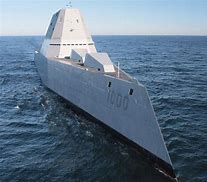
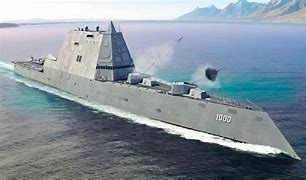
The Zumwalt-class destroyer is a class of three United States Navy guided missile destroyers designed as multi-mission stealth ships with a focus on land attack. It is a multi-role class that was designed for secondary roles of surface warfare and anti-aircraft warfare and originally designed with a primary role of naval gunfire support. It was intended to take the place of battleships in meeting a congressional mandate for naval fire support. The ship is designed around its two Advanced Gun Systems, their turrets and magazines, and unique Long Range Land Attack Projectile (LRLAP) ammunition. LRLAP procurement was cancelled, rendering the guns unusable, so the Navy re-purposed the ships for surface warfare. Procurement was halted after the first three Zumwalts, and the Navy reverted to building more Arleigh Burke destroyers. A National Review article by Mike Fredenburg calls the Zumwalts "an unmitigated disaster". The class design emerged from the DD-21 "land attack destroyer" program as "DD(X)". These ships are classed as destroyers, but they are much larger than any other active destroyer or cruiser. The vessels' distinctive appearance results from the design requirement for a low radar cross-section (RCS). The Zumwalt-class has a wave-piercing tumblehome hull form whose sides slope inward above the waterline, which dramatically reduces RCS by returning much less energy than a conventional flare hull form. The appearance has been compared to that of the historic USS Monitor and her famous antagonist CSS Virginia. The class has an integrated power system that can send electricity from its turbo-generators to the electric drive motors or weapons, the Total Ship Computing Environment Infrastructure (TSCEI), automated fire-fighting systems, and automated piping rupture isolation. The class is designed to require a smaller crew and to be less expensive to operate than comparable warships. The lead ship is named Zumwalt for Admiral Elmo Zumwalt and carries the hull number DDG-1000. Originally, 32 ships were planned, with $9.6 billion research and development costs spread across the class. As costs overran estimates, the quantity was reduced to 24, then to 7, and finally to 3, significantly increasing the cost per ship to $4.24 billion (excluding R&D costs) and well exceeding the per-unit cost of a nuclear-powered Virginia-class submarine ($2.688 billion). The dramatic per-unit cost increases eventually triggered a Nunn–McCurdy Amendment breach and cancellation of further production. In April 2016, the total program cost was $22.5 billion, with an average cost of $7.5 billion per ship.

Naval & Littoral Specifications
Crew 175
Beam 24.60 m
Draft 8.40 m
System
Alternative Designation Zumwalt Class
Type Guided Missile Destroyer
Builder Bath Iron Works
Crew 175 (vessel - 147; Aviation - 28)
Note: Original plan was for
Dimensions
Length 610 m
Beam 24.6 m
Draft 8.4 m
Displacement, Standard 15,656 t
Propulsion System
Engine Name 2 x Rolls Royce MT30
Engine Type 2 x Gas Turbine
Engine Power Rolls Royce RR4500 Turbine Generators
Maximum Range INA
Maximum Speed 56 km/h
Note: The "Zumwalts" use an Integrated Power System (IPS), which is a modern version of a Turbo-electric drive system. The IPS is a dual system, with each half consisting of a gas turbine prime mover directly coupled to an electrical generator, which in turn provides power for an electric motor that drives a propeller shaft. The system is "integrated" because the turbo-generators provide electrical power for all ship systems, not just the drive motors. The system provides much more available electrical power than is available in other types of ship.
Gun Weapon Systems
Gun Weapon System #1
Name Mark 51
Type Advanced Gun System
Caliber 155 mm
Quantity 300 rounds carried in each magazine
Note: This weapon system was halted in 2018 due the high cost of the ammunition.
Gun Weapon Systems #1 Ammunition
Type LRLAP
Caliber 155 mm
Cartridge INA
Basic Load 300 rds
Missile Weapon System
Missile #1
Name Mark 57 Vertical Launch System (VLS)
Type Surface-to-Air
Launcher Peripheral Vertical Launching System (PVLS)
Length 4.33 m
Height 7.93 m
Weight 15240 kg
Note: This launch system can also be used for the RIM-162 Evolved Sea Sparrow Missile, the RGM-109 Tomahawk and the RUM-139 VL-ASROC.
Missile #2
Name RIM-162 Evolved Sea Sparrow Missile (EMMS)
Type Surface-to-Air
Torpedoes
Name Mark 32 Anti-Submarine Warfare
Type Torpedo
Warhead PBXN-103
Weight 43.9 kg
Range 10 km
Speed 74.1 km/h
Fire Control Systems
FCS Name Naval Surface Fire Support Weapon Control System (NWCS)
Computerized FCS INA
Battle Management System INA
Aircraft
Helicopter 2 x Sikorsky MH-60R/S Seahawk
Helicopter 3 x Northrup Grumman MQ-8 Fire Scout
Radar Systems
Name 1 x Raytheon AN/SPY-3 Multi-Function System
Type Navigation and Targeting
Frequency X-band (8-12 GHz Freq Range)
Range 320 km
Sonar Systems
AN/SQS-90
Name AN/SQS-90
Type Dual Frequency, Hull-mounted suite sonar
AN/SQS-60
Name AN/SQS-60
Type Hull-mounted, Medium frequency sonar
AN/SQS-61
Name AN/SQS-61
Type Hull-mounted, High frequency sonar
AN/SQR-20
Name AN/SQR-20
Type Multifunction Towed Array sonar
Protection
Active Protection System INA
Countermeasures #1 1 x AN/SLQ-25A Nixie Towed Torpedo Decoy
Countermeasures #2 4 x Loral-Hycor MK 36 SRBOC Decoy Rocket Launchers (140 rounds)
Countermeasures #3 2 x MK 53 Nulka Automated Decoy Rocket Launching Systems using MK 137 Rocket Launchers
Details
Country of Origin United States
Category Naval
Naval
Filter Label
Z
Classification
Domain
Naval & Littoral
Equipment Status
Active
Dimensions
Length
610 m
Width
Height
Weight
43.9 kg
Operators (1)
United States
Something went wrong. Please reload the page. Reload