ARMSNET
Military Equipment Database
Initializing 0%

An-26 (Curl) Russian Military Transport Aircraft
Spotted an error? Sign in to suggest an edit.
Basic Information
Name
An-26 (Curl) Russian Military Transport Aircraft
Designation
Alternate Designation
Equipment Type
Manufacturer
Antonov
Date of Introduction
1970
Description

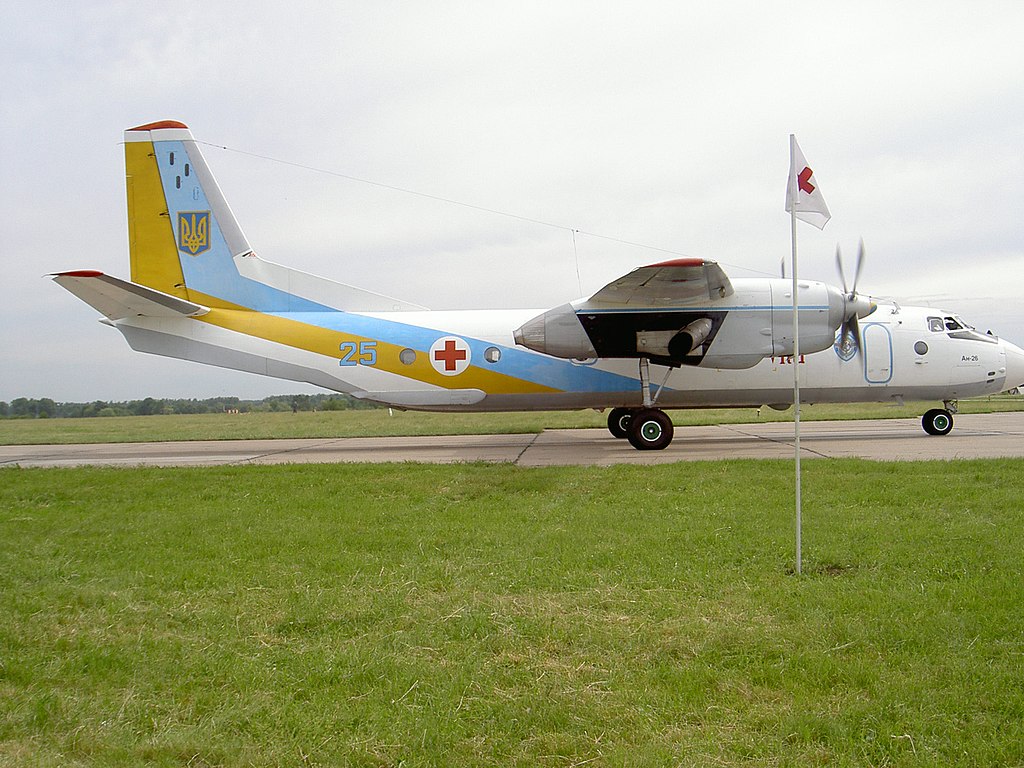
The Antonov An-26 (NATO reporting name: Curl) is a twin-engined turboprop civilian and military transport aircraft, designed and produced in the Soviet Union from 1969 to 1986. After successful operations of the An-24T tactical transport in austere locations, interest in a version with a retractable cargo ramp increased. Initial studies for the retractable ramp were carried out as part of the projected An-40 medium transport. When given the go-ahead for the An-26 in March 1968, the Antonov OKB adapted the ramp design of the An-40 to the An-24 fuselage, resulting in the An-26. Particular attention was given to the military mission, and the majority of early An-26 production was delivered to the VTA (voyenno-transportnaya aviatsiya). Using the majority of the An-24 airframe, with its high-set cantilevered wings, twin turboprops, and stalky main undercarriage, the An-26 included military equipment, such as tip-up paratroop canvas seats, an overhead traveling hoist, bulged observation windows, and parachute static line attachment cables. The An-26 made its public debut at the 27th Paris Air Show at Le Bourget where the second prototype, CCCP-26184 (c/n00202), was shown in the static aircraft park. The An-26 is also manufactured without a license agreement in China by the Xian Aircraft factory as the Y-14, later changed to be included in the Xian Y7 series. The Antonov An-26 was developed from the An-24 of 1962 for the airliner passenger / general transport role. First flight of the An-26 product was on May 21st, 1969 and production spanned from then until 1986 to which 1,403 examples were ultimately realized. A plethora of variants then emerged and operators have ranged the globe with many airframes still in active service today (2014). The original An-24 proved a design that was robust for the harshest of conditions available across the vast Soviet empire - particularly in hard-to-reach areas of the frontier where few services were available. This propelled a new, modified form to gain traction, one in particular that included a powered loading ramp for ease of moving cargo pallets to and from the aircraft to awaiting bays or transport trucks. With a new ramp design finishing its testing phase, the installation commenced producing the new working designation of An-26. As finalized, the An-26 carried over much of the same form and function of the preceding An-24 model including its high-wing design and twin-engine layout. The tail unit remained a single vertical fin with low-set horizontal planes. The flight deck was held at the extreme front end of the fuselage aft of a short nose cone. The cargo hold then made up a bulk of the available internal space remaining. Initial production models were recognized simply as "An-26" and were identified in NATO nomenclature as "Curl-A". A combo passenger/cargo-hauler form then became the An-26-100. The local Chinese variant became the Xian Y-7H military transport. Other limited-production variants followed including an Arctic reconnaissance platform with special mission equipment, an atmospheric air lab, an assault transport prototype, various testbeds, a fire-fighting platform, and other proposed (some unrealized) designs. Operators have gone on to range from Angola and Belarus to Yemen and Zambia. Many military operators have since abandoned the type including Afghanistan, Pakistan, Poland, and Somalia. The United States operated An-26s through the 6th Special Operations Squadron of the United States Air Force from the period of 2003 to 2007. Soviet An-26s were passed on to the emerging states after the fall of the Soviet empire. Most current operators remain civilian in nature including fifteen operating in Ukraine.

Air & Air Defense Specifications
Crew 5
Engine Turboprop (2820 hp)
Max Speed 540.0 km/h
Cruise Speed 440.0 km/h
Variants
Variants An-26 "Curl-A" : Twin-engine tactical transport aircraft. An-26-100 Convertible passenger/cargo aircraft modified from 'An-26' aircraft at the Kiev plant from 1999. An-26 Nel'mo An arctic surveillance and reconnaissance aircraft retrofitted with Nel'mo equipment. An-26 Pogoda (Weather) Another aircraft for weather control duties, similar to the 'An-26 Tsiklon ', with a simplified equipment test lab. An-26 Polyot (Flight) A single aircraft retrofitted for the purpose of research of unified air traffic control and monitoring system throughout the USSR, with a comprehensive navigation test lab including precision compasses and Doppler speed/shift sensors. An-26 Sfera (Sphere) A single production aircraft built as a laboratory for atmospheric research. An-26 Shtabnoy (Shtab: or Headquarters) some 'An-26's delivered to the Soviet and DDR air forces for use as staff transports/mobile command posts. An-26 Vitauk (Life) A single mobile operating room, surgery and intensive care unit ('25 Blue', c/n5406), for the Ukrainian Air Force. An-26A A one-off assault transport prototype with higher performance due to removal of some military equipment. An-26ASLK (Avtomatizirovannaya sistema lyotnogo kontrolya – automated flight control and monitoring system) : A modern flight control and monitoring system equipped with automatic calibration and navigation systems. Recognizable by the distinctive pod low on the forward fuselage side. An-26B A civil cargo version equipped with roller gangsways which can be swung up against the cabin walls when not in use. It was also equipped with two ZMDB Progress (Ivchyenko) Al-24VT turboprop powerplants to deliver higher thrust. An-26B 'Mobile Hospital' : The prototype 'An-26B' retrofitted as a mobile civilian emergency hospital. An-26B Tsiklon (Cyclone) A weather research/control and cloud-seeding aircraft for the Central Aerologic Laboratory. This aircraft was used for rain induction and protection using cloud-seeding chemicals dropped from slab-sided pods hung from pylons. An-26B-100 Convertible passenger/cargo aircraft modified from 'An-26B' aircraft at the Kiev plant from 1999. An-26BL Alternative designation for the 'An-26L'. An-26BRL Alternative designation of the 'An-26RL' Arctic surveillance and reconnaissance aircraft. An-26D (Dal'niy – long-range) An extended range version with extra fuel in wing tanks and additional external tanks attached to the airframe of the fuselage. One aircraft ('21 Yellow', c/n 13806) was retrofitted and delivered, but no further orders were forthcoming. An-26K Kaira (Great Auk) A single An-26 aircraft converted to a Kaira test airframe for the development of airborne LASER guided systems. An-26K Kaplya (Drop [of liquid]) After completion of the LASER designator trials, the 'An-26K Kaira' was retrofitted to search or optically guided weapons as the navigation systems. During a night test flight at a low level, in March 1989, the An-26K Kaplya suffered a massive bird strike, which consequently destroyed the windshield and injured the pilot, who involuntarily downed the aircraft into the Azov Sea. An-26KPA (Kontrol'no-Poverochnaya Apparatura – Testing and calibration equipment) : A navigation aids inspecting aircraft with comprehensive navigation equipment and calibration equipment. An-26L A single 'An-26', (14 Orange, c/n 00607), used at Sperenberg Airfield near Berlin, for airfield and NAVAID calibration. An-26LL-PLO (Letayuschaya Laboratoriya – Protivolodochnoy Oborony – ASW (Anti-Submarine Warfare) testbed) : A single 'An-26A' aircraft, (c/n 0901), retrofitted and modified to accommodate a range of sophisticated laboratories for surveillance systems, detecting and tracking stealthy nuclear submarines. An-26LP Firefighting version, for delivery of field equipment and para-dropping firefighters in lieu of water-bombing (any more info?). An-26M Spasatel (Rescue worker) Flying hospital with an emergency surgery facility and consultation conference room. An-26P (Protivopozharnyy – firefighting) : Aircraft fire engine fighter, retrofitted with water lifting vessels in pods on either side of the lower fuselage. An-26P Prozhektor (Projector or Searchlight) Single conversion of an An-26 as a guided missile system airframe. An-26REP (RadioElektronnoye Protivodeystviye – ECM (Electronic Counter-Measures) [aircraft]) : Electronic countermeasures aircraft fitted with active jammers in cylindrical pods on either side of the lower fuselage sides, as well as chaff and I/R flares for self-defense. An-26RL (Razvedchik Ledovyy – An arctic surveillance, reconnaissance, and monitoring) : An arctic surveillance, reconnaissance, and monitoring aircraft used to monitor the icebergs and ice formations at arctic circle fitted with SLAR (Sideways Looking Airborne Radar) in long pods on either side of the lower fuselage, extra fuel in a cargo hold fuel tank, provision for surveyors and radar operators. An-26RR Alternative unit designation of the 'An-26RT' ELINT(ELectronic INTelligence) aircraft. An-26RT "Curl-B": (First use of the designation) A basic designation for a series of ELINT aircraft fitted with a wide range of electromagnetic surveillance equipment. At least one aircraft, (tactical code '152'), retrofitted with the Tarahn (Ramming Attack) ELINT suite for use in Afghanistan. An-26RT (ReTranslyator – Interpreter -Translator): (Substitute of designation) Battlefield communications relay aircraft, fitted with powerful Inzheer (Fig) radio relay system, for connecting forward units to headquarters units. An-26RTR Alternative unit designation of the 'An-26RT' ELINT aircraft. An-26S (Salon – [VIP] Lounge) : A new VIP Lounge aircraft for the Ukrainian Ministry of Defense delivered about 1997. An-26Sh (Shturmanskiy – Navigator) : Navigator trainer for the VVS, 36 built at Kiev. An-50 A proposed jet-powered variant of the An-26.
System
Alternate Designation(s) An-26; NATO: Curl
Primary Function / Type Military Transport Aircraft
Manufacturer Antonov
In Service 1970-Present
Crew 5 (pilot, co-pilot, navigator, flight engineer, radio operator)
Passengers 38 to 40 seats in pressurized cargo bay; or 24 litters and attendants
Number of Engines 2 x Ivchenko AI-24VT turboprop; and 1 x RU19A-300 auxiliary turbojet for takeoff assist
Day/Night Capable Yes
All Weather Capable Yes
Number of Hard Points INA
Dimensions
Length 23.80 m
Width (Wing Span) 29.20 m
Height 8.58 m
Wing Area 74.98 sq m
Cabin Length 11.50 m
Cabin Width 2.40 m
Cabin Height 1.91 m
Weight, Empty 15,020 kg
Weight, Max Takeoff 5,500 kg
Payload, Normal 4,500 kg
Payload, Maximum 24,000 kg
Automotive
Engine Name 2 x Ivchenko AI-24VT turboprop; and 1 x RU19A-300 auxiliary turbojet for takeoff assist
Engine Type Turboprop
Engine Power 2,820 equivalent hp each turboprop; plus 1,765-lb (800-kg) static thrust turbojet
Internal Fuel Capacity 7,050 liters
Maximum Speed 540 km/h
Cruise Speed 440 km/h
Takeoff Speed 200 km/h
Landing Speed 190 km/h
Maximum Range, with Maximum Payload 1,100 km
Maximum Range, with Maximum Fuel 2,550 km
Climb Rate 480 m/min
Ceiling 7,500 m
Takeoff Run 780 m
Landing Run 730 m
Protection
Stealth Properties No
Heat Signature Reduction No
Add on Armor No
NBC Protection Yes
EW Counter Measures No
Chaffs/Flares INA
Details
Country of Origin Russia
Category Fixed Wing Aircraft
Air > Fixed Wing Aircraft
Filter Label
A
Classification
Domain
Air & Air Defense
Equipment Status
Active
Dimensions
Length
23.8 m
Width
29.2 m
Height
8.58 m
Weight
5500 kg
Operators (22)
Russia
China
Ukraine
Serbia
Belarus
Angola
Cabo Verde
Chad
Cuba
Ethiopia
Hungary
Kazakhstan
Laos
Libya
Madagascar
Mozambique
Namibia
Sudan
Syria
Uzbekistan
Vietnam
Yemen
Something went wrong. Please reload the page. Reload