M88A1 American Armored Recovery Vehicle
M88A1

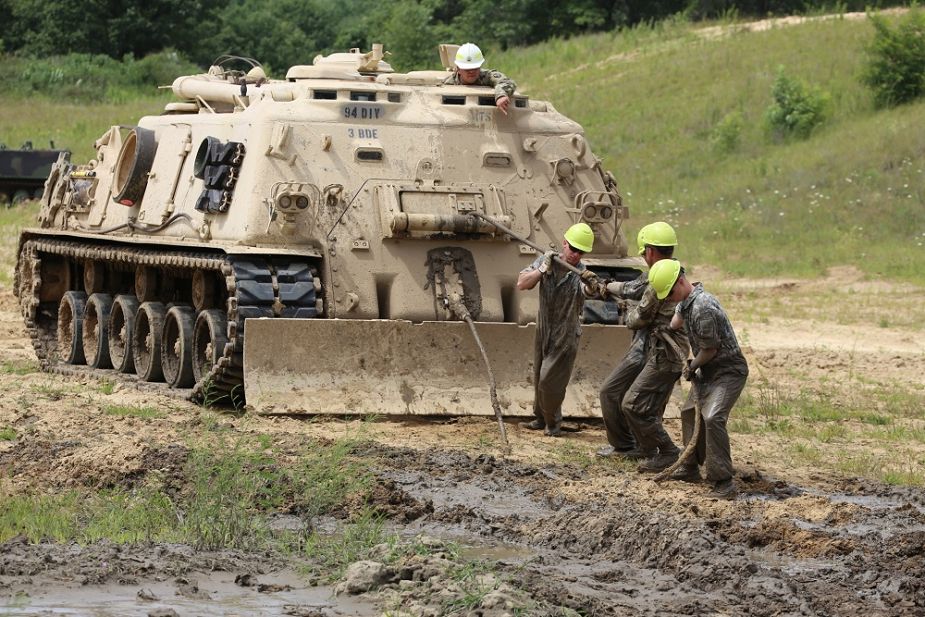
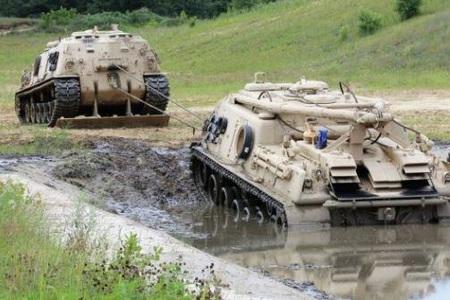
M88A1 improved version, developed in 1973. The petrol engine was replaced by a diesel unit. It is powered by Continental AVSI-1790-6A turbocharged diesel engine, developing 750 hp. Engine is coupled with Allison XT-1400-2 transmission. This recovery vehicle was also fitted with auxiliary power unit which powers all systems and add-on equipment when the main engine is turned off. Unlike it's predecessor it is equipped with NBC protection system. Production of the M88A1 commenced in 1977 and ceased in 1985 with a total of 1427 vehicles produced. Additionally 876 original M88 ARVs were upgraded to the A1 standard. The M88 armored recovery vehicle was designed for medium and heavy recovery operations. Typical tasks of this support vehicle include recovery of damaged, stuck, swamped or overturned armored vehicles on the battlefield. It also provides maintenance service or tows them to maintenance units. The M88 was accepted to service with the US Army in 1959. Deliveries commenced in 1961 and over 1 000 of these armored recovery vehicles were produced until 1964. This ARV saw action during a number of wars, noticeably in Vietnam and both Iraq wars. The upgraded M88 armored recovery vehicles are still in service with the US military. This vehicle was also exported to a number of countries. The M88 armored recovery vehicle is based on the suspension and running gear of the M48A2 and M60 tanks. Vehicle is fitted with "A" frame-type hoisting boom, winch and a front-mounted dozer. It was designed to support the Patton series tanks. The crane has a 22.3 t capacity. It is used to lift disabled vehicles, turrets, powerpacks, or other loads. If repairs are required to a vehicle's suspension, the crane raises the front of back of the vehicle to allow access to the damaged system. When not required the crane lays on top of the roof. The main winch has a 40.8 t capacity. It is used for recovery of damaged, stuck, sunken and overturned vehicles. There is also an auxiliary winch. It is used for delivery of the main winch rope and other cargo handling operations. The front-mounted dozer blade is used to stabilize the vehicle during craning and winching operations. It can be also used for clearing obstacles and light earth-mowing works, such as covering up of ditches and so on. Vehicle has a welding outfit for welding and cutting works in the field. These are carried by one of the crew member. The M88 also has a set of tools for field repairs. The M88 ARV tows damaged, faulty or uncontrolled tanks or armored vehicles using rigid or non-rigid hitches. Damaged vehicles are towed to the nearest shelters, assembly points of repair depots. The superstructure of this armored recovery vehicle is composed of a single large armor casting. It provides protection against machine gun fire and artillery shell splinters. Hull bottom armor is similar to that of medium tanks and withstands anti-tank mine blast. The original M88 lacks NBC protection system, which later models are equipped with. The M88 is armed with a single roof-mounted 12.7 mm machine gun for self-defense. This weapon is operated by the vehicle commander. A total of 1 300 rounds are carried. This support vehicle has as crew of four, including commander, driver, mechanic and rigger. All crew members have their separate hatches in the roof of the superstructure. There is also a door in each side. The original M88 was powered by a petrol engine. With the introduction of the M1 Abrams two M88 recovery vehicles were required to tow this MBT, due to it's weight. To address this shortcoming a more powerful version of the M88 was introduced in the early 1990s. In case of emergency this recovery vehicle can refuel main battle tanks from it's own fuel tank. The M88 can be fitted with a deep wading kit. After preparation it can ford water obstacles up to 2.6 m deep.