FV101 Scorpion British Amphibious Combat Reconnaissance Vehicle
FV101


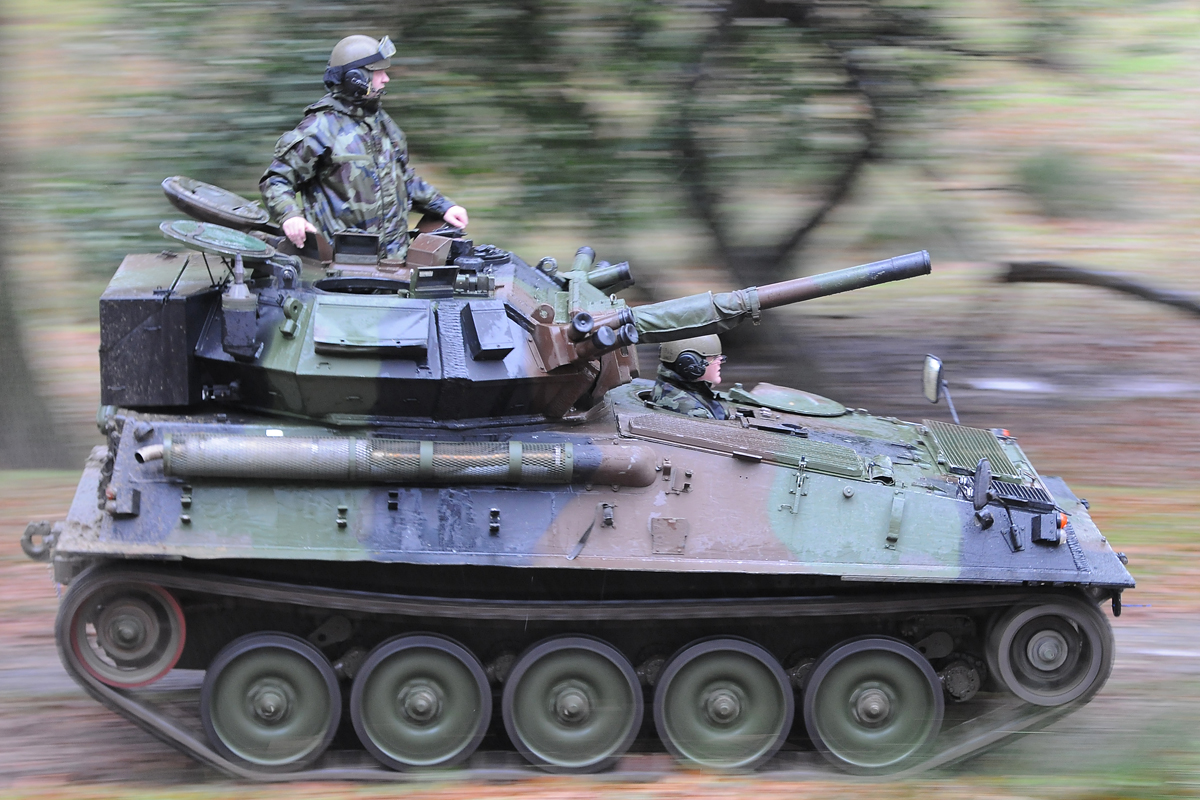
The FV101 Scorpion is a British armored reconnaissance vehicle. It was the lead vehicle and the fire support type in the Combat Vehicle Reconnaissance (Tracked), CVR(T), a family of seven armored vehicles. Manufactured by Alvis, it was introduced into service with the British Army in 1973 and was withdrawn in 1994. More than 3,000 were produced and used as reconnaissance vehicles or light tanks. It holds the Guinness world record for the fastest production tank; recorded doing 82.23 km/h (51.10 mph) at the QinetiQ vehicle test track, Chertsey, Surrey, on 26 January 2002. The Scorpion was armed with the low velocity 76 mm L23A1 gun, which could fire high-explosive, HESH, smoke, and canister rounds. Stowage was provided for 40 or 42 rounds. A 7.62 mm coaxial machine gun (3,000 rounds carried) was also fitted, as were two multi-barreled smoke grenade dischargers, one on each side of the turret. The main armament has an elevation of 35 degrees and a depression of 10 degrees; the turret has a full 360-degree traverse. The original engine was the Jaguar J60 Mk 100b 4.2-liter petrol engine, which was replaced by a Cummins or Perkins diesel engine. The maximum speed was about 50 miles per hour (80 km/h) and it could accelerate from naught to 30 miles per hour (48 km/h) in 16 seconds. The maximum speed on water (with the flotation screen deployed) was 3.6 mph (5.8 km/h). The Irish engineering company IED replaced the existing Jaguar engine in Irish Army Scorpions in a successful re-powering process with a Steyr M16 TCA HD engine (6-cylinder, 145 kW), making the Scorpion more powerful and more reliable in critical environments. The FV101 was a very light armoured vehicle, weighing in at a mere 8 tonnes. This meant some compromises had to be made on protection. The vehicle had 12.7 mm of sloped aluminum armor, giving an average effective thickness of 25 mm. The FV101 had all-around protection from shell fragments and 7.62 mm rounds, and the heavily sloped frontal arc was designed to be resistant to 14.5 mm rounds fired from a 200-meter range. The initial manufacture of the aluminum armor resulted, after time and effects of the environment, in failure. This phenomenon was known as Stress Corrosion Cracking (SCC) and it seriously affected all early builds.