ARMSNET
Military Equipment Database
Initializing 0%

Mohajer-4 (Hodhod) Iranian Tactical Unmanned Aerial Vehicle (UAV)

Mohajer-4
Spotted an error? Sign in to suggest an edit.
Basic Information
Name
Mohajer-4 (Hodhod) Iranian Tactical Unmanned Aerial Vehicle (UAV)
Designation
Mohajer-4
Alternate Designation
Mohajer-4; Hodhod
Equipment Type
Manufacturer
Qods Aviation
Date of Introduction
1997
Description

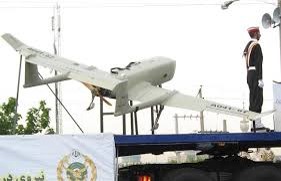
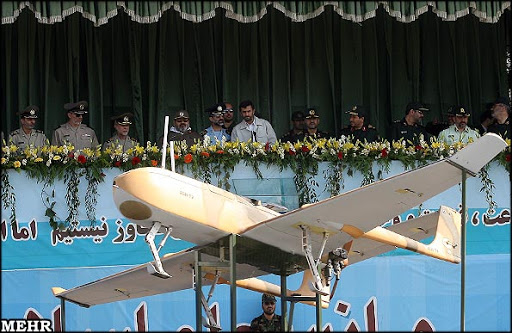
HEZBOLLAH Proliferation. The Mohajer-4 is another evolutionary improvement over the Mohajer-1 and the Mohajer-2. with again improved range, endurance, and surveillance. Also known as the Hodhod, the Mohajer-4 has a larger box-like fuselage. The Mohajer-4 was designed for both the Iranian Army and the IRGC and entered service in late 1997. The wings are tapered with an upward cranked tip. The static skids of the Mohajer-2 are replaced with flexible ones in a tricycle configuration. Composite materials are used in its construction. The Mohajer-4 was designed for both the Iranian Army and the IRGC and entered service in late 1997. It may have entered mass production in 1999. It was first documented in 2003. Sources differ slightly on how many have been built; one source says that 40 have been built as of 2006, while another says that as of the mid-2000s, 34 had been built. Design The Mohajer-4 features a squarish body and low-mounted trapezoidal wings with upward-canted wingtips to lessen drag. It is powered by a two-bladed Limbach L550E four-cylinder, two-stroke 50 hp engine in a pusher configuration. The Mohajer-4 is constructed of composite material. It is 3.64 m long and has a wingspan of 5.3 m. The Mohajer-4 has a modular design, and components such as the body, wings, and tail booms can be detached and recombined. It has three landing skids. The Mohajer-4 can land via landing gear or a parachute. The Mohajer-4 has a Hyarat 3 guidance and control system, which includes GPS navigation. It normally follows a preprogrammed flight path, but its mission profile can also be updated in-flight via a radio uplink. The Mohajer-4 has a fixed forward-facing camera for navigation and either a downward-facing camera for aerial surveying or a gimbal-mounted video camera for surveillance. Sources disagree on whether the Mojajer-4 can carry an infrared camera. Like the Mohajer-2, it has an onboard digital processor and can downlink sensor imagery. The Mohajer-4 is also reportedly capable of being fitted for communications relay and has an 'impressive' electronic warfare capability. Operational History: On November 7, 2004, Hezbollah flew a UAV over northern Israel for about 5 minutes. The UAV entered Israeli airspace at more than 100 knots and an altitude of about 1,000 feet, flew briefly over the seaside city of Nahariya and fell into the sea. Some sources have identified the UAV as a Mohajer-4. There are reports that Iran sold eight Mohajer-4s to Hezbollah. Mohajer-4s have been used in the civil wars in Iraq and Syria. On 16 May 2015, the Turkish Air Force shot down a Mohajer-4 that violated its airspace. Mohajer-4s have also crashed or been shot down, over Islamic State-held territories. A Mohajer-4 in Iraqi markings was downed over Iraq, but it is not clear if the UAV was actually being operated by the Iraqi Armed Forces. Mohajer-4s are located at Iran's Konorak Air Base and at Bandar Jack. There is a designation of the Mohajer-4 called "Shahin", which may be a sub-variant with unknown differences, or a designation for the Mohajer-4 in Iranian Army Ground service. There is also another sub-variant with unknown differences called the "Hodhod A/100". In addition, Mohajer-4s are used by Iran's border guard to interdict drug smuggling.

Air & Air Defense Specifications
Crew 2
Engine Four-cylinder, two-stroke 50 hp engine (50 hp)
Endurance 7.00 hrs
Variants
Mohajer-1 The Mohajer was Iran's first drone to enter series production and was used during the Iran–Iraq War. The Mohajer-1 was known simply as "Mohajer" through the 80s and 90s when it was re-designated "Mohajer-1" as other Mohajer variants had been developed.
Mohajer-2 Following the successful use of the Mohajer-1, Iran wanted a version with more range and endurance. This version, which would later be named the Mohajer-2, also had an auto pilot system to fly beyond the line-of-control of its command center.
Mohajer-2N In 2014, Iran introduced the Mohajer-2N, which shares the same design as the Mohajer-2 but has far improved performance. The Mohajer-2N replaces the electronics of the Mohajer-2 with more modern versions and has also has improved flight characteristics.
Mohajer-3 The Mohajer-3, also known as the Dorna, was designed with a new airframe for better performance. It had a square body and featured a low-mounted horizontal stabilizer flush with the main wing, the only member of the Mohajer family configured this way.
Mohajer-4B Also known as the Sadiq, the Mohajer-4B is a significant evolution of the Mohajer-4 platform with a square fuselage, twin tail booms, a top-mounted horizontal stabilizer, wingtips, new landing skids, and straight wings mounted high and to the mid of the body
Sadegh-1 The Sadegh-1 ("Honest-1"), also known as the QOM-1, is simply a Mohajer-4B with two MANPADS mounted on pylons.It was tested in late 2014.
Mohajer-6 The Qods Mohajer-6 is a persistent ISTAR UAV capable of carrying a multispectral surveillance payload and/or up-to two precision-guided munitions. Ten have been manufactured as of February 2018 for the IRGC Ground Forces, and 40 are planned for the IRGC Navy. The Mohajer-6 complements the larger Shahed 129 operated by the third IRGC branch, the IRGC-ASF. Three have also been delivered to the Iranian Army. The Mohajer-6 has a rectangular fuselage, an upwards-sloping nose, twin tail booms, a top-mounted horizontal stabilizer, uncanted wingtips, straight wings mounted high and to the rear of the body, and air intakes on the top and bottom of the engine. The Mohajer-6 is controlled by two elevators on the horizontal stabilizer, rudders on the vertical stabilizers, and two flaps per wing. Unlike other Mohajer variants, it has a three-bladed propeller. The Mohajer-6 has a wingspan of 10 meters and is 5.67 meters long. It is similar in shape to the Selex ES Falco. The Mohajer-6 has fixed tricycle landing gear, which underwent changes between the unveiling ceremony in 2017 and mass production in 2018, perhaps to accommodate more weight. It is launched and recovered via runway takeoff/landing. It has a fixed, forward-facing camera for navigation and a gimbal on the chin for a laser range finder and multispectral IR and visible light electro-optical imagery. The Mohajer-6 has three antennas, two on its left-wing and one on its right, and a pitot tube on its nose. The Mohajer-6 has two hardpoints, one under each wing, which can each carry one Qaem TV/IR-guided missile. It has an autopilot system capable of automatic takeoff and landing. In addition, Iran describes it as capable of being fitted with electronic support measures, communications jamming, or electronic warfare payloads.
System
Alternative Designation Mohajer-4; Hodhod
Type of UAV Tactical Unmanned Aerial Vehicle (UAV)
Proliferation Iran: IRGC, Islamic Republic Ground Forces, Syria. Non-state Actors: Hezbolla and libyan National Army.
Manufacturer Qods Aviation, Tehran
Family Mohajer family
In Service 1997-Present
Flight Control Method The Mohajer-4 has a Hyarat 3 guidance and control system, which includes GPS navigation
Day/Night Capable INA
All Weather Capable INA
Takeoff or Landing Limitations INA
Ground Crew Crew of 5-7 men, including two operators. Capable of being controlled via land crew or autopilot
Autopilot Yes, which controls the aircraft via waypoints
Endurance 7 hours
Range 150 km
Date Transmit Distance INA
Location Positioning System Yes
Launch System PL3 pneumatic catapult
Recovery System Skid Landing or Parachute
Number of Hard Points 6 ea
Manned-Unmanned Teaming (MUM-T) Capable No
Automatic Landing and Takeoff Capability No
Landing Gear three fixed landing gear for launch and recovery
Stabilizer Horizontal stabilizer
Antenna Type two stub antenna in the under 10 GHz range, one on each wing, for real-time control.
Note #1 Designed for surveillance use
Dimensions
Length 3.64 m
Width (Wing Span) 5.3 m
Height INA
Weight, Maximum Takeoff 175 kg
Weight, Empty 70 kg
Tailbooms Twin
Wing Type low-mounted trapezoidal wings with upward-canted wingtips to lessen drag
Tail Type Horizontal tail
Note The Mohajer-4 has a modular design, and components such as the body, wings, and tailbooms can be detached and recombined.
Automotive
Engine Name Limbach L550E four-cylinder, two-stroke 50 hp engine
Engine Type Four-cylinder, two-stroke 50 hp engine
Engine Power 50 hp
Cruising Range 150 km
Speed, Maximum 200 km/h
Speed, Average INA
Endurance 7 hours
Maximum Ceiling 5,486 m
Radius 50 km
Cargo Capacity (Payload) 15 kg
Propellers 2-bladed
Rudders Twin Rudders
Belly Skid Yes, The belly skids are non-retractable, but can compress on landing to reduce shock
Communications
Radio INA
Retrans Radio INA
Main Weapons System
Name Hydra 70
Type Unguided Rocket
In Service INA
Manufacturer INA
Proliferation WIdely Proliferated. The Hydra is widely used by US and allied forces, competing with the Canadian CRV-7, with which it is physically interchangeable.
Guidance System Unguided Rocket
Length 1,060 mm
Diameter 70 mm
Weight 6.2 kg
Muzzle Velocity 700 m/s
Effective Firing Range 8,000 m
Maximum Firing Range 10,500 m
Speed 739 m/s
Basic Load 2 ea
Fire Control
Fire Control System Type INA
Fire Control Radar No
Radar Type INA
Radar Designator INA
Laser Rangefinder INA
Laser Designator INA
Full-Motion Video Yes, video and infrared with 1-m resolution mounted on the forward part of the fuselage
Still Camera static nose-mounted camera
Thermal Imaging Sensors INA
Electro Optical Pod INA
Forward-Looking Infrared (FLIR) Sensors. Yes
Onboard Digital Processor Yes, which can downlink sensor imagery
Navigation Camera Fixed forward-facing camera for navigation
Surveillanc Camera Either a downward-facing camera for aerial surveying or a gimbal-mounted video camera for surveillance
GPS Enabled Yes
Guidance System Hyarat 3 guidance and control system
Data Link Yes, data link that can downlink imagery in real time
Note A line-scanner is provided, which reportedly can provide 3-ft (1-m) resolution at an altitude of 16,400 ft (5,000 m)
Protection
Fuselage Larger box-like fuselage
Stealth Properties No
Heat Signature Reduction No
Add on Armor No
EW No
EW Counter Measures / CCM No
Counter Measures (Chaffs/Flares) No
Details
Country of Origin Iran
Category UAVs
Air > UAVs
Filter Label
M
Classification
Domain
Air & Air Defense
Equipment Status
Active
Dimensions
Length
3.64 m
Width
5.3 m
Height
Weight
6.2 kg
Operators (4)
Turkey
Iran
Iraq
Non-State Actors
Something went wrong. Please reload the page. Reload