ARMSNET
Military Equipment Database
Initializing 0%

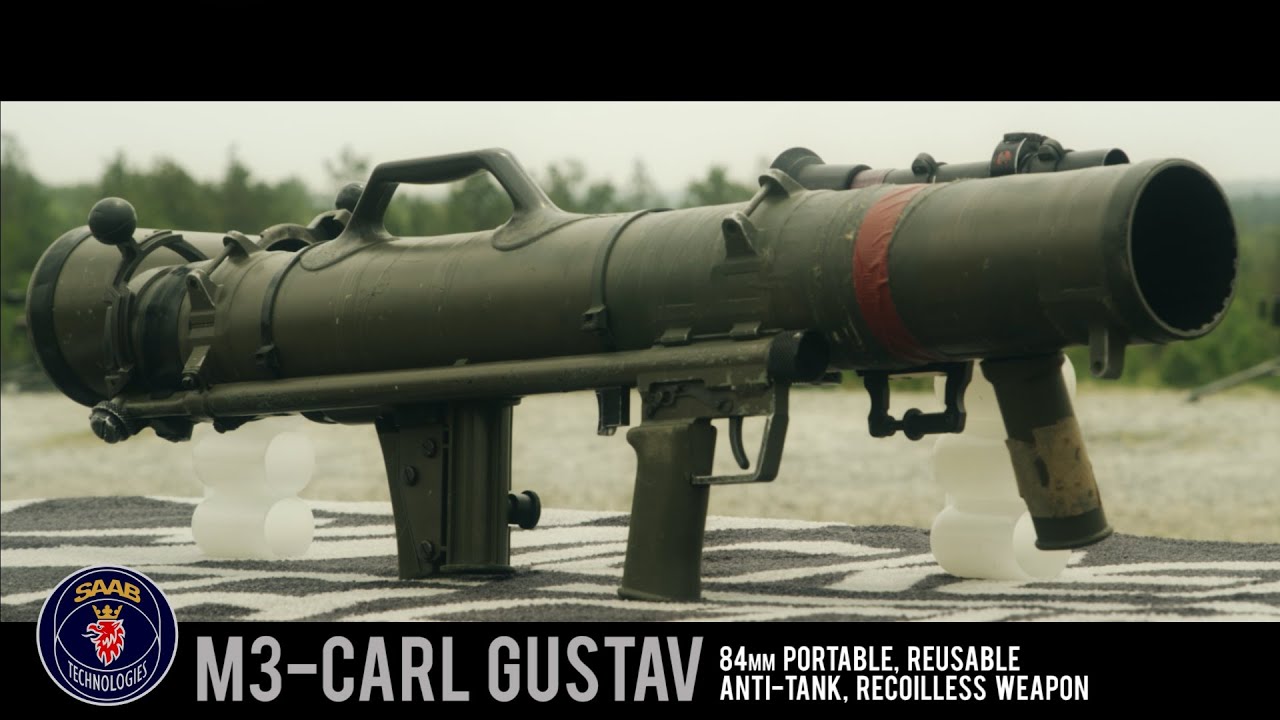
Carl Gustaf M3 Swedish 84mm Man-Portable Anti-Tank Recoilless Rifle
Recoilless Gun
Spotted an error? Sign in to suggest an edit.
Basic Information
Name
Carl Gustaf M3 Swedish 84mm Man-Portable Anti-Tank Recoilless Rifle
Designation
Alternate Designation
Equipment Type
Recoilless Gun
Manufacturer
Saab Bofors Dynamics
Date of Introduction
1991
Description

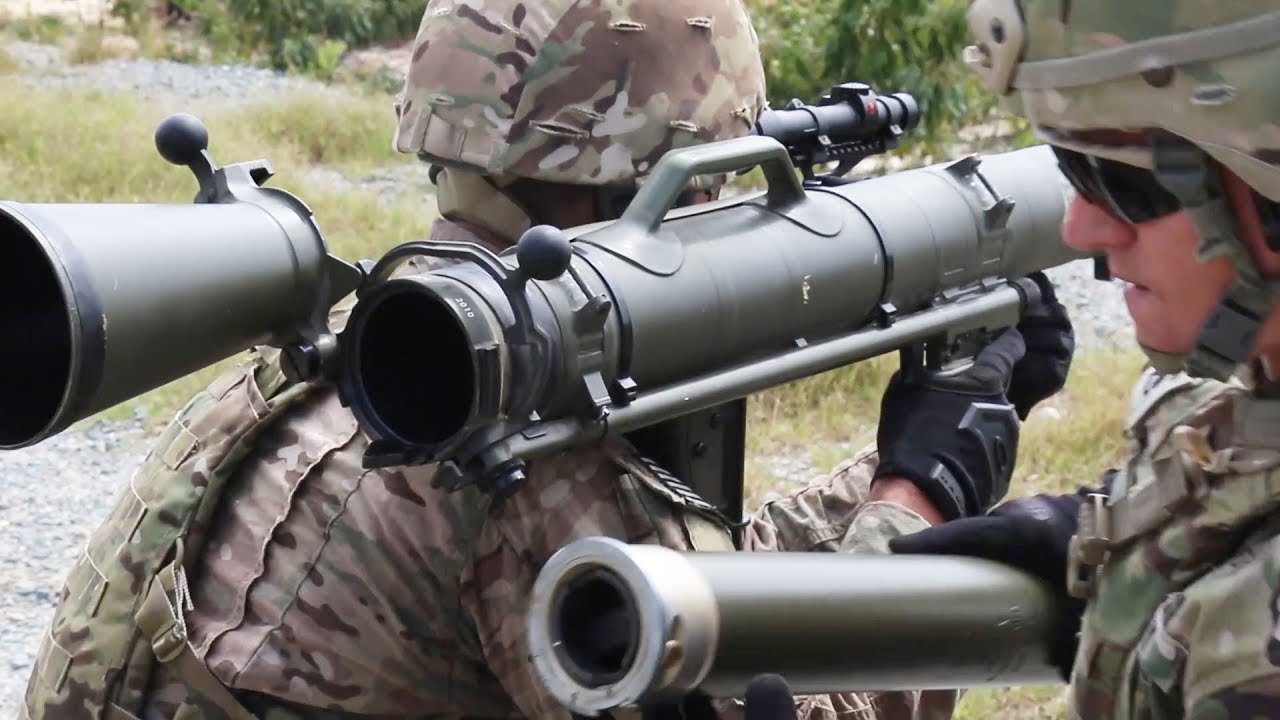
Swedish arms designers began to experiment with recoilless antitank rifles in early 1940s. Their first design, a shoulder-fired, single shot weapon, fired a 20mm solid projectile from a rifled barrel. This design has been adopted by Swedish army in 1942 as the m/42, but its small-caliber solid projectile was hardly effective against the new tanks, which emerged during the Second Worldwar. By the mid-1940s, Swedish designers adopted the idea of the shaped-charge HEAT ammunition, and by the 1946 produced their first prototype of the large-caliber recoilless rifle, which fired HEAT grenades. This single-shot,shoulder fired weapon quickly evolved into the "Granatgevär 8.4cm m/48Carl-Gustaf", or "Grenade rifle, caliber 84mm, model of 1948".This simple and effective weapon attracted significant interest and has been adopted by a significant number of military forces around the world. Other than Sweden, Carl Gustaf recoilless rifles were adopted by Australia, Austria, Belgium,Canada, Germany, USA and several other countries. Initial production was by the FFV factories, latter transferred to the SAAB-Bofors Dynamics AB, which is the current manufacturer of both M3 rifle and 84mm ammunition. The ammunition alsois manufactured in several countries which use the Carl-Gustaf launchers,including the Belgium and India. While the Carl-Gustaf recoilless rifle / launcher was initially devised as an antitank weapon, its tactical role was quickly expanded with adoption of various other types of ammunition, such as high-explosive fragmentation rounds, close-defense shrapnel-type rounds, smoke, illumination and several other types of warheads.In fact, the Carl-Gustaf series recoilless rifles / launchers are among the most versatile weapons of the "one man artillery" type, extremely popular and widely used. Their only drawback is the bulk and weight of the launcher itself, which is significantly heavier than its major rival, the venerable RPG-7 antitank grenade launcher. The Carl-Gustaf series recoilless rifles /launchers are single shot, breech loading weapons with rifled barrels. Unitary ammunition of 84mm caliber is loaded into aluminum cases with open bottoms,closed by plastic pressure discs. The primers are located at the side of the cartridge case, so the round must be properly aligned in the bore upon the loading. To achieve that, the case rim has a special indexing recess. Most types of projectiles are just warheads which are "blown out" of the barrel by the propellant charge, but some most recently developed types of ammunition has built-in rocket boosters, which are ignited as the round reaches safe distance from the shooter, greatly improving the maximum effective range. The rear part of the barrel is fitted with venturi nozzle, which is hinged to allow loading of the ammunition and ejection of the fired cases or unfired rounds. The M2 (m/48) barrels are made from steel, and the M3 (m/86) barrels are made from thin steel liners enclosed into polymer wrapping, so the M3 launcher is significantly lighter. The firing unit consists of the pistol grip with the trigger and manual safety, which is linked to the ignition module at the rear of the weapon by the tube, located below and to the right of the barrel. Under the barrel, there's also a shoulder rest, an adjustable bipod, and a front support grip. The Carl-Gustaf recoilless rifles / launchers are fitted with folding open sights, located at the left side of the barrel, but usually issued with telescope sight of 2X or 3X magnification, which has range-finding reticule and can be adjusted for temperature and wing conditions. Standard crew for Carl-Gustaf recoilless rifle / launcher is two men, shooter and loader. Ammunition is usually carried in special plastic containers, which hold two types of ammunition each. Most modern HEAT rounds for Carl-Gustaffeature either single or a tandem shaped-charge warhead, and a rocket booster for increased range, and can penetrate up to 500 mm of armor behind the ERAprotection. The Gustaf was soon sold around the world and became one of the primary squad-level anti-tank weapons for many West European armies. An improved, lighter and slightly shorter version, the Carl Gustaf M2, was introduced in 1964 and quickly replaced the original version. The current Carl Gustaf M3 version was introduced in 1991. It reduced the weight even further by replacing the forged steel tube with a thin steel liner containing the rifling, strengthened by a carbon fiber outer sleeve. The external steel parts were also replaced with plastics and aluminium alloys.

Ground Specifications
Crew 2
Variants
M1 (1948) Original, still in Service with Third-World Countries
M2 (1963) An improved, lighter and slightly shorter version, the Carl Gustaf M2, was introduced in 1964 and quickly replaced the original version.
M3 (1991) The current Carl Gustaf M3 version was introduced in 1991. It reduced the weight even further by replacing the forged steel tube with a thin steel liner containing the rifling, strengthened by a carbon fiber outer sleeve. The external steel parts were also replaced with plastics and aluminium alloys. In recent years, the M3 has found new life in a variety of roles. The British Special Air Service, United States Army Special Forces and United States Army Rangers use M3s in bunker-busting and anti-vehicle roles, while the German Bundeswehr maintains a small number of M2s for battlefield illumination. Many armies continue to use it as a viable anti-armor weapon, especially against 1950s- and 1960s-era tanks and other armored vehicles still in use worldwide.
M3 MAAWS In November 2011, the U.S. Army began ordering the M3 MAAWS for regular units deployed in Afghanistan. Soldiers were being engaged with RPGs at 900 meters, while their light weapons had effective ranges of 500–600 meters. The Gustaf allows airburst capability of troops in defilade out to 1,250 meters, and high explosive use out to 1,300 meters. While the weapon provides enhanced effectiveness, its 9.5 kg (21 lb) weight burdens troops. On 28 March 2013, USSOCOM announced a call for sources to develop a kit to lighten the M3 MAAWS and reduce overall length without affecting handling or ruggedness. By that time, Saab was developing a weight-reduced version prior to the SOCOM release that demonstrated no decrease in performance, no increase in recoil, and nearly equivalent barrel life that could be ready for government testing in 2014. Saab has also developed a new high explosive round that has a direct fire range of 1,500 meters when using a fire control system. The US Defense Department agreed to evaluate the shorter and lighter M4 version over the next two years; testing and qualifications were planned to be completed in spring 2017, and the weapon type classified as the M3E1 in fall 2017, making the system available for procurement to all Department of Defense services. The first unit is planned to be equipped with the M3E1 in 2018. In April 2019, a contract of SEK168 million (USD18.1 million) was approved to supply the Australian Army with ammunition for the Carl-Gustaf M4 84 mm multipurpose weapon systems ordered by the service in September 2018.
M4 (M3-E1) At AUSA 2014, Saab Dynamics displayed its new Carl Gustaf M4 variant. Compared to the M3 MAAWS, the M4 is 3.4 kg (7.5 lb) lighter, weighing 6.6 kg (15 lb), and shorter with a 950 mm (37 in) overall length. The shorter length was in response to the need to wield the weapon in urban terrain, and weight savings were achieved through using lighter components whenever possible including a carbon fiber tube with titanium liner, as well as a new venturi design. Other new features include a red-dot sight, a travel safety catch to allow the M4 to be carried while loaded, an adjustable shoulder rest and forward grip for improved ergonomics, a shot counter to keep track of how many rounds have been fired to manage the weapon's 1,000-round barrel life, picatinny rails for grips and sight mounts, and a remote round management function so intelligent sights can "talk" to programmable rounds.
System
Alternate Name Carl Gustaf M3
Type Recoilless rifle
Manufacturer Saab Bofors Dynamics (formerly Bofors Anti-Armour AB), Howa (license)[
Caliber 84 mm rifled (24 lands, progressive twist)
Cartdige 84×246 mm R
Crew 2 optimal, 1 minimal
Breech Hinged
Rate of fire 6 rounds per minute
Muzzle Velocity 230–255 m/s
Effective Firing Range, Moving Vehicles 350 to 400 m against moving vehicles
Effective Firing Range, Stationary Vehicles 500 m against stationary vehicles
Effective Firing Range, using Smoke and High Explosive Rounds 1000 m
Effective Firing Range, Rocket-Boosted Laser Guided Ammunition 2000 m
Specifications
Length 1.13m (M1); 1.13m (M2); 1.07m (M3); 1.0m (M4)
Weights 14.2 kg (M2); 8.5 kg (M3); 7.0 kg (M4)
Ammunition
Ammunition Types HEAT (tandem), HEDP, HEAT, HE, Smoke, Illumination
Note Improvements to the ammunition have been continual. While the older HEAT rounds are not particularly effective against modern tank armor, the weapon has found new life as a bunker-buster with an HEDP round. In addition, improved HEAT, high explosive (HE), smoke and illumination (star shell or flare) ammunition is also available. For full effectiveness, illumination rounds have to be fired at a very high angle, creating a danger for the gunner as the backblast from firing can burn him. For this reason, several armies have retired the illumination rounds, while the U.S. Army requires that they be fired from a standing position.
FFV 751
Note FFV401 is an Area Defence Munition designed as a close-range anti-personnel round. It fires 1100 flechettes over a wide area.
FFV441
Note FFV441 is an HE round, useful in a "lobbed" trajectory to 1,000m, which can be fused to either detonate on impact or as an airburst.
FFV441B
Note FFV441B is an HE round with an effective range against personnel in the open of 1,100 m. The round arms after 20 to 70 m of flight, weighs 3.1 kg, and is fired at a muzzle velocity of 255 m/s.
FFV469
Note FFV469 is a smoke round fired like the FFV441, with a range of about 1,300 m. The 3.1 kg round is also fired at 255 m/s.
FFV502
Note FFV502 is an HEDP round with the ability to be set to detonate on either impact or one-tenth of a second afterwards. Effective range is 1,000 m against dispersed soft targets such as infantry in the open, 500 m against stationary targets and 300 m against moving targets. Minimum range is 15 to 40 m to arm the warhead. Penetration exceeds 150 mm of rolled homogeneous armour (RHA). Ammunition weight is 3.3 kg and muzzle velocity is 230 m/s.
FFV509
Note FFV509 is an ASM (Anti-Structure Munition), designed especially for destroying buildings and other types of urban constructions. The fuse has two modes, impact or a delayed function.[
FFV545
Note FFV545 is an illuminating star shell, fired up to 2,300 m maximum range, but with an effective envelope of 300 to 2,100 m. Suspended by parachute, the star shell burns for 30 seconds while producing 650,000 candela, providing a 400 to 500 m diameter area of illumination.
FFV551
Note FFV551 is the primary HEAT round and is a rocket-assisted projectile (RAP). Effective range is up to 700 m (400 m against moving targets) and penetration up to 400 mm of RHA. Ammunition weight is 3.2 kg and muzzle velocity is 255 m/s.[
FFV552
Note FFV552 is a practice round with the same ballistics as the 551.
FFV651
Note FFV651 is a newer HEAT round using mid-flight rocket assistance for ranges up to 1,000m. In theory, it has less penetration than the FFV551, but it includes a stand-off probe for the fuse to improve performance against reactive armour.
HEAT 655 CS
Note HEAT 655 CS (Confined Spaces) "high-explosive anti-tank (HEAT) round that can be fired by the 84 mm Carl Gustaf recoilless weapon from within small enclosures."
FFV751
Note FFV751 is a tandem-warhead HEAT round with an effective range of 500 m and ability to penetrate more than 500 mm of armour. Weight is 4 kg.
FFV756
Note FFV756 is an MT (Multi Target) ammunition, designed for combat in built-up areas and for incapacitating an enemy under cover inside a building or some type of fortification. The MT 756 uses a tandem charge.[
Guided Carl Gustaf Munition (GCGM)
Note Guided Carl Gustaf Munition (GCGM) is a laser guided projectile developed between Saab and Raytheon, featuring a multi-target warhead capable of defeating bunkers and moving light armored vehicles at a range of 2,000 m and capable of being fired from enclosed spaces; demonstrations planned for 2020.
Sights
Type Iron sights, optical 3×, laser rangefinder, image intensification system for the newer M3 and M4 series
Details
Country of Origin Sweden
Category Recoilless Guns
Land > Infantry Weapons > Recoilless Guns
Filter Label
C
Classification
Domain
Ground
Equipment Status
Active
Dimensions
Length
Width
Height
Weight
14.2 kg
Operators (7)
United States
India
Australia
Estonia
Latvia
Lithuania
Slovakia
Something went wrong. Please reload the page. Reload