Oerlikon GDF-007 Swiss 35mm Towed Anti-Aircraft Gun
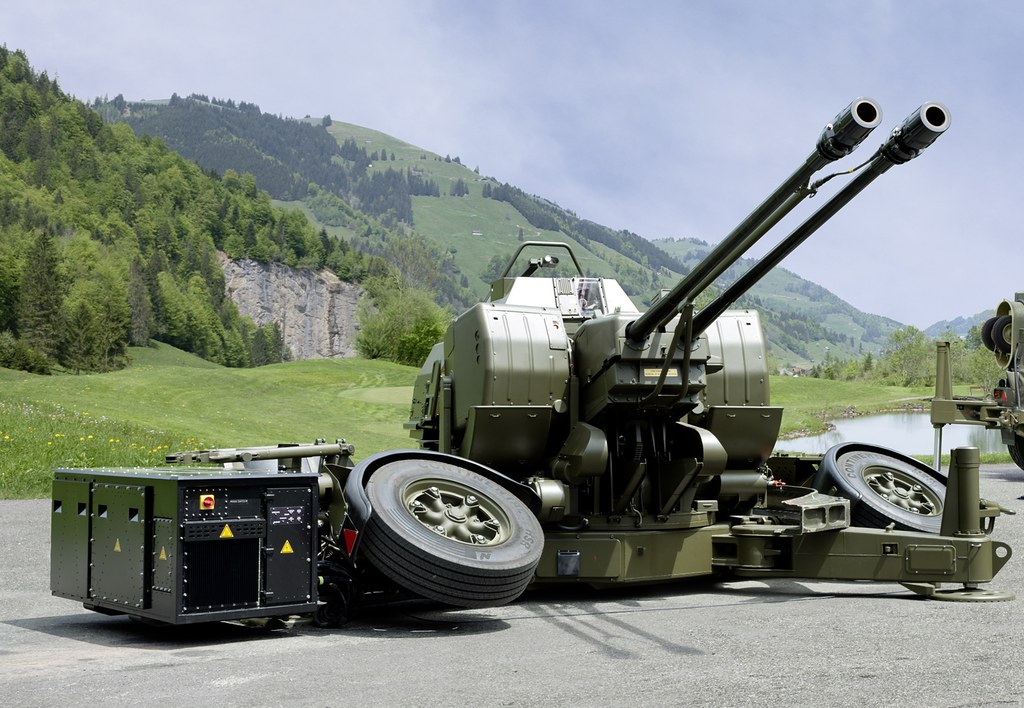
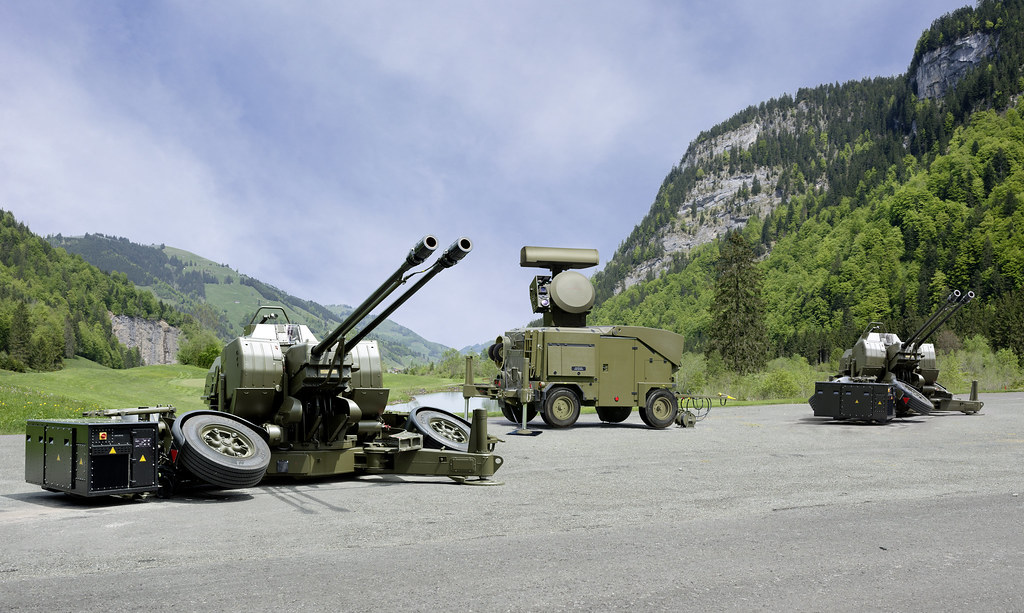
GDF-007 This is a further development of the basic GDF system. Features include: *High rate of fire; *Ahead capability (programmable air burst munition); *High hit probability; *High impact efficiency; *Rapid response to FCU target data in remote mode; *High-performance sighting system and fire control for autonomous target engagement in local mode; *Self-defense capability; *Two 35-mm positively locked, gas-operated automatic cannons with automatic weapon lubrication; *Automatic reloading; *Quick firing readiness after emplacement due to independent power supply unit; *Automatic muzzle velocity measurement and projectile fuze programming; *Built-in test and diagnostics; *High mobility with four-wheel trailer mount; *Rapid deployment at the firing position by tilting the wheels hydraulically; and *Accurate positioning, which is statically determined through automatic leveling of three-point hydraulic support. Additionally, the GDF-006 is fitted with the Advanced Hit Efficiency and Destruction (AHEAD) ammunition that was developed in the late 1980s for service in the mid-1990s. The GDF muzzle is fitted with the three-coil muzzle-velocity sensor; Sky Guard fire-control software is modified. When the AHEAD round is fired, its passage through the rear two coils is timed and its exact muzzle velocity is determined and used to set the time fuze in the projectile through the forward coil. When the timer triggers the fuze, the shell is fractured into a cone of heavy-metal fragments that spray the target. A 25-round burst is capable of generating a spray of 3,800 fragments. The system is designed to provide quick kills against small targets at long ranges. The Oerlikon GDF or Oerlikon 35 mm twin cannon is a towed anti-aircraft gun made by Oerlikon Contraves (renamed as Rheinmetall Air Defence AG following the merger with Rheinmetall in 2009). The system was originally designated as 2 ZLA/353 ML but this was later changed to GDF-001. It was developed in the late 1950s and is used by around 30 countries. The system uses twin autocannons, firing 35×228mm NATO-standard ammunition. It was originally designated 353 MK and is now designated as the KD series. The same KD series 35mm cannons are used in the Leopard 1-based Gepard and Type 74 tank-based Type 87 SPAAG and Marksman self-propelled anti-aircraft guns (SPAAG). The system could be paired with the off-gun (remote) Super Fledermaus fire control radar, which in the late 1970s was upgraded to the Skyguard system. The weapons was aimed either directly, by way of an advanced sighting system, or automatically, by locking onto the target with radar. Early models carried 112 rounds ready to fire, and an additional 126 stored on the chassis as reloads. Later versions with automated reloading carry 280 rounds total. A typical engagement burst is 28 rounds