ARMSNET
Military Equipment Database
Initializing 0%

Type 98 Chinese Main Battle Tank (MBT)

Type 98
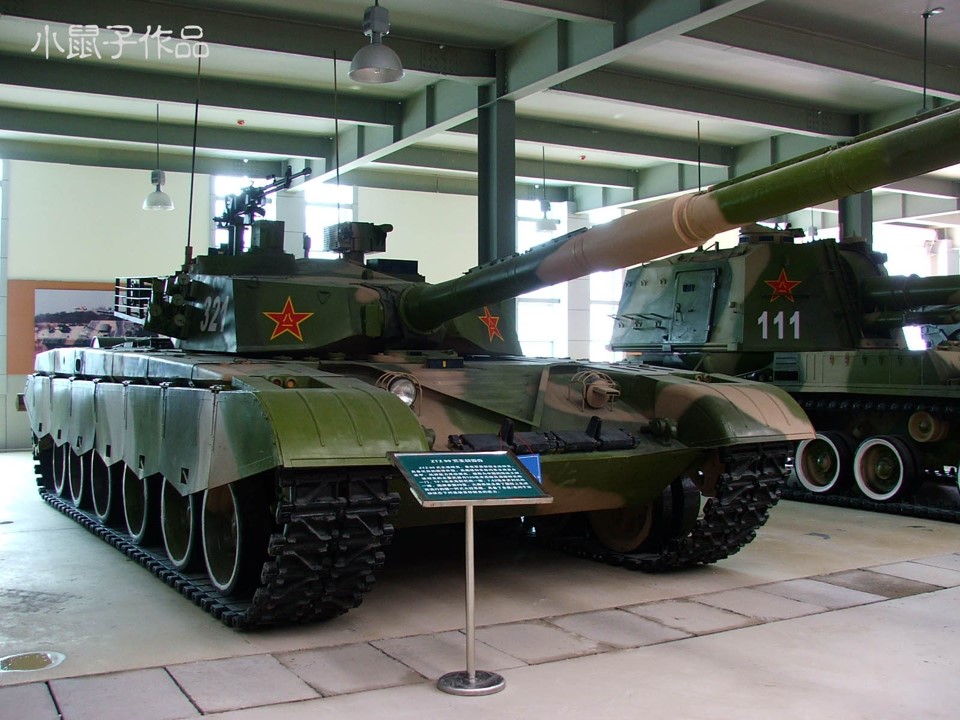
Main Battle Tank (MBT)
Spotted an error? Sign in to suggest an edit.
Basic Information
Name
Type 98 Chinese Main Battle Tank (MBT)
Designation
Type 98
Alternate Designation
Type 98
Equipment Type
Main Battle Tank (MBT)
Manufacturer
NORINCO
Date of Introduction
1999
Description

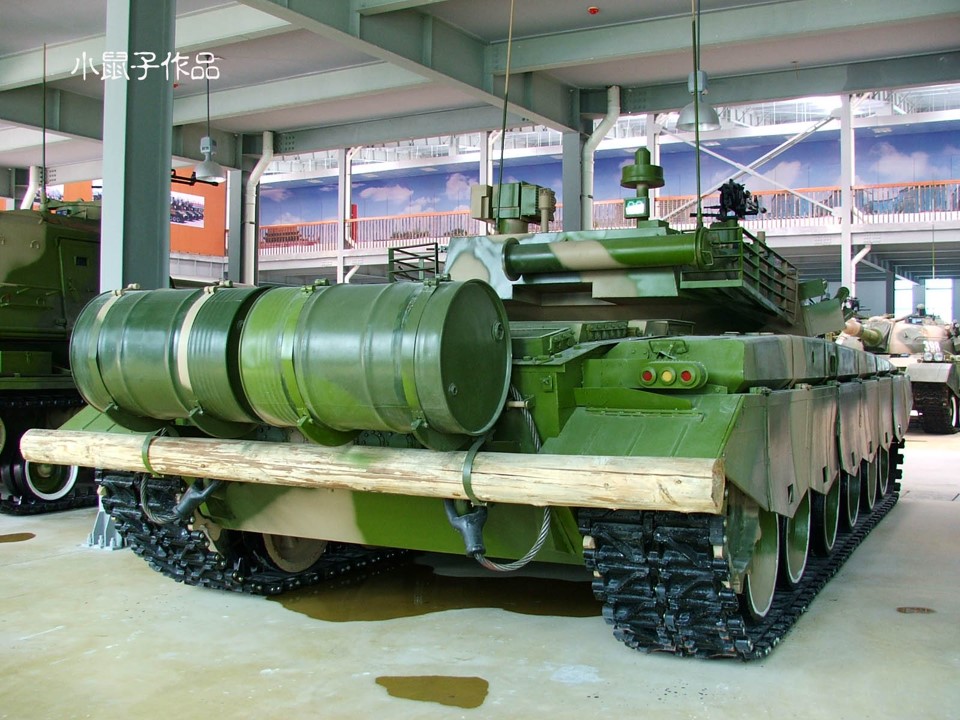
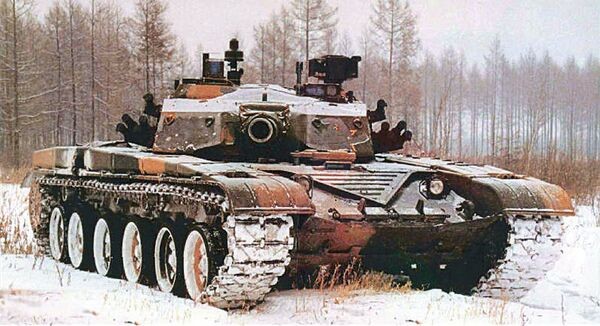
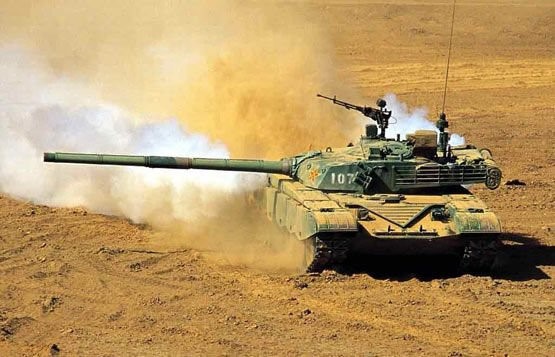
The Type 98 Chinese Main Battle Tank (MBT) follow the layout of a T-72 and have a crew of three, an auto loader, and ammunition carried in a carousel beneath the turret. They are widely considered to be third-generation tanks with mobility and protection characteristics that are close to Russian and Western equivalents. More recent developments in active protection measures could potentially increase the efficacy of this MBT family. At the time it entered service the Type 98 was the most advanced MBT to serve with the People's Liberation Army (PLA) and featured significant improvements over the remainder of the Chinese tank force. It is the original member of the family, equipped with appliqué armour and a powerful engine, which were improvements over the Type 80 and Type 69 vehicles that formed the backbone of the PLA. The Type 98 has a box-shaped hull with a steep glacis and belly plate creating an angular nose. There are six unevenly spaced roadwheels per side with an idler to the front and drive sprocket to the rear. Track return is provided by three evenly spaced rollers. Suspension is of the torsion bar type, supported with hydraulic shock absorbers. The bogies are partially protected by an optional armoured skirt, half the height of the wheels, which runs the length of the tracks. The engine is located centre-rear and there is an exhaust on either side of the vehicle towards the rear of the turret.

Ground Specifications
Crew 3
Mobility Type Tracked
Engine V-8 Turbocharged Diesel (1200 hp)
NBC Protection Yes
Max Speed 65.0 km/h
Range 500.0 km
Variants
Type 99A1 The ZTZ-99A1 (Type 99A1) Chinese Main Battle Tank (MBT) was a development of the Type 98, it has become the primary MBT of elite armoured units in China as a result of its increased survivability and mobility over the Type 98. It has distinctive wedge-shaped armour added to the turret front and features some internal modifications, which were made after experience gained with the Type 98. Hull layout and structure as per Type 98. The turret is arrow-shaped to the front with additional composite armour appearing to create a spaced cavity. The bulge in the turret roof is no longer present and ERA can be added to the hull nose giving the impression of a shallower glacis than the Type 98. There is little to confuse between the Type 99A1 and the Type 99A2, as the two are markedly different in their external appearances.
Type 99A2 The Type 99A2 builds further improvements into the Type 99A1 design. It has even greater protection against threats from the front and is thought to have a more powerful engine to provide mobility for the additional weight. Hull structure and layout as per Type 98. The turret has an arrow-shaped front much larger than the Type 99A1, the turret sides are flat and square with ERA adding width to the turret.
System
Alternative Designation Type 98
Type Main Battle Tank (MBT)
Manufacturer Norinco
Crew 3 ea
Mission Systems The driver has three periscopes to his front, the middle periscope can be replaced with a passive imaging device to provide visibility in low light at a range of 200 m. Each vehicle has a standard GPS for navigation, which both the driver and commander have access to. The commander has five periscopes for observation and to the front of his position is a stabilised panoramic sight featuring a laser rangefinder, which can operate at day or night. The gunner has a sight with similar capabilities and the thermal imager is believed to have two magnifications of 5x and 11.4x. Information from the gunner's sight is fed into the FCS along with data from the trunnion tilt and crosswind sensors.
Features Driver's hatch in the centre of the hull, single periscope.; Panoramic sight in front of commander's hatch. Hatch opens to the rear.; Headlights set in middle of glacis.; Laser suite located on pillar behind gunner's hatch.; Roadwheels have a central hub with recesses arranged around the hub, similar to T-72.
Mobility Weighing over 50 tons the Type 98 was the heaviest tank deployed by the PLA when it entered service. Without preparation it can ford water up to depths of 1.4 m, and with preparation, which would necessarily involve the addition of a snorkel, depths of 5 m can be crossed.
Ancillary Systems Ancillary systems include an NBC system and a Sicong fire-suppression system provide the crew with safety. It is claimed that the system is capable of exterminating steam fires caused by HEAT rounds and protecting the crew from second-degree burns. A snorkel, which requires around 30 minutes to assemble, enables the Type 98 to perform deep-water fording. In addition to this, the Type 98 can add two reserve fuel tanks to the rear of the platform, which extend its range by 150 km.
Dimensions
Length 10.92 m
Width 3.372 m (132.8 in)
Height 2.805 m (110.4 in)
Length of Track on Ground 5.16 m (203.1 in)
Weight, Combat 50,000 kg (110,231 lb) (50.0 t)
Automotive
Engine Name WD396
Engine Type V-8, turbocharged Diesel
Engine Power 1,200 hp
Maximum Speed 65 km/h (40.4 mph)
Maximum Range, with main Fuel Supply 500 km (310.7 miles) (est.)
Maximum Range, with additional Fuel Tanks 650 km
Fuel Capacity 1,000 litres (264.17 US gallons) (est.)
Amphbious No
Fording, without Preparation 1.4 m (55.1 in)
Fording, with Preparation 5 m (196.9 in)
Gradiant 60% (27.0°)
Side Slope 40% (18.0°)
Vertical Obstacle 0.85 m (33.5 in)
Trench 3 m (118.1 in)
Suspension Torsion bar with additional hydraulic shock-absorbers
Main Weapon System
System
Name 1 × turret-mounted 125 mm ZPT-98 Smoothbore Gun
Type Smoothbore Gun
Caliber 125 mm
Barrel Chrome-lined barrel
Thermal Sleeve Yes
Fume Extrator YEs
Breach The breech is a drop-down type fed by an auto-loader capable of firing eight rounds per minute without adjustments. In the event that the loader fails it is possible to manually reload the weapon although doing so reduces the rate of fire to two rounds per minute.
Ammunition
Note The gun employs two-part ammunition and enough charges are carried for a total of 42 shots, which can include APFSDS with a depleted uranium (DU) penetrator and the GP7 gun-launched missile. The autoloader carries 22 complete rounds including charges and projectiles. The sabot rounds are thought to be capable of penetrating 700 mm of conventional steel armour, the DU variant conferring a 10–15% increase. The GP7 carries a tandem HEAT warhead capable of penetrating 240 mm of armour at ranges up to 5 km.
Coaxial Weapon System
Note Mounted co-axially is a modified version of the 7.62 mm Type 80 MG (itself copy of the Russian PKM), known to Chinese armoured units as the Type 86.
Auxiliery Weapon System
Note Mounted on the commander's pintle is a 12.7 mm Type 88 MG, which can be used for air and close-range defense.
Protection
Hull Armor The basic passive armour is steel, modular composite and ceramic plates are added to the frontal arc and these can be further upgraded with blocks of ERA such as the FY series designed and built by China (further details in separate entry Norinco New Generation ERA). The most advanced member of the FY series provides protection against HEAT, tandem HEAT, and sabot rounds, although it adds a significant amount of weight at 10.4 kg per tile. In combat, the suspension and roadwheels are provided with an armoured skirt, believed to be included in the GVW. The driver's seat is mounted to the roof of the tank elevating him off the floor for added protection in the event of a mine blast.
Applique Armor Yes
Explosive Reactive Armor Yes
NBC Protection Yes
Smoke Equipment 10 x 76 mm grenades (5 on each side of the turret), which can fire smoke or obscurant natures of grenades.
Note Mounted to the roof is a laser warning receiver, which is potentially the GL5, as well as a form of laser weapon, the latter believed to carry the industrial designation ZM-87. It was later banned in 2000 under a UN protocol on blinding laser weapons. However, it still features on Type 98s and Type 99A1s. The ZM-87 was designed to damage electro-optical sensors and dazzle the human eye at ranges up to 10 km (also reported by unofficial sites as 5 km). The GL5 and attendant laser jammer is rarely seen fitted to Type 98/99 tanks. However, it is known to be an option for them. It is broadly analogous to the Russian Shtora system and is externally similar. The GL5 transmits information on detected lasers to the commander, informing him of the type of laser allowing him to take the most appropriate action. It is supported by a JD-3 IR jammer, which covers a limited arc and is designed to protect against Western missiles such as the TOW and MILAN. The jammers are fitted above the stowage boxes on the sides of the turret when used. In the event that a threat is detected the vehicle carries 12 76 mm grenades divided either side of the turret, which can fire smoke or obscurant natures of grenade.
Details
Country of Origin China
Category Tanks
Land > Tanks
Filter Label
T
Classification
Domain
Ground
Equipment Status
Active
Dimensions
Length
10.92 m
Width
3.37 m
Height
2.81 m
Weight
50000000 kg
Operators (1)
China
Something went wrong. Please reload the page. Reload