Arpia Venezuela Tactical Unmanned Aerial Vehicle (UAV)
CAVIM Arpia, Arpia
Spotted an error? Sign in to suggest an edit.
Other

Basic Information
Name
Arpia Venezuela Tactical Unmanned Aerial Vehicle (UAV)
Designation
CAVIM Arpia, Arpia
Alternate Designation
CAVIM Arpia, Arpia
Equipment Type
—
Manufacturer
Qods Aviation
Date of Introduction
2009
Description
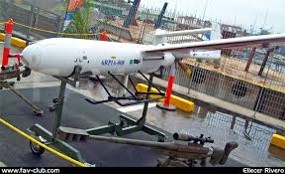
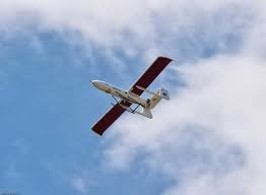
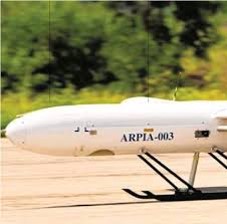
In 2007, Venezuela signed an agreement with Iran to assemble 12 Mohajer-2 UAVs from knock-down kits supplied by Quds. Venezuelan state-owned defense contractor CAVIM began assembling the drones by 2009. US satellite imagery revealed the facility manufacturing the drones in 2010, and they were unveiled to the public as the CAVIM Arpia in 2012.
Air & Air Defense Specifications
Max Speed
200.0 km/h
Range
30.0 km
Endurance
90.00 hrs
Variants
Mohajer-1
The Mohajer was Iran's first drone to enter series production and was used during the Iran–Iraq War. The Mohajer-1 was known simply as "Mohajer" through the 80s and 90s, when it was re-designated "Mohajer-1" as other Mohajer variants had been developed.
Mohajer-2
Following the successful use of the Mohajer-1, Iran wanted a version with more range and endurance. This version, which would later be named the Mohajer-2, also had an auto pilot system to fly beyond the line-of-control of its command center.
Mohajer-2N
In 2014, Iran introduced the Mohajer-2N, which shares the same design as the Mohajer-2 but has far improved performance. The Mohajer-2N replaces the electronics of the Mohajer-2 with more modern versions and has also has improved flight characteristics. T
Mohajer-3
The Mohajer-3, also known as the Dorna, was designed with a new airframe for better performance. It had a square body and featured a low-mounted horizontal stabilizer flush with the main wing, the only member of the Mohajer family configured this way.
Mohajer-4
The Mohajer-4 was designed for both the Iranian Army and the IRGC and entered service in late 1997.
Mohajer-4B
Also known as the Sadiq, the Mohajer-4B is a significant evolution of the Mohajer-4 platform with a square fuselage, twin tail booms, a top-mounted horizontal stabilizer, uncanted wingtips, new landing skids, and straight wings mounted high and to the mid of the body
Sadegh-1
The Sadegh-1 ("Honest-1"), also known as the QOM-1, is simply a Mohajer-4B with two MANPADS mounted on pylons.It was tested in late 2014
Mohajer-6
The Qods Mohajer-6 is a persistent ISTAR UAV capable of carrying a multispectral surveillance payload and/or up to two precision-guided munitions. Ten have been manufactured as of February 2018 for the IRGC Ground Forces, and 40 are planned for the IRGC Navy.The Mohajer-6 complements the larger Shahed 129 operated by the third IRGC branch, the IRGC-ASF. Three have also been delivered to the Iranian Army.
System
Alternative Designation
CAVIM Arpia, Arpia
Type of UAV
Tactical Unmanned Aerial Vehicle (UAV)
Manufacturer
Qods Aviation, Tehran
Family
Mohajer family
In Service
2009-Present
Flight Control Method
controlled by hobby-class radio, which was easily jammed
Day/Night Capable
INA
All Weather Capable
INA
Takeoff or Landing Limitations
INA
Ground Crew
Capable of being controlled via land crew or autopilot
Autopilot
Yes, which controls the aircraft via waypoints
Endurance
90 min
Range
30 km
Date Transmit Distance
INA
Location Positioning System
Yes
Launch System
PL3 pneumatic catapult
Recovery System
Skid Landing or Parachute
Number of Hard Points
6 ea
Manned-Unmanned Teaming (MUM-T) Capable
No
Automatic Landing and Takeoff Capability
No
Landing Gear
three fixed landing gear for launch and recovery
Stabilizer
Horizontal stabilizer
Antenna Type
two stub antenna in the under 10 GHz range, one on each wing, for real-time control.
Note #1
Designed for surveillance use
Note #2
the Arpia lacks over-the-horizon guidance
Proliferation
Valenzuela
Dimensions
Length
2.9 m
Width (Wing Span)
3.8 m
Height
INA
Weight, Maximum Takeoff
83 kg
Weight, Empty
70 kg
Tailbooms
Twin
Wing Type
Mid-mounted, untapered wings
Tail Type
Horizontal tail
Automotive
Engine Name
WAE-342 Engine
Engine Type
Single Engine
Engine Power
25 hp
Cruising Range
30 km
Speed, Maximum
200 km/h
Speed, Average
INA
Endurance
90 min
Maximum Ceiling
4,820 m
Radius
50 km
Cargo Capacity (Payload)
15 kg
Propellers
2-bladed
Rudders
Twin Rudders
Belly Skid
Yes, The belly skids are non-retractable, but can compress on landing to reduce shock
Communications
Radio
INA
Retrans Radio
INA
Main Weapons System
Name
RPG-7
Type
Rocket-propelled grenade launcher[
In Service
1961-Present
Manufacturer
Bazalt and Degtyarev plant (Russian Federation)
Proliferation
+ 9 Million
Length
950 mm
Cartridge
85 mm
Caliber
40 mm
Weight
6.3 kg
Muzzle Velocity, Boost
115 m/s
Muzzle Velocity, Flight
300 m/s
Effective Firing Range
300 m
Maximum Firing Range
700 m (OG-7V)
(self detonates at ≈920 m (1,000 yd))
Sights
PGO-7 (2.7×), UP-7V Telescopic sight and 1PN51/1PN58 night vision sights
Red dot reflex sight
Basic Load
12 ea
Fire Control
Fire Control System Type
INA
Fire Control Radar
No
Radar Type
INA
Radar Designator
INA
Laser Rangefinder
INA
Laser Designator
INA
Full-Motion Video
Yes, video and infrared with 1-m resolution mounted on the forward part of the fuselage
Still Camera
static nose-mounted camera
Thermal Imaging Sensors
No infrared camera installed
Electro Optical Pod
INA
Forward-Looking Infrared (FLIR) Sensors.
Yes
Onboard Digital Processor
Yes, which can downlink sensor imagery
Navigation Camera
fixed forwards-facing camera for navigation
Guidance System
GPS Guidance System
Note
A line-scanner is provided, which reportedly can provide 3-ft (1-m) resolution at an altitude of 16,400 ft (5,000 m)
Protection
Fuselage
Bullet-shaped fuselage
Stealth Properties
No
Heat Signature Reduction
No
Add on Armor
No
EW
No
EW Counter Measures / CCM
No
Counter Measures (Chaffs/Flares)
No
Image Sources
Notes
https://thearkenstone.blogspot.com/2015/03/mohajer-uav.html; https://globalmilitaryreview.blogspot.com/2013/10/venezuelan-arpia-unmanned-aerial.html; https://www.secretprojects.co.uk/threads/latin-american-aircraft.31752/page-3; https://commons.wikimedia.org/wiki/File:Sistema_a%C3%A9reo_no_tripulado_-_Mohajer2_Cavim_Sant_Arpia.jpg;
Details
Country of Origin
Venezuela
Category
UAVs
Air > UAVs
Filter Label
A
Classification
Domain
Air & Air Defense
Equipment Status
Active
Dimensions
Length
2.9 m
Width
3.8 m
Height
—
Weight
6.3 kg
Operators (2)
Venezuela
South America
Something went wrong. Please reload the page.
Reload