CH-91 (BZK-008) Chinese Reconnaissance Unmanned Aerial Vehicle (UAV)
CH-91
Tactical Unmanned Aerial Vehicle (UAV)
Spotted an error? Sign in to suggest an edit.

Other

Basic Information
Name
CH-91 (BZK-008) Chinese Reconnaissance Unmanned Aerial Vehicle (UAV)
Designation
CH-91
Alternate Designation
CH-91; BZK-008
Equipment Type
Tactical Unmanned Aerial Vehicle (UAV)
Manufacturer
Chinese Defence Company ALIT (Aerospace Long-March International)
Date of Introduction
2015
Description
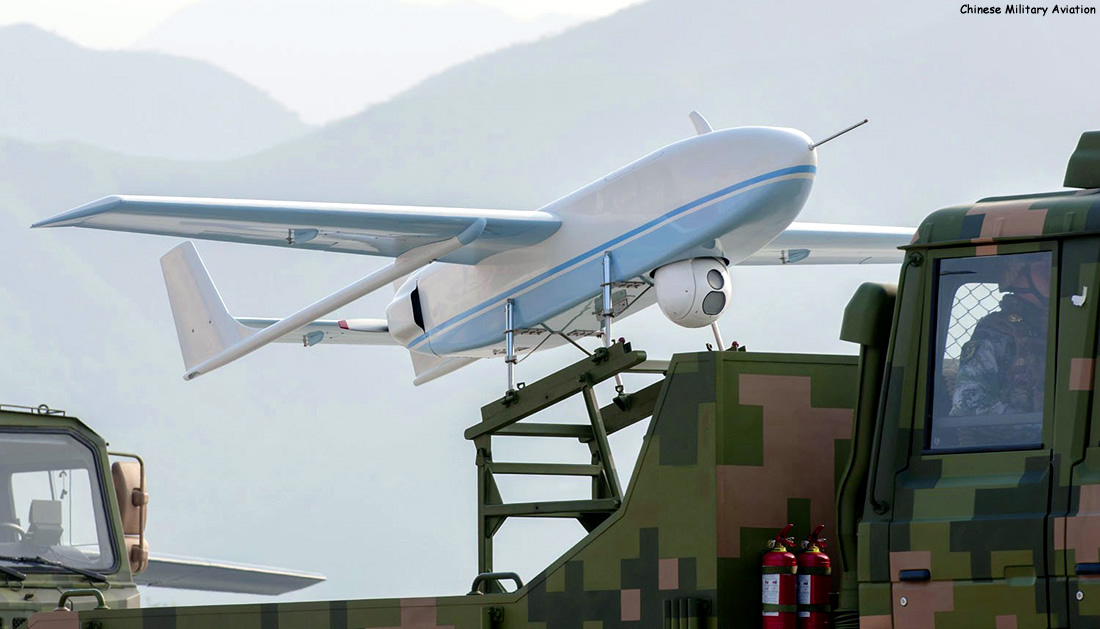
The CH-91 (BZK-008) Chinese Reconnaissance Unmanned Aerial Vehicle (UAV)is a fixed-wing UAV in a twin-boom layout with an inverted v-tail and a pair of skids as landing gear. Propulsion is provided by a two-blade propeller driven by a pusher engine mounted at the rear end of the fuselage. CH-91 is mainly intended for reconnaissance and surveillance missions. It's also called BZK-008.
Air & Air Defense Specifications
Engine
Cylinder gasoline engine (16 hp)
Max Speed
180.0 km/h
Wingspan
4.40 m
Payload Capacity
20 kg
Variants
CH-1
CH-1 is the first of the Rainbow (CH) series UAVs. The general designer was Mr. Shi Wen (石文), who is also the general designer of CH-2, the successor of CH-1, CASC PW-1, the derivative of CH-1, and CASC PW-2, the derivative of CH-2. The CH-1 program began in 2000, and its success resulted in the establishment of the UAV program that led to other designs that followed.
CH-2
CH-2 is the second of the Rainbow (CH) series UAVs and is a development of the earlier CH-1, with identical twin-boom layout. As for the CH-1, propulsion is provided by a two-blade propeller driven by a pusher engine mounted at the rear end of the fuselage, and the UAV is launched via vehicle mounted catapult with rocketed assisted take-off. The CH-2 is mainly intended for reconnaissance and surveillance missions.
CH-3
CH-3 is a fixed wing unmanned combat aerial vehicle (UCAV) of the Rainbow series. The CH-3 adopts an unusual canard layout, similar to the Jetcruzer 450 and the Rutan VariEze. This means that the CH-3 lacks centrally located vertical tail, but has large winglets and canards. Propulsion is provided by a three-blade propeller driven by a pusher engine mounted on empennage. The main landing wheels of the tricycle landing gear has fairing to reduce drag.
CH-3A
CH-3A is the development of CH-3 and share the identical layout. Improvement of CH-3A over CH-3 includes that the maximum payload is increased to more than 100 kg, and satellite data link is also incorporated. CH3A is a multipurpose UAV which can also carry AR 1 laser guided rocket for attacking role. It is also widely rumored that Myanmar Air Force operates them, and some images have been found.
CH-4
Externally, CH-4 looks almost identical to General Atomics MQ-9 Reaper, and the only distinct visual difference between two UAVs is that the ventral fin below the V-tail on MQ-9 is absent on CH-4. There are two versions, the CH-4A and CH-4B. The CH-4A is a reconnaissance drone (capable of a 3500–5000 km range and a 30- to 40-hour endurance) while the CH-4B is a mixed attack and reconnaissance system with provisions for 6 weapons and a payload of up to 250 to 345 kg.
CH-5
The CH-5 is the latest UCAV of the Rainbow series, with a wingspan of 21 meters, a payload of 1,000 kg, a maximum takeoff weight of over 3 tones, a service ceiling of 9 km, an endurance of up to 60 hours and a range of 10,000 km.
CH-7
The CH-7 is a stealthy flying wing UCAV similar to the X-47B, with a 22m wingspan and 10m length. It can fly at 920 km/h and at an altitude of 13,000m. Endurance is about 15 hours and its operational radius is 2000 kilometers. It can carry antiradiation missiles and standoff weapons. According to its chief designer, "the CH-7 can intercept radar electronic signals, and simultaneously detect, verify and monitor high-value targets, such as hostile command stations, missile launch sites and naval vessels". It is planned to make its maiden flight in 2019 and commence production in 2022.
CH-10
The CH-10 is a tilt-rotor UAV.
CH-91
CH-91 is a fixed-wing UAV in twin-boom layout with inverted v-tail and a pair of skids as landing gear. Propulsion is provided by a two-blade propeller driven by a pusher engine mounted at the rear end of the fuselage. CH-91 is mainly intended for reconnaissance and surveillance missions. It's also called as BZK-008.
CH-92
CH-92 is a fixed-wing UAV in conventional layout with V-tail and tricycle landing gear. Propulsion is provided by a propeller driven by a pusher engine mounted at the empennage. CH-92 is mainly intended for reconnaissance and surveillance missions.
CH-802
CH-802 is a fixed wing micro air vehicle (MAV) in conventional layout with elevated high-wing configuration and V-tail. CH-802 has a cylindrical fuselage and propulsion is provided by a two-blade propeller driven by a tractor brushless electric motor atop of the fuselage. CH-803 is mainly intended for reconnaissance and surveillance missions. CH-802 program begun in 2007 and was completed in 2008.
CH-803
CH-803 is a fixed-wing UAV with a cylindrical fuselage and canards, but without tail plane. Propulsion is provided by two-blade propeller driven by a tractor engine mounted in the nose. Another unique feature of CH-803 is that it adopts forward-swept wing. CH-803 is mainly intended for reconnaissance and surveillance missions. CH-803 program begun in 2008 and was completed in 2011.
CH-901
CH-901 is a fixed-wing UAV in conventional layout with cylindrical fuselage and high-wing configuration. Propulsion is provided by a two-blade propeller driven by a pusher engine mounted at the end of empennage. CH-901 is designed as an UCAV.
System
Alternate Designation
CH-91; BZK-008
Type
Unmanned Aerial Vehicle (UAV)
Manufacturer
Chinese Defence Company ALIT (Aerospace Long-March International)
Mission
CH-91 is mainly intended for reconnaissance and surveillance missions.
Crew
Unmanned
Operator
1 ea
Payload Capacity
20 kg
Deployment Time
The UAV deployment time is less than 60 minutes.
Recovery Time
The recovery time after a combat mission is less than 20 minutes.
Dimensions
Length
3.5 m
Wingspan
4.4 m
Height
1.4 m
Maximum Takeoff Weight
110 kg
Automotive
Engine Name
INA
Engine Type
Cylinder gasoline engine
Engine Power
power 16.4 kw, using twin - bladed thrust propeller
Fuel Capacity
INA
Maximum Speed
180 km/h
Cruising Speed
120-150 km/h
Maximum Altitude
4,480 m
Combat Radius
175 km
Battery Life
5 hours
Armament
Note
The CH-91 is designed to perform reconnaissance, surveillance, intelligence information gathering, high-precision target pointing, artillery fire correction, battlefield damage effectiveness assessment, and gis missions.
Details
Country of Origin
China
Category
UAVs
Air > UAVs
Filter Label
C
Classification
Domain
Air & Air Defense
Equipment Status
Active
Dimensions
Length
3.5 m
Width
—
Height
1.4 m
Weight
110 kg
Operators (1)
China
Something went wrong. Please reload the page.
Reload