ARMSNET
Military Equipment Database
Initializing 0%

ZALA Z-53 Russian Unmanned Aerial Vehicle (UAV)

ZALA Z-53
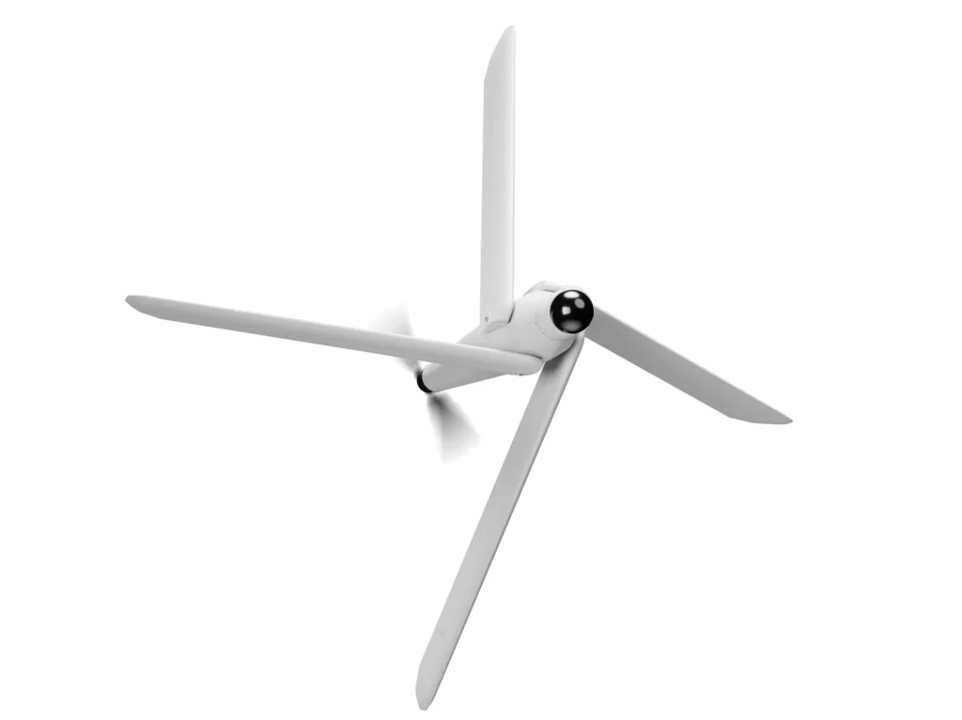
Tactical Unmanned Aerial Vehicle (UAV)
Spotted an error? Sign in to suggest an edit.
Basic Information
Name
ZALA Z-53 Russian Unmanned Aerial Vehicle (UAV)
Designation
ZALA Z-53
Alternate Designation
ZALA Z-53; Izdeliye-53
Equipment Type
Tactical Unmanned Aerial Vehicle (UAV)
Manufacturer
ZALA
Date of Introduction
2023
Description

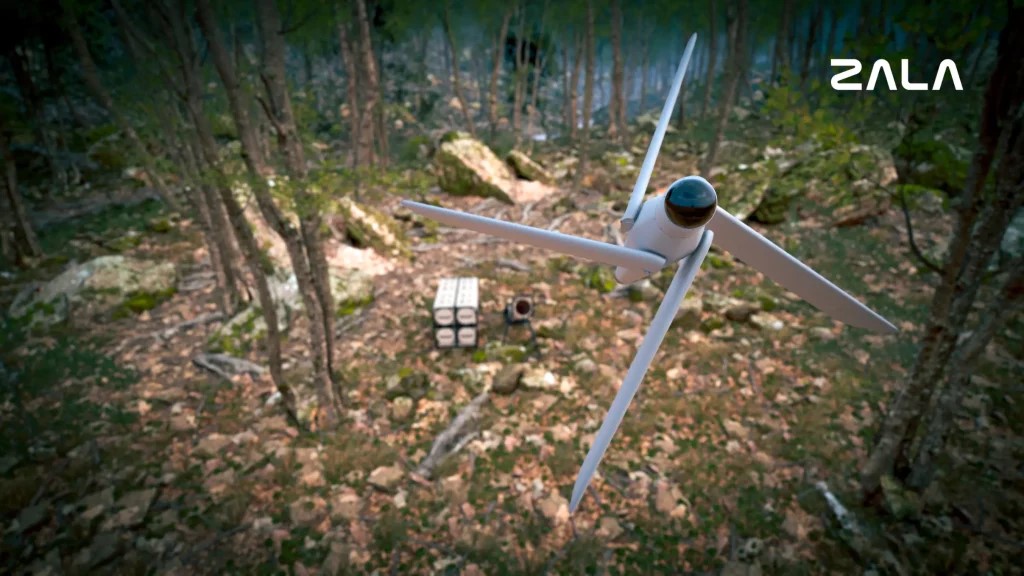
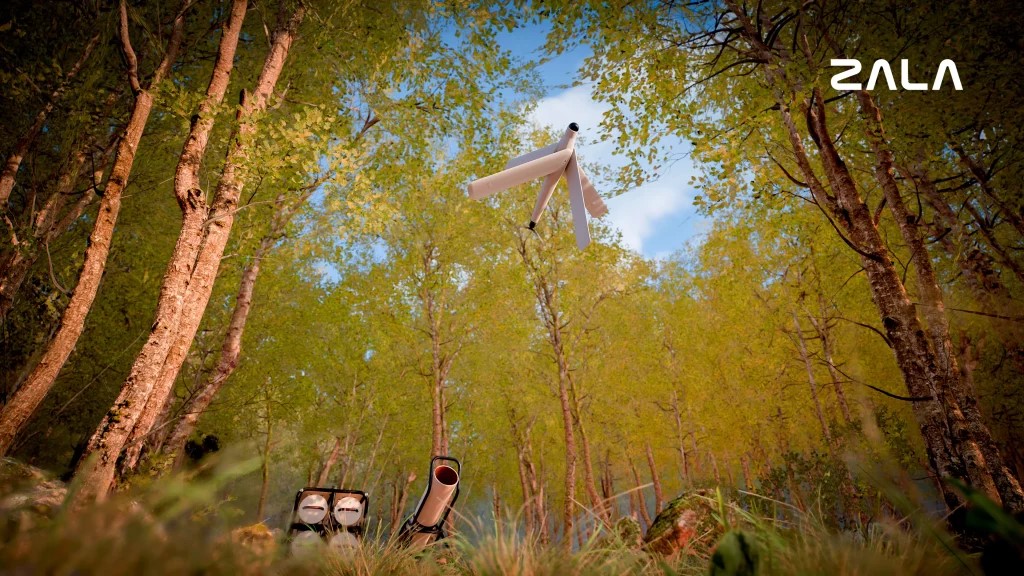
The ZALA Z-53 Russian Unmanned Aerial Vehicle (UAV) officially designated Izdeliye-53 ("Product 53"), represents the third-generation evolution of Russia's Lancet loitering munition family and a significant technological advancement in autonomous strike warfare. Manufactured by ZALA Aero Group—a subsidiary of Kalashnikov Concern—the Z-53 combines an upgraded platform architecture with onboard artificial intelligence for autonomous target detection, classification, and engagement. Operationally deployed since October 2023, it represents a qualitative shift from operator-controlled kamikaze drones toward network-centric swarm warfare capabilities, with documented strikes exceeding 4,000 targets as of January 2025. The Z-53 emerged from operational refinements of its predecessors, the Izdeliye-51 and Izdeliye-52 (commonly designated Lancet-1 and Lancet-3 in open discourse). While Items 51 and 52 retain X-shaped wing configurations and catapult launch systems, the Z-53 introduces a fundamentally different architecture: a four-winged design with automatically deployable folding wings and a containerized launch system that enables rapid, multi-unit salvo employment. This design shift prioritizes operational flexibility over the proven catapult methodology, allowing simultaneous deployment of multiple drones from single or quadruple-loaded transport-launch containers (TLC). The airframe construction employs carbon fiber composite materials throughout, reducing weight while maintaining structural rigidity—a critical requirement for autonomous operations requiring precise control authority across all flight regimes. The shift from catapult to containerized launch represents more than tactical convenience; it fundamentally alters force employment patterns by eliminating preparation time, reducing signature (both visual and thermal), and enabling rapid relocation of launch points. Russian military doctrine explicitly frames the Z-53 within "network-centric warfare" (сетецентрическая война) concepts, where reconnaissance sensors (such as the ZALA Z-16 reconnaissance UAV), fires platforms (loitering munitions), and command systems operate as integrated nodes in a reconnaissance-fire system. The Z-53's compatibility with relay drones and its ability to receive real-time targeting intelligence from airborne reconnaissance platforms enables strike ranges exceeding 100 kilometers when coordinated with extended-range reconnaissance UAVs.

Air & Air Defense Specifications
Engine Brushless electric motor. The electric motor provides extended loiter capability and virtually silent operation—a critical advantage for low-observable approaches. Flight control authority derives from the four-wing configuration, providing unrestricted maneuverability across all axes, enabling the distinctive diving attack profile and anti-missile evasive maneuvers that characterize Lancet-family employment.
Max Speed 110.0 km/h
Cruise Speed 80.0 km/h
Range 65.0 km
Endurance 40.00 hrs
Service Ceiling 5000 m
Payload Capacity 3 kg
System
Alternate Designation ZALA Z-53; Izdeliye-53
Type Unmanned Aerial Vehicle (UAV)
Manufacturer ZALA
Payload Capacity 3–5 kg (configurable)
Autonomous and Intelligent Systems The Z-53's operational significance fundamentally derives from its autonomous targeting capability—a deliberate engineering response to Ukrainian electronic warfare (EW) pressure on operator-controlled variants. This represents a transition from human-in-the-loop to machine-enabled decision-making in combat environments.
Artificial Intelligence Onboard processing employs NVIDIA's Jetson TX2/TX4 modules, executing machine learning algorithms trained to identify and classify military targets with priority-based selection logic. The manufacturer's disclosed combat experiments confirm operation in "fully automatic application" mode, where the operator defines only the engagement area and target category (e.g., "only armor"), and the drone independently detects, ranks, and engages targets.
Target Discrimination The AI system incorporates value-based targeting heuristics that prioritize high-value military assets over lower-priority targets. In a documented example provided by ZALA's chief designer, if the drone simultaneously acquires both a tank and a radar system, it will preferentially engage the radar—an indication of embedded intelligence regarding relative target threat or strategic value. This represents autonomous decision-making at the tactical level, eliminating dependence on real-time operator guidance for target selection.
Navigation The platform integrates U-Blox navigation modules supporting GPS, Galileo, GLONASS, and BeiDou satellite systems with intrinsic anti-jamming and anti-spoofing capabilities. This multi-constellation redundancy provides continued navigation functionality even when individual systems are jammed or denied—a critical operational requirement given Ukrainian EW capabilities.
Swarm Warfare Beyond individual autonomous strike capability, the Z-53 is architected as a network-centric swarm platform, fundamentally altering the kill-chain dynamics of UAV operations.
Inter-Drone Communication and Coordination The Z-53 design explicitly incorporates communication protocols enabling drone-to-drone data sharing within coordinated strike packages. When one drone in a swarm detects a target array, all drones in the network acquire that intelligence, allowing each platform to select the most appropriate target based on warhead type and capability. This distributed decision-making architecture increases strike probability while reducing the likelihood that any single point of failure (operator jamming, comms relay destruction) can degrade the entire operation.
Swarm Attack Profiles Testing has confirmed capability for "mass synchronized swarm strikes"—the simultaneous launch of multiple drones engaging different elements of a defended target complex. This saturation approach is specifically designed to overwhelm air defense systems: by launching 20–30 units from multiple angles and locations, defenders face impossible interception ratios, and the simultaneous engagement of different target types (e.g., air defense systems, command posts, logistics nodes) creates a comprehensive operational effect.
Rapid Salvo Capability The quadruple-loaded TLC configuration enables the near-simultaneous launch of four drones from a single platform, or coordinated saturation attacks employing multiple containers sequentially. This architecture directly supports swarm attack concepts: instead of sequential launches requiring multiple engagement cycles, an entire strike package can achieve airborne simultaneously, multiplying the air defense challenge.
Transport-Launch Container System The containerized launch methodology represents a deliberate operational improvement over catapult systems. Individual TLC units—functioning simultaneously as transport, storage, and launch platforms—can be positioned on standard vehicles, coastal vessels, or mobile platforms. Upon launch command, wings automatically deploy as the drone exits the container, eliminating manual preparation steps and reducing operator exposure time.
Dimensions
Length INA
Height INA
Wingspan INA
Maximum Takeoff Weight INA
Automotive
Engine Name AXI 5330
Engine Type Brushless electric motor. The electric motor provides extended loiter capability and virtually silent operation—a critical advantage for low-observable approaches. Flight control authority derives from the four-wing configuration, providing unrestricted maneuverability across all axes, enabling the distinctive diving attack profile and anti-missile evasive maneuvers that characterize Lancet-family employment.
Engine Power INA
Battery The Z-53 relies on lithium-ion polymer (LiPo) battery systems, with the power source being the only component identified as Russian-manufactured (AccumStation).
Maximum Speed 110 km/h
Cruise Speed 80 km/h
Maximum Range 65 km
Service Ceiling 5,000 m
Endurance 40 min
Details
Country of Origin Russia
Category UAVs
Air > UAVs
Filter Label
Z
Classification
Domain
Air & Air Defense
Equipment Status
Active
Operators (1)
Russia
Something went wrong. Please reload the page. Reload