ARMSNET
Military Equipment Database
Initializing 0%

Nuuva V300 Slovenian Unmanned Aerial Vehicle (UAV)

Nuuva V300
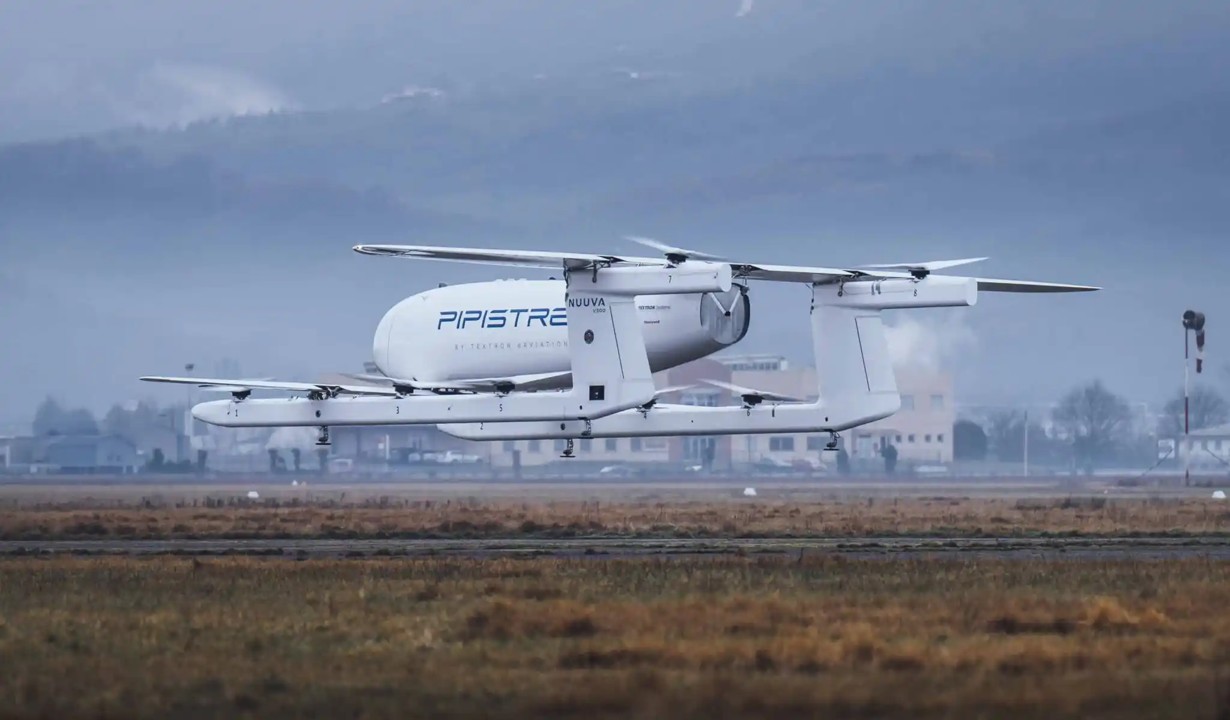
Tactical Unmanned Aerial Vehicle (UAV)
Spotted an error? Sign in to suggest an edit.
Basic Information
Name
Nuuva V300 Slovenian Unmanned Aerial Vehicle (UAV)
Designation
Nuuva V300
Alternate Designation
Nuuva V300
Equipment Type
Tactical Unmanned Aerial Vehicle (UAV)
Manufacturer
Pipistrel
Date of Introduction
2025
Description

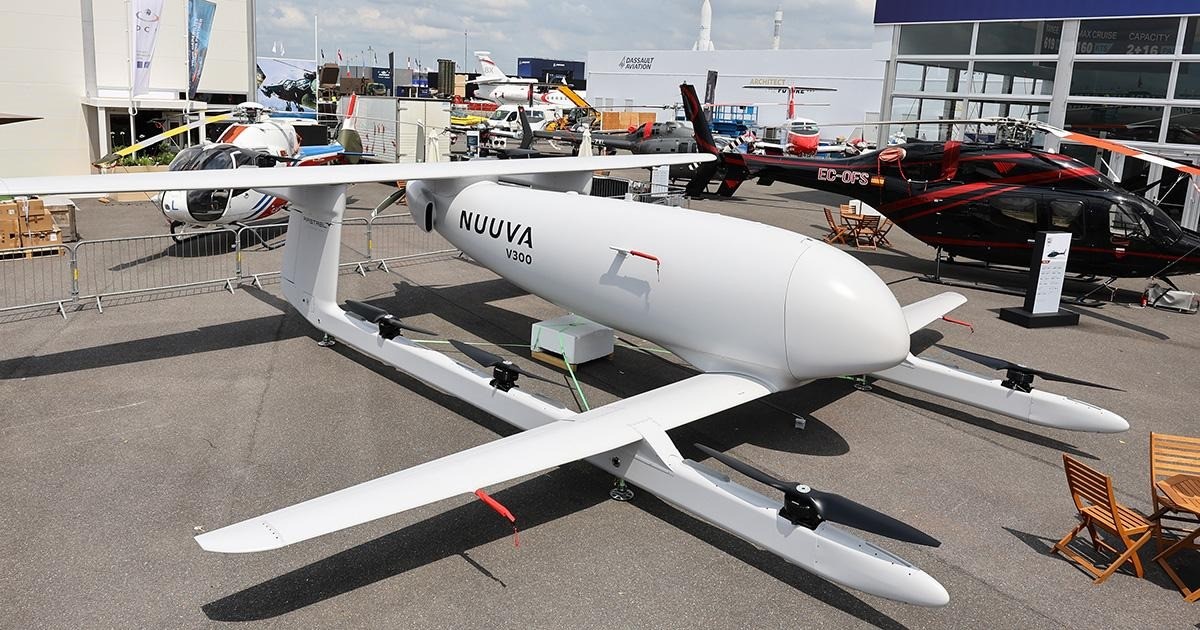
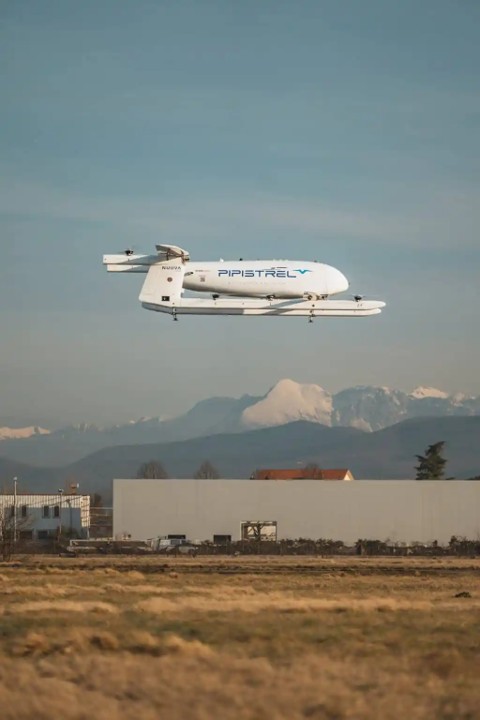
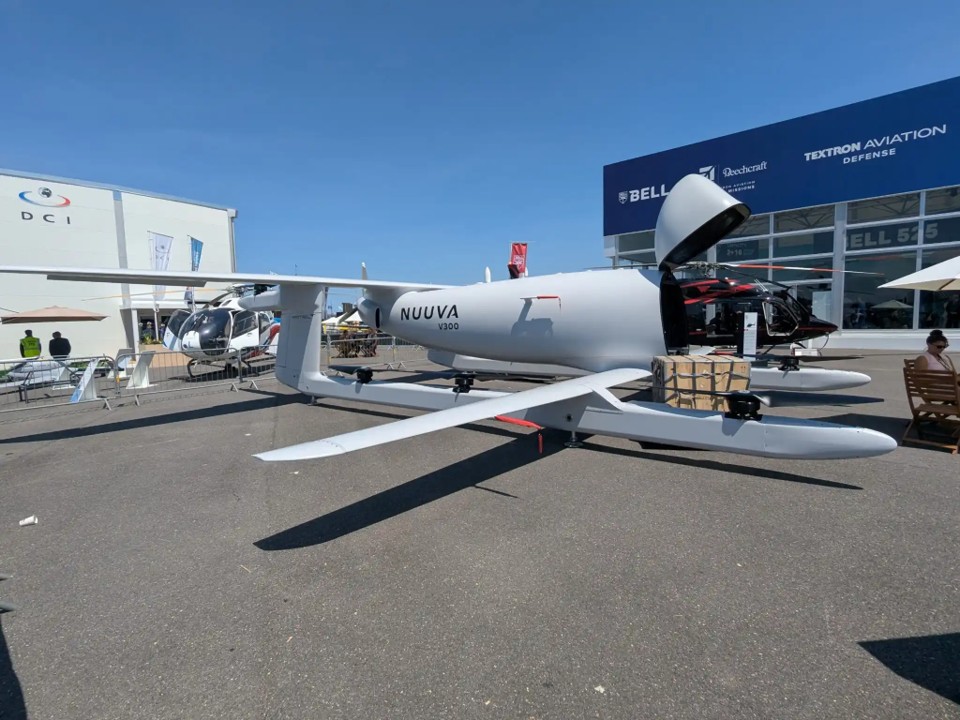
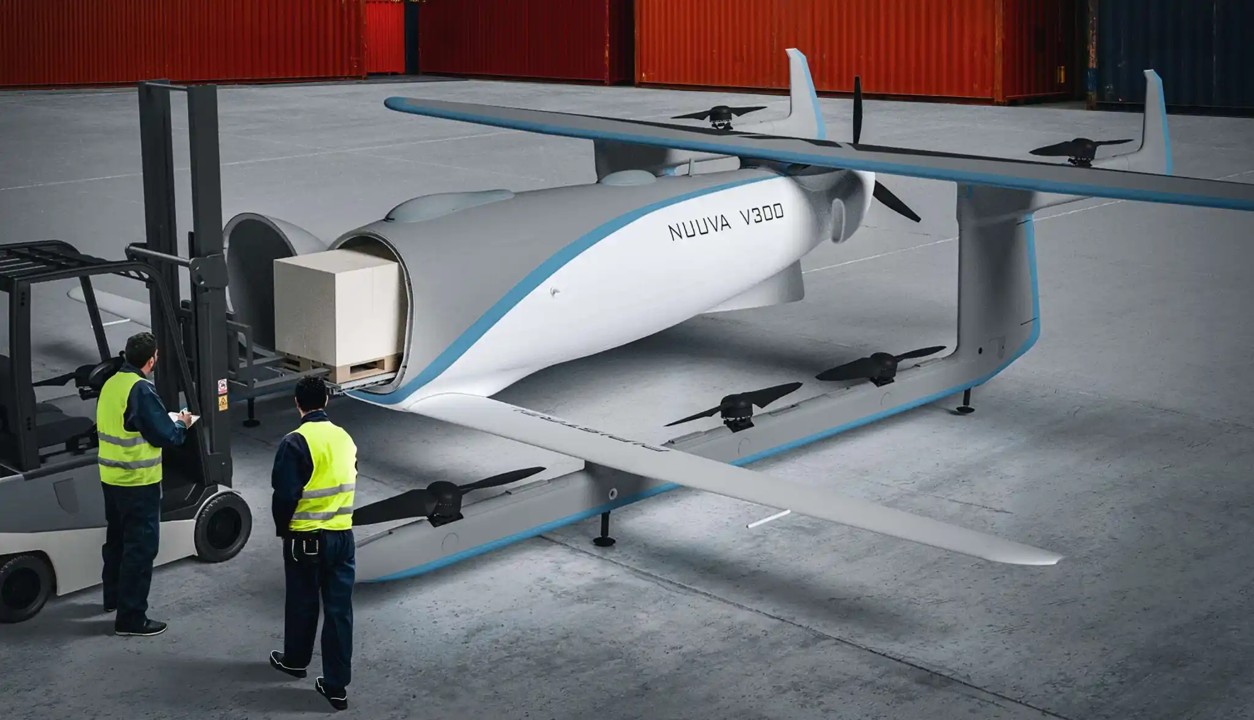
The Nuuva V300 Slovenian Unmanned Aerial Vehicle (UAV) represents a significant advancement in large-capacity, long-range autonomous cargo aviation. As a hybrid-electric vertical takeoff and landing (VTOL) unmanned aircraft system developed by Pipistrel (a Textron subsidiary). The system uniquely combines battery-powered electric vertical propulsion with a fuel-efficient internal combustion engine for cruise flight, delivering what industry observers recognize as the optimal balance between payload capacity (600 pounds), range (300 nautical miles), and operational flexibility. The Nuuva V300 is a 11.3-meter-long, 13.2-meter-wingspan tandem-wing aircraft constructed primarily of carbon fiber composite materials. The tandem-wing configuration, with the rear wing featuring a larger wingspan than the front wing, provides the aerodynamic efficiency necessary to achieve extended range with heavy payloads. This distinctive layout, combined with long-range booms connecting the wings, accommodates the distributed electric propulsion architecture while maintaining the structural integrity required for sustained autonomous operations. The aircraft stands 3.1 meters tall and features four fixed landing struts designed for operations on prepared or unimproved surfaces—a critical capability for disaster relief, humanitarian, and remote operations where traditional runway infrastructure is unavailable. The nose section incorporates a large hinged door that lifts vertically to reveal a 3-cubic-meter (106 cubic feet) cargo hold, enabling straightforward loading and unloading of Euro pallets or loose cargo using standard ground handling equipment. The Pipistrel Nuuva V300 represents a mature design philosophy successfully applied to an underserved market segment. By segregating vertical and cruise propulsion functions rather than attempting all-electric operation or accepting rotorcraft inefficiency, the designers have positioned the aircraft at an attractive point in the performance envelope trade-space.

Air & Air Defense Specifications
Engine The V300 employs an innovative hybrid-electric propulsion strategy that segregates vertical and cruise propulsion functions. Eight independent battery-powered Pipistrel E-811 electric motors drive small propellers mounted on outboard booms for vertical lift during takeoff and landing. For forward flight, a single high-efficiency, full authority digital engine control (FADEC) internal combustion engine mounted in the aft fuselage drives a pusher propeller. This separation of vertical and cruise propulsion systems yields superior energy efficiency compared to pure-electric VTOL concepts, which must either accept severely range-limited missions or carry prohibitively large and heavy battery packs.
Max Speed 220.0 km/h
Cruise Speed 165.0 km/h
Range 2500.0 km
Endurance 12.00 hrs
Service Ceiling 2438 m
Wingspan 13.20 m
Payload Capacity 300 kg
System
Alternate Designation Nuuva V300
Type Unmanned Aerial Vehicle (UAV)
Manufacturer Pipistrel
Payload Capacity 300 kg (661 lbs)
Maximum Payload 460 kg (1,014 lbs) short range; 900 lbs at reduced range
Flight Management The Nuuva V300 employs a triple-redundant fly-by-wire flight control system supplied by Honeywell, a choice that reflects the complexity of managing nine propellers, two independent propulsion systems, and the transient flight dynamics during vertical-to-horizontal transition. The triple-redundant architecture ensures that no single point of failure in sensor, processor, or control surface functions can degrade flight safety.
Autonomous Systems The aircraft is designated for Beyond Visual Line of Sight (BVLOS) autonomous operations, meaning it can execute complete cargo missions without maintaining operator visual contact. The ground control station, developed in collaboration with Textron Systems, implements a "point-and-click" operational interface that abstracts the complexity of trajectory management, propulsion mode transitions, and emergency procedures into straightforward operator commands. Pre-mission flight planning loads the complete flight plan into the ground station, and upon the operator's launch command, the aircraft executes the mission autonomously, including: Vertical ascent to transition altitude (typically 50-100 meters) Rotation from vertical to forward flight mode using wing lift; Cruise flight along the pre-planned route using GPS and inertial navigation; Approach sequencing to the destination; Descent and vertical landing with ground impact stability. Throughout autonomous flight, the ground operator maintains continuous two-way communication and can assume manual control to cancel, modify, or execute emergency procedures. The integrated health monitoring system continuously assesses propulsion system status and can predict component failures before critical degradation, enabling predictive maintenance and maximizing operational availability.
Dimensions
Length 11.3 m
Height 3.1 m
Wingspan 13.2 m
Maximum Takeoff Weight 1,700 kg
Automotive
Engine Name Pipistrel E-811 electric motors
Engine Type The V300 employs an innovative hybrid-electric propulsion strategy that segregates vertical and cruise propulsion functions. Eight independent battery-powered Pipistrel E-811 electric motors drive small propellers mounted on outboard booms for vertical lift during takeoff and landing. For forward flight, a single high-efficiency, full authority digital engine control (FADEC) internal combustion engine mounted in the aft fuselage drives a pusher propeller. This separation of vertical and cruise propulsion systems yields superior energy efficiency compared to pure-electric VTOL concepts, which must either accept severely range-limited missions or carry prohibitively large and heavy battery packs.
Engine Power INA
Fuel Capacity The V300 carries a maximum fuel capacity of 410 liters (108 gallons) of MOGAS or AVGAS, with typical mission fuel weight of 65 kilograms.
Battery System The aircraft operates with in-house developed proprietary battery systems, suggesting Pipistrel's commitment to optimizing the power management architecture for the hybrid system's unique demands. The powertrain is designed to withstand battery thermal runaway events, faults, and crash loads through liquid cooling and integrated monitoring systems. Battery capacity figures are proprietary, but given the endurance specifications and the dual-propulsion architecture, the battery pack likely provisions sufficient energy for approximately 10-15 minutes of electric VTOL operations at takeoff and 5-10 minutes for emergency contingency power during cruise flight. This design ensures the aircraft can transition between vertical and cruise flight phases without exhausting battery reserves.
Maximum Speed 220 km/h
Cruise Speed 165 km/h
Maximum Range 2,500 km With minimal 50 kg payload
Typical Mission Range 300 km With 300 kg payload + 30-minute reserve
Service Ceiling 2,438 m (8,000 ft) typical; Up to 6,000 m (19,685 ft) maximum cruise
Endurance 12 hours
Details
Country of Origin Slovenia
Category UAVs
Air > UAVs
Filter Label
N
Classification
Domain
Air & Air Defense
Equipment Status
Active
Dimensions
Length
11.3 m
Width
13.2 m
Height
3.1 m
Weight
1700 kg
Operators (2)
Italy
Slovenia
Something went wrong. Please reload the page. Reload