ARMSNET
Military Equipment Database
Initializing 0%

PMN-4 Russian Anti-Personnel Mine

PMN-4
Spotted an error? Sign in to suggest an edit.
Basic Information
Name
PMN-4 Russian Anti-Personnel Mine
Designation
PMN-4
Alternate Designation
Equipment Type
Manufacturer
Date of Introduction
1981
Description

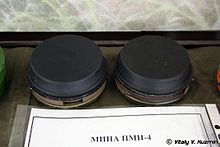
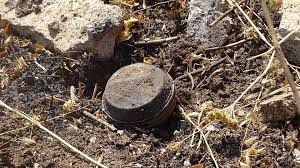
The PMN-4 is a delay-armed, pressure-fired blast-mine. The pressure-plate is black and the body is reddish-brown or khaki. The black rubber pressure-plate has a plastic pressure "spider" concealed underneath, shaped like flower-petals. The diameter of the mine is 95mm and the height is 46mm. The explosive charge weight is 55 grams. This comprises 52 grams of 'TG-40' (a 40/60 TNT/RDX mixture) plus a 3 gram pentolite booster. The total weight of the mine is 300 grams. PMN-4 mines contain a significant amount of metal components, so they are readily detectable with a mine detector. Details of the fuze mechanism are scarce, though given that the PMN-4 was designed during the early 1980s, it is logical to assume that the fuze is more sophisticated and/or reliable than the fuze in the PMN-2 (a mid-1970s design) to compensate for having a smaller explosive filling with significantly reduced destructive power. Similarly, the PMN-4 is almost certainly a blast resistant mine due to the design of the flower-shaped pressure "spider" under the pressure-plate.[2] Cross-sectional diagrams of the PMN-4 showing its components support the view that the PMN-4 is a more sophisticated design then the PMN-2.Examples of the PMN-4 have been encountered in Ukraine and Southern Syria.

Variants
PMN-1 The design of the PMN-1 mine dates from the late 1950s. It is particularly deadly because it contains an unusually large explosive filling when compared to most other anti-personnel landmines. For comparison, most anti-personnel blast mines (e.g. the VS-50) contain around 50 grams of high explosive, which typically destroys all or part of a victim's foot. In marked contrast, a PMN-1 contains 249 grams of explosive which can easily destroy a victim's entire leg (frequently requiring amputation high above the knee) in addition to inflicting severe injuries on the adjacent limb, which may also require some form of amputation due to blast injury. The majority of anti-personnel mine victims (e.g. those who step on an M14 mine containing 29 grams of explosive) have a very high probability of survival, though inevitably they suffer permanent disability regarding their gait. However, the amount of explosive inside a PMN-1 mine is so large that the risk of victims dying is significantly greater and, assuming that they survive their injuries, the degree of disability inflicted is much more severe. These mines are palm sized and cylindrical in shape. The PMN-1 has a bakelite case (brown or black in colour) with a black rubber pressure-plate and contains TNT explosive.
PMN-2 The PMN-2 mine casing is made from injection-molded plastic. In general, the color is leaf-green, but occasionally brown examples may be encountered. The top of the mine has a black rubber X-shaped pressure plate. The filling is an RDX/TNT based explosive that is quite similar to Composition B. As with the PMN-1, the PMN-2 has an unusually large explosive filling when compared to many other anti-personnel landmines.
System
Country of Manufacturer Russia
Emplacement Method manual, chute
Diameter 95 mm
Height (mm) 46 mm
Armor Penetration (mm)/ Kill Mechanism blast
Explosive Charge Weight 55 grams
Total Weight 300 grams
Details
Country of Origin Russia
Category Landmines
Land > Infantry Weapons > Landmines
Filter Label
P
Classification
Domain
Ground
Equipment Status
Active
Dimensions
Length
Width
0.1 m
Height
0.05 m
Weight
0.3 kg
Operators (2)
Russia
Ukraine
Something went wrong. Please reload the page. Reload