Pinzgauer 710M Austrian 4x4 High-Mobility All-Terrain Vehicle
Pinzgauer 710M
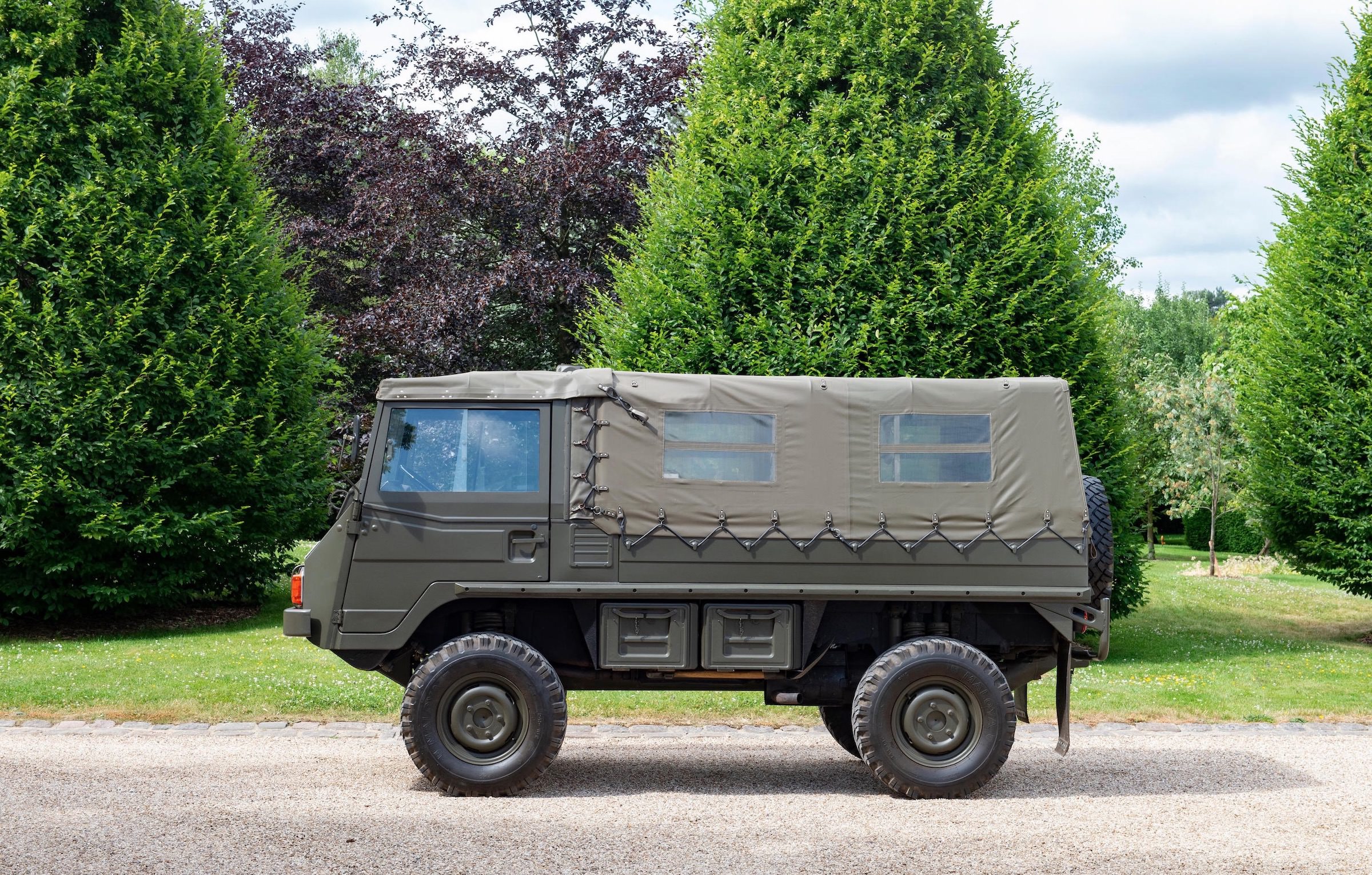
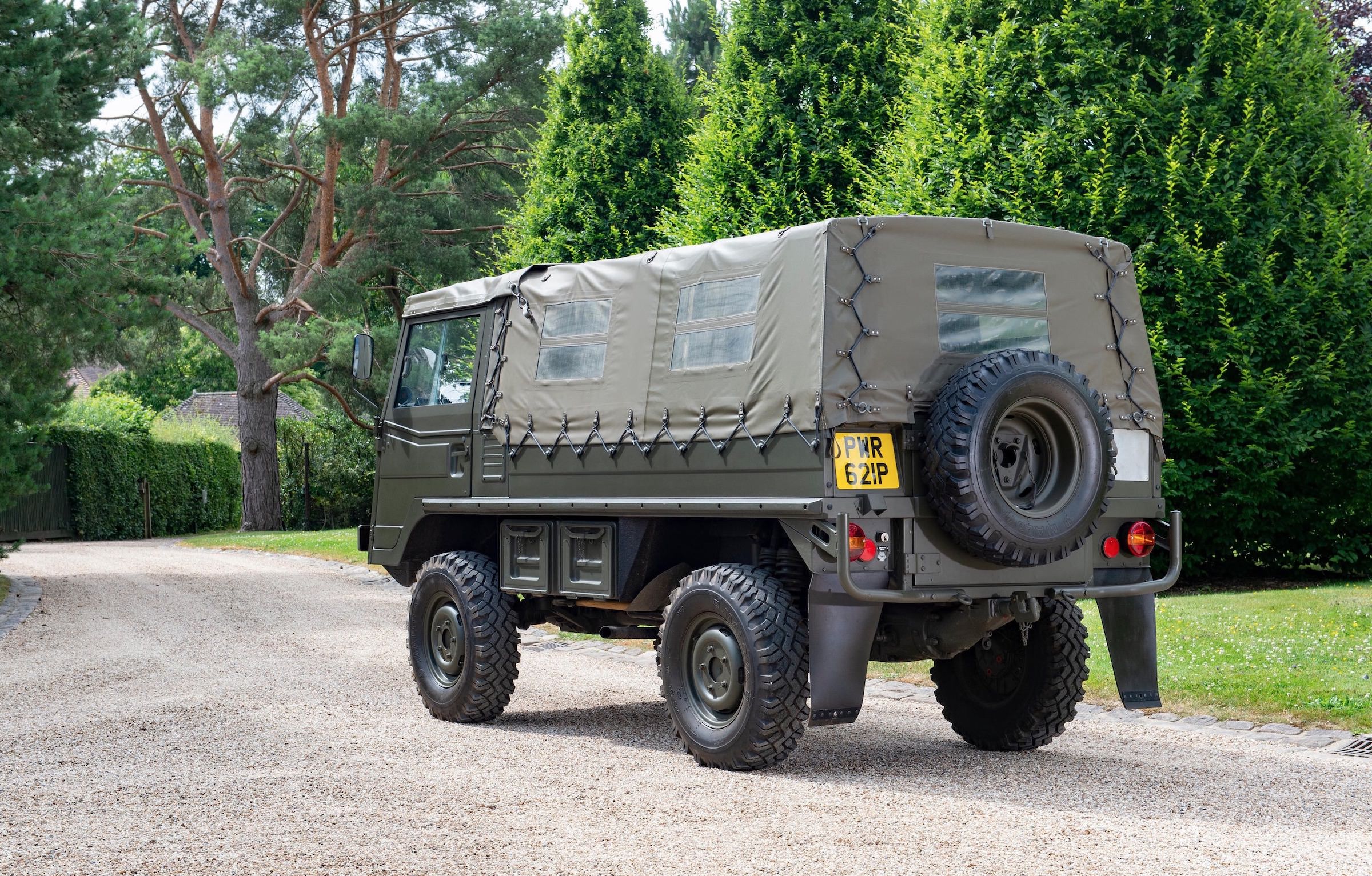
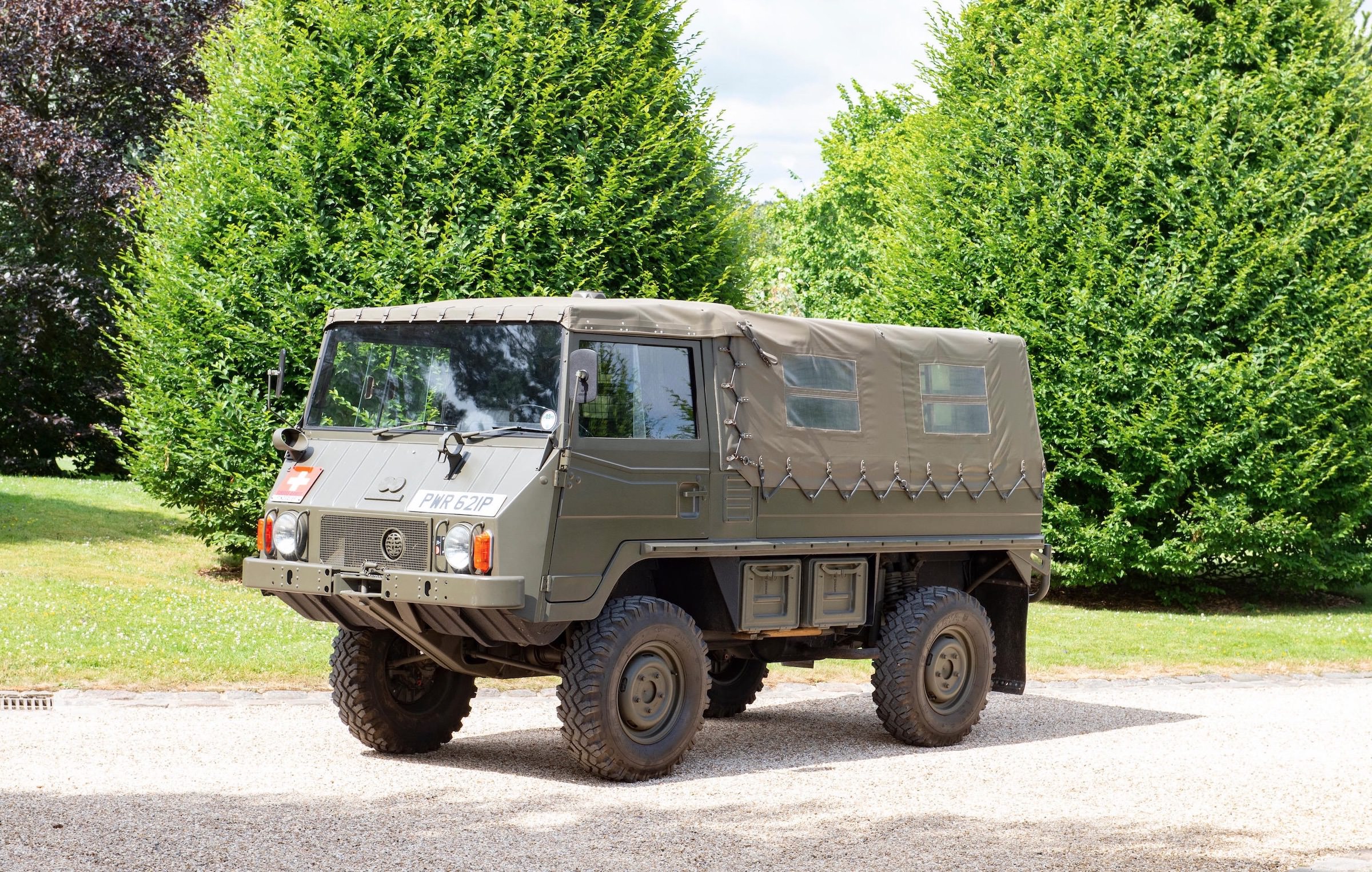
Pinzgauer 710M: Soft Top version with rear passenger seats (10 Total Passengers) The Pinzgauer is a family of high-mobility all-terrain 4WD (4×4) and 6WD (6×6) military utility vehicles. They were most recently manufactured at Guildford in Surrey, England by BAE Systems Land & Armaments. The vehicle was originally developed in the late 1960s and manufactured by Steyr-Daimler-Puch of Graz, Austria, and was named after the Pinzgauer, an Austrian breed of horse. It was popular amongst military buyers, and continued in production throughout the rest of the century. In 2000 the rights were sold to Automotive Technik Ltd (ATL) in the UK. ATL was subsequently acquired by Stewart & Stevenson Services, Inc. in 2005; in May 2006, Stewart & Stevenson became a subsidiary of the aerospace and defense group Armor Holdings, Inc.. One year later, Armor Holdings was acquired by BAE Systems plc, who discontinued UK production of the Pinzgauer, which was proving to be vulnerable to mines and improvised explosive devices in Afghanistan. Development work (done in the UK) on a planned Pinzgauer II was evaluated by a BAE subsidiary in Benoni, Gauteng, South Africa but no vehicle was ever made. First Generation: The original prototype was developed around 1969 and production began in 1971, as successor of the Steyr-Daimler-Puch Haflinger 700 AP 4×4 light military multi purpose offroad vehicle. The Pinzgauer first generation model (710, 712) was produced until 2000 by Steyr-Daimler-Puch in the city of Graz, Austria. It was, and is in use in many armies around the world like Austria, Switzerland, United Kingdom, Saudi Arabia, Thailand, Albania, and Bolivia. When Austrian millionaire Mr. Stronach took over the shareholder majority of Steyr-Daimler-Puch off-road vehicles; he gave the right to build the Steyr Pinzgauer to Automotive Technik Ltd (now BAE). As of 2009, in the Graz plant, the Mercedes-Benz G Wagon / Puch G off-road vehicles were being built. The Pinzgauer is one of the most capable all-terrain vehicles ever made.[citation needed] While not as fast on-road (110 kilometers per hour (68 mph)) as an American Humvee, it can carry more troops, and move faster over rough trails. Even the smaller 710M can carry 10 people or two NATO pallets. Both the 4×4 and 6×6 models can tow 5,000 kilograms (11,023 lb) on road; and 1,500 kilograms (3,307 lb) or 1,800 kilograms (3,968 lb), respectively, off-road. It has a range of over 400 kilometers (249 mi) on one tank of fuel, or nearly 700 kilometers (435 mi) with the optional 125 liter tank. The first generation Pinzgauer is available in both four-wheel drive (4×4) (model 710) and six-wheel drive (6×6) (model 712) versions. The Pinzgauer was designed to be reliable and easy to fix; it is shipped with an air-cooled petrol engine with dual-Zenith 36 mm NDIX carburetors. The engine in the Pinzgauer was specifically designed for the vehicle; it has more than one oil pump so that the engine will not get starved of oil no matter how the vehicle is oriented. The Pinzgauer has a chassis design which contributes to its high mobility. It has a central tube chassis with a transaxle which distributes the weight more evenly, and keeps the center of gravity as low as possible. The differentials are all sealed units and require minimal additional lubrication. The Pinzgauer also has portal axles like the Unimog to provide extra clearance over obstacles. The 710 4×4 was the more popular variant, but the Pinzgauer was designed to have a very capable 6×6 configuration from the start. The rear suspension on the back of the 6×6 712 is designed to provide maximum traction in the most demanding circumstances along with increasing its towing, load carrying, and off-road abilities. During production from 1971 until 1985, 18,349 first-generation 710s and 712s were produced and sold to both civilian and military customers. Second generation: In 1980, Steyr-Daimler-Puch started development on a second generation Pinzgauer. After six years of research and development, the initial second generation Pinzgauer II rolled off the assembly line in 1986. In 2000, Magna, who bought Steyr-Daimler-Puch, sold its rights to the Pinzgauer to Automotive Technik in the UK who took over production of the Pinzgauer. The Pinzgauer is now owned and produced by BAE Systems Land Systems in Guildford, Surrey, however production has ceased. The four-wheel drive (4×4) model is now called a 716, and the six-wheel drive (6×6) model is now called a 718. The same letter body type designations apply. The new 716 has the same payload rating as the old 712, and the new 718 also has a similarly higher payload capacity. There were a few minor changes to the design of the Pinzgauer II: Inline six-cylinder Volkswagen Group Turbocharged diesel engine model D24T; ZF Friedrichshafen four-speed automatic transmission, or five-speed manual transmission; Slightly wider track; Slightly bigger tires; Disc brakes; Standard automatic transmission, with optional manual transmission. The second generation motor vehicle went through several minor revisions through its life, unlike the first generation which used the same design throughout production. The first second-generation Pinzgauers were designated P80 (1980). It went through a minor revision in 1990 (P90), and 1993 (P93), when an intercooler version of the VW engine (D24TIC) was substituted. A more significant engine change was carried out in 2002 when a new Volkswagen Group Turbocharged Direct Injection (TDI) engine was introduced to meet the new Euro3 emissions requirements.