MiG-21PFM (Fishbed-F) Russian Fighter Aircraft
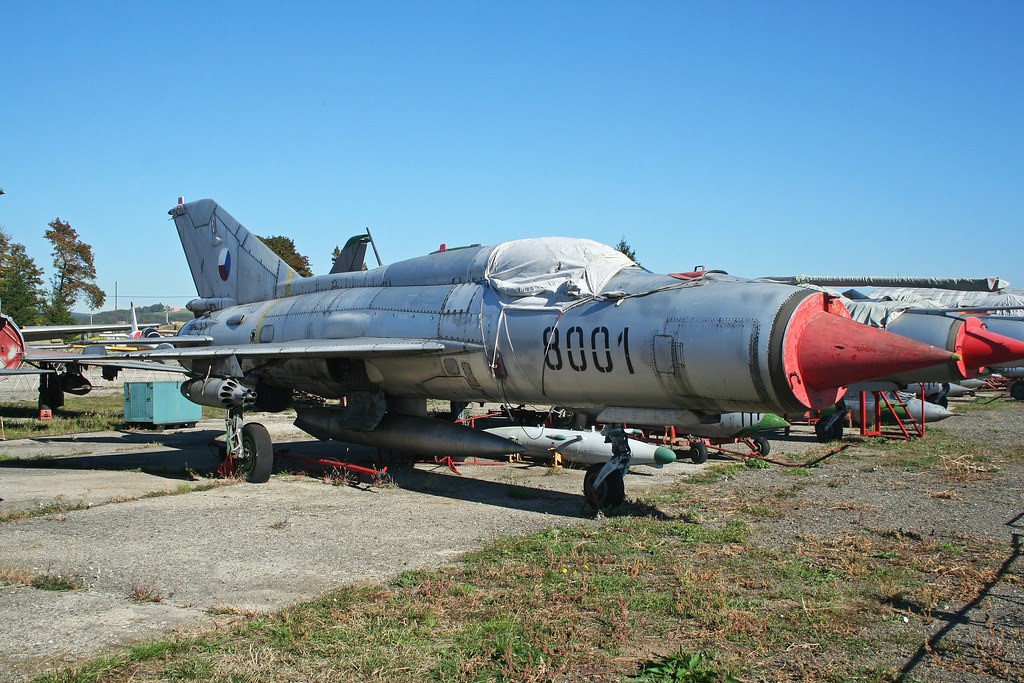
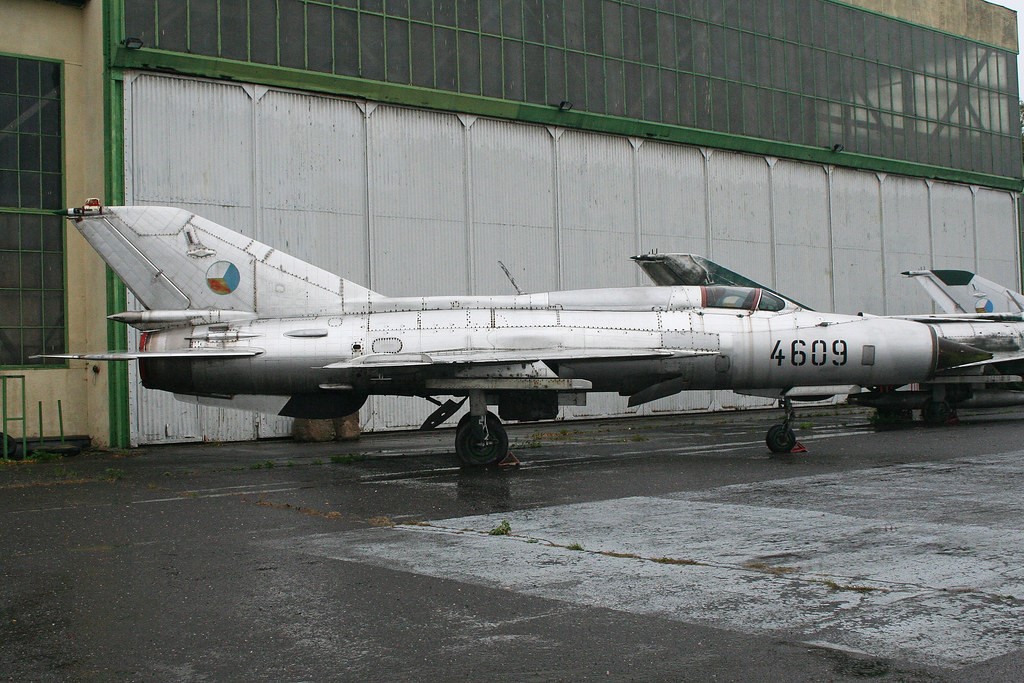

MiG-21PFM Fishbed-F This is a NATO designation for MiG-21PF. Modified PF/PFS (M = modifikatsirovanny). It incorporates a series of changes made during PF production and adds a side-hinged canopy and broader vertical tail surfaces. The Mikoyan-Gurevich MiG-21 (Russian: Микоян и Гуревич МиГ-21; NATO reporting name: Fishbed) is a supersonic jet fighter and interceptor aircraft, designed by the Mikoyan-Gurevich Design Bureau in the Soviet Union. Its nicknames include Balalaika because its planform resembles the stringed musical instrument of the same name; Ołówek, Polish for "pencil", due to the shape of its fuselage, and; Én bạc, meaning "Silver Swallow", in Vietnamese. Approximately 60 countries over four continents have flown the MiG-21, and it still serves many nations six decades after its maiden flight. It made aviation records, became the most-produced supersonic jet aircraft in aviation history, the most-produced combat aircraft since the Korean War, and previously the longest production run of a combat aircraft (now exceeded by both the McDonnell Douglas F-15 Eagle and General Dynamics F-16 Fighting Falcon). It's also one of the earliest examples of planes capable of performing the Cobra maneuver. The MiG-21 was the first successful Soviet aircraft combining fighter and interceptor characteristics in a single aircraft. It was a lightweight fighter, achieving Mach 2 with a relatively low-powered afterburning turbojet, and is thus comparable to the American Lockheed F-104 Starfighter and Northrop F-5 Freedom Fighter, and the French Dassault Mirage III. Its basic layout was used for numerous other Soviet designs; delta-winged aircraft included the Su-9 interceptor and the fast E-150 prototype from the MiG bureau while the mass-produced successful front fighter Su-7 and Mikoyan's I-75 experimental interceptor combined a similar fuselage shape with swept-back wings. However, the characteristic layout with the shock cone and front air intake did not see widespread use outside the USSR and finally proved to have limited development potential, mainly because of the very small space available for the radar. Like many aircraft designed as interceptors, the MiG-21 had a short-range. This was exacerbated by the poor placement of the internal fuel tanks ahead of the center of gravity. As the internal fuel was consumed, the center of gravity would shift rearward beyond acceptable parameters. This had the effect of making the plane statically unstable to the point of being difficult to control, resulting in an endurance of only 45 minutes in clean conditions. This can be somewhat countered by carrying fuel in external tanks closer to the center of gravity. The Chinese variants somewhat improved the internal fuel tank layout (also the second generation of Soviet variants), and also carry significantly larger external fuel tanks to counter this issue. Additionally, when more than half the fuel was used up, violent maneuvers prevented fuel from flowing into the engine thereby causing it to shut down in flight. This increased the risk of tank implosions (MiG-21 had tanks pressurized with air from the engine's compressor), a problem inherited from the MiG-15, MiG-17, and MiG-19. The short endurance and low fuel capacity of the MiG-21F, PF, PFM, S/SM, and M/MF variants—though each had a somewhat greater fuel capacity than its predecessor—led to the development of the MT and SMT variants. These had an increased range of 250 km (155 mi) compared to the MiG-21SM but at the cost of worsening all other performance figures, such as a lower service ceiling and slower time to altitude. The delta wing, while excellent for a fast-climbing interceptor, meant any form of turning combat led to a rapid loss of speed. However, the light loading of the aircraft could mean that a climb rate of 235 m/s (46,250 ft/min) was possible with a combat-loaded MiG-21bis, not far short of the performance of the later F-16A. Mig-21's Tumansky R-25 jet engine's specialty was the addition of a second fuel pump in the afterburning stage. Activating the ЧР (rus. "чрезвычайный режим" - emergency mode) booster feature allows the engine to develop 97.4 kilonewtons (21,896 lbf) of thrust under 4,000 meters (13,000 ft) of altitude. The limit of operation is 1 minute for dogfight practice and 3 minutes for an actual wartime emergency, as further use causes the engine to overheat. Use of this "diamond regime" provided a massive 97.4 kN of thrust for no more than 3 minutes in actual wartime use. Use of this temporary power gave the MiG-21bis slightly better than 1:1 thrust-to-weight ratio and a climbing rate of 254 meters/second, equalling the F-16's nominal capabilities in a close-quarters dogfight. In air combat practice with the MiG-21bis, the use of WEP thrust was limited to 1 minute, to spare on the engines' 800 flight hours lifetime, since every second of super-afterburner use counted as several minutes of regular power run due to extreme thermal stress. When WEP was on, the MiG-21bis's R-25 engine produced a huge 5-meter-long blowtorch exhaust - the six or seven brightly glowing rhomboids "shock diamonds" visible inside the flames gave the emergency-power setting its "diamond regime" name. Given a skilled pilot and capable missiles, it could give a good account of itself against contemporary fighters. Its G-limits were increased from +7Gs in initial variants to +8.5Gs in the latest variants. It was replaced by the newer variable-geometry MiG-23 and MiG-27 for ground support duties. However, not until the MiG-29 would the Soviet Union ultimately replace the MiG-21 as a maneuvering dogfighter to counter new American air superiority types. The MiG-21 was exported widely and remains in use. The aircraft's simple controls, engine, weapons, and avionics were typical of Soviet-era military designs. The use of a tail with the delta wing aids stability and control at the extremes of the flight envelope, enhancing safety for lower-skilled pilots; this, in turn, enhanced its marketability in exports to developing countries with limited training programs and restricted pilot pools. While technologically inferior to the more advanced fighters it often faced, low production and maintenance costs made it a favorite of nations buying Eastern Bloc military hardware. Several Russian, Israeli, and Romanian firms have begun to offer upgrade packages to MiG-21 operators, designed to bring the aircraft up to a modern standard, with greatly upgraded avionics and armaments.