Tomahawk American Long-Range Cruise Missile
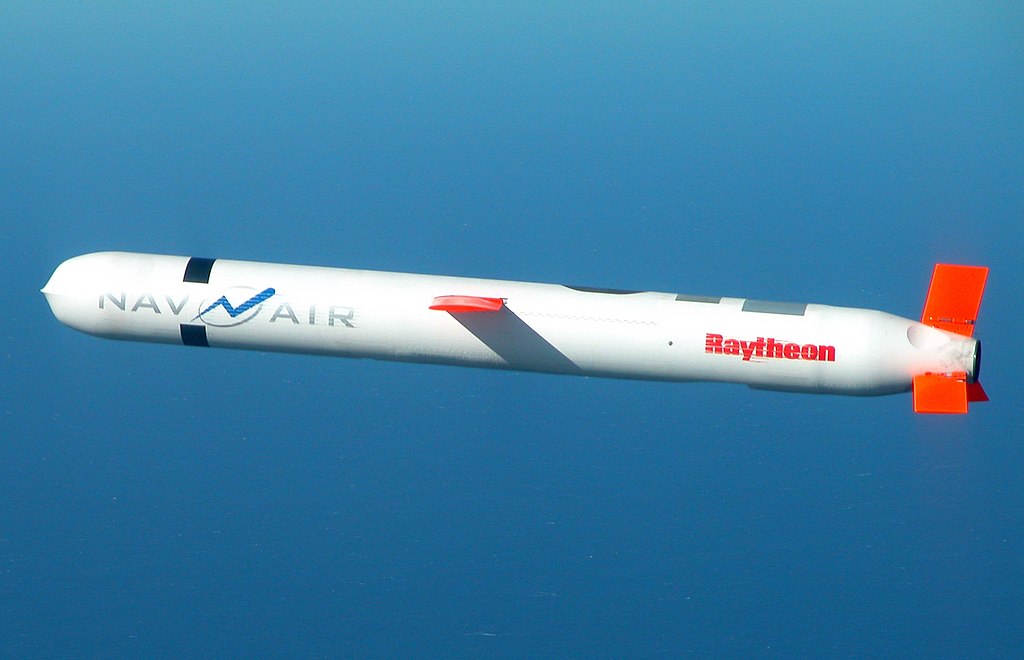
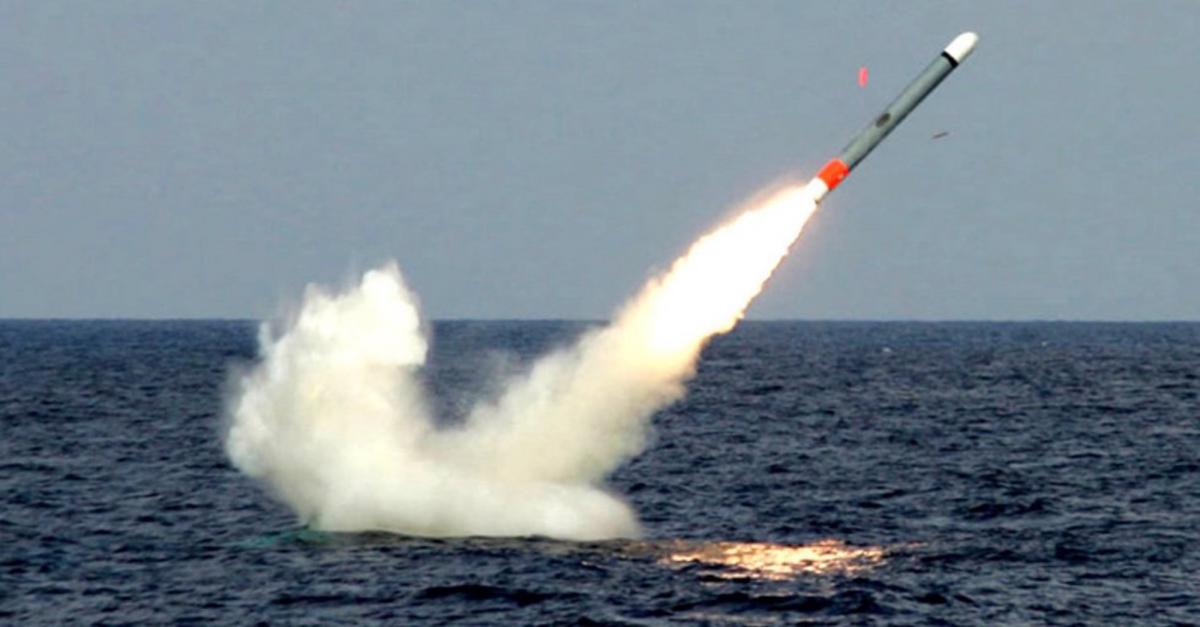

The Tomahawk (/ˈtɒməhɔːk/) Land Attack Missile (TLAM) is a long-range, all-weather, jet-powered, subsonic cruise missile that is primarily used by the United States Navy and Royal Navy in ship- and submarine-based land-attack operations. It was designed and initially produced in the 1970s by General Dynamics as a medium- to long-range, low-altitude missile that could be launched from a surface platform. The missile's modular design accommodates a wide variety of warhead, guidance, and range capabilities. At least six variants and multiple upgraded versions have been introduced since then, including air-, sub-, and ground-launched variants and conventional and nuclear-armed ones. As of 2019, only non-nuclear, sea-launched variants are currently in service. The U.S. Navy launched the BGM-109 Tomahawk project, hiring James H. Walker and a team of scientists at the Applied Physics Laboratory near Laurel, Maryland. Since then, it has been upgraded several times with guidance systems for precision navigation. In 1992–1994, McDonnell Douglas Corporation was the sole supplier of Tomahawk Missiles and produced Block II and Block III Tomahawk missiles and remanufactured many Tomahawks to Block III specifications. In 1994, Hughes outbid McDonnell Douglas Aerospace to become the sole supplier of Tomahawk missiles. It is now manufactured by Raytheon. In 2016, the U.S. Department of Defense purchased 149 Tomahawk Block IV missiles for $202.3 million. Ground-launched cruise missiles (GLCM) and their truck-like launch vehicles were employed at bases in Europe; they were withdrawn from service to comply with the 1987 Intermediate-Range Nuclear Forces Treaty. Many of the anti-ship versions were converted into TLAMs at the end of the Cold War. The Block III TLAMs that entered service in 1993 can fly 3 percent farther using their new turbofan engines and use Global Positioning System (GPS) receivers to strike more precisely. Block III TLAM-Cs retain the Digital Scene Matching Area Correlation (DSMAC) II navigation system, allowing three kinds of navigation: GPS-only, which allow for rapid mission planning, with some reduced accuracy, DSMAC-only, which take longer to plan but terminal accuracy is somewhat better; and GPS-aided missions that combine DSMAC II and GPS navigation for greatest accuracy.Block IV TLAMs have an improved turbofan engine that allows them to launch more quickly, get better fuel economy, and change speeds in flight. The Block IV TLAMs can loiter better and have a real-time targeting system for striking fleeing targets and electro-optical sensors that allow real-time battle damage assessment. The Block IVs can be given a new target in flight and can transmit an image, via satcom, immediately before impact to help determine whether the missile is on target and the likely damage from the attack.