Type 073A Class (Yunshu Class) Chinese Landing Ship
Type 073A Class
Landing Ship Dock (LSD)
Spotted an error? Sign in to suggest an edit.
Other
Basic Information
Name
Type 073A Class (Yunshu Class) Chinese Landing Ship
Designation
Type 073A Class
Alternate Designation
Type 073A Class; Yunshu Class
Equipment Type
Landing Ship Dock (LSD)
Manufacturer
—
Date of Introduction
2001
Description
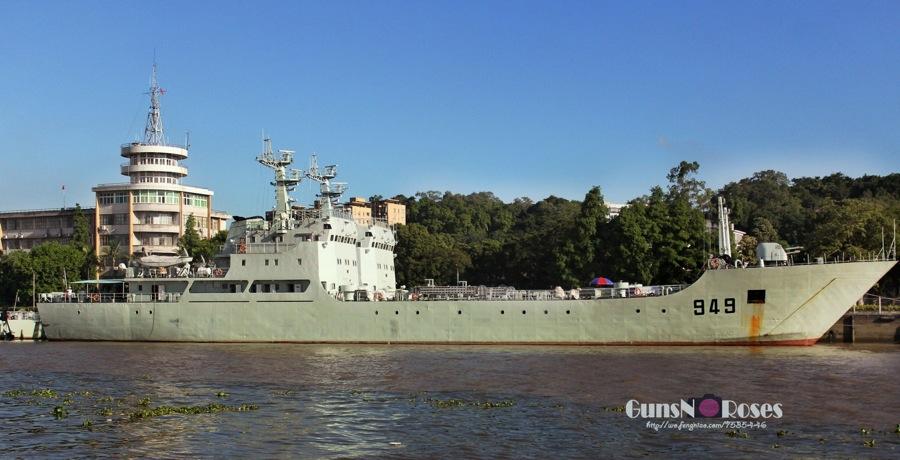
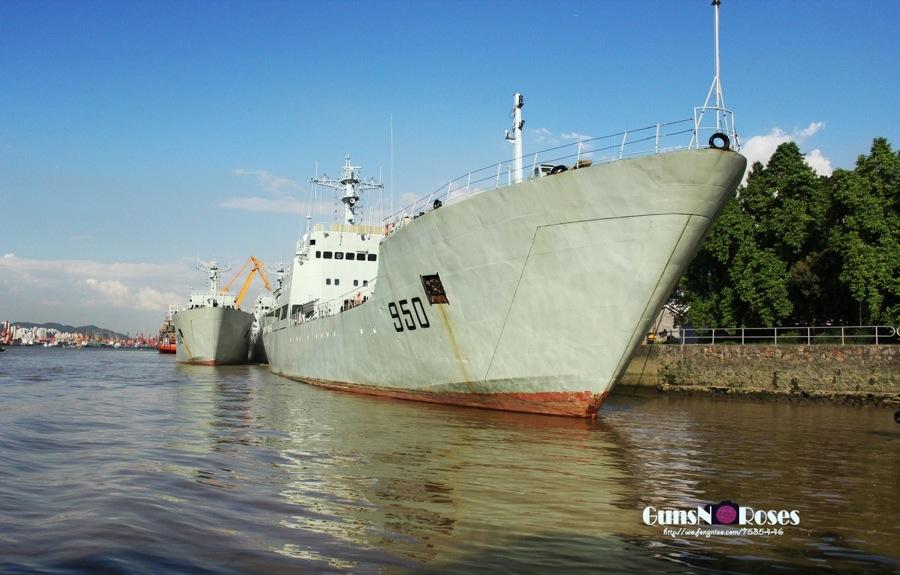
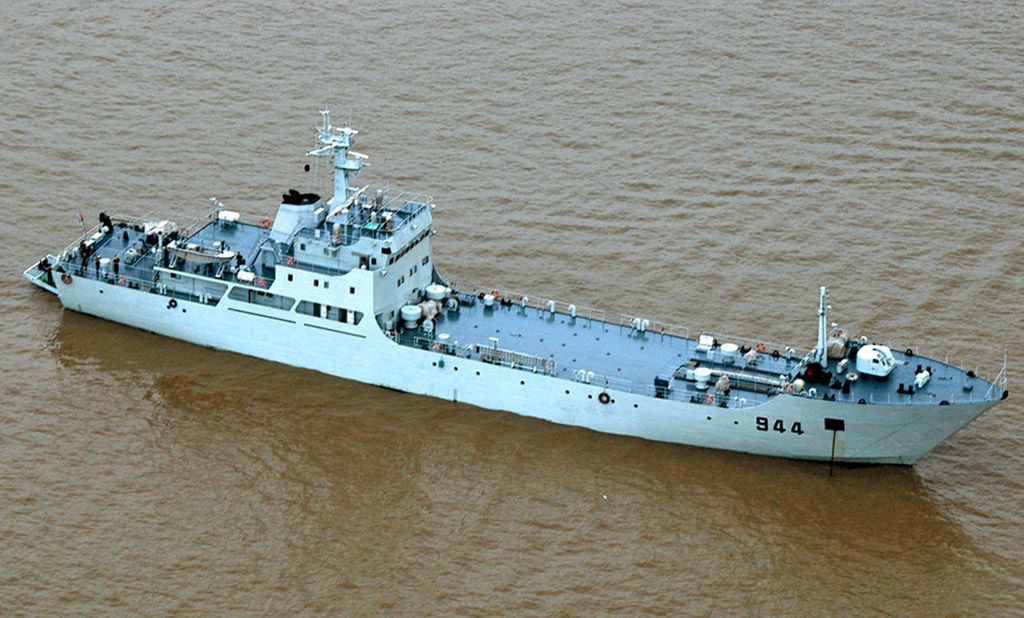
After the completion of the first unit (pennant # 990), it takes a decade for more units to follow, and 10 more entered service between 2001 through 2002. These later units are slightly larger in displacement at 2,000 tons, and more advanced equipment, mainly in electronics and onboard machinery. This latest batch is referred to as the Type 073A landing ship (NATO reporting name: Yunshu-class). Pennant numbers; 941 (Shengzhou Hill), 942 (Lushan), 943 (Monsanto), 944 (Yushan), 945 (Huashan), 946 (Songshan), 947, 948, 949 (Hengshan), 950 (Taishan).
Ground Specifications
Crew
70
Variants
Type 073 Yudao-class landing ship
Requirement of the Type 073-class landing ship was finalized in May 1965, and design work by Shanghai-based 708th Research Institute completed just 4 months later in September 1965. Preparation to build this class was completed in October 1966, and construction begun a month later in November 1966. Due to political turmoil in China at the time, namely, Cultural Revolution, it was not until almost three years later in August 1969 when the ship was launched. From November 1969 thru December 1969, extensive trials were conducted and the ship was handed over to PLAN in December 1969 for further tests. In 1970 more tests were conducted with more than 7,000 km (3,800 nmi; 4,300 mi) logged, and the longest trip was from Chongqing to Dalian.
However, trials revealed that the vibration was too great at high speed, and the Type 073 did not enter production. Redesign work designated as Type 073II immediately started after the trials of the first unit ended, and the first unit entered PLAN service with pennant number 904 and was subsequently designated as Type 073I, and was later ordered to be fully converted to Type 073II standard. Due to the political turmoil at the time, conversion was not completed until 1975.
Type 073II Yudao-class landing ship
Shortcomings of Type 073I exposed in trials caused a crush program to rework and redesign at Dalian Shipyard, but due to political turmoil in China at the time, it was not sufficient to correct the problem completely. Shipyard # 9308 in Anhui petitioned the 6th Machinery Industrial Ministry and Anhui provincial Defense Industrial Office to construct Type 73II LSM in 1975, which was approved in April 1976, with orders for 3 ships. Construction of the first Type 073II LSM at Shipyard # 9308 begun five months later in September 1976, and it was launched in June 1978. From 1978 to 1979, extensive trials were conducted and the ship was handed over to PLAN in early 1980, with pennant number East Transport 757 (East Transport = Dong Yun 东运 in Chinese), meaning Transport 757 of East Sea Fleet of PLAN. This unit was later reassigned as # 937.
The primary difference between Type 073I and Type 073II is in the engine. Additional balance weight was added to the diesel engine which solved the vibration problem, but the reliability issue of the engine remain unsolved, and as a result, Type 073II did not enter mass production, just like its predecessor Type 073I.
Type 073IIY Yudao-class landing ship
As the mass production plan for Type 073II was cancelled due to reliability problem of its engine, Shipyard # 9308 begun to modify the remaining two units that were already being built, which was successfully completed in September 1985. The resulting type is Type 073IIY landing ship, with Y for Yun (运), meaning transport in Chinese. Type 073I, Type 073II, and Type 073IIY all received the NATO reporting name Yudao-class. A total of two units of Type 073IIY were completed, with pennant #s 937 and 938. The primary difference between Type 073II and Type 073 IIY includes more than 100 upgrades in addition to engine improvement.
Type 073III Yudeng-class landing ship
The reliability problem of the engine of Type 073 series was not completely solved until the appearance of Type 073III landing ship, with NATO reporting name Yudeng-class. The D-39 engine that is reliable only at slower speed was replaced by a new engine that is reliable at all speeds, and displacement is also increased. Only one unit entered service, with pennant # 990 in 1991.
Type 073A Yunshu-class landing ship
After the completion of the first unit (pennant # 990), it takes a decade for more units to follow, and 10 more entered service between 2001 through 2002. These later units are slightly larger in displacement at 2,000 tons, and more advanced equipment, mainly in electronics and on board machinery. This latest batch is referred to as the Type 073A landing ship (NATO reporting name: Yunshu-class). Pennant numbers; 941 (Shengzhou Hill), 942 (Lushan), 943 (Monsanto), 944 (Yushan), 945 (Huashan), 946 (Songshan), 947, 948, 949 (Hengshan), 950 (Taishan).
System
Alternative Designation
Type 073A Class; Yunshu Class
Type
Landing Ship
Builder
Shanghai-based 708th Research Institute
In Service
INA
Crew
70 ea
Cargo Capacity
250 tons or
5 × medium tanks or
10 × amphibious light tanks or
500 fully equipped troops
Dimensions
Length
87 m
Beam
12.6 m
Draft
2.25 m
Displacement, Full Load
2,000 tons full
Propulsion System
Engine Name
2 × 6PA6L-380
Engine Type
Diesel
Engine Power
3,540 kW (4,750 hp) each
Maximum Range
1,500 nmi (2,800 km; 1,700 mi) at 14 knots (26 km/h; 16 mph)
Maximum Speed
17 knots (31 km/h; 20 mph)
Endurance
INA
Main Weapon System
System
Name
Type 76
Type
Naval Gun
Caliber
37 mm
Quantity
2 × Type 76 twin 37 mm AAA
Note
The Type 76 is a further development of the Type 65. The Chinese military wanted to further improve the Type 65 by incorporating a fully automatic operational mode, but political turmoil from the Cultural Revolution delayed development of the Type 65's successor until its eventual release in 1976.
The Type 76 incorporated a fully automatic operational mode, though the semi-automatic operational mode was retained as a backup measure. The model's rate of fire could reach a maximum rate of 400 rounds per minute per barrel (cyclic). The gun saw military action in the 1988 Spratly Islands naval battle and received positive feedback from the Chinese navy.
Ammunition
Type
Rifle
Caliber
37 mm
Cartridge
INA
Basic Load
INA
Auxiliary Weapon Systems #1
Missile Launcher
Name
Type 81H Launcher
Type
Rocket Launcher
Quantity
1 ea
Length
9.8 m
Width
3.24 m
Height
3.50 m
Crew
5 ea
Barrels
40 ea
Traverse
360°
Elevation
INA
Rocket
Name
Type 81H
Type
Rocket
Caliber
122 mm
Length
1.5 m
Diameter
INA
Weight
200.0 kg
Basic Load
INA
Targets
Targets: Surface Vessel, Land Structure - Soft, Land Structure - Hardened, Mobile Target - Soft, Mobile Target -
Hardened
Maximum Surface Effective Range
9.3 km
Fire Control System
FCS Name
INA
Computerized FCS
INA
Protection
Active Protection System
INA
Countermeasures
INA
NBC Water Washdown System
INA
Details
Country of Origin
China
Category
Naval
Naval
Filter Label
T
Classification
Domain
Ground
Equipment Status
Active
Dimensions
Length
87 m
Width
—
Height
—
Weight
2000000 kg
Operators (1)
China
Something went wrong. Please reload the page.
Reload