ARMSNET
Military Equipment Database
Initializing 0%

Bird-Eye 400 Israeli Reconnaissance Unmanned Aerial Vehicle (UAV)

Bird Eye 400

Spotted an error? Sign in to suggest an edit.
Basic Information
Name
Bird-Eye 400 Israeli Reconnaissance Unmanned Aerial Vehicle (UAV)
Designation
Bird Eye 400
Alternate Designation
Bird Eye 400
Equipment Type
Manufacturer
Israel Aerospace Industries (IAI)
Date of Introduction
2005
Description

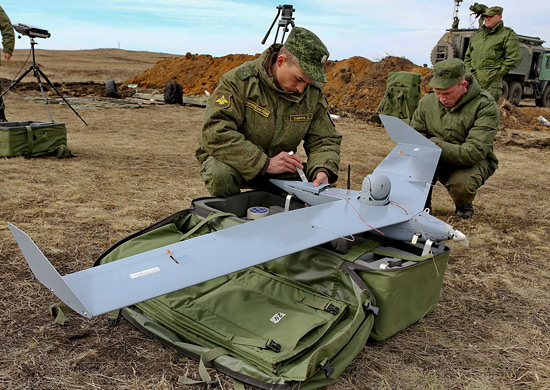
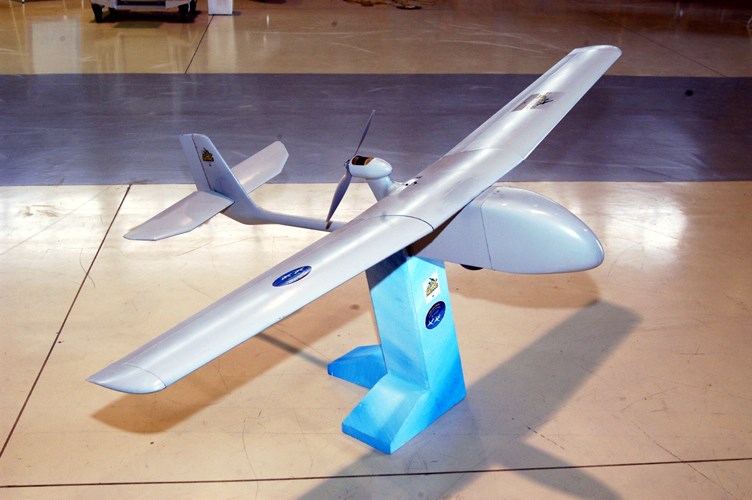
The Bird Eye 400 is a mini unmanned aerial vehicle (UAV) designed for urban and "over the hill" intelligence, surveillance and damage-assessment operations. The air vehicle captures real-time imagery and transmits it back to the portable ground control system via a satellite communication data link. Flight modes include automatic launch, navigation, return to base, hold and auto-recovery. The man-portable system is carried in two backpacks and can be deployed by two crewmembers in 30 minutes. The air vehicle has an underbelly camera for optimal coverage with a stabilized picture and high-resolution imagery. The Bird Eye 400 can be launched by hand or with a bungee system. The air vehicle utilizes a turn-over landing maneuver to protect the payload. The Bird Eye 400 has a flap system that lowers the aircraft's nose into a deep stall before landing on its back. Two elastic "shock absorbers" on the upper part of the UAV hit the ground first and reduce its impact, while its electric motor drives a hinged propeller, which also helps to avoid damage. The electrical propulsion system also minimizes its acoustic signature. Each system consists of three air vehicles; electro-optical/infrared payloads; portable ground-control station; data link; and a power source and repair kit. The ground-control station features a portable remote video terminal and ground control equipment. The fitted computer monitor displays planned missions using digital maps and pre-programmed flight coordinates. The Bird Eye's gimbaled MicroPOP sensor turret features color TV and infrared cameras

Air & Air Defense Specifications
Engine 1 x electric (lithium batteries)
Max Speed 111.0 km/h
Endurance 90.00 hrs
Variants
Bird Eye 650 This is a larger version of the Bird Eye featuring additional batteries for an endurance of 12 hours. The system can be carried in three backpacks and operated by two crewmembers. It provides wide coverage with a stabilized day/night sensor payload and moving target tracker. The Bird Eye 650, as does its predecessor, is capable of fully automated and autonomous flight and has an electrical or fuel cell propulsion system. The air vehicle takes off from a folding mini-launcher or bungee system. It utilizes a flip-over recovery concept with parachute descent. The ground-control station is ruggedized and portable. The Bird Eye 650 is powered by an Aeropak integrated hydrogen proton exchange membrane fuel-cell system developed by Hydrogen Energy Systems in Singapore. The system delivers 600 watts of peak power and 900 watt/hour of net usable energy at less than 4.4 lb (2 kg) of weight. It uses hot-swappable cartridges that eliminate the need for battery chargers in the field. Payload options include Tamam's MicroPOP or Controp's Stabilized Miniature Payloads (STAMP). Potential missions include reconnaissance, urban, counterterrorism, law enforcement, patrol and convoy escort.
Bird Eye 650D Bird Eye 650D This is the latest variant. It is designed for military and paramilitary intelligence, surveillance and reconnaissance missions. Commercial applications include mapping, monitoring oil, gas and electrical distribution lines, water and pollution management and rapid surveillance of disaster areas. The UAV can conduct autonomous missions, including point takeoff and point recovery, at ranges of up to 90 mi (150 km) and with a maximum endurance of 15 hours. The air vehicle has a maximum takeoff weight of 66 lb (30 kg) and can carry a 12-lb (5.5-kg) payload, including an electro-optical infrared sensor. It is powered by a standard fuel engine. The Bird Eye 650D can be integrated with a variety of payloads, including gimbaled electro-optical sensors, passive electronic countermeasures and electronic warfare systems.
System
Alternative Designation Bird Eye 400
Type of UAV designed for urban and "over the hill" intelligence, surveillance and damage-assessment operations.
Manufacturer IAI Malat division.
Primary Function Reconnaissance UAV
Man-Portable Yes, The man-portable system is carried in two backpacks and can be deployed by two crewmembers in 30 minutes.
Takeoff or Landing Limitations None, the Bird Eye 400 can be launched by hand or with a Bungee System
Automatic Launch Yes
Navigation Yes
Return to Base Capable Yes
Hold and Auto-Recovery Capable Yes
Real-Time Imagery The air vehicle captures real-time imagery and transmits it back to the portable ground control system via a satellite communication data link.
Deployment Time 30 min
Camera Type underbelly camera for optimal coverage with a stabilized picture and high-resolution imagery.
System Package Each system consists of three air vehicles; electro-optical/infrared payloads; portable ground-control station; data link; and a power source and repair kit.
Ground Control Station The ground-control station features a portable remote video terminal and ground control equipment. The fitted computer monitor displays planned missions using digital maps and pre-programmed flight coordinates.
Note The air vehicle utilizes a turn-over landing maneuver to protect the payload.
Proliferation Israel, Russia and Singapore
Dimensions
Length 0.8 m
Width (Wing Span) 2.2 m
Height INA
Weight, Maximum Takeoff 5.6 kg
Weight, Payload 1.2 kg
Automotive
Engine Name INA
Engine Type 1 x electric (lithium batteries)
Engine Power INA
Range 15 km
Maximum Speed 111 km/h
Loiter Speed 59-93 km/h
Endurance 90 min
Mission Radius 10 km
Operational Altitude 150-460 m
Communications
Radio INA
Retrans Radio INA
Protection
Fuselage INA
Stealth Properties No
Heat Signature Reduction No
Add on Armor No
EW Counter Measures / CCM No
Counter Measures (Chaffs/Flares) No
Details
Country of Origin Israel
Category Very Low-Cost, Close-Range UAVs (Less than 5 km Range)
Air > Very Low-Cost, Close-Range UAVs (Less than 5 km Range)
Filter Label
B
Classification
Domain
Air & Air Defense
Equipment Status
Active
Dimensions
Length
0.8 m
Width
2.2 m
Height
Weight
5.6 kg
Operators (3)
Russia
Israel
Ukraine
Something went wrong. Please reload the page. Reload