ARMSNET
Military Equipment Database
Initializing 0%

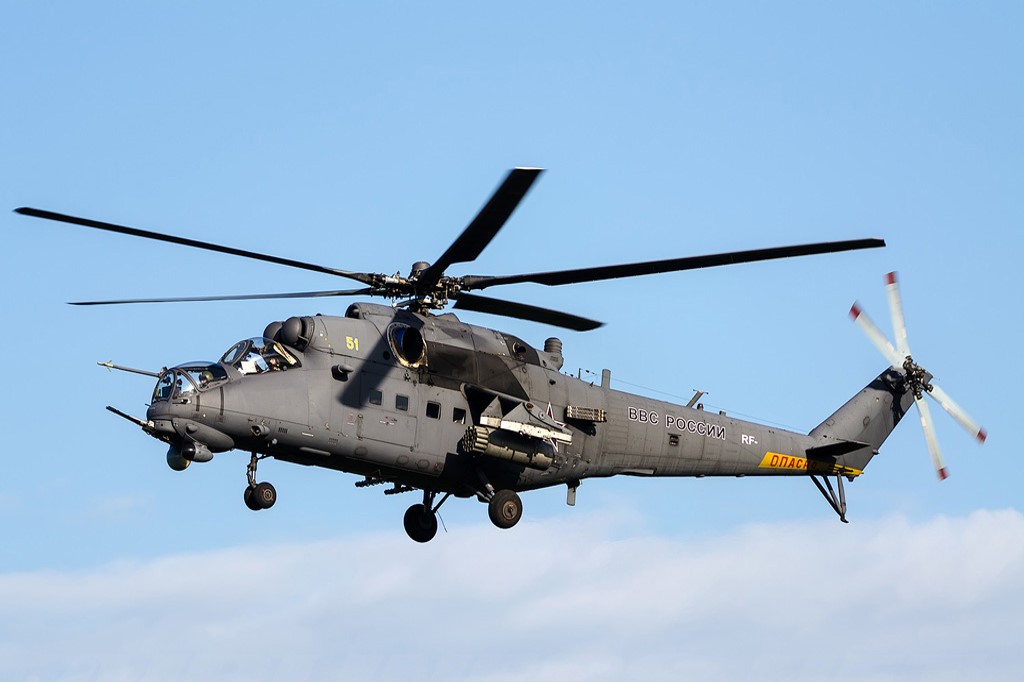
Mi-24 (Hind) Russian Attack Helicopter

Mil Mi-2

Attack Helicopter
Spotted an error? Sign in to suggest an edit.
Basic Information
Name
Mi-24 (Hind) Russian Attack Helicopter
Designation
Mil Mi-2
Alternate Designation
Mil Mi-2; NATO: Hind
Equipment Type
Attack Helicopter
Manufacturer
Sukhoi
Date of Introduction
1972
Description

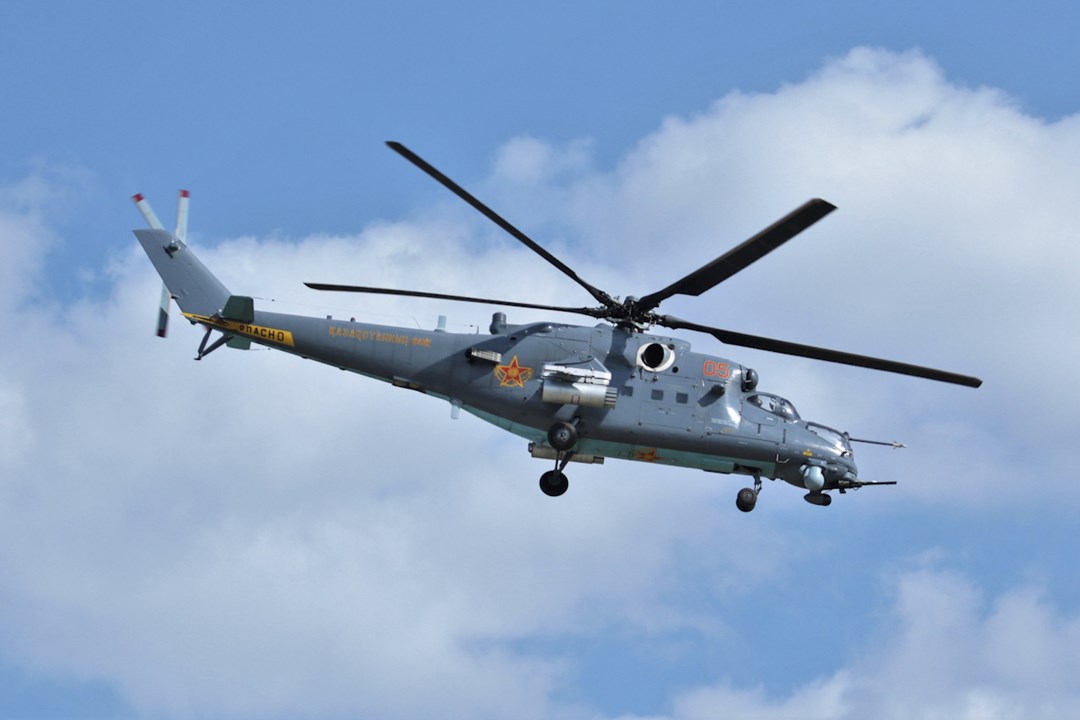
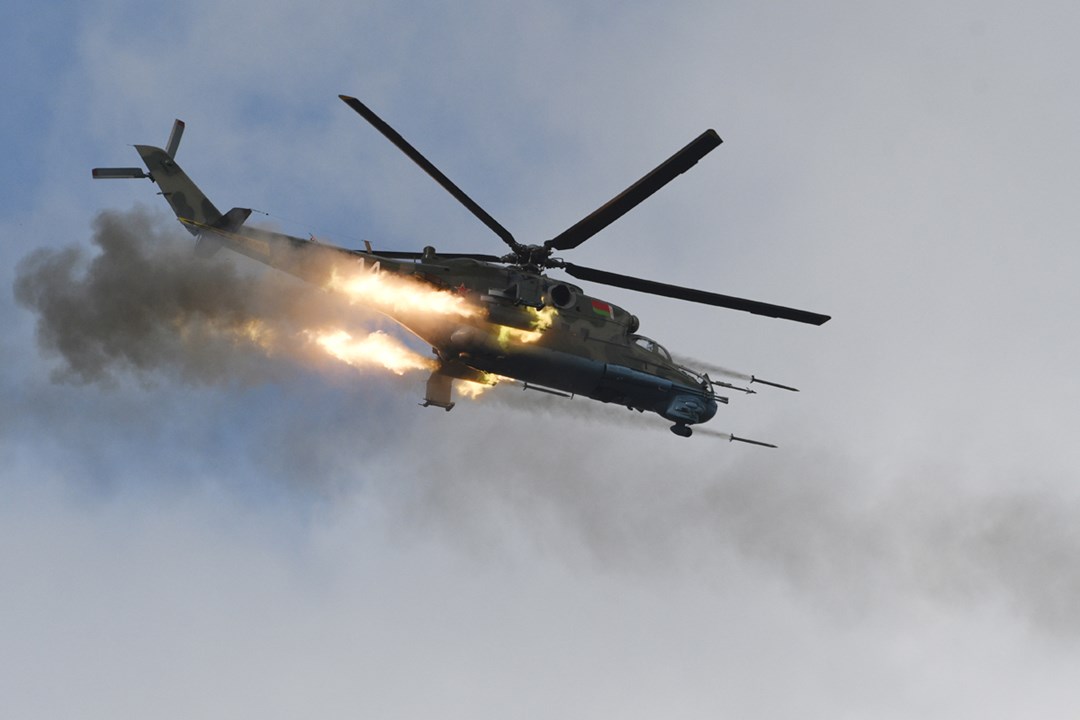
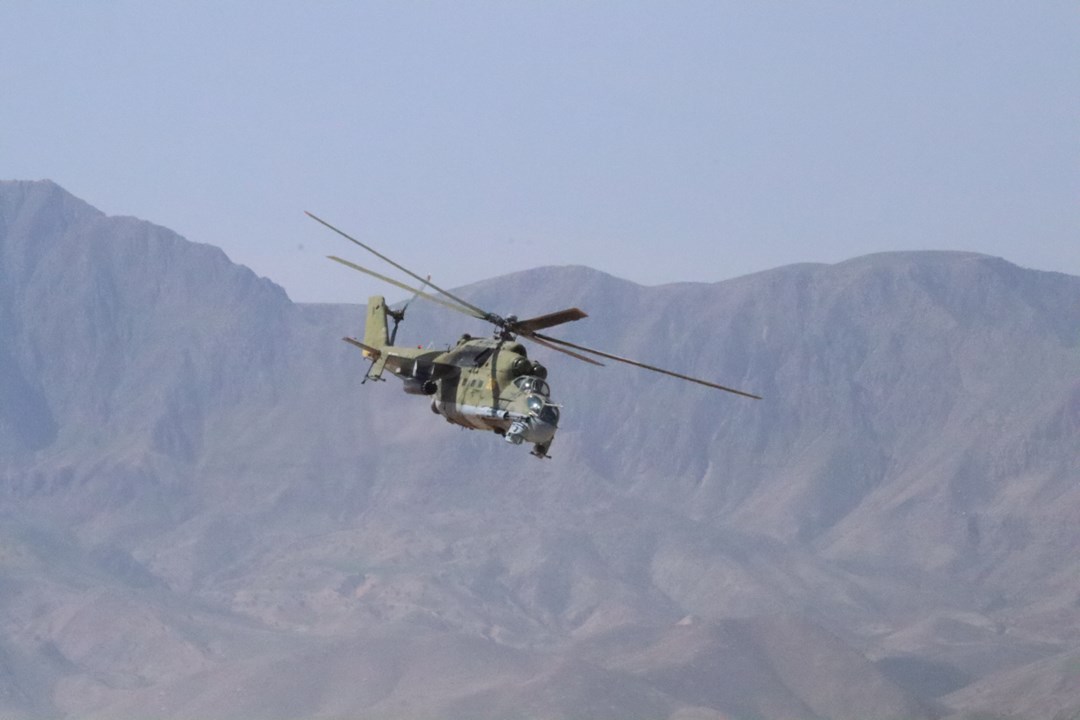
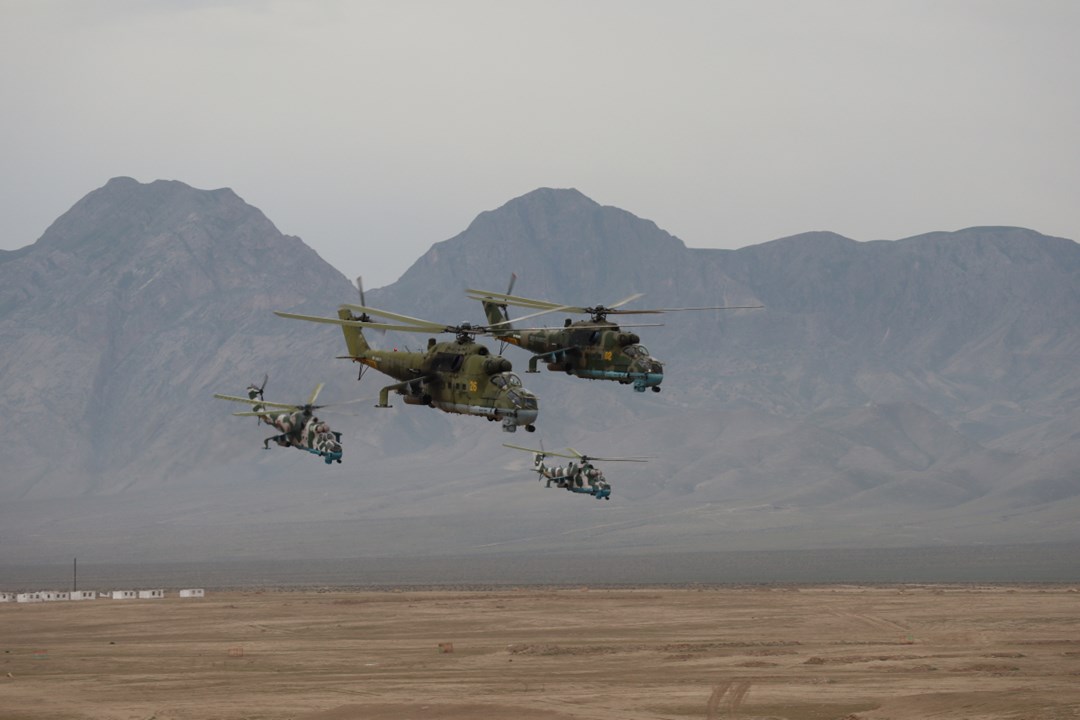
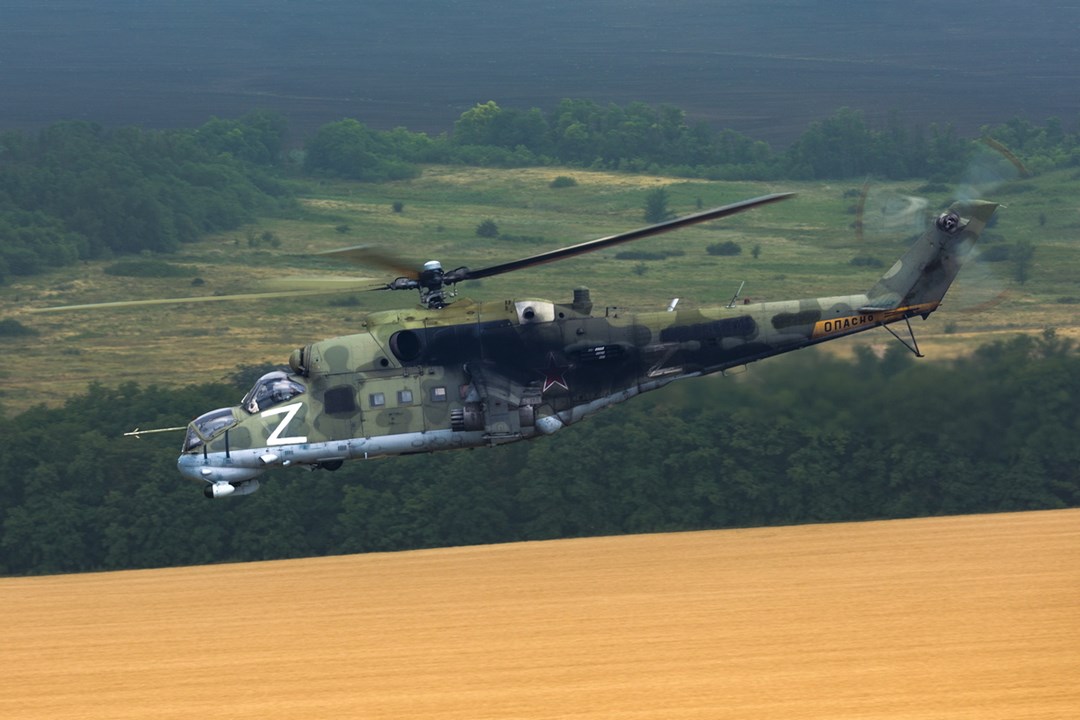
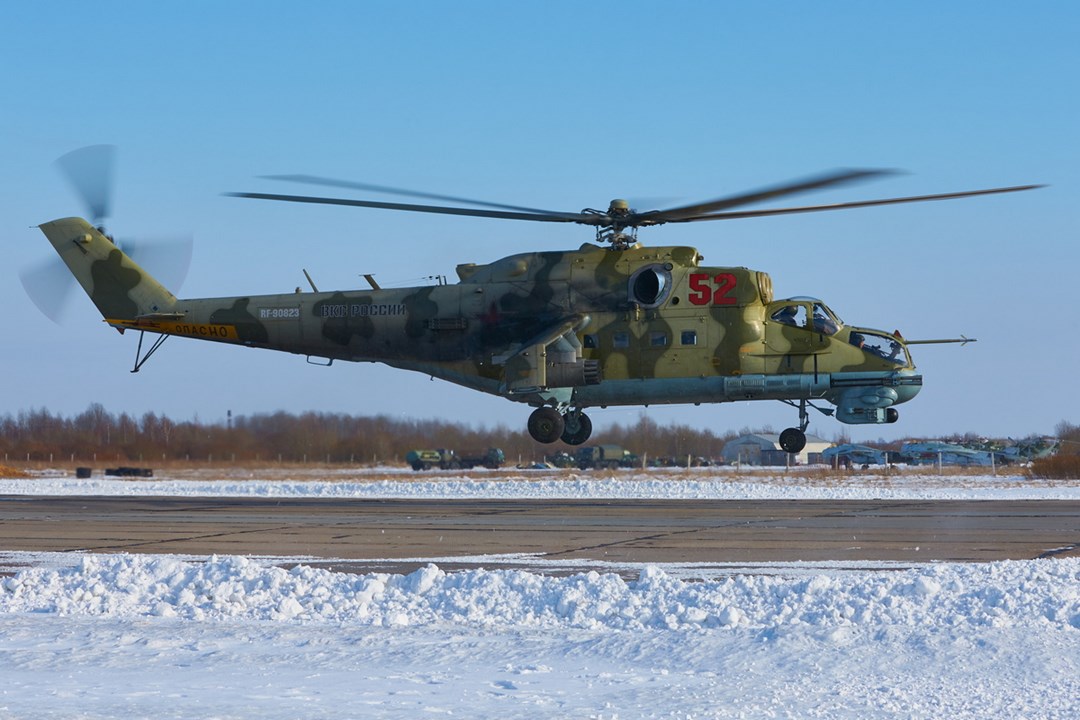
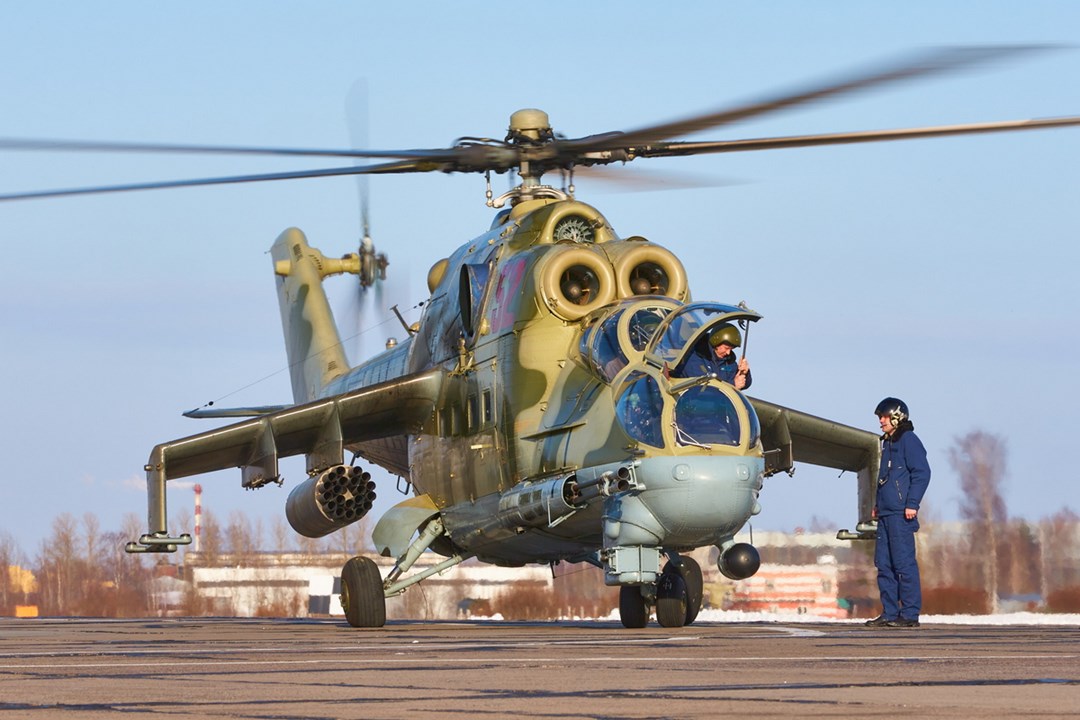
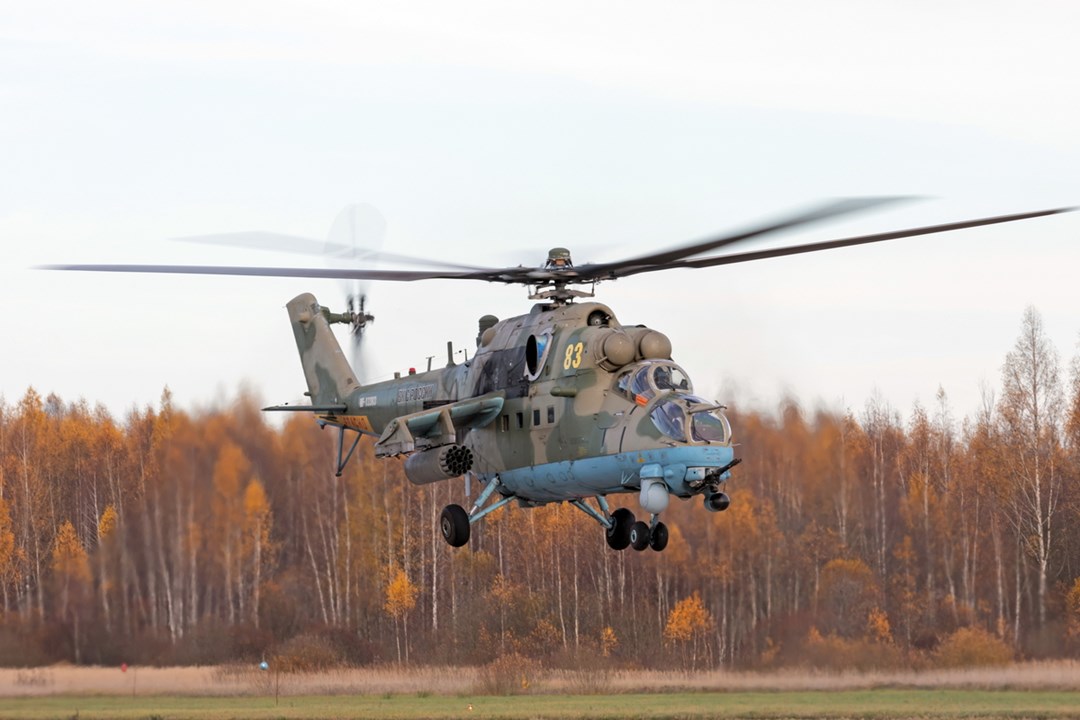
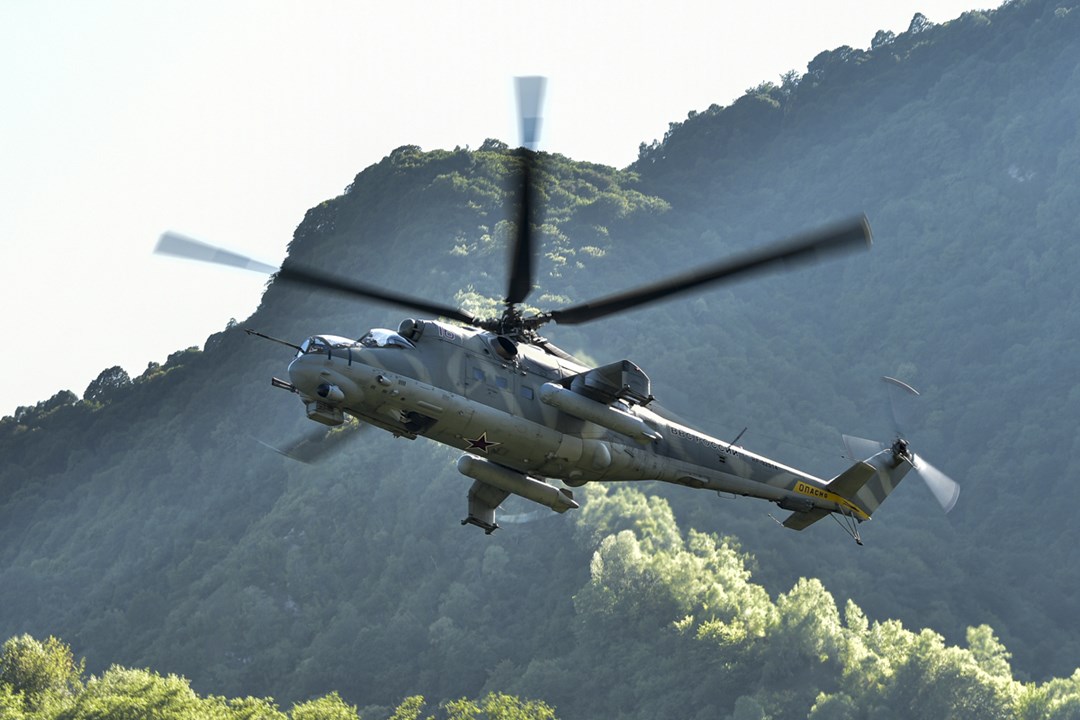
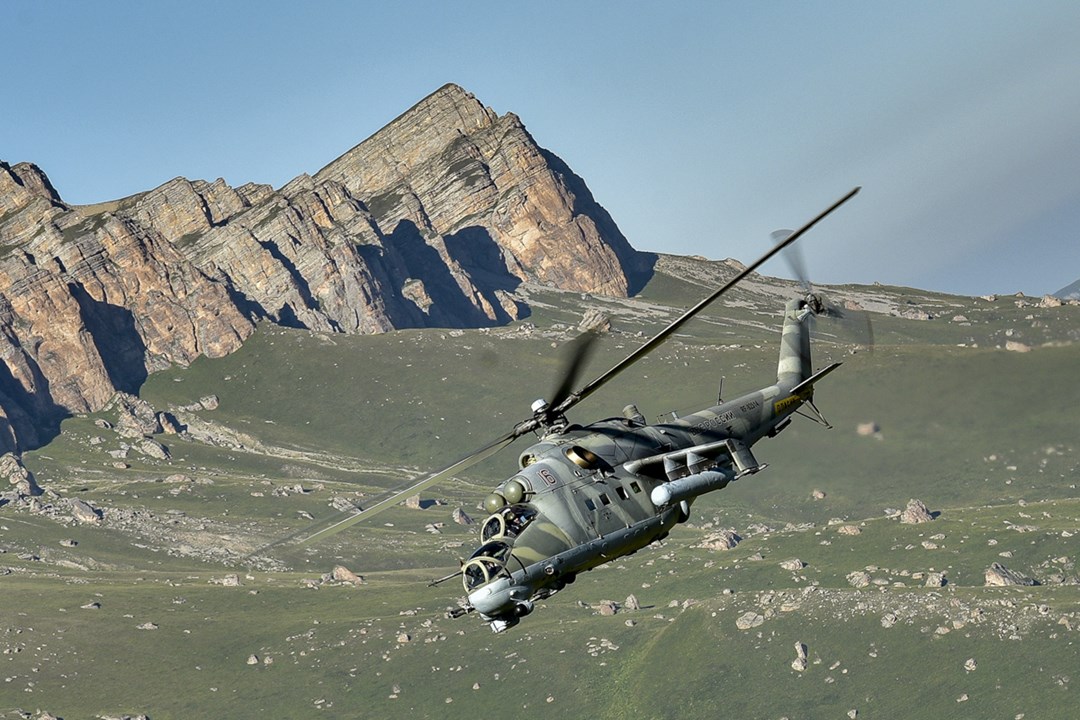
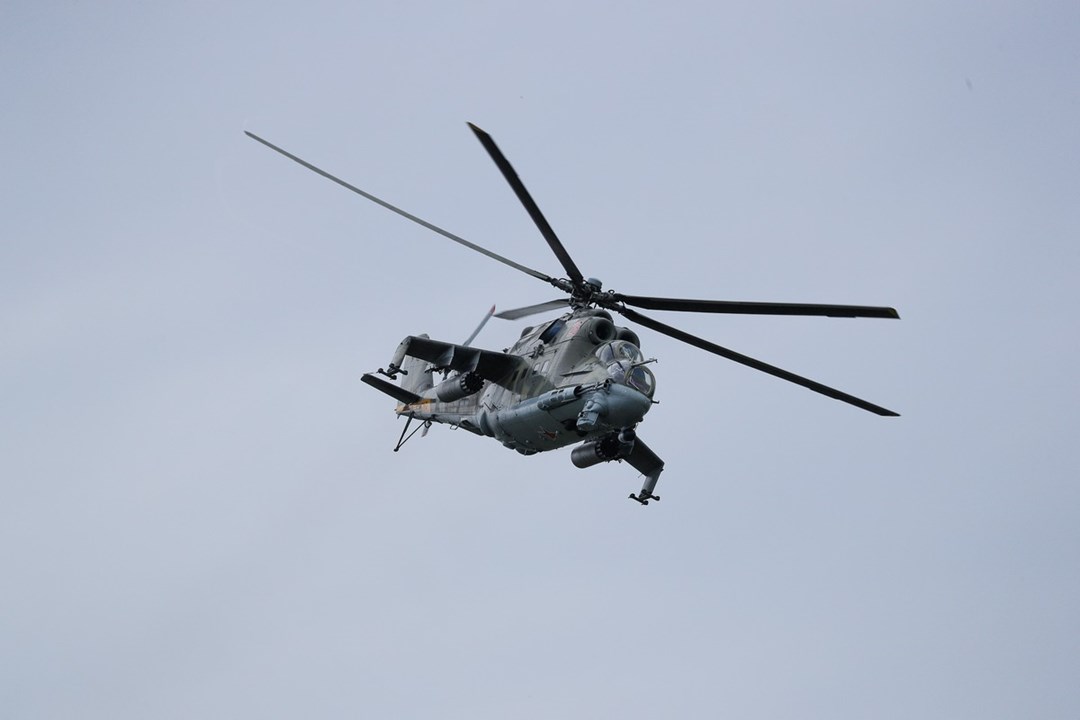
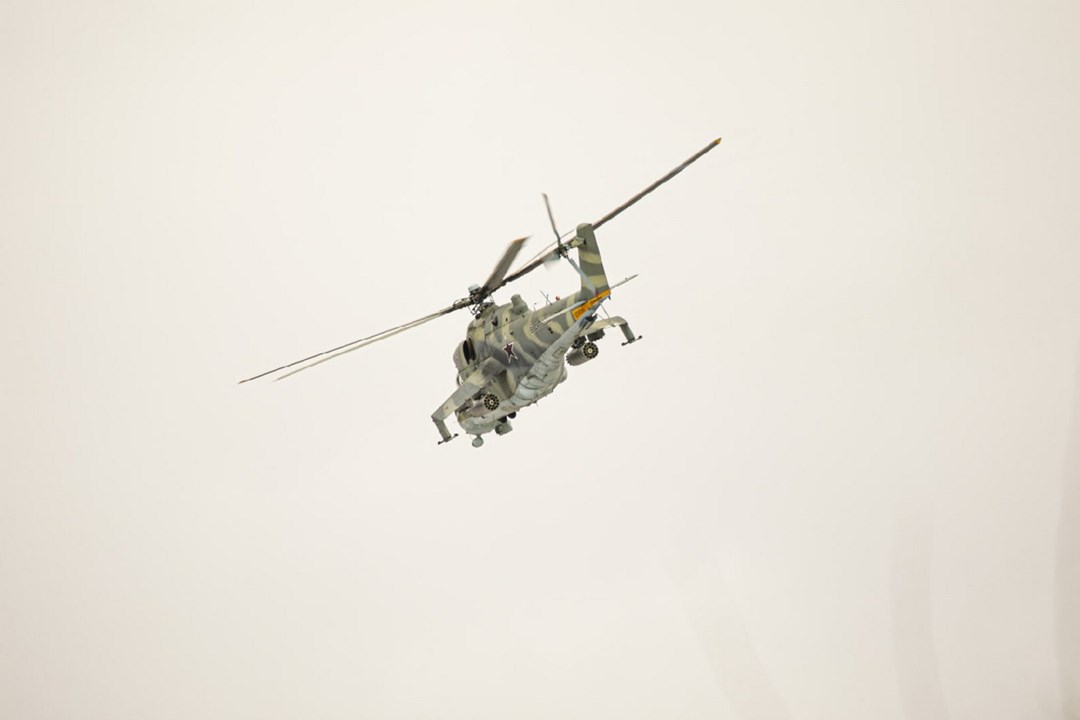
Mil Mi-24 is a twin-engined Combat helicopter intended for close support of ground forces, destruction of armored targets, and transportation of persons or cargo. The Mi-24 is not a direct counterpart to the American AH-64 Apache, since unlike this and other Western attack helicopters it is also capable of transporting up to eight troops. As a combination of gunship and troop transport, the Hind combat helicopter has no direct NATO counterpart. The combat helicopter is a flying infantry fighting vehicle, which blends features of both transport and attack helicopters. Soviet pilots called the aircraft 'letayushiy tank' or flying tank. Another common nickname is 'Krokodil' (Crocodile) - due to the helicopter's camouflage and fuselage shape and "Drinking Glass", (Stakan) because of the flat glass plates that surround the Mi-24's cockpit. The core of the aircraft was derived from the Mil Mi-8 (NATO reporting name "Hip") with two top-mounted turboshaft engines driving a mid-mounted 17.3 m five-blade main rotor and a three-blade tail rotor. The engine configuration gave the aircraft its distinctive double air intake. Original versions have an angular greenhouse-style cockpit; Model D and later have a characteristic tandem cockpit with a "double bubble" canopy. Other airframe components came from the Mi-14 "Haze". Two mid-mounted stub wings provide weapon hardpoints, each offering three stations, in addition to providing lift. The loadout mix is mission-dependent; Mi-24s can be tasked with close air support, anti-tank operations, or aerial combat. The Mi-24 fuselage is armored and can resist impacts from 12.7 mm (0.50 in) rounds from all angles. The titanium rotor blades are resistant to 12.7 mm rounds. The cockpit is protected by ballistic-resistant windscreens and a titanium-armored tub. The cockpit and crew compartment are over-pressurized to protect the crew in NBC conditions. Considerable attention was given to making the Mi-24 fast. The airframe was streamlined, and fitted with retractable tricycle undercarriage landing gear to reduce drag. At high speed, the wings provide considerable lift (up to a quarter of the total lift). The main rotor was tilted 2.5° to the right from the fuselage to compensate for translating tendency at a hover. The landing gear was also tilted to the left so that the rotor would still be level when the aircraft was on the ground, making the rest of the airframe tilt to the left. The tail was also asymmetrical to give a side force at speed, thus unloading the tail rotor. Comparison to Western helicopters As a combination of armored gunship and troop transport, the Mi-24 has no direct NATO counterpart. While the UH-1 ("Huey") helicopters were used in the Vietnam War either to ferry troops or as gunships, they were not able to do both at the same time. Converting a UH-1 into a gunship meant stripping the entire passenger area to accommodate extra fuel and ammunition, and removing its troop transport capability. The Mi-24 was designed to do both, and this was greatly exploited by airborne units of the Soviet Army during the 1980–89 Soviet-Afghan War. The closest Western equivalent was the Sikorsky S-67 Blackhawk, which used many of the same design principles and was also built as a high-speed, high-agility attack helicopter with limited troop transport capability using many components from the existing Sikorsky S-61. The S-67, however, was never adopted for service. Other Western equivalents are the Romanian Army's IAR 330, which is a license-built armed version of the Aérospatiale SA 330 Puma, and the MH-60 Direct Action Penetrator, a special purpose armed variant of the Sikorsky UH-60 Black Hawk. The Hind has been called the world's only "assault helicopter" due to its combination of firepower and troop-carrying capability A modified Mi-24B, named A-10, was used in several speed and time-to-climb world record attempts. The helicopter had been modified to reduce weight as much as possible—one measure was the removal of the stub wings. The previous official speed record was set on 13 August 1975 over a closed 1000 km course of 332.65 km/h (206.7 mph); many of the female-specific records were set by the all-female crew of Galina Rastorguyeva and Lyudmila Polyanskaya. On 21 September 1978, the A-10 set the absolute speed record for helicopters with 368.4 km/h (228.9 mph) over a 15/25 km course. The record stood until 1986 when it was broken by the current official record holder, a modified British Westland Lynx.

Air & Air Defense Specifications
Crew 3
Engine Diesel (2200 hp)
Max Speed 368.4 km/h
Cruise Speed 270.0 km/h
Variants
V-24 The first version, twelve prototypes, and development aircraft. The first V-24 mockup resembled the Bell UH-1A Huey. Later models resembled the future Hind-A, one of which was modified in 1975 as A-10 for speed record attempts with wings removed and faired over and with inertia-type dampers on the main rotor head. The A-10 reached a speed of 368 km/h. It was armed with GSh-23 and could carry up to six missiles or rockets.
Mi-24 (Hind-A) Other early versions were the armed assault helicopter, which could carry eight combat troops and three crew members. It could also carry four 57mm rocket pods on four underwing pylons, four MCLOS 9M17 Fleyta (AT-2 Swatter) anti-tank missiles on two underwing rails, free-fall bombs, plus one Afanasev A-12.7 12.7mm machine-gun in the nose. The Mi-24 was the first production model.
Mi-24F (Hind-A) Modified Hind-A with seven reinforcing ribs on the port fuselage aft of the wing and the SRO-2M Khrom ("Odd Rods") IFF antenna relocated from the canopy to the oil cooler. The APU exhaust was also extended and angled downwards. The designation may be unofficial.
Mi-24A (Hind-B) The Mi-24A was the second production model. Both the Mi-24 and Mi-24A entered the Soviet Air Forces service in 1972. They Lacked the four-barrel Yak-B 12.7mm machine gun under the nose.
Mi-24U (Hind-C) Training version without nose gun and wingtip stations.
Mi-24BMT Small number of Mi-24s converted into minesweepers.
Mi-24D (Hind-D) The Mi-24D was a purer gunship than the earlier variants. It entered production in 1973. The Mi-24D has a redesigned forward fuselage, with two separate cockpits for the pilot and gunner. It is armed with a single 12.7mm four-barrel Yak-B machine gun under the nose. It can carry four 57mm rocket pods, four SACLOS 9M17 Phalanga anti-tank missiles (a significant enhancement compared to the MCLOS system found on the Mi-24A), plus bombs and other weapons. One Mi-24D was sold to Poland in January 1996 and was used by the WTD 61 in Manching during 1994 for tests with the head of a MIM-23 Hawk missile in place of the chin-mounted gun. This version also had an unidentified modification in the rear cabin window on the starboard side.
Mi-24PTRK This version was the Mi-24D modification that was used for testing the Shturm V missile system for the Mi-24V.
Mi-24DU Small numbers of Mi-24Ds were built as training helicopters with doubled controls.
Mi-24V (Hind-E) Later development which entered production in 1976 and was first seen by the west in the early 1980s. It was armed with the more advanced 9M114 Shturm (AT-6 Spiral). Eight of those missile are mounted on four outer wing pylons. It was the most widely produced version with more than 1,500 made. In Polish service this aircraft is designated Mi-24W. One Mi-24V was referred to as Mi-24T for unknown reasons.
Arsenal Mi-24V upgrade Ukrainian upgrade for Mi-24V.
Mi-24P (Hind F) (Hind-F) The gunship version replaced the 12.7mm machine gun with a fixed side-mounted 30mm GSh-30-2K twin-barrel autocannon.
Mi-24TECh-24 Experimental Mi-24P to test abilities for recovery of downed aircraft.
Mi-24VP (Hind-E Mod) Development of Mi-24V was made in 1985 which replaced the machine-gun with twin 23mm autocannons in a movable turret. Entered service in 1989, but only 25 were made before production ended the same year. One Mi-24VP flew with the Delta-H tail rotor of the Mil Mi-28.
Mi-24RKhR (Hind-G1) NBC reconnaissance model, which is designed to collect radiation, biological and chemical samples. It was first seen during the 1986 Chernobyl disaster. Also known as the Mi-24R, Mi-24RK and Mi-24RKh (Rch). The MI-24RKhR lacks many of the undernose electro-optic and RF missile guidance systems associated with most of the Mi-24 assault helicopters. The stub wings are retained, but in place of the wingtip weapon stations, there are what can be described as 'clutching hand' excavator mechanisms on the end of the pylon which are able to obtain six soil samples per sortie; air samples are sucked in via a pipe on the port side, forward of the doors with it exhausting through a horizontal slit above. The exact detection methods and models of the NBC detection systems are not known. The helicopter features an NBC protection system for the crew, though it is not clear from the specifications if the personnel is fully suited in NBC protective equipment, or if the aircraft is fully NBC filtered with the personnel wearing normal aircrew suits and are supplied collectively filtered NBC agent-free air. The output exhaust pipe of the NBC system is reported to be under the port side of the cabin. The aircraft is also fitted with two additional seats for the analysis personnel, a small rearward-firing marker flag/flare pack on its tail-skid, a bubble window on the starboard side of the main cabin, and it has a datalink to pass findings to ground stations.
Mi-24RR Radiation reconnaissance model derived from the Mi-24R.
Mi-24K (Hind-G2) Army reconnaissance, artillery observation helicopter.
Mi-24VM Upgraded Mi-24V with updated avionics to improve night-time operation, new communications gear, shorter and lighter wings, and updated weapon systems to include support for the 9M120 Ataka, Shturm and 9K38 Igla ATGM missiles and a 23mm main gun. Other internal changes have been made to increase the aircraft life-cycle and ease maintenance.
Mi-24VN (Hind-E) A night-attack version based on an Mi-24V in Mi-24VM Stage 1 configuration.
Mi-24PM Upgraded Mi-24P using same technologies as in Mi-24VM.
Mi-24PN PN version has a TV and a FLIR camera located in a dome on the front of the aircraft, and is armed with GSh-23L. The Russian Air Force received 14 Mi-24PNs in 2004
Mi-24PS Civil police or paramilitary version, equipped with a FLIR, searchlight, loudspeaker PA system and attachments for rappelling ropes.
Mi-24V Ecological Survey Version Environmental research modification developed by the Polyot Industrial Research Organisation.
Mi-24 SuperHind Mk.II Modern western avionics upgrade produced by South African company Advanced Technologies and Engineering (ATE)
Mi-24 SuperHind Mk.III Extensive operational upgrade of the original Mi-24 including weapons, avionics and counter measures.
Mi-PSV Experimental high-speed helicopter based on the Mi-24. PSV stands for Perspektivny skorostnoi vertolet (Перспективный скоростной вертолёт) – Prospective high speed helicopter). Single-seat streamlined cockpit, unarmed, fitted with experimental main rotors for research into high-speed flight, with a target of increasing the speed of the Mi-28N by 10% and the Mi-35M by 13%
Mi-35P Russian Helicopters holding has developed a common standard for Mi-24 modernization designated as Mi-35P. The Mi-35P has received the OPS-24N-1L observation-sight system with a third generation long-wave matrix thermal imager, TV camera, and laser rangefinder.
Mi-35MV Modernized version of Mi-35M with an additional armour and upgraded propulsion and optical systems. It is equipped with a opto-electronic OPS-24N1 surveillance and targeting system
Mi-35O Export version of the Mi-24VN using a Mexican FLIR camera and a glass cockpit with upgraded avionics. Operated by Mexico only.
Mi-35M4 (AH-2 Sabre) Updated version of the Mi-35M with Israeli avionics for the Brazilian Air Force.
Mi-35M2 Updated version of the Mi-35M for the Venezuelan Army.
Mi-35MS Flying Command Post variant of the Mi-35M. Operated by the Russian Federal Protective Service (FSO).
System
Alternative Designation Mil Mi-2; NATO: Hind
Manufacturer Sukhoi
Type Attack Helicopter
In Service 1972-Present
Crew 3 (pilot, co-pilot/gunner, engineer)
Passenger Capacity 8 ea
Litter Capacity 4 ea
Blades, Main Rotor 5 ea
Blades, Tail Rotor 3 ea
Number of Engines 2 ea
Day/Night Capable Yes
All Weather Capable Yes
Number of Hard Points 6 ea
Inner Harg Points Capacity 500 kg
Outer Hard Points Capacity 250 kg
Dimensions
Length 18.60 m
Width 4.80 m
Height 6.50 m
Weight, Combat 11,000 kg
Weight, Empty 8,400 kg
Main Rotor Diameter 17.20 m
Disc Area 227 m sq
Tail Rotor Diameter 3.9 m
Cargo Compartment Dimensions Floor Length 2.5 m
Cargo Compartment Dimensions Floor Width 1.5 m
Cargo Compartment Dimensions Floor Height 1.2 m
Automotive
Engine Name 2 x Klimov TV-3-117 turboshaft
Engine Type Diesel
Engine Power 2,200 hp each
Cruising Range 450 km
Speed, Maximum 320 km/h
Cruise Speed 270 km/h
Internal Fuel 1,500 kg
Cabin Auxiliary Fuel Tank 1,000 kg
External Fuel Tanks 1,200 kg
Climb Rate 899 m/min
Ceiling, Service 5,750 m
Ceiling, Hover 3,100 m
Radius (Max Load) Internal Fuel 160 km
Radius (Max Load) 2 External Tanks 224 km
Radius (Max Load) 4 External Tanks 288 km
Maximum Range with Auxiliary Fuel 950 km
Maximum Range with Normal Load 450 km
Max G Force 1.75 G
Payload, Innternal Load 8 x combat troops or 4 x litters
Payload, External Weapons Load: 1,500 kg
Payload, External Load (no weapons) 2,500 kg
Chin Mounted Gun
Note The original Mi-24/Mi-25 was equipped with a 1 x 4 barrel 12.7mm gun, which was later replaced with a 23mm twin-barrel cannon.
Cannon
Name 1x Gryazev-Shipunov GSh-23
Type Twin-barreled 23mm autocannon
Caliber 23 mm
Manufacturer KBP Instrument Design Bureau
In Service 1960-Present
Length 1,387 mm
Barrel Length 1,000 mm
Weight 49.2 kg
Action Gas Principle
Barrels 2 ea
Rate of Fire 3,400-3,600 rds/min
Ammunition
Type Autocannon Rifle Round
Caliber 23 mm
Cartridge 23x115mm
Muzzle Velocity 715 m/s
Armor Penetration INA
Ammo Types HEFI, HEI, APT, APE, CC
Basic Load 450 Rounds
Wing Mounted Weapons
Rocket System #1 Launcher
Name UB-32
Type 57mm, reusable, 32-salvo rocket pod
Basic Load (UB-32 Rocket Pod) 2-4 ea
Launcher Length 2,080 mm
Launcher Diameter 464 mm
Weight, Empty 103 kg
Weight, Loaded 264 kg
Rocket System #1 Projectile
Name S-5M (ARS-57) Rocket
Type Unguided HE-FRAG
Caliber 55 mm
Length 1.4 m
Diameter INA
Weight 5 kg
Basic Load (S-5 Rockets) 32 ea
Engine Solid Rocket Motor
Speed 300 meters in 1.1 seconds
Operational Range 3-4 km
Note #1 Produces 75 Splinters
Note #2 The S-5 is carried in rocket pods, with 4–32 rockets
Rocket System #2
Name S-24 Rocket
Type Unguided high-velocity airborne rocket
Diameter 240 mm
Length 2.33 m
Launch Weight 235 kg
Warhead Type blast-fragmentation warhead
Warhead Weight 123 kg
Operational Range 2-3 km
Proximity Fuze R-24
Fragmentation Casualty Zone Radius 300-400 m
Number of Fragments 4,000
Penetration 30mm of armor
Basic Load 2-4 ea
Note The S-24 Warhead detones 3 meters above the ground
Anti-Tank Guided Missile System
Name AT-2 Swatter (3M11/9M17)
Type Anti-Tank Guided Missile (ATGM)
In Service 1964-Present
Manufacturer Nudelman OKB-16
Weight 27 kg
Length 1160 mm
Diamter 148 mm
Wingspan 680 mm
Warhead Type HEAT
Warhead Weight 5.4 kg
Engine Solid fuel rocket
Operational Range 0.5-2.5 km
Speed 160 m/s (360 mph)
Guidance System Radio command
Steering System MCLOS
Launch Platform Mi-4, Mi-8, Mi-24, Mi-25, BRDM-1, BRDM-2
Fire Control
Fire Control System Type INA
Fire Control Radar Yes
Digital or Analog Cockpit Digital
Direct Fire Control Yes
Laser Designator Yes
Automated Helmet INA
Sensor Suite(s) Available electro-optical sensor systems
Position Location System Yes
Radar Warning System Sirena-3M radar warning system
IR Jammer HO Brick IR Jammer
FLIR Equipped Yes
RWR Equipped Yes
Air Data Sensor Yes
Missile Guidance Transmitter Yes
Protection
Stealth Properties None
Heat Signature Reduction INA
Add on Armor INA
NBC Protection Yes
EW No
EW Counter Measures/CCM No
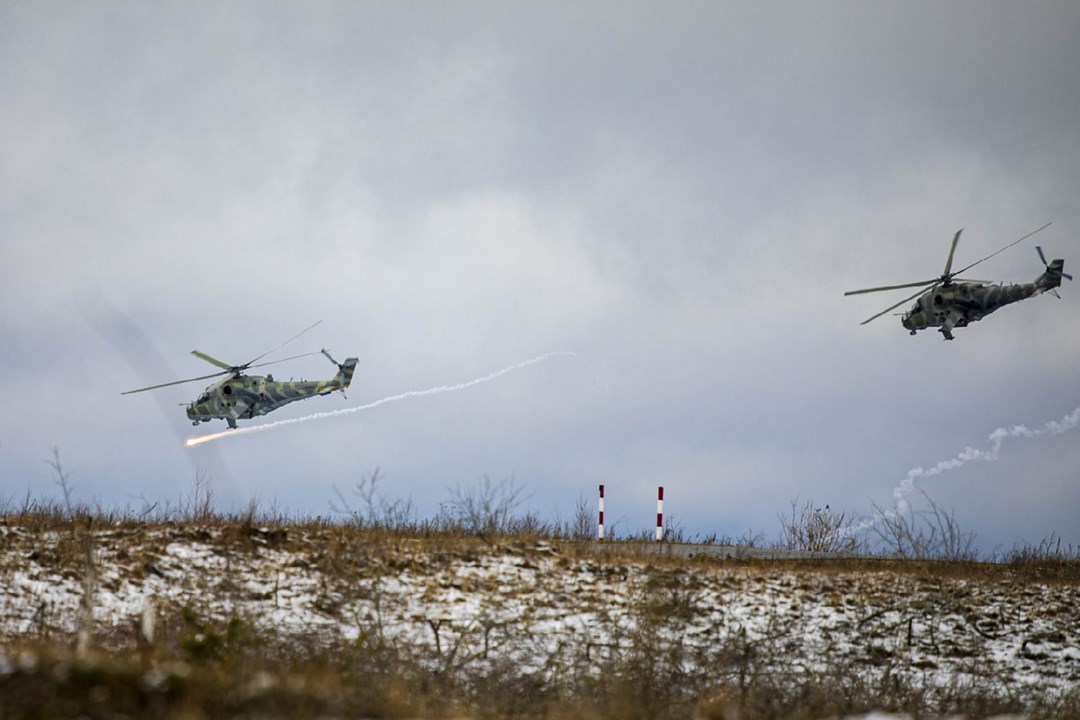
Counter Measures (Chaff/Flares) ASO-2V flare dispensers
CVI: WEFT
Wings 5 x main rotor blades. Swept back wing weapon load mount points.
Engine Engine exhausts on both sides. Includes twin air inlets.
Fuselage Bubble shaped tandem pilot canopies. Retractable landing gear. Mid-air refueling stake. The Hind-F model substitutes the chin-mounted 12.7mm machine-gun with a fixed side-mounted (right side of a/c) 30mm GSh-30-2K twin-barrel autocannon.
Tail Tail rotor is on the left side, and features stabilizer wings
Details
Country of Origin Russia
Category Rotary Wing Aircraft
Air > Rotary Wing Aircraft
Filter Label
M
Classification
Domain
Air & Air Defense
Equipment Status
Active
Dimensions
Length
18.6 m
Width
4.8 m
Height
6.5 m
Weight
11000 kg
Documents & Files (4)
Mil_Mi24bc8c.Mi35_Hind_(D)
1.66 MB
Mil_Mi-24.Mi-35_Hind_(D).jpg
TRADOC ODIN WEG
Mil_Mi246441.Mi35_Hind_(C)
955.67 KB
Mil_Mi-24.Mi-35_Hind_(C).jpg
TRADOC ODIN WEG
Mil_Mi2445ee.Mi35_Hind(A)
587.68 KB
Mil_Mi-24.Mi-35_Hind(A).jpg
TRADOC ODIN WEG
Mil_Mi24b4fb.Mi35_Hind_(B)
29.67 KB
Mil_Mi-24.Mi-35_Hind_(B).jpg
TRADOC ODIN WEG
Operators (57)
Russia
Ukraine
Poland
North Korea
Pakistan
Brazil
Soviet Union
Czech Republic
Serbia
Belarus
Afghanistan
Algeria
Angola
Armenia
Azerbaijan
Bulgaria
Burkina Faso
Burundi
Chad
Congo, Republic of the
Cuba
Cyprus
Djibouti
Equatorial Guinea
Eritrea
Ethiopia
Georgia
Guinea
Hungary
Indonesia
Iraq
Kazakhstan
Kyrgyzstan
Libya
Mali
Mozambique
Myanmar
Namibia
Nicaragua
Niger
Nigeria
North Macedonia
Peru
Rwanda
Senegal
Sierra Leone
Sri Lanka
Sudan
Syria
Tajikistan
Turkmenistan
Uganda
Uzbekistan
Venezuela
Yemen
Zimbabwe
CFE Treaty
Something went wrong. Please reload the page. Reload