GJ-X Chinese Unmanned Aerial Vehicle (UAV)
GJ-X
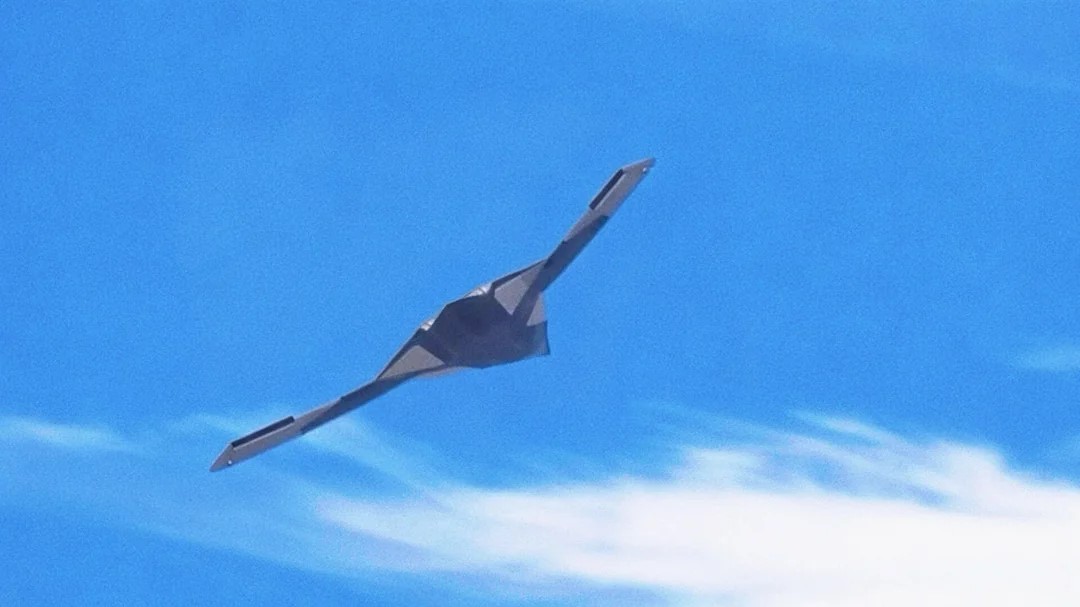


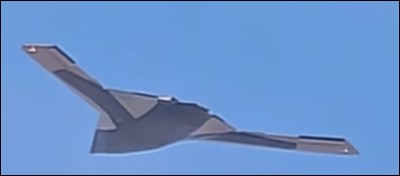
The GJ-X Chinese Unmanned Aerial Vehicle (UAV) is the latest generation of stealth UAVs developed by China, signifying a significant advancement in the unmanned combat capabilities of the People's Liberation Army Air Force (PLAAF). This aircraft was first identified through commercial satellite imagery at Malan Air Base in Xinjiang in August 2025 and conducted its maiden public flight in October 2025. This marked China's entry into the elite club of nations developing strategic-level stealth UAV platforms. The GJ-X features a unique "cranked-kite" flying-wing design, resembling the U.S. Air Force's B-21 Raider and B-2 Spirit stealth bombers. Several aspects of its design are optimized for stealth and long-range operations. The tailless flying-wing configuration removes vertical stabilizers, which would otherwise increase its radar cross-section. Instead, control is managed through split rudders located on the outer wing panels—a design choice also found on the B-2 Spirit, allowing for yaw and roll control without traditional tail surfaces. Additionally, a dorsal hump above the rear fuselage indicates an integrated exhaust system consistent with a twin-engine design. The airframe is coated with counter-shading paint and features fictitious "wing" and "fuselage" markings to disrupt visual identification and conceal the aircraft's actual size at high altitudes. Military analysts have identified three primary mission roles for the GJ-X, which are not mutually exclusive: 1. **Intelligence, Surveillance, and Reconnaissance (ISR):** The GJ-X's high-altitude, long-endurance capabilities position it as a successor to manned reconnaissance aircraft. It can penetrate heavily defended airspace, similar to the rumored U.S. RQ-180 platform. In this capacity, the UAV would conduct persistent surveillance over the South China Sea, monitor approaches to Taiwan, and perform electromagnetic intelligence sweeps while remaining hard to detect and track. The integration of a large-aperture AESA radar in a bar configuration enables synthetic aperture radar (SAR) scanning and ground moving target indication (GMTI) mapping with metric resolution at extreme ranges. 2. **Unmanned Combat Air Vehicle (UCAV):** With an estimated internal payload capacity of 4 tons, the GJ-X can carry precision-guided munitions, stand-off anti-ship missiles, or advanced cruise missiles stored in internal weapons bays designed to maintain stealth. Some analysts suggest it could function as an "external weapons bay" alongside manned stealth fighters like the J-20, compensating for the fighter's limited internal weapons capacity. Realistic payloads range from 2 to 6 tons, depending on configuration and range, allowing for the deployment of guided weapons weighing between 250 and 1,000 kilograms or the stand-off release of subsonic air-to-surface missiles with ranges exceeding 250 kilometers. 3. **Strategic Strike Platform:** Some Chinese defense observers describe the GJ-X as an "unmanned version of the H-20 bomber," highlighting its large size, extended range, substantial payload capacity, and superior stealth characteristics. Operationally, the aircraft could penetrate deep into enemy territory to conduct bombing missions, electronic jamming operations, or precision strikes in high-risk areas that previously required manned bombers. The unmanned design removes pilot safety concerns, enabling the execution of more hazardous missions and potentially replacing manned bombers in various operational scenarios.