II-28 (Beagle) Russian Twin-Engine Light Bomber
II-28
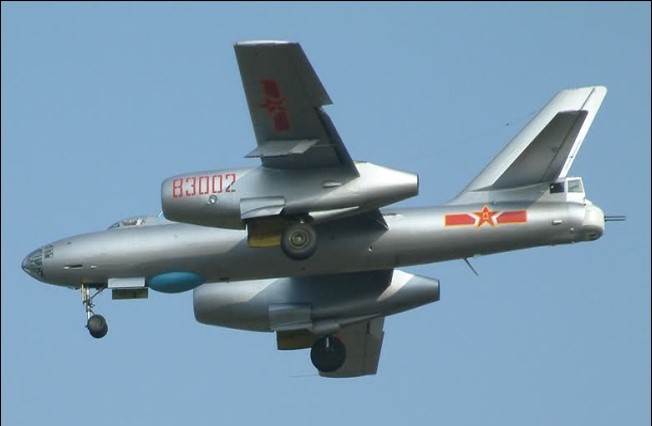
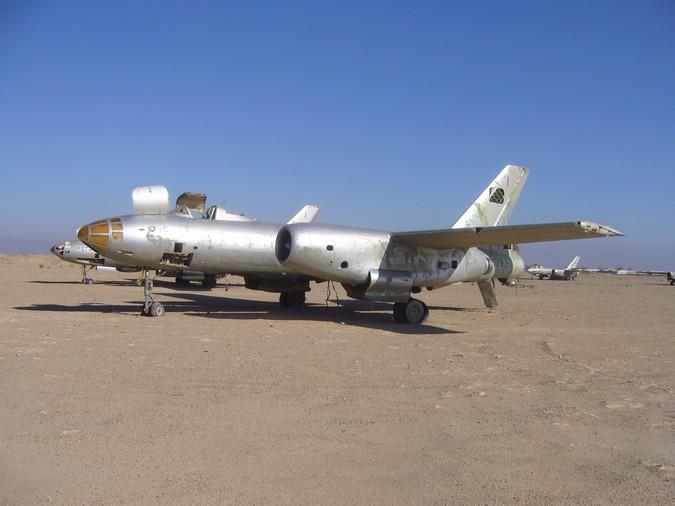

The Ilyushin Il-28 (Russian: Илью́шин Ил-28; NATO reporting name: Beagle) is a jet bomber of the immediate postwar period that was originally manufactured for the Soviet Air Forces. It was the Soviet Union's first such aircraft to enter large-scale production. It was also licence-built in China as the Harbin H-5. Total production in the USSR was 6,316 aircraft, and over 319 H-5s were built. Only 187 examples of the HJ-5 training variant were manufactured. In the 1990s hundreds remained in service with various air forces over 50 years after the Il-28 first appeared. The only H-5s in service currently are approximately 80 aircraft which operate with the Korean People's Air Force. The Il-28 has the USAF/DoD reporting name "Type 27" and NATO reporting name "Beagle", while the Il-28U trainer variant has the USAF/DoD reporting name "Type 30" and NATO reporting name Mascot. After a number of attempts at a four-engined bomber (the Lyulka TR-1 powered Ilyushin Il-22 and the unbuilt Rolls-Royce Derwent powered Ilyushin Il-24), the Ilyushin Design Bureau began development of a new jet-powered tactical bomber in late 1947. Western Intelligence focused on the four-engine developments while the twin-engine Ilyushin Il-28 was created to meet a requirement for a bomber to carry a 3,000 kilograms (6,600 lb) bombload at 800 kilometres per hour (500 mph). The new design took advantage of the sale of a number of Rolls-Royce Nene jet engines by Great Britain to the Soviet Union, which allowed Soviet engineers to quickly produce an unlicensed copy of the Nene, the RD-45, with Ilyushin designing the new bomber around two RD-45s. The Il-28 was smaller than the previous designs and carried a crew of only three (pilot, navigator and gunner). It was also smaller than the competing design from the Tupolev design bureau, the three-engined (i.e. two Nenes and a Rolls-Royce Derwent) Tupolev Tu-73, which had been started long before the Ilyushin project, and flew before the design of the Il-28 was approved. The Il-28 design was conventional in layout, with high, unswept wings and a swept horizontal tail and fin. The engines were carried in bulky nacelles slung directly under the wings. The nosewheel retracted rearwards, while the main wheels retracted forwards into the engine nacelles. The crew of three were accommodated in separate, pressurised compartments. The navigator, who also acted as bombardier, was accommodated in the glazed nose compartment and was provided with an OPB-5 bombsight based on the American Norden bombsight of the Second World War, while the pilot sat under a sideways opening bubble canopy with an armoured windscreen. The gunner sat in a separate compartment at the rear of the fuselage, operating a power driven turret armed with two Nudelman-Suranov NS-23 23 mm cannons with 250 rounds each. In service, the turret was sometimes removed as a weight saving measure. While the pilot and navigator sat on ejector seats, the gunner had to parachute out of a hatch in the floor in the event of an emergency. Two more fixed, forward-firing 23 mm cannon with 100 rounds each were mounted under the nose and fired by the pilot, while a bomb bay was located in the fuselage, capable of holding four 100 kg (220 lb) bombs in individual containers, or single large bombs of up to 3,000 kg (6,600 lb) slung from a beam in the bomb bay. One unusual design feature of the Il-28 was that the wings and tail were split horizontally through the centre of the wing, while the fuselage was split vertically at the centreline, allowing the separate parts to be built individually and fitted out with systems before being bolted together to complete assembly of the aircraft. This slightly increased the weight of the aircraft structure, but eased manufacture and proved to be more economical. The first prototype, powered by two imported Nenes, made its maiden flight on 8 July 1948, with Vladimir Kokkinaki at the controls. Testing was successful, with the Il-28 demonstrating good handling and reaching a speed of 833 km/h (518 mph). It was followed on 30 December 1948 by the second prototype, with Soviet built RD-45 engines replacing the Nenes. After the completion of state tests in early 1949 the aircraft was ordered into large scale production on 14 May 1949, with the Klimov VK-1, an improved version of the RD-45 to be used in order to improve the aircraft's performance. The first pre-production aircraft with VK-1 engines flew on 8 August 1949, and featured reshaped engine nacelles to reduce drag, while the radome for the navigation radar was moved from the rear fuselage to just aft of the nosewheel. Full production in three factories started in September 1949, with service deliveries starting in early 1950, allowing 25 Il-28s to be displayed at the Moscow May Day parade of 1950 (as ordered by Joseph Stalin when it was ordered into production in 1949). The Il-28 soon became the standard tactical bomber in the Soviet forces and was widely exported.