ARMSNET
Military Equipment Database
Initializing 0%

Borei Class (Project 955 Borei Class) Russian Nuclear-Powered Ballistic Missile Submarine
Nuclear-Powered Ballistic Missile Submarine (SSBN)
Spotted an error? Sign in to suggest an edit.
Basic Information
Name
Borei Class (Project 955 Borei Class) Russian Nuclear-Powered Ballistic Missile Submarine
Designation
Alternate Designation
Equipment Type
Nuclear-Powered Ballistic Missile Submarine (SSBN)
Manufacturer
Sevmash
Date of Introduction
2013
Description

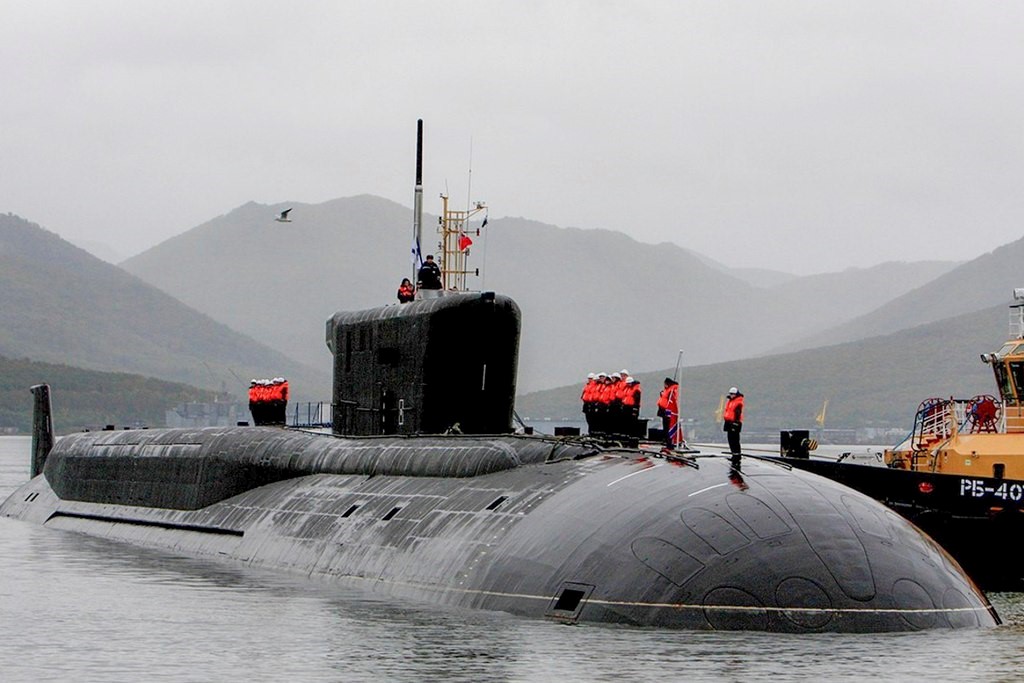
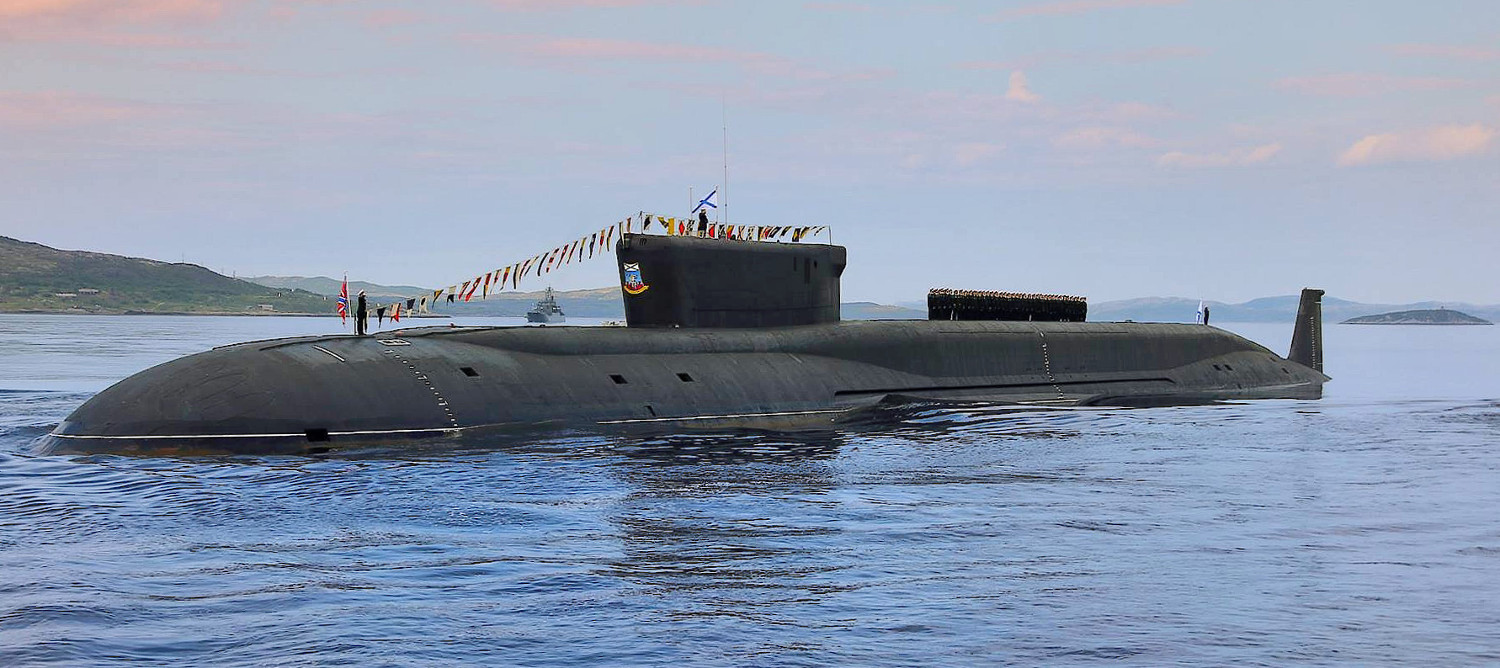
The Borei Class (Project 955 Borei Class) Russian Nuclear-Powered Ballistic Missile Submarine are series of nuclear-powered ballistic missile submarines being constructed by Sevmash for the Russian Navy. The class is projected to replace the Soviet-era Delta III, Delta IV, and Typhoon classes in Russian Navy service. Despite being a replacement for many types of submarines, the Borei-class submarines are much smaller than those of the Typhoon class in both volume and crew (24,000 tons opposed to 48,000 tons and 107 people as opposed to 160 for the Typhoons) and are in terms of class more accurately a follow-on to for the Delta IV-class SSBNs. The first design work on the project started in the mid-1980s and the construction of the first vessel started in 1996. Previously, a short-lived, smaller parallel design appeared in the 1980s with the designation Project 935 Borei II. A new submarine-launched ballistic missile (SLBM) called the R-39UTTH Bark was developed in parallel. However, the work on this missile was abandoned and a new missile, the RSM-56 Bulava, was designed. The submarine needed to be redesigned to accommodate the new missile, and the design name was changed to Project 955. The vessels were developed by Rubin Design Bureau are being built by Russia's Northern shipyard Sevmash in Severodvinsk. Because of the repeated failures during Bulava test launches, some experts suggested that the Borei submarines could instead be armed with R-29RMU Sineva SLBMs, already in active duty with the Delta IV-class submarines. It has been reported that the arrival of the Borei class will enable the Russian Navy to resume strategic patrols in southern latitudes that have not seen a Russian missile submarine for 20 years. Borei class includes a compact and integrated hydrodynamically efficient hull for reduced broadband noise and the first-ever use of pump-jet propulsion on a Russian nuclear submarine. The noise level is to be five times lower when compared to the third-generation nuclear-powered Akula-class submarines and two times lower than that of the U.S. Virginia-class submarines. The acoustic signature of Borey is significantly stealthier than that of the previous generations of Russian SSBNs, nevertheless, the USN has been able to identify the main noise emitter, i.e. the hydraulic pump. As the pump ages, it tends to become noisier, allowing for easier detection of the submarine. The Borei submarines are approximately 170 meters (560 ft) long, 13 meters (43 ft) in diameter, and have a maximum submerged speed of at least 46 kilometers per hour (25 km; 29 mph). They are equipped with a floating rescue chamber designed to fit in the whole crew. Smaller than the Typhoon class, the Boreis were initially reported to carry 12 missiles but are able to carry four more due to the decrease in mass of the 36-ton Bulava SLBM (a modified version of the Topol-M ICBM) over the originally proposed R-39UTTH Bark. Cost is some ₽23 billion (USD$890 million), in comparison the cost of an Ohio-class SSBN was around US$2 billion per boat (1997 prices). Each Borey includes 1.3 million units and mechanisms. Its construction requires 17 thousand tons of metal which are 50 % more than the Eiffel Tower. The total length of pipelines is 109 km and the length of cable routes is 600 km. 10 thousand rubber plates cover the hull of the boat.

Naval & Littoral Specifications
Crew 107
Variants
Project 955 (Borei Class) Despite being a replacement for many types of SSBNs, Borei-class submarines are much smaller than those of the Typhoon class in both volume and crew (24,000 tons opposed to 48,000 tons and 107 personnel as opposed to 160 for the Typhoons). In terms of class, they are more accurately a follow-on for the Delta IV-class SSBNs. Borei class includes a compact and integrated hydrodynamically efficient hull for reduced broadband noise and the first-ever use of pump-jet propulsion on a Russian nuclear submarine. Russian news service TASS claimed the noise level is to be five times lower when compared to the third-generation nuclear-powered Akula-class submarines and two times lower than that of the U.S. Virginia-class submarines. The acoustic signature of Borei is significantly stealthier than that of the previous generations of Russian SSBNs, but it has been reported that their hydraulic pumps become noisier after a relatively short period of operation, reducing the stealth capabilities of the submarine.
Project 955A (Borei-A Class) Units of Project 955A include improved communication and detection systems, improved acoustic signature, and have major structural changes such as the addition of all moving rudders and vertical endplates to the hydroplanes for higher maneuverability, and a different sail geometry. Besides, they are equipped with hydraulic jets and improved screws that allow them to sail at nearly 30 knots while submerged with minimal noise. Although first reported to carry 20 Bulava SLBMs, the 955A will be armed with 16 SLBMs with 6-10 nuclear warheads atop each, just like the project 955 submarines. The contract for five modified 955A submarines was delayed several times due to a price dispute between the Russian Defence Ministry and the United Shipbuilding Corporation. The contract was formally signed on 28 May 2012. The first 955A submarine, Knyaz Vladimir, was laid down on 30 July 2012, during a ceremony attended by the Russian President Vladimir Putin. Two additional project 955A submarines were laid down in 2014, one in late 2015, and one in late 2016. According to Sevmash official, Vitaliy Bukovskiy, all Borei-A submarines are to be equipped with aspen banyas able to accommodate 3-4 people.
Project 955B (Borei-B Class) Project 955B was expected to feature a new water jet propulsion system, an upgraded hull, and new noise reduction technology. The concept design was to be initiated by the Rubin Design Bureau in 2018 and four project 955B boats were been proposed with the first unit to be delivered to the Russian Navy in 2026. However, the project wasn't reportedly included in Russia's State Armament Programme for 2018–2027 due to cost-efficiency. Instead, six more Borei-A submarines were to be built after 2023. According to a 2018 report, Russia's State Armament Programme for 2018–2027 includes the construction of two more Borei-A submarines by 2028. The construction should take place at Sevmash starting in 2024 with deliveries to the Russian Navy in 2026 and 2027 respectively.
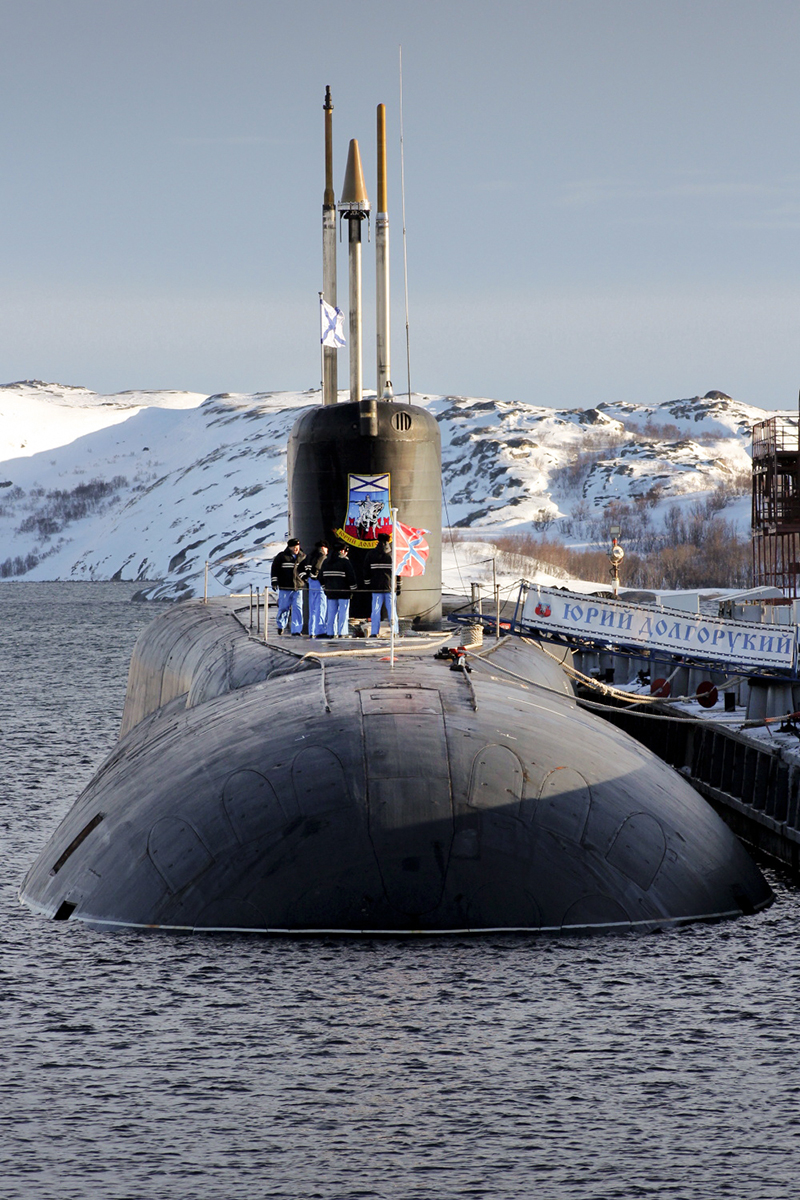
Yury Dolgorukiy Project: 955 Commissioned: 2013 Status: Active Fleet: Northern Fleet
Alexander Nevsky Project: 955 Commissioned: 2013 Status: Active Fleet: Pacific Fleet
Vladimir Monomakh Project: 955 Commissioned: 2014 Status: Active Fleet: Pacific Fleet
Knyaz Vladimir Project: 955А Commissioned: 2020 Status: Active Fleet: Northern Fleet
Knyaz Oleg Project: 955А Commissioned: 2020 Status: Active Fleet: Pacific Fleet
Generalissimus Suvorov Project: 955А Commissioned: 2021 Status: Under Construction Fleet: Pacific Fleet
Imperator Aleksandr III Project: 955А Commissioned: 2022 Status: Under Construction Fleet: Pacific Fleet
Knyaz Pozharskiy Project: 955А Commissioned: 2023 Status: Active Fleet: Northern Fleet
Dmitry Donskoy Project: 955А Commissioned: 2026 Status: Ordered Fleet: INA
Knyaz Potyómkin Project: 955А Commissioned: 2027 Status: Ordered Fleet: INA
Borei-K Note: A proposed version armed with cruise missiles instead of SLBMs, similar to the American Ohio-class nuclear-powered cruise missile submarines (SSGNs), is under consideration by the Russian Defence Ministry.
System
Alternative designations Borei Class; Project 955 Class; Project 955A Class; Project 955B Class; Dolgoruky Class.
Type Nuclear-Powered Ballistic Missile Submarine
Builders Sevmash, designed by Rubin
Crew 107 (55 off. + 52 enl.)
Note By 2022 Russian Navy will operate a total of eight Borei class ballistic missile submarines. These boats will form a core of the Russian nuclear triad until 2040.
Diminsions
Length 170.0 m
Beam 13.5 m
Draft 9.0 m
Displacement, Surface 14,720 tons
Displacement, Submerged 24,000 tons
Propulsion
Reactor 2 x OK-650B pressurized-water nuclear reactors
Power 190 MW each
Turbine 2 x OK-9 steam
Emergency Prop Power 2 DC electric
Generator 1,000 shp total
Total Electrical 7,400 kW
Surface Speed 15 knots (17 mph, 28 kph) max
Submerged Speed 29 knots (33 mph, 54 kph) max
Endurance 90 days
Normal Diving Depth 380 m
Maximum Diving Depth 480 m
Armament
Weapon Station #1
Name 12 x RSM-56 Bulava (NATO: SS-NX-30)
Type Submarine-Launched Ballistic Missile (SLBM)
Proliferation The Russian Navy is the only operator of the RSM-56 Bulava. As of 2019, 48 missiles were deployed on 3 Borei-class ballistic missile submarines: K-535 Yury Dolgorukiy K-550 Alexander Nevsky K-549 Vladimir Monomakh
Launch Platform Borei-class submarines Typhoon-class submarine Dmitri Donskoi (as a testbed)
Length 11.5 m (38 ft) (without warhead) 12.1 m (40 ft) (launch container)
Diameter 2 m (6 ft 7 in) (missile) 2.1 m (6 ft 11 in) (launch container)
Weight 36.8 t (36.2 long tons; 40.6 short tons)
Warhead 6-10 × 100-150 kt MIRVs
Engine Three stage solid and liquid head stage
Propellant Solid propellant and liquid fuel
Guidance System Inertial guidance, possibly with Astro-inertial guidance and/or GLONASS update
Operational Range 8,000-8,300 km ≥ 9,300 (> 9 - 10+k km)
Accuracy 120-350 meters
Basic Load 12 x RSM-56 Bulava (NATO: SS-NX-30) missiles.
Weapon Station #2
Name 12 x Type 53 Torpedo
Type ASUW Torpedo
Length 7.2 m
Diameter 533 mm
Weight 2,070–2,300 kg
Guidance System Wake homing
Range 18,000 metres
Speed 83 km/h
Basic Load 12 x Type 53 Torpedos
Note Type 53 Torpedos include a mixture of SAET-60M and UGST torpedoes, SS-N-16 Stallion anti-ship missiles
Weapon Station #3
Name 1 x Igla-M shoulder-launched system
Type man-portable infrared homing surface-to-air missile (SAM)
Length 1.574 m
Diameter 72 mm
Warhead 1.17 kg (2.6 lb) with 390 g (14 oz) explosive
Weight Missile weight: 10.8 kg (24 lb), Full system: 17.9 kg (39 lb)
Engine solid fuel rocket motor
Guidance System dual waveband infra-red (S-version
Detonation Mechanism contact and grazing fuzes
Operational Range 5.2 km
Speed 570 m/s
Flight Ceiling 3.5 km
Basic Load 1 x Igla-M shoulder-launched system with 8 x 9K38 Igla Missiles
Sensors
Navigation Radar 1 x Medveditsa-M system radar
Towed Array Sonar 1 x MGK-540 Skat-3M with towed array sonar
Communications 1 x Molnaya-M system
Combat Control 1 x Omnibus system
Protection
Hull The overall design appears to have evolved from Project 667BDRM (DELTA IV class), with conservative lines. The BOREI incorporates a double Hogner stern, as in the DELTA IV. It also includes a detachable crew rescue chamber built into the central sail. The chamber is designed to accommodate the whole crew. The design has been described as "nearly silent" compared to previous Russian submarines.
Countermeasures INA
NBC Washdown Yes
Details
Country of Origin Russia
Category Submarines
Naval > Submarines
Filter Label
B
Classification
Domain
Naval & Littoral
Equipment Status
Active
Dimensions
Length
170 m
Width
13 m
Height
Weight
24000 kg
Operators (1)
Russia
Something went wrong. Please reload the page. Reload