ARMSNET
Military Equipment Database
Initializing 0%

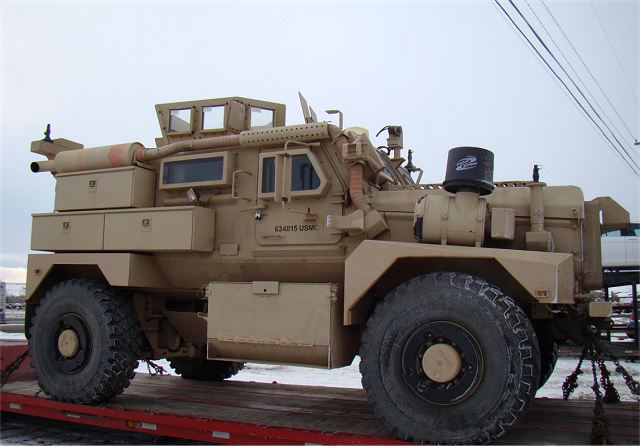
Cougar H American 4x4 Mine-Resistant Ambush Protected (MRAP)

Cougar H
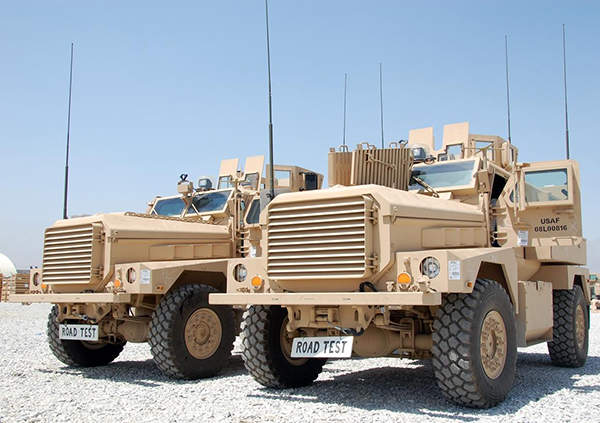
Mine-Resistant Ambush Protected (MRAP)
Spotted an error? Sign in to suggest an edit.
Basic Information
Name
Cougar H American 4x4 Mine-Resistant Ambush Protected (MRAP)
Designation
Cougar H
Alternate Designation
Cougar H
Equipment Type
Mine-Resistant Ambush Protected (MRAP)
Manufacturer
Force Protection, Inc
Date of Introduction
2002
Description

The Cougar is an MRAP and infantry mobility vehicle structured to be resistant to landmines and improvised munitions. The Cougar comes in two main configurations, a 4×4 and 6×6. It is designed for the transport and protection of troops and equipment, especially against mines or IEDs. The two main configurations come in specific variants. It is a family of armored vehicles produced by Force Protection Inc, which manufactures ballistic and mine-protected vehicles. The vehicles are integrated by Spartan Motors.[3] These vehicles are protected against small arms, land mines and improvised explosive devices (IEDs) using a combination of design features and materials to protect both the crew and engine compartment against a wide range of attacks.[7] A Monocoque type, V-shaped hull extends to the engine bay and serves to direct the blast away from under the vehicle. The dual air-conditioners help keep heavily dressed troops from overheating in temperatures over 100 °F (38 °C) in Iraq. Force Protection, Inc. was formed in 2002 when Sonic Jet purchased Technical Solutions Group, using the name Sonic Jet until 2004. Technical Solutions Group had been a defense company in the US that was involved in a range of products, including mine-resistant vehicles based on South African designs. A few vehicles were sold to the US Army for evaluation, and a small fleet of heavily protected vehicles were sold to the British Army in 2001. In 2004, the new Cougar was designed by a small British-led team in the US at Force Protection, Inc., in response to an urgent requirement by the US Marine Corps. This was a new design, developed in the US, based on an evolution of vehicle mine-protection technology used by the South African Army and Rhodesian Security Forces since the 1970s. The very first sketches of the new vehicle were made in late March 2004 in response to those initial USMC inquiries. The rapid development and production that followed was based upon the USMC request that the first vehicle be delivered within 6 months of an order – which was subsequently placed in mid-April 2004 for 27 units. The new design was called Cougar to provide a degree of continuity with the older designs, but had little in common with them. The former vehicles were almost entirely non-compliant with NATO standards for protection, human factors and safety, which made those designs obsolete. The Cougar was effectively a totally new vehicle which incorporated the latest US-made automotive, a new hull design and structure, as well as built-in growth potential, including dimensions that allowed for the addition of the latest armor and protection systems. After being built, the first vehicle was only trialed by doing some circuits of the company campus and trundling over a few rocks and beams set up by the designer to provide a degree of shake-down testing as well as a demonstration course. Urgent operational requirements dictated that the first unit be shipped to theatre as fast as possible and those involved in the project decided that the risk of doing so was outweighed by the advantages of having the vehicle available. The Cougar was fully trialed when it became part of the MRAP program. The first Cougars were called HEV (hardened engineer vehicle), which became JERRV when the Army joined the program, and then MRAP for political reasons when the requirement for many thousands of units was issued. Some 4,000 of these vehicles were fielded under the US military's MRAP (Mine Resistant Ambush Protected) and other vehicle programs. US Defense secretary Robert Gates demanded that the vehicles be ordered in larger numbers after the Marines reported in 2004 that no troops had died in more than 300 IED attacks on Cougars. Since then, Cougar vehicles have been hit by improvised explosive devices (IEDs) many times in Iraq with few fatalities. Britain chose the Cougar over the RG-31 Nyala for their "Mastiff" APV. As of December 2011, the Pentagon planned to add the Crows II remote weapon station and the Frag Kit 6 anti-EFP armor. Official data states that the Cougar is able to withstand a blast of at least 14 kg TNT (30.86 lb) under a wheel and 7 kg TNT (15.43 lb) under a belly.

Ground Specifications
Crew 2
Engine Diesel (330 hp)
NBC Protection Yes
Variants
Cougar HEV (Hardened engineer vehicle) 4×4 and 6×6 vehicles ordered in 2004 by the USMC.
Badger ILAV (Iraqi Light Armored Vehicle) Based on the Cougar and manufactured by FPII and BAE Systems for the Iraqi Army. The ILAV is based on the Cougar, which can carry ten passengers (the six-wheel version can carry 16). The Cougar/ILAV vehicle uses a capsule design to protect the passengers and key vehicle components from mines and roadside bombs. The larger Cougar costs about $730,000 each, fully equipped. The Cougars have been very popular with American troops, and with Iraqis who have worked with them. 865 ILAVs were ordered by Iraq and 18 by Yemen. The ILAV gives the Iraqis the same degree of protection that most Coalition troops have.
Cougar JERRV (Joint EOD rapid response vehicle) 4×4 and 6×6 variants for the US Army, USAF, and USMC. Approx. 200 ordered in 2005 and 2006, with another 200 ordered in late 2006 but now called MRAPs to take account of the new US military/political initiative to be seen to be responding to public concerns about casualties.
Cougar ISS Based on the Cougar 4×4, the ISS is fitted with an integrated independent suspension system that gives the vehicle increased cross-country mobility.
Ridgeback PPV (Protected Patrol Vehicle) British version of the Cougar 4x4 from FPII base vehicles with a British armor package and electronics, including installation of Enforcer remote weapon stations on some vehicles. In 2015, Salisbury coroner David Ridley raised several "points of concern" relating to the vehicle when recording a narrative verdict on the deaths of four soldiers who drowned in Helmand, Afghanistan in June 2010.
Mastiff PPV (Protected Patrol Vehicle) British version of the Cougar 6×6 which arrived in Afghanistan during December 2006, with FPII providing the base vehicle and NP Aerospace in the UK integrating electronics and the British armour package. The Mastiff 2 is an improved version with a capacity of 2 + 8 which arrived in Afghanistan during June 2009. The Mastiff is armed with a 7.62 mm GPMG, 12.7 mm Heavy Machine Gun or 40 mm Grenade Machine Gun.
Mastiff 2 'Protected Eyes' A version of the British Mastiff specially designed for the Talisman Counter-IED program. It is fitted with an M151 Protector remote weapon station, mine plow, optical camera and a Micro Air Vehicle (MAV) with screens in the back to display its camera feed.
Wolfhound (Heavy Tactical Support Vehicle) British modification of the Cougar 6×6, with FPII providing the base vehicle and NP Aerospace in the UK integrating electronics and the British armor package. The first Wolfhounds entered service in Afghanistan in October 2010. 130 have been ordered for gun tractor and logistical roles.
Timberwolf Cougar variant that was being marketed by Malley Industries of Dieppe, NB Canada for the replacement of the RG-31 and LAV for the Canadian Forces; Malley Industries lost the contract to Textron TAPV.
Fire Support Cougar Cougar 4x4 chassis fitted with the complete turret and main gun assembly of the Panhard AML-90 armored car. In service with the Djiboutian Army.
Recovery of Airbase Denied by Ordnance (RADBO) Category I Cougar equipped with a U.S. Air Force-designed directed energy weapon, interrogator arm, console, and other features to clear unexploded ordnance from airfields.
System
Alternative Designation Cougar H
Type Mine-Resistant Ambush Protected (MRAP)
Manufacturer Force Protection, Inc.
Family Cougar
Configuration 4x4
Crew 2 ea
Passenger Capacity 4 ea
Dimensions
Length 5.91 m
Width 2.74 m
Height 2.64 m
Weight, Curb 14.5 tons
Weight, Gross Max 17.2 tons
Payload Capacity 2.72 tons
Automotive
Engine Name Caterpillar C-7 Diesel I6
Engine Type Diesel
Engine Power 330 hp
Cruising Range 670 km
Speed, Maximum Road 105 km/h
Speed, Average Cross INA
Speed Maximum Swim Not Amphibious
Gradient 60 %
Side Slope 30 %
Vertical Step 0.5 m
Trench 0.5 m
Fording Depth 1.0 m
Communications
Note Varies on which country is operating the Cougar
Main Gun
System
Name 1 x M153 CROWS II
Type Common Remotely Operated Weapon Station (CROWS)
Proliferation More than a thousand M153 CROWS II systems are in use. It has been employed on M1 Abrams main battle tanks, various versions of the Humvee, Buffalo MRVs, RG-31 Nyalas, RG-33s, the Army's M1126 Stryker APC, and was soon integrated into the Oshkosh M-ATV, JERRV, Caiman, and MaxxPro.
Manufacturer Kongsberg Gruppen
Maximum Elevation +60 deg
Minimum Elevation -20 deg
Traverse Range 360 deg
Traverse Left 180 deg
Traverse Right 180 deg
Available Weapons to Mount to the M153 Crows II The CROWS system provides an operator with the ability to acquire and engage targets while inside a vehicle, protected by its armor. It is designed to mount on a variety of vehicle platforms and supports the Mk 19 grenade launcher, M2 .50 Caliber Machine Gun, M240B Machine Gun, and M249 Squad Automatic Weapon.
Gyro-stabilized Yes
Daylight Video Camera Yes
Thermal Camera Yes
Laser Rangefinder Yes
Computerized FCS Yes
Weight 172 kg
Note Its camera systems can identify targets out to 1,500 meters away, and the mount's absorption of about 85% of weapon recoil delivers an estimated 95% accuracy rate, as well as the ability to track targets moving 25 mph (40 km/h).
Ammunition
Note #1 The CROWS system provides an operator with the ability to acquire and engage targets while inside a vehicle, protected by its armor. It is designed to mount on a variety of vehicle platforms and supports the Mk 19 grenade launcher, M2 .50 Caliber Machine Gun, M240B Machine Gun, and M249 Squad Automatic Weapon.
Note #2 Large ammunition boxes enable for sustained firing periods, carrying 96 rounds for the Mk 19, 400 rounds for the M2, 1,000 rounds for the M240B, and 1,600 rounds for the M249. Each CROWS costs $190,000.
Protection
Armor All-round protected from 12.7mm Heavy Machine Guns.
Applique Armor Available
Active Protection System INA
Mine Clearing Available
Self-Entrenching Blade INA
NBC Protection Yes
Smoke Equipment INA
Note Official data states that the Cougar is able to withstand a blast of at least 14 kg TNT (30.86 lb) under a wheel and 7 kg TNT (15.43 lb) under a belly.
Details
Country of Origin United States
Category Mine-Resistant Ambush Protected (MRAP)
Land > Infantry Vehicles > Mine-Resistant Ambush Protected (MRAP)
Filter Label
C
Classification
Domain
Ground
Equipment Status
Active
Dimensions
Length
5.91 m
Width
2.74 m
Height
2.64 m
Weight
17200 kg
Operators (5)
United States
Poland
Canada
Denmark
Djibouti
Something went wrong. Please reload the page. Reload