Suffren Class (Barracuda Class) French Nuclear Attack Submarine
Suffren Class
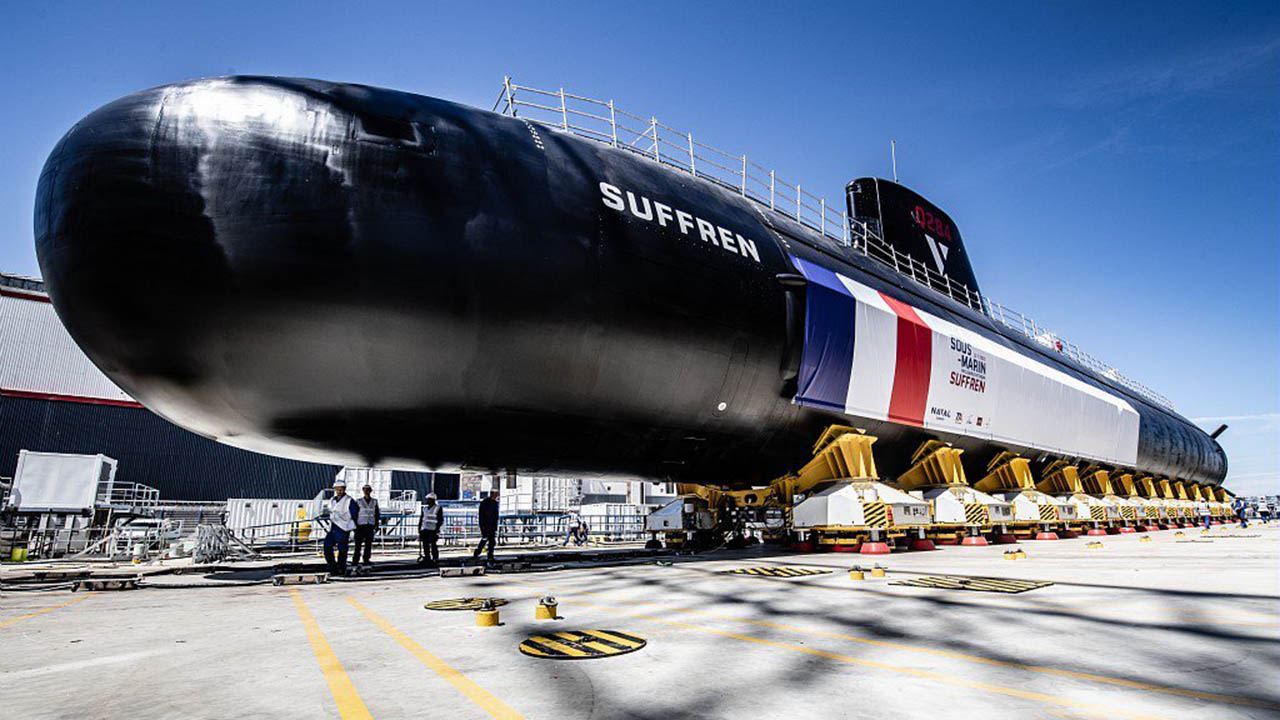

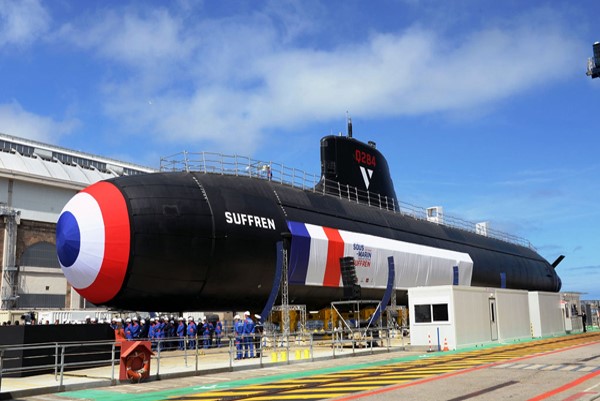
The Barracuda class (or Suffren class) is a nuclear attack submarine, designed by the French shipbuilder Naval Group (formerly known as DCNS and DCN) for the French Navy. It is intended to replace the Rubis-class submarines. Construction began in 2007 and the first unit will be commissioned in 2020. In October 1998, the Delegation Générale pour l'Armement, the French government's defense procurement agency, established an integrated project team consisting of the Naval Staff, DCN (now known as Naval Group), Technicatome and the Commissariat a l'Énergie Atomique, a regulatory body that oversees nuclear power plants, to oversee the design of a new attack submarine class. DCN was to be the boat's designer and builder while Technicatome (since acquired by Areva) was to be responsible for the nuclear power plant. The two companies were to act jointly as a single prime contractor to share the industrial risks, manage the schedules, and be responsible for the design's performance and costs, which at the time was estimated to be US$4.9 billion. On 22 December 2006, the French government placed a €7.9 billion order for six Barracuda submarines with Naval Group and their nuclear power plants with Areva-Technicatome. According to the DGA “Competition at the subcontractor level will be open to foreign companies for the first time.”According to the contract, the first boat was to commence sea trials in early 2016, with delivery occurring in late 2016/early 2017. This was to be followed by entry into service in late 2017. Naval Group also designed a conventionally powered derivative, dubbed the SMX-Ocean, featuring fuel cells and vertical launchers. Another conventionally powered design, the Shortfin Barracuda, was selected as a future replacement for the Collins-class vessels with the Royal Australian Navy. In 2016, Naval Group also began to position itself and its Shortfin Barracuda design to the Royal Canadian Navy's Future Canadian Submarines project. The project is planned to replace the Victoria-class submarines by 2030. Naval Group is also offering a version of the "Shortfin" diesel-electric variant as replacement for the current Walrus-class submarines of the Royal Netherlands Navy competing against the A26 design by Saab and Damen. Barracudas will use technology from the Triomphant class, including pump-jet propulsion. This class reportedly produces approximately 1/1000 of the detectable noise of the Redoutable-class boats (submarines), and they are ten times more sensitive in detecting other submarines. They will be fitted with torpedo-tube-launched cruise missiles MDCN SCALP Naval for long-range (well above 1,000 km, 620 mi) strikes against strategic land targets. Their missions will include anti-surface and anti-submarine warfare, land attack, intelligence gathering, crisis management and special operations. The Barracuda class nuclear reactor incorporates several improvements over that of the preceding Rubis. Notably, it extends the time between refueling and complex overhauls (RCOHs) from 7 to 10 years, enabling higher at-sea availability. In support of special operations missions, Barracudas may also accommodate up to 12 commandos, while carrying their equipment in a mobile pod attached aft of the sail.