Type 90-II Chinese Main Battle Tank (MBT)
Type 90-II Chinese Main Battle Tank (MBT)
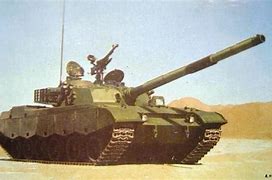

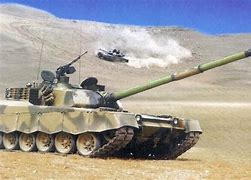
The Type 90 MBT was further developed, incorporating advanced features into their next-generation MBT, but besides a few test vehicles for evaluation, this tank was not adopted by the People's Liberation Army, instead, the tank became the export model for Pakistan which developed the MBT-2000 (Al-Khalid) tank based on the Type 90. In the 1970s, the leadership of China's People's Liberation Army was concerned about the Soviet threat and requested an improved main battle tank (MBT). Norinco and the Inner Mongolia First Machine Group Corporation were tasked to develop a series of new tanks. After examining samples of T-72 tanks delivered by Iran in the late 1980s (captured from the Iraqi Army), the Chinese military realized contemporary Chinese tanks were still vulnerable. Design features of the T-72 and some western tanks were used to develop a second generation of Chinese tanks, eventually incorporating a redesigned hull and suspension, a new welded turret and 125 mm autoloaded tank gun. The Type 80 and Type 85 tanks led to the Type 90. The Type 90 was rejected for Chinese service in favour of other designs, but it influenced further development which would lead to China's third-generation Type 99 tanks. The Type 90 is an evolutionary design: the Type 90-II version shares 10% of its components with the Type 59, 15% with Type 69, 20% with Type 85/88C, and is built with 55% new components. This model was put up for sale on the international market. This tank was jointly developed by Beijing 201 Institute (China North Vehicle Research Institute) and Inner Mongolia 617 Factory (Inner Mongolia First Machine Group Corporation). The Type 90 is the first Chinese tank to incorporate the modular design concept for its armor. The frontal arc of the turret is a modular design so that when more advanced composite armor is developed, it can readily replace older composite armor.