AN/TPQ-37 American Firefinder Radar
AN/TPQ-37
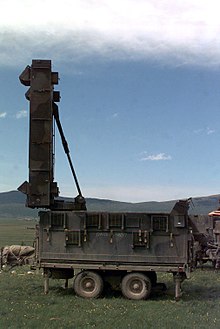
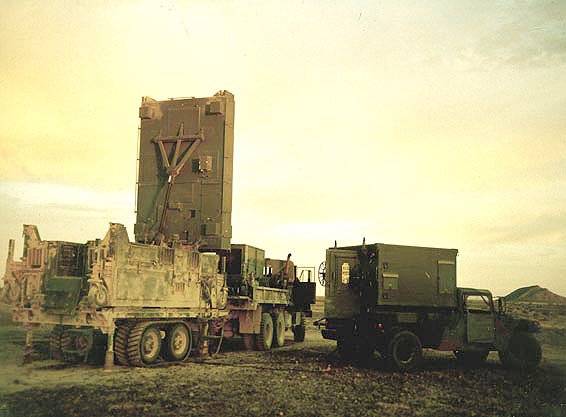
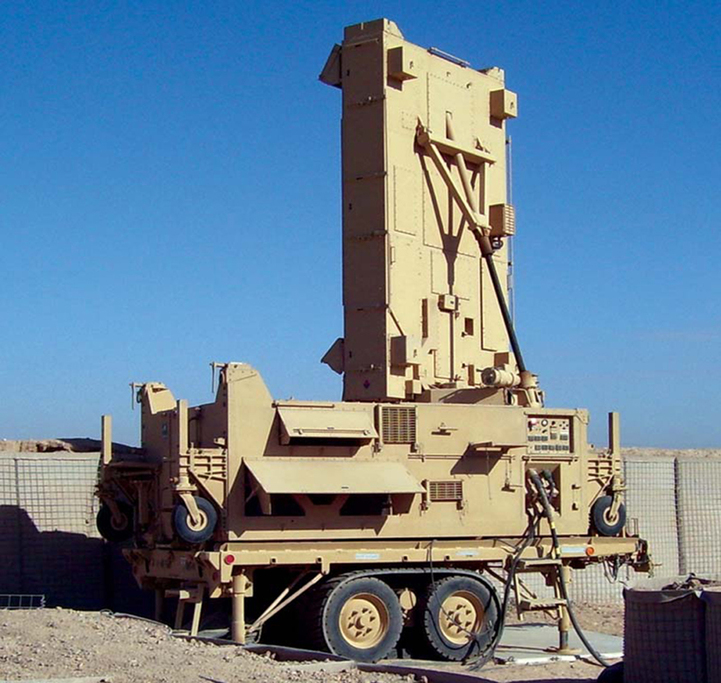
The AN/TPQ-37 Firefinder is a mobile radar system developed in the late 1970s by Hughes Aircraft Company, achieving Initial Operational Capability in 1980 and full deployment in 1984. AN/TPQ-36 radar was used to design and develop the AN/TPQ-37 radar. Thus, the AN/TPQ-37, is considered to be a companion of the AN/TPQ-36. They both comprise the U.S. Firefinder artillery, rocket and mortar-locating radar system. The AN/TPQ-37 (unlike the AN/TPQ-36) is capable of locating artillery and rocket launchers at their normal ranges. Currently manufactured by Thales Raytheon Systems, the system is a long-range version of an artillery locating radar, designed to detect and track incoming artillery and rocket fire to determine the point of origin for counter-battery fire. It is currently in service at brigade and higher levels in the United States Army and by other countries. A typical AN/TPQ-37 system consists of the Antenna-Transceiver Group, Command or operations Shelter and 60 kW Generator. The radar is trailer-mounted and towed by a 5 ton truck. The 60kW generator is mounted on the truck. The AN/TPQ-37 operations shelter can be transported on a 1-1/4 ton vehicle such as a High Mobility Multi-purpose Wheeled Vehicle - HMMWV. The AN/TPQ-37 is an electronically steered radar, meaning the radar does not actually move while in operation. The radar scans a 90-degree sector for incoming rocket, artillery and mortar fire. Upon detecting a possible incoming round, the system verifies the contact before initiating a track sequence, continuing to search for new targets. The incoming round/rocket is tracked during its initial upward/launch trajectory (i.e., the linear portion of its flight path) prior to reaching apogee. A computer program analyzes the track data and then extrapolates the round's point of origin. This calculated point of origin is then reported to the operator with map coordinates, thus allowing friendly artillery to direct counterbattery fire towards the enemy artillery. The system has a reported range of up to 50 kilometers. The system may also be operated in a friendly fire mode to determine the accuracy of counterbattery return fire. The system requires only one operator since most of its functions are performed automatically. However, a crew of eight to 12 is needed for mobile 24-hour operation.