ARMSNET
Military Equipment Database
Initializing 0%

RAM-LOC Dutch Mobile Long-Range Artillery Localisation System

Acoustic Sensor, Artillery, RAM-LOC
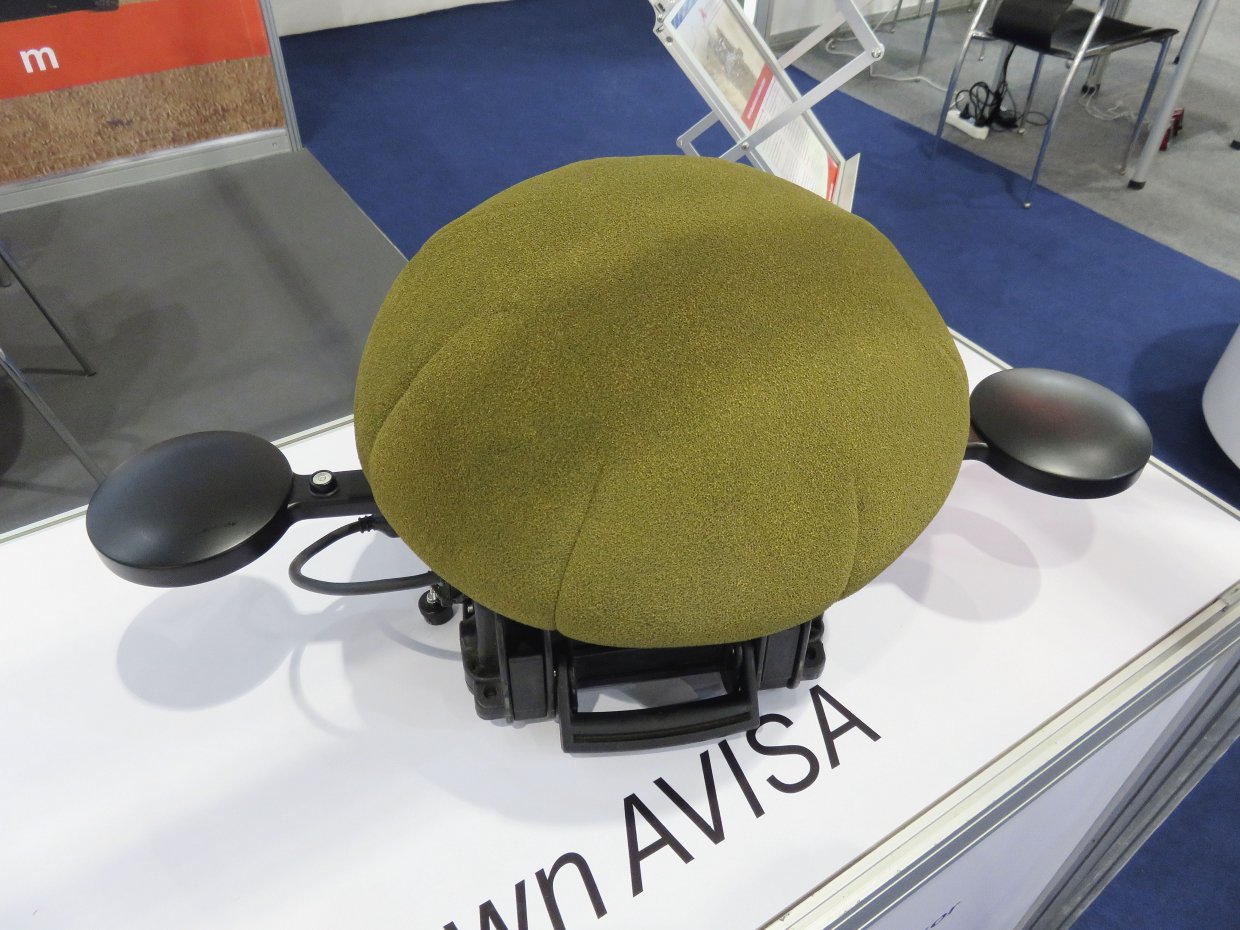
Long Range Artillery Localisation System
Spotted an error? Sign in to suggest an edit.
Basic Information
Name
RAM-LOC Dutch Mobile Long-Range Artillery Localisation System
Designation
Acoustic Sensor, Artillery, RAM-LOC
Alternate Designation
Acoustic Sensor, Artillery, RAM-LOC
Equipment Type
Long Range Artillery Localisation System
Manufacturer
Microflown AVISA
Date of Introduction
2012
Description

The Rocket, Artillery, and Mortar Localization (RAM-LOC) system is a completely passive acoustic and seismic sensor system capable of accurately detecting indirect fire and small arms fire (SAF). Developed and produced by Microflown AVISA, the RAM-LOC Acoustic Multi-Mission Sensor or AMMS can be configured in a stand-alone or networked mode as well as be employed on manned and unmanned vehicles to detect SAF or RAM points of origin and impacts. The Clip-on Acoustic Pointer facilitates the employment of the sensor to be clipped to the airframe of any fixed-wing mini-UAV. RAM-LOC is not a radar but is a sound-ranging system with the same purpose as a counter-battery radar. However, the system is not susceptible to jamming or enemy electronic countermeasures. The system possesses the ability to detect firing systems by itself and/or act as a passive cueing system when used in conjunction with an artillery location radar. RAM-LOC consists of multiple remotely controlled autonomous ground sensor posts. The ground sensor is based upon the Micro-Electro-Mechanical System (MEMS). The temperature difference in the cross-section of two sensitive heated wires determines the velocity of the acoustic particle. The Acoustic Vector Sensor or AVS is comprised of three sensors and a sound pressure transducer. The differences in amplitude across the sensors determine the direction and elevation of the source of the sound. An AVS is hemispherical in shape with a diameter of 26.5 cm (diameter), a height of 10 cm, a weight of 1.7 kg, and has a battery life of 1 month. Several AVS (possibly nine sensors total) are connected in an integrated wireless network that is linked to a laptop in the main command post. A digital map (based on the Carmenta engine) provides real-time information on the operational area. Once a SAF or RAM event is detected by one of the sensors a report is transmitted to the main command post with a date-time-group stamp, the type of acoustic event, and direction. The individual sensor processes the information to ensure the keep the wirelessly transmitted packages to the command post as small as possible. Analysts within the command post analyze the preprocessed information from multiple ground sensors and the calculated locations are presented on the main station command post in both tabular form and on the digital map. The points of impacts (POI) and points of origin (POO) are presented as grid coordinates. The events are plotted on the map and individual events can be selected to obtain additional related information. Additionally, all information can be exported or printed out for further reporting and de-briefing. All of the event histories are stored for further analysis. Recent upgrades include an Iridium external interface to transmit AMMS detection messages over long distances as well as the introduction of the Geo-boom that enables the self-orientation of the AMMSD to <1 degree. There are no associated vehicles for the RAMK-LOC. However, the Mercedes Benz Unimog U1350L truck (described within the table) provides a representative worldwide transportation capability for the system.

Ground Specifications
Mobility Type Towed
Max Speed 80.0 km/h
Range 20.0 km
Variants
Vehicle Based Acoustic Multi-Mission Sensor (V-AMMS) The V-AMMS is mounted on manned and unmanned vehicles and uses the AVS technology to determine SAF and RAM locations. Marketing literature states that systems are capable of locating hostile locations from a vehicle traveling up to 80 km/h in rough terrain at ranges up to 1,500.
Mobile Sound Ranging Array (MSRA) MSRA is a lightweight portable system capable of being quickly installed anywhere. The system is typically employed for the protection of fixed locations such as forward operating bases (FOBs) or along the perimeter of a building. The MSRA consists of a command post and at least 10 mobile AMMS sensor posts. The sensor post is comprised of a single-man portable sensor equipped with a GNSS and a weather station.
Clip-on acoustic pointer for mini-UAVs Sensor capable of being clipped to the airframe of any fixed wing mini-UAV.
System
Alternative Designation Acoustic Sensor, Artillery, RAM-LOC
Type Long Range Artillery Localisation System
Manufacturer Microflown AVISA
System Configuration A RAM-LOC system comprises at least five remotely operated ground Sensor Posts and an AMMS Command Post. The Sensor Posts are wirelessly connected to the Command Post and can be switched on and off remotely, requiring minimal human interaction.The localisation of an acoustic RAM event by one of the AMMS results in a wireless, time-stamped report of the direction of the acoustic event to the AMMS Command Post. The already pre-processed information, from multiple AMMS is then analysed centrally, and the calculated POO and POI are digitally presented on the AMMS Command Post in both tabular form and on a map in real-time.
Crew INA
Sound Frequency INA
Microphone Cable Length Wireless
Meteorological Unit, Mast Height INA
Meteorological Unit, Mast Weight INA
Maximum Detection Range 20 km
Precision Under 10 km 1% of the measured distance
Precision Under 30 km 1% of the measured distance
Maximum Number of Targets INA
Response Time INA
Emplacement Time Varies
Displacement Time Varies
Number of Microphones/Sensors Varies to the number of AMMS employed
Detection Small Arms Fire 1.5 km
Detection Mortar 8 km
Detection Artillery 15 km
Detection Rocket 20 km
Dimensions
Length 260 mm
Width 600 mm
Height 100 mm
Weight 1.75 kg
Automotive: Mercedes Benz Unimog U1350L 4x4 (if used)
Engine Name OM-352
Engine Type 6 Cylinder Diesel
Speed, Maximum Road 80 km/h
Speed, Maximum Swim NA
Speed, Cross INA
Speed, Maximum Off INA
Fording Depth 1.2 m
Image Sources
Notes INA
Details
Country of Origin Netherlands
Category Sound Ranging System
Land > Artillery > Sound Ranging System
Filter Label
R
Classification
Domain
Ground
Equipment Status
Active
Dimensions
Length
0.26 m
Width
0.6 m
Height
0.1 m
Weight
1.75 kg
Operators (1)
Netherlands
Something went wrong. Please reload the page. Reload