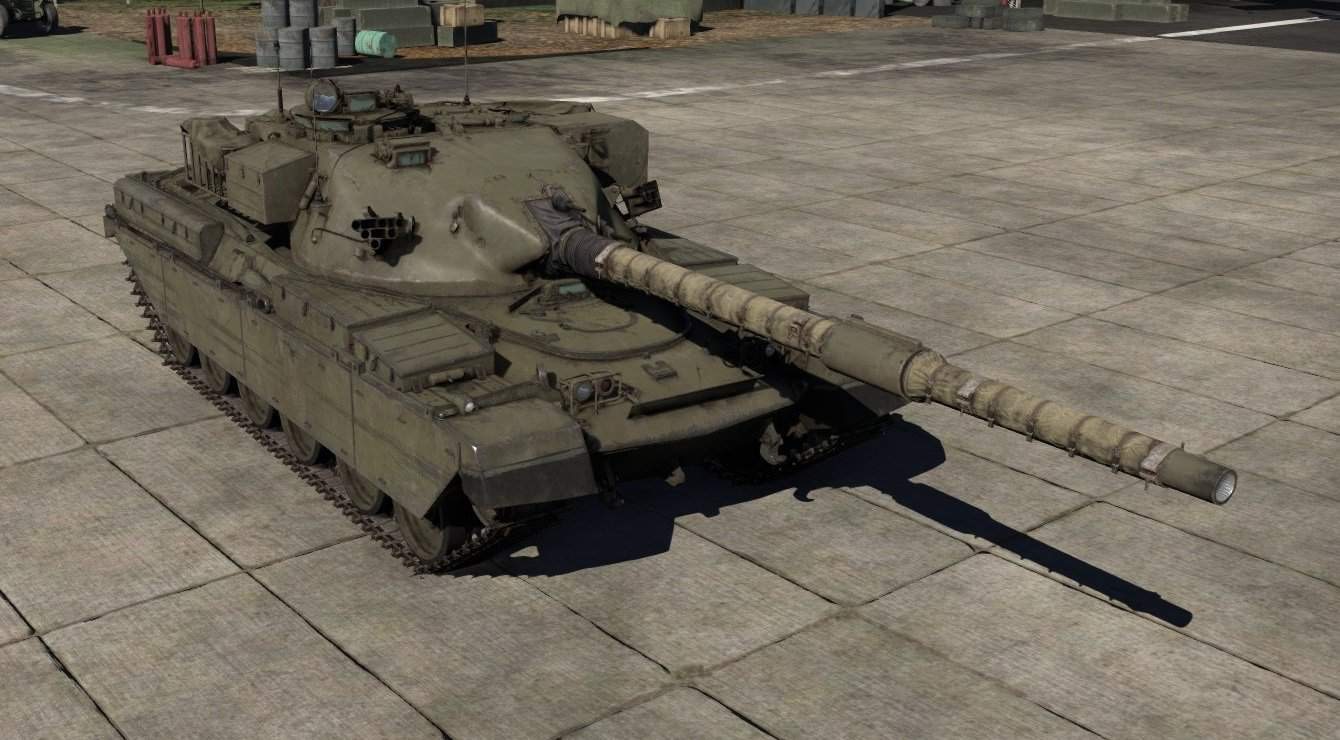
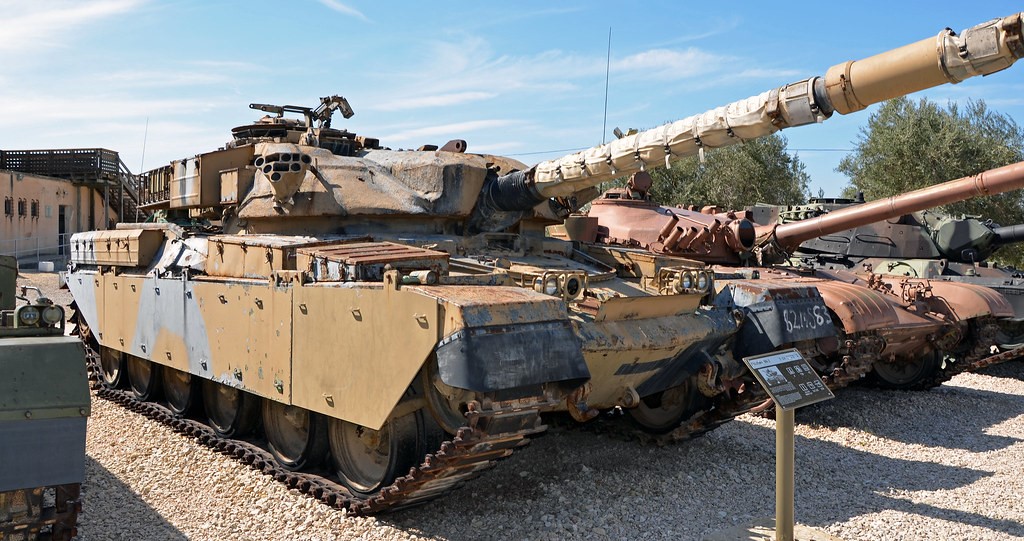
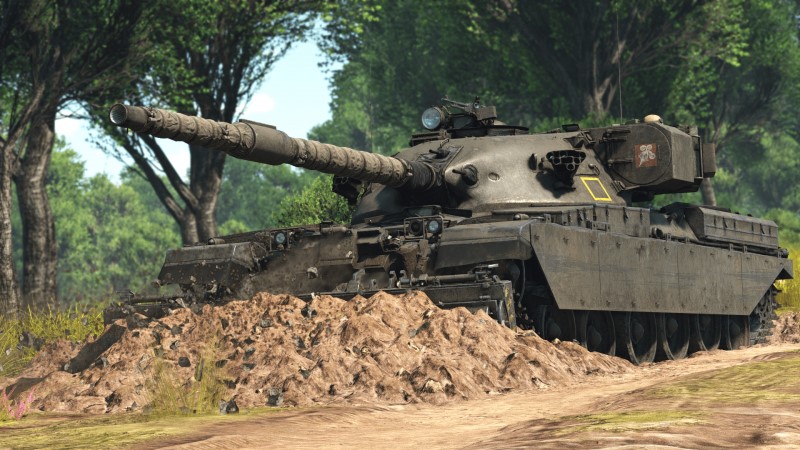
Chieftain MK 3 British Main Battle Tank (MBT)
Chieftain Mk.3
Main Battle Tank (MBT)
Spotted an error? Sign in to suggest an edit.
Other
Basic Information
Name
Chieftain MK 3 British Main Battle Tank (MBT)
Designation
Chieftain Mk.3
Alternate Designation
Chieftain Mk.3; Chieftain Mk 3/3P
Equipment Type
Main Battle Tank (MBT)
Manufacturer
Alvis Plc
Date of Introduction
1973
Description
The Chieftain MK3 Main Battle Tank is a variant of the Chieftain series Main Battle Tanks. The MK3 has a revised suspension, Command's Cupola, engine air cleaner and other additional equipment to assist the tank when operating in the desert environment. The Mk.3 was fitted with additional equipment's, dry-air cleaner element, modified No 15 Mk 2 commander cupola, upgraded engine and gave birth to Mk 3/2 (Improved electrical equipment and air cleaners), Mk 3/3 (ER RMG, laser rangefinder, 720 bhp engine & modified NBC pack), Mk 3/3P (Iranian version), Mk 3G (Prototype with turret air-breathing for engine aspiration), and the Mk3s (Mk 3/G with turret air-breathing and commander\’s firing switch).
Ground Specifications
Crew
4
Mobility Type
Tracked
Main Weapon
L11A2 or L11A3 main gun (120mm)
Engine
Diesel (720 hp)
Max Speed
48.3 km/h
Range
400.0 km
Variants
FV4202 "40-ton Centurion"
Test vehicle built by Leyland Motors using Centurion components to test reclining drivers position and mantlet-less turret proposed for FV4201. One built, 1956, official specification for FV4201 issued August 1958.
FV4201 P1 - FV4201 P7
Prototypes. Seven built, 485 hp L60 Mk 1 or 485 hp L60 Mk 4,initial vehicles had internal exhaust silencers, short hull. small diameter road wheels, weight 45 long tons, initial vehicles, 49.5 long tons for later vehicles, 1959-1962
Chieftain Mk.1
40 training vehicles for 1965–1966 with 585 hp L60 Mk 4 engine, strengthened TN12 gearbox, exhaust silencers moved to external armoured box on hull rear plate, larger 'Centurion' 31.6 inch diameter road wheels, re-positioned final drive and idler wheel assemblies, two-piece commander's hatch cover, rubber track pads fitted for road protection, resilient rubber coaming around engine rear decking to prevent damage from gun with gun depression when turret traversed to the rear, stowage rack added to left rear of turret, dummy stowage 'bin' on front glacis and canvas cover over turret nose to conceal ballistic shapes, [v] weight 50 long tons, Issued to 1 RTR and 5 RTR for troop trials. All Mk.1 to Mk.1/4 vehicles were subsequently to be based at Bovington Camp and Catterick Garrison. 11 short hull units converted to be CH AVLB Mk.6
Chieftain Mk.1/2
Upgrade of Chieftain Mk.1 to Chieftain Mk.2 standard, fitted with 650 hp L60 Mk 4A2 engine, training use only
Chieftain Mk.1/3
Upgrade of Chieftain Mk.1, fitted with 650 hp L60 Mk 5A engine, training use only
Chieftain Mk.2
First service model with 650 hp L60 Mk 4A2 engine, L11A2 or L11A3 main gun,[viii] NBC system fitted to rear of turret, revised turret stowage, one-piece commander's hatch cover, armour removed from searchlight cover, rigid flotation panels replaced by facility for deep wading, road speed 25 mph, range 250 miles, weight 51.5 long tons, first vehicles issued to 11th Hussars at Hohne in West Germany in early 1967, improved 650 hp L60 Mk 5A engine fitted 1969
Chieftain Mk.3
Improved 650 hp L60 Mk 6A engine with two-stage air cleaner, improved auxiliary generator (Coventry Climax A30), better stowage, new No. 15 Mk 2 commander's cupola, road speed improved to 30 mph, range increased to 310 miles, weight 53 long tons, 1970
Chieftain Mk 3/2
Fitted with 720 hp L60 Mk 7A, 1971
Chieftain Mk 3/3
Fitted with 720 hp L60 Mk 7A, Improved main gun range finding,provision for Barr & Stroud TLS (Tank Laser Sight) LF2 laser range finder, 1971
Chieftain Mk 3/G
Chieftain Mk.3 with engine induction through fighting compartment. Prototype only
Chieftain Mk.3/3P
Chieftain Mk 3/3 for Iran, 1973
Chieftain Mk 3/S
Production version of Chieftain Mk 3/G with commander's firing control
Chieftain Mk.4
Chieftain Mk.3 with increased fuel capacity. Only two built.
Chieftain Mk.5/5P
Chieftain Mk.5 for Iran, 1975. Engine later upgraded to 750 hp L60 Mk 10A, 1977
Chieftain Mk.5/2K
Chieftain Mk.5 for Kuwait, 1975
Chieftain Mk.6
Chieftain Mk.2 upgraded to Chieftain Mk.5 standard, 1975
In 1975 all earlier Marks of tanks except Mark 1's were upgraded to Chieftain Mk.5 standard as part of the 1975 "Totem Pole" programme,[xvi] including addition of Clansman radios, fitting of TLS, fitment of Muzzle Reference System (MRS) [ upon replacement of L11A3 barrel with L11A5 barrel,[xviii] and fitment of 750 hp L60 Mark 8A. These vehicles were re-designated Chieftain Mk's.6 to Mk.8.
Chieftain Mk.7
Chieftain Mk.3 and Chieftain Mk 3/S upgraded to Chieftain Mk.5 standard, 1975
Chieftain Mk.7C
Chieftain Mk.3 upgraded to Chieftain Mk.5 standard for Oman
Chieftain Mk.8
Chieftain Mk.3/3 upgraded to Chieftain Mk.5 standard, 1975
In 1977 the engines of all vehicles were upgraded to the 750 hp L60 Mark 9A, followed by further upgrading with the 840 hp L60 Mark 11A or L60 Mark 12A [xxi] in 1978 as part of the 1977 "Dark Morn" and the 1978 "Sundance" programmes.
Chieftain Mk.9
Chieftain Mk.6 after completing all phases of "Totem Pole", 1979.
Chieftain Mk.10
Chieftain Mk.7 after completing all phases of "Totem Pole". Later upgraded with addition of Stillbrew Crew Protection Package to the turret front and turret ring, 1984–86
Chieftain Mk.11
Chieftain Mk.8 after completing all phases of "Totem Pole". Later upgraded with Stillbrew, 1984–86
Chieftain Mk.12
Chieftain Mk.5 after completing all phases of "Totem Pole". Later upgraded with Stillbrew, 1984–86
Chieftain Mk.12/13
Proposed further upgrades, cancelled when the Challenger 1 was introduced.
Chieftain 800
Chieftain with Chobham armour and new power train
Chieftain 900
Chieftain with Chobham armour, new power train, and Centaur fire control system
FV4204 ARV/ARRV
Armoured Recovery Vehicle, Armoured Recovery and Repair Vehicle.
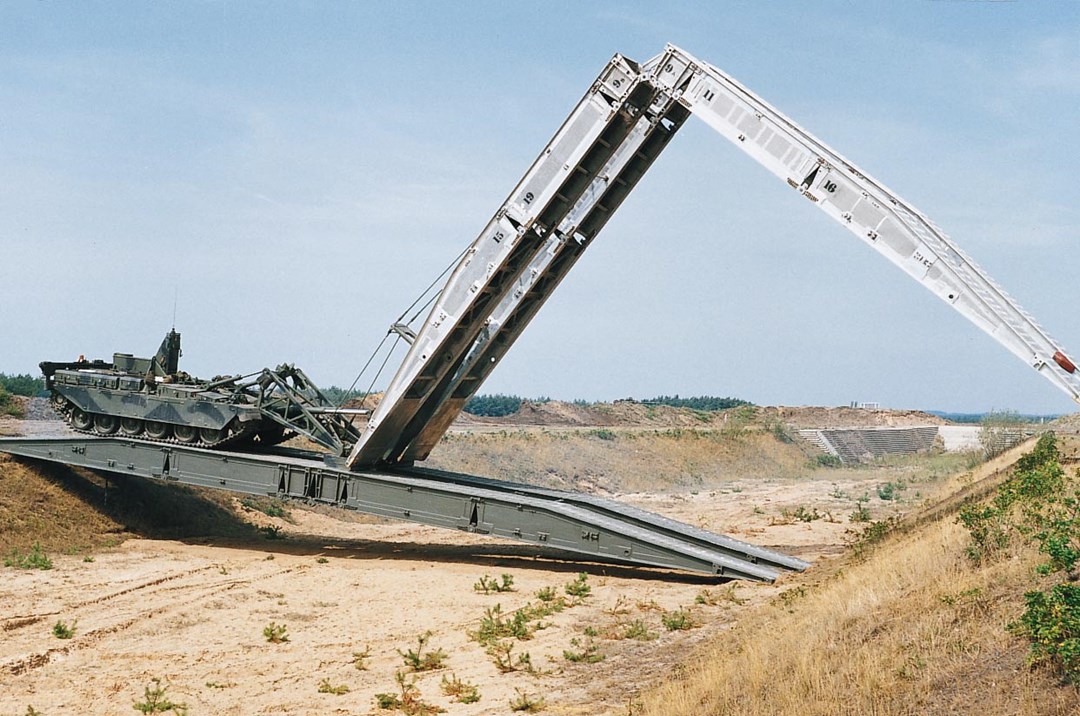
FV4205 AVLB Mk5
Bridge-laying vehicle
Chieftain AVRE (CHAVRE)
Armoured Vehicle Royal Engineers, twelve early "Willich Chieftain AVRE" vehicles converted by 32 Armoured Engineer Regiment and 21 Engineer Base Workshop of the Royal Engineers, Willich, 1987, remaining 48 ex MBTs converted by Vickers Defence Ltd, 1991, to be a British Army combat engineering variant used by the Royal Engineers.
Chieftain Marksman
Self-propelled anti-aircraft gun version, equipped with the Marksman twin gun turret.
Khalid /Shir (Lion) 1
Also known as "4030 Phase 2 Jordan". Jordanian with the running gear of the Challenger 1. In essence, this was a transition vehicle from the Chieftain to the Shir 2, which had been intended for Iran but was subsequently cancelled due to the 1979 Iranian Revolution. The vehicle chassis comprised the front half of a Chieftain hull, Chieftain running gear and the rear of a 4030/2 Chassis (Sloping Hull). This allowed the fitment in the engine bay of a Rolls-Royce CV12 engine producing 1200 bhp at 2,300 rpm.
Weapon Carriers
The Chieftain chassis was adapted to mount air defence weapons ("Marksman" 2 x 35 mm cannon) and a 155 mm howitzer in a number of variants.
Shir 2
4030 Phase 3" Iranian variant. Visible external differences from Chieftain Mk.5 included a sloping rear hull, the removal of the searchlight from the left turret area and the refitting of storage baskets, the removal of the water channel from around the driver's hatch on the glacis, modification of the light clusters also on the glacis and the enlargement of the sight housing on the commander's cupola. Not delivered, the Shir 2 tanks became Challenger 1 tanks after reworking at ROF Leeds
Mobarez Tank
Iranian upgraded version of Chieftain.
System
Alternative Designation
Chieftain Mk.3; Chieftain Mk 3/3P
In Service
1973-Present
Type
Main Battle Tank
Family
Chieftain Main Battle Tank Family
Crew
4 (commander, gunner, loader, driver)
Dry-Air Cleaner Element
Yes
Cupola Type
Modified no. 15 Mk 2 Commander Cupola
Dimensions
Length (Overall)
10.8 m
Length (Hull)
7.5 m
Width
3.5 m
Height
2.9 m
Weight, Combat
55 tons
Ground Pressure
INA
Automotive
Engine Name
L60 Mk 7A
Engine Type
Diesel
Engine Power
720 hp
Fuel Capacity
950 liters
Gearbox
TN12 gearbox
Maximum Range
400 km
Cruising Range
200 km
Speed, Maximum Road
48 km/h
Speed, Average Cross
30 km/h
Speed Maximum Swim
Not Amphibious
Steering System
Merritt-Wilson differential steering system
Suspension
Horstmann suspension
Communications
Primary
Twin Clansman VRC 353 VHF Radio sets
Secondary
1 C42 1 B47 Larkspur VHF radios
Main Gun
System
Name
120 mm L11A5 Rifled Tank Gun
Type
120 mm
Max Rate of Fire
8-10 rds/min
Manufacturer
Royal Ordnance Factories
Proliferation
3,012
Bore Evacuator
Yes
Thermal Sleeve
Yes
Weight
1,778 kg
Length (Total)
6.858 m
Length (Barrel)
6.6 m
Gun Recoil
370 mm
Breech Type
semi-automatic cam
Maximum Effective Range
3,000 m
Maximum Elevation
+20 Deg
Minimum Elevation
-10 Deg
Ammunition (Option 1)
Type
Armour-piercing fin-stabilized discarding sabot (APFSDS) L23
Caliber
120 mm
Diameter
120 mm
Height
500 mm
Muzzle Velocity
1,534 m/s
Effective Range
3,000 m
Penetrator
Monobloc tungsten alloy rod
Case Charge
L8 combustible case charge
Basic Load
64 total of any 120mm projectile combination
Note
Average Projectile Load would consists of the following: 33 L26 APFSDS rounds, 13 L31A7 HESH, and 3 white L34 phosphorous smoke rounds.
Ammunition (Option 2)
Type
APFSDS L26 (CHARM 1)
Caliber
120 mm
Muzzle Velocity
INA m/s
Maximum Effective Range
2,100 m
Penetrator
Monobloc tungsten nickel copper long rod
Case Charge
L14A1 or L14A2
Basic Load
64 total of any 120mm projectile combination
Variant
APFSDS L27A1 (CHARM 3).
Ammunition (Option 3)
Type
HESH L31
Caliber
120 mm
Muzzle Velocity
670 m/s
Maximum Effective Range
8,000 m
Basic Load
64 total of any 120mm projectile combination
Auxiliary Weapon System
System
Name
1 x FEG AK-63 / AMM
Type
7.62 mm General Purpose Machine Gun
Manufacturer
Fegyver- és Gépgyár
In Service
1977-Present
Proliferation
+1 Million
Max Rate of Fire
600 rds/min
Weight
3.6 kg
Length (Total)
880 mm
Length (Barrel)
415 mm
Width
INA
Height
INA
Action
Gas-operated, rotating bolt
Effective Firing Range
500 m
Feed system
10, 20, 30, 40-round box magazines, 75 or 100-round drum magazine
Sights
Iron Sights
Ammunition
Type
Rifle
Caliber
7.62 mm
Cartridge
7.62×39mm NATO
Muzzle Velocity
INA m/s
Basic Load
200 ea
Fire Control
Name
Fully Integrated Improved Fire-Control System (IFCS)
Computerized FCS
Yes, Marconi 12-12P digital computer
First-Round Hit Probability (Stationary Targets)
3,000 m
First-Round Hit Probability (Moving Targets)
2,000 m
Thermal Sight Tank Commander
Yes
Commander's Cupola Traverse Range
360 Deg
Thermal Sight Gunner
Yes, the AFV No 36 Mk 2 periscope or L3A1.
Periscopes
Nine AFV No 40 Mk 2 observation periscopes
Main Gun Stabilization
INA
Radar and Defense System
GEC-Marconi Radar and Defence Systems
Search Light
Defence Control Systems Division, IR/white-light searchlight
Search Light Range (IR Mode)
1,000 m
Search Light Range (White Light Mode)
1,500 m
Tank Laser Sight Unit (TLSU).
Yes
No 70 Telescopic Sight
Yes, for the Gunner
Gun Control System
all-electric gun control system is a Marconi Fighting Vehicle Gun Control Equipment (FV/GCE) No 7 Mk 4
Laser Rangfinder
Yes, LF2 laser range finder,
Protection
Hull Armor
Welded RHA
Turret Armor
Cast and rolled steel
Applique Armor
Available, Stillbrew armour
Explosive Reactive Armor
Available
Active Protection System
INA
Mine Clearing
INA
Self-Entrenching Blade
Available
NBC Protection
Yes, a modified Iranian NBC package
Smoke Equipment
Yes, on each side of the turret there is six electrically-operated 66 mm smoke grenade dischargers.
IR Detector
Yes
Fire Suppression System
FIREWIRE automatic fire-detection system
Air Ventilation and Filtration System
Yes
Details
Country of Origin
United Kingdom
Category
Tanks
Land > Tanks
Filter Label
C
Sources
deagel.com: https://www.deagel.com/x/x/a000736
Classification
Domain
Ground
Equipment Status
Active
Dimensions
Length
7.5 m
Width
3.5 m
Height
2.9 m
Weight
55000 kg
Operators (4)
United Kingdom
Iran
Jordan
Kuwait
Something went wrong. Please reload the page.
Reload