ARMSNET
Military Equipment Database
Initializing 0%

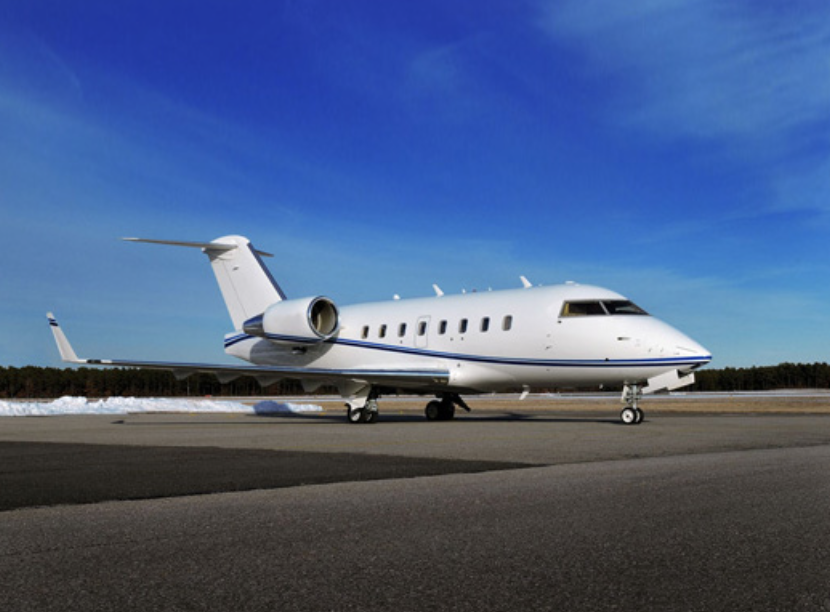
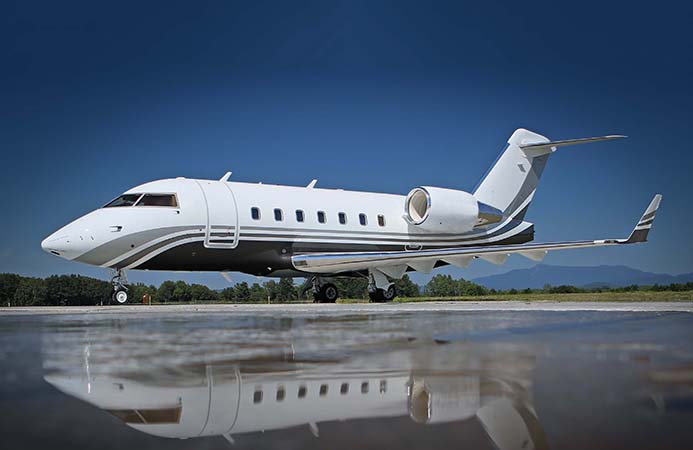
Challenger 604 (CL-604) Canadian Transport Aircraft
Spotted an error? Sign in to suggest an edit.
Basic Information
Name
Challenger 604 (CL-604) Canadian Transport Aircraft
Designation
Alternate Designation
Equipment Type
Manufacturer
Canadair, St Laurent, Quebec, Canada (part of Bombardier Aerospace)
Date of Introduction
1986
Description

CL-604 advanced GE CF34-3B engines; increased fuel capacity including saddle tanks in the rear of the aircraft; new undercarriage for a higher takeoff and landing weight; structural improvements to wings and tail; and a new Rockwell Collins ProLine 4 avionics system.. The Bombardier Challenger 600 series is a family of business jets developed by Canadair and then produced from 1986 by its new owner, Bombardier Aerospace. At the end of 1975, Canadair backed the LearStar 600 concept by Bill Lear, and acquired the large business jet or freighter project in April 1976. On 29 October, the program was launched, backed by the Canadian federal government, and designed to comply with new FAR part 25 standards. In March 1977, it was renamed the Challenger 600 after Bill Lear was phased out, as the original conventional tail was changed for a T-tail among other developments. The first prototype was rolled out on 25 May 1978, and performed its maiden flight on 8 November. The flight test program saw a deadly crash on 3 April 1980, but Transport Canada approved the CL-600 type certification on 10 August 1980. In 1986, Canadair was close to bankruptcy and was bought by Bombardier. The jet was stretched into the Bombardier CRJ regional airliner, introduced on 19 October 1992, and the longer range Global Express, introduced in July 1999. The 500th Challenger was rolled out in May 2000, and the 1000th was delivered to NetJets in December 2015. By October 2018, 1,066 aircraft have been built. The Challenger is a low-wing jet powered by two turbofans mounted in aft fuselage pods, it has a supercritical wing and a stand-up cabin with two seating sections. The original Lycoming ALF 502 turbofans were replaced by a pair of General Electric CF34s on the CL-601, which also gained winglets, and first flew on 10 April 1982. Subsequent variants have updated systems, avionics, and higher weights.

Air & Air Defense Specifications
Crew 2
Engine Turbofan (4146 hp)
Range 7556.0 km
Variants
Challenger 600 (CL-600) The was the initial production version with Avco Lycoming ALF 502L-2 engines and without winglets at the wingtips.
CE-144 Electronic Support and Training (EST) Seven CL-600s were converted as EW simulators; fitted with radar, jamming systems, communications equipment; the first service entry was in 1990.
Challenger 601 (CL-601) The 601 is a production version with uprated engines and winglets. At one point, there were 18 in military service, most as VIP transports: six in Canada, five in China and seven in Germany. One German aircraft was configured for combined passenger/cargo operations; another operated as an air ambulance with a 4-litter capacity.
Challenger 601-3A (CL-601-3A) This is an improved 601 with flat-rated CF-34-3A engines for better hot-day performance; integrated digital flight management and guidance system including automatic flight control system (AFCS) and electronic flight instrumentation system (EFIS).
Challenger 604 (CL-604) The CL-604 is the latest version of this type of aircraft by Bombardier Aerospace. It has a range of 4,077 nm (4,696 mi; 7,556 km). It also utilizes advanced transonic wing design, a damage-tolerant airframe (FAR 25), triple-redundant hydraulic systems and quadruple-redundant electrical systems.
CL-605 Initial operating capability (IOC) of this version was reached in 2006. It upgrades the avionics and structure of the 604 design. Features include larger cabin windows, new avionics displays and "electronic flight bag" capability. The version can be identified by its new, rounded tailcone. See separate record for more information.
System
Alternate Designation(s) Challenger 604; CL-604
Primary Function / Type Transport Aircraft
Manufacturer Canadair, St Laurent, Quebec, Canada (part of Bombardier Aerospace)
Crew 2 (pilot, co-pilot)
Passengers 19 passengers
Number of Engines 2
Number of Hard Points INA
Avionics System Rockwell Collins ProLine 4 avionics system.
Dimensions
Length 20.85 m
Height 6.30 m
Width (Wing Span) 19.61 m
Wing Area 48.31 sq m
Cabin Length 8.61 m
Cabin Width 2.49 m
Cabin height 1.85 m
Cabin Volume 32.6 cu m
Empty Weight 9,054 kg
Maximum Payload 2,229 kg
Maximum Takeoff Weight 19,550 kg
Automotive
Engine Name 2 x General Electric CF34-3B
Number of Engines 2
Engine Type Turbofan
Engine Power 4,146 kg static thrust each
Maximum Cruise Speed 851 kph
Normal Cruise Speed 819 kph
Long-Range Cruise Speed 743 kph
Climb Rate 1,341 m/min
Ceiling, 2 Engines 12,500 m
Ceiling, 1 Engine 7,315 m
Maximum Range 7,556 km
Protection
Stealth Properties None
Heat Signature Reduction No
Add on Armor No
NBC Protection INA
EW Counter Measures INA
Chaffs/Flares INA
Details
Country of Origin Canada
Category Fixed Wing Aircraft
Air > Fixed Wing Aircraft
Filter Label
C
Classification
Domain
Air & Air Defense
Equipment Status
Active
Dimensions
Length
20.85 m
Width
19.61 m
Height
6.3 m
Weight
19550 kg
Operators (4)
South Korea
Australia
Denmark
Jordan
Something went wrong. Please reload the page. Reload