NoDong-1 North Korean Medium-Range Ballistic Missile
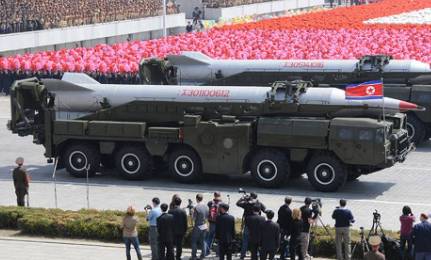
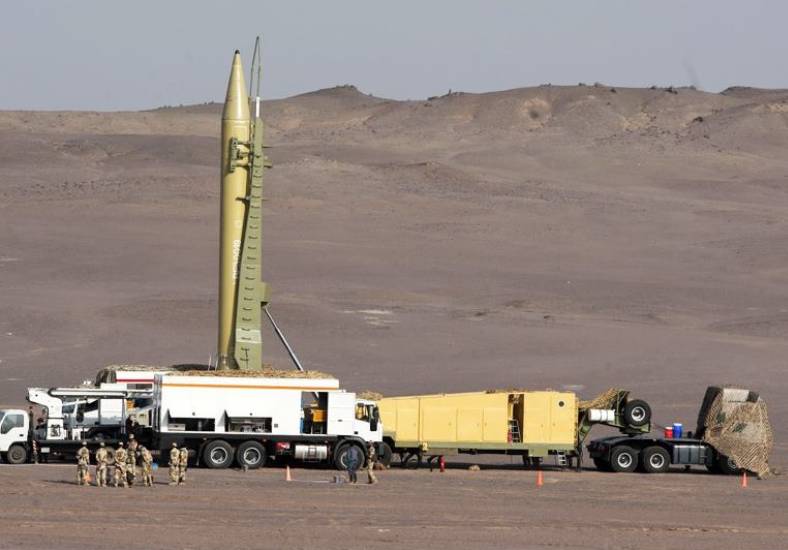
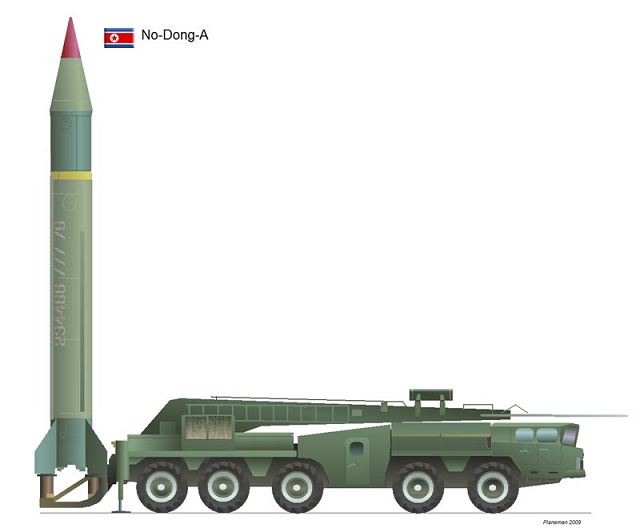
The NoDong is a medium-range ballistic missile indigenous to North Korea. The missile has a maximum range of 1250 km, making it capable of striking all of South Korea and Japan. The NoDong is liquid-fueled and can carry a payload of 1,200kg. It is likely capable of carrying nuclear warheads. As a road-mobile system, the missile can be launched from any location and is concealable, making it more resilient to a preemptive strike. Believed to have been developed in the late 1980s as a part of a Soviet technological transfer, the NoDong is an enhanced version of the Soviet Scud-C missile. However, the development of the NoDong was not entirely an independent North Korean effort, but a collaboration of Chinese and Russian assistance. A derivative of the NoDong was used as the first stage of the long-range Taepodong-1 when it was launched in 1998. Although the rocket failed to reach orbit, the NoDong performed successfully as the first stage. The capabilities of the NoDong-1 missile are such that it can only effectively be used against large, soft targets like cities, airports, or harbors. Its range is sufficient to put parts of Japan within striking distance. However, the accuracy is extremely low for modern missiles and likely ineffective against hardened military targets unless it was equipped with a nuclear warhead. In 2006, it was estimated that North Korea’s inventory of NoDong-1 missiles was approximately 200. By 2009, reports indicated that this stockpile may have reached 300 missiles.