ARMSNET
Military Equipment Database
Initializing 0%

R2-600 French Unmanned Aerial Vehicle (UAV)

R2-600

Tactical Unmanned Aerial Vehicle (UAV)
Spotted an error? Sign in to suggest an edit.
Basic Information
Name
R2-600 French Unmanned Aerial Vehicle (UAV)
Designation
R2-600
Alternate Designation
R2-600
Equipment Type
Tactical Unmanned Aerial Vehicle (UAV)
Manufacturer
FLY-R
Date of Introduction
2026
Description

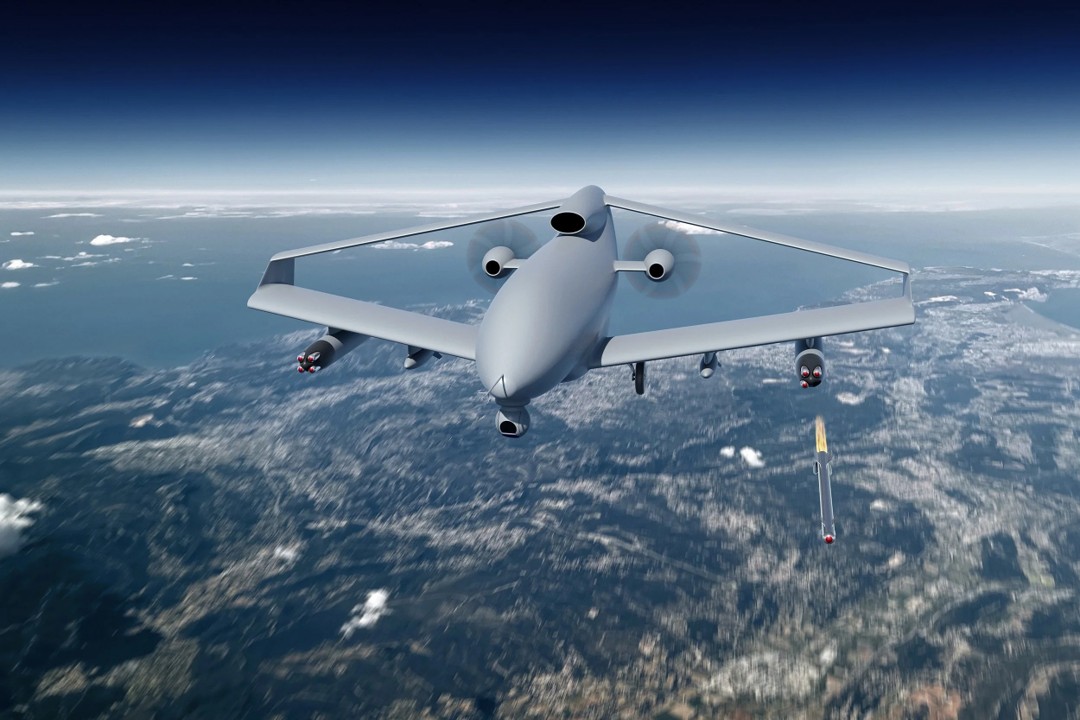
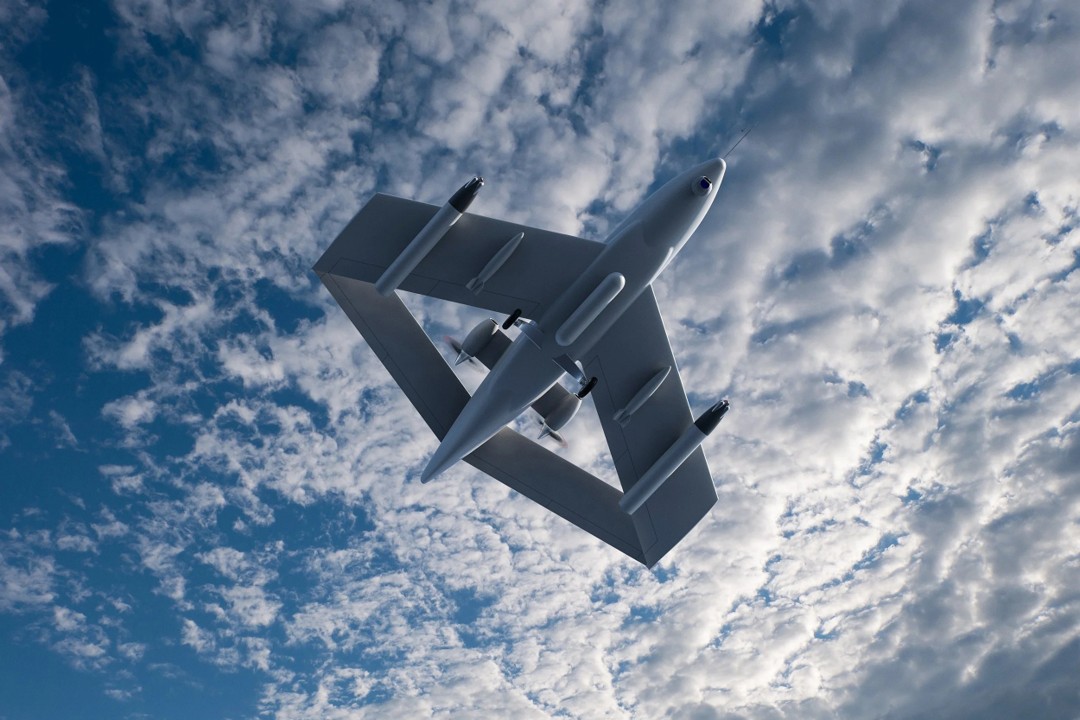
The R2-600 French Unmanned Aerial Vehicle (UAV) is a hybrid-powered medium-altitude long-endurance (MALE) unmanned aerial vehicle developed by FLY-R, a French aerospace company founded in 2013. The R2-600 embodies a fundamentally different approach to MALE UAV design compared to conventional platforms. Rather than adopting traditional cantilever wing configurations, the airframe employs a closed-wing rhomboidal (diamond-shaped) geometry characterized by the absence of vertical control surfaces and a three-dimensional diamond planform. This design innovation yields substantial aerodynamic and structural advantages that directly enhance operational flexibility and reduce logistical burdens. The rhomboidal wing configuration delivers approximately 50% wingspan reduction compared to conventional wings delivering equivalent lift. This geometric efficiency translates into reduced structural mass—estimated at one-third lighter than conventionally designed equivalents—while simultaneously improving lift-to-drag ratios and enabling wider operational speed envelopes. The design exhibits high maneuverability characteristics and maintains relatively constant aerodynamic efficiency across diverse flight regimes, critical attributes for operations spanning loitering surveillance to dash-transit scenarios. The airframe employs a composite and metal hybrid construction, designed according to CS23/FAR23 standards and certifiable with respect to STANAG 4671 military standards. For the French Armed Forces, the R2-600 addresses persistent surveillance and reconnaissance requirements across geographically expansive and operationally demanding regions. The platform's 25-hour endurance enables coverage of vast terrain areas with minimal platform rotation, critical for Sahel operations where dispersed insurgent formations and trafficking networks demand continuous monitoring. The 600-kilogram payload capacity supports advanced signals intelligence collection, enabling French strategic intelligence agencies to monitor adversary communications and electronic emissions across contested airspace without manned platform vulnerability. Maritime surveillance applications leverage the R2-600's endurance for Indo-Pacific operations, where France maintains strategic interests in territorial seas, chokepoint monitoring, and freedom of navigation operations. The compact 6.0-meter wingspan facilitates deployment from smaller naval platforms, potentially including French Navy helicopter platforms with equipment modifications.

Air & Air Defense Specifications
Engine The R2-600 employs a hybrid propulsion system featuring twin engines with a pusher propeller configuration. This hybrid architecture merges traditional combustion-based power generation with electric motor technology, delivering performance advantages specific to extended-duration missions. The propulsion efficiency enables operational range exceeding 3,000 kilometers when equipped with satellite communications infrastructure, substantially extending the platform's geographic coverage and deployment flexibility.
Max Speed 500.0 km/h
Cruise Speed 269.0 km/h
Range 3000.0 km
Endurance 25.00 hrs
Service Ceiling 13700 m
Wingspan 6.00 m
Payload Capacity 600 kg
System
Alternate Designation R2-600
Type Unmanned Aerial Vehicle (UAV)
Manufacturer FLY-R
Payload Capacity 600 kg
Sensor & Intelligence The R2-600 integrates a comprehensive sensor suite specifically tailored for ISR missions across diverse operational contexts. The platform accommodates day and night imaging systems, synthetic aperture radar (SAR) for all-weather surveillance, and signals intelligence (SIGINT) collection packages supporting spectrum analysis and electronic warfare awareness.
Navigation System Navigation systems employ inertial navigation unit (INU) architecture coupled with GNSS (Global Navigation Satellite System) receivers and anemometric sensors for precise positioning and altitude control. Critical to contested operational environments, the R2-600 demonstrates GNSS-denied navigation capability, enabling continued operations when satellite positioning is compromised through jamming, spoofing, or other electronic countermeasures.
Command & Control The platform features fully integrated ground control station (GCS) architecture compatible with existing customer operational systems, minimizing integration complexity and training overhead. The GCS supports both direct line-of-sight (LOS) radio frequency communications and satellite communications (SATCOM), enabling persistent command authority across intercontinental range. The dual communication path architecture provides resilience and flexibility for operations spanning from regional battlefields to expeditionary theaters requiring extended global reach. Secure communication protocols protect command and telemetry streams, critical for operations in contested environments where electronic warfare threats extend beyond kinetic engagement.
Take-Off Distance The take-off distance requirement of less than 500 meters at sea level under ISA conditions and maximum takeoff weight facilitates operation from austere, forward-deployed locations with minimal infrastructure development. The aircraft features retractable front landing gear with fixed main gear, optimizing aerodynamic efficiency during cruise while maintaining operational flexibility across diverse terrain.
Dimensions
Length 6.1 m
Height 5.9 m
Wingspan 6.0m
Empty Weight 700 kg
Maximum Takeoff Weight 1,700 kg
Automotive
Engine Name INA
Engine Type The R2-600 employs a hybrid propulsion system featuring twin engines with a pusher propeller configuration. This hybrid architecture merges traditional combustion-based power generation with electric motor technology, delivering performance advantages specific to extended-duration missions. The propulsion efficiency enables operational range exceeding 3,000 kilometers when equipped with satellite communications infrastructure, substantially extending the platform's geographic coverage and deployment flexibility.
Engine Power INA
Internal Fuel Tank 150 kg
External Fuel Tank 150 kg
Maximum Speed 500 km/h
Cruise Speed 269 km/h
Minimum Speed 144 km/h
Maximum Range 3,000 km
Service Ceiling 13,700 m
Endurance 25 hours
Armament
Weaponization & Strike Capability The R2-600 demonstrates full integration with external ordnance and weaponized payloads. The platform accommodates laser-guided munitions (such as LGB—laser-guided bomb units), laser-guided rockets (LGR), designator pods enabling precision strike against moving targets, and small loitering munitions configured for autonomous engagement or swarm operations. This multi-platform strike architecture enables diverse tactical engagements from close air support in complex terrain to strikes against hardened fixed positions.
Details
Country of Origin France
Category UAVs
Air > UAVs
Filter Label
R
Classification
Domain
Air & Air Defense
Equipment Status
Active
Dimensions
Length
6.1 m
Width
6 m
Height
5.9 m
Weight
1700 kg
Operators (1)
France
Something went wrong. Please reload the page. Reload