ARMSNET
Military Equipment Database
Initializing 0%

Puma German Infantry Fighting Vehicle (IFV)

Puma

Infantry Fighting Vehicle (IFV)
Spotted an error? Sign in to suggest an edit.
Basic Information
Name
Puma German Infantry Fighting Vehicle (IFV)
Designation
Puma
Alternate Designation
Puma
Equipment Type
Infantry Fighting Vehicle (IFV)
Manufacturer
Date of Introduction
2006
Description

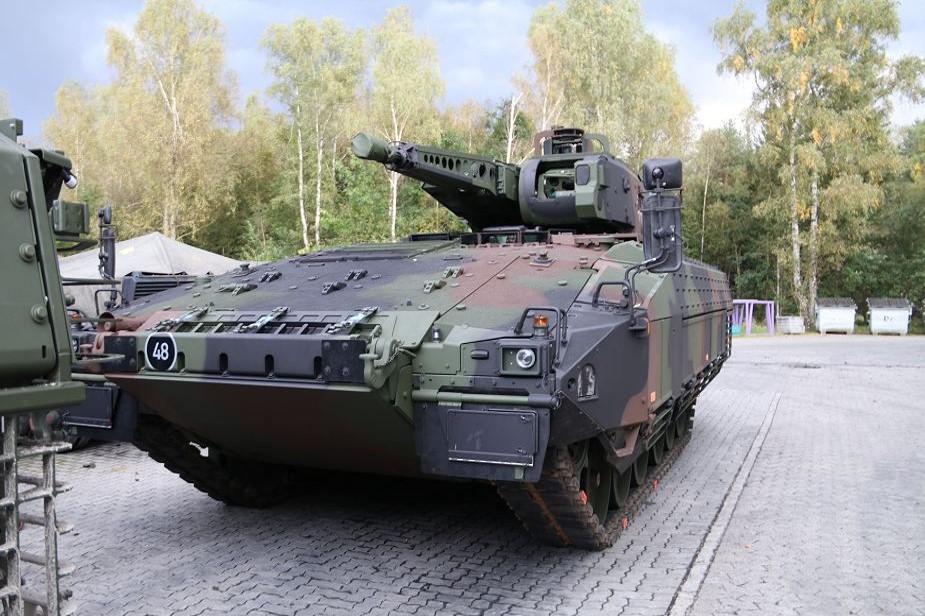
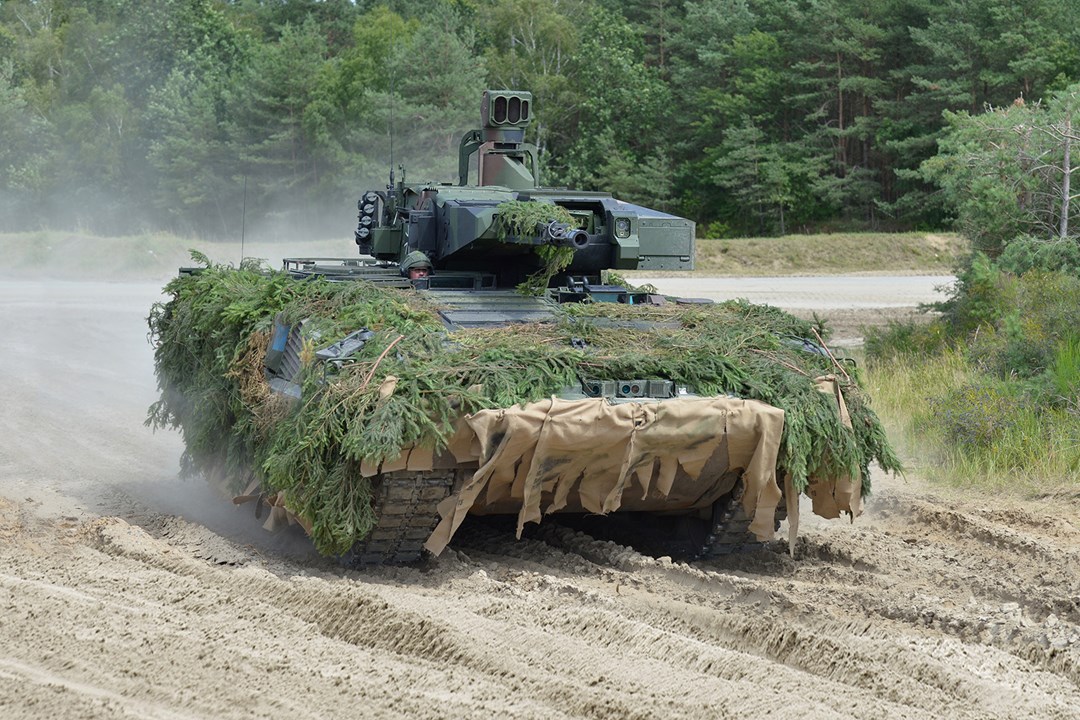
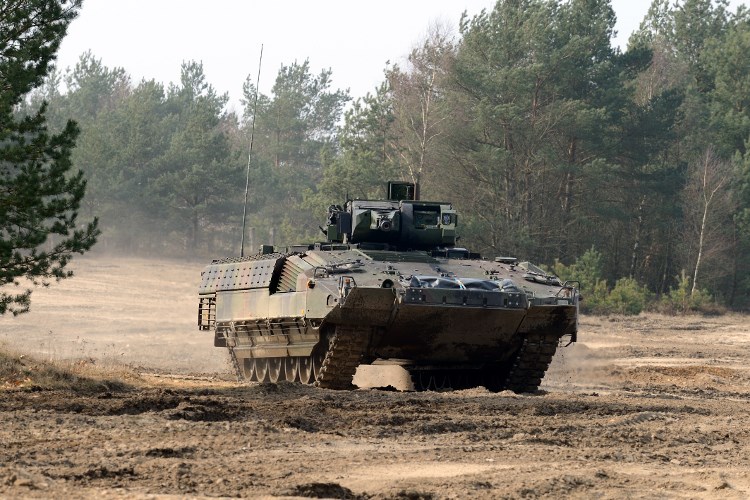
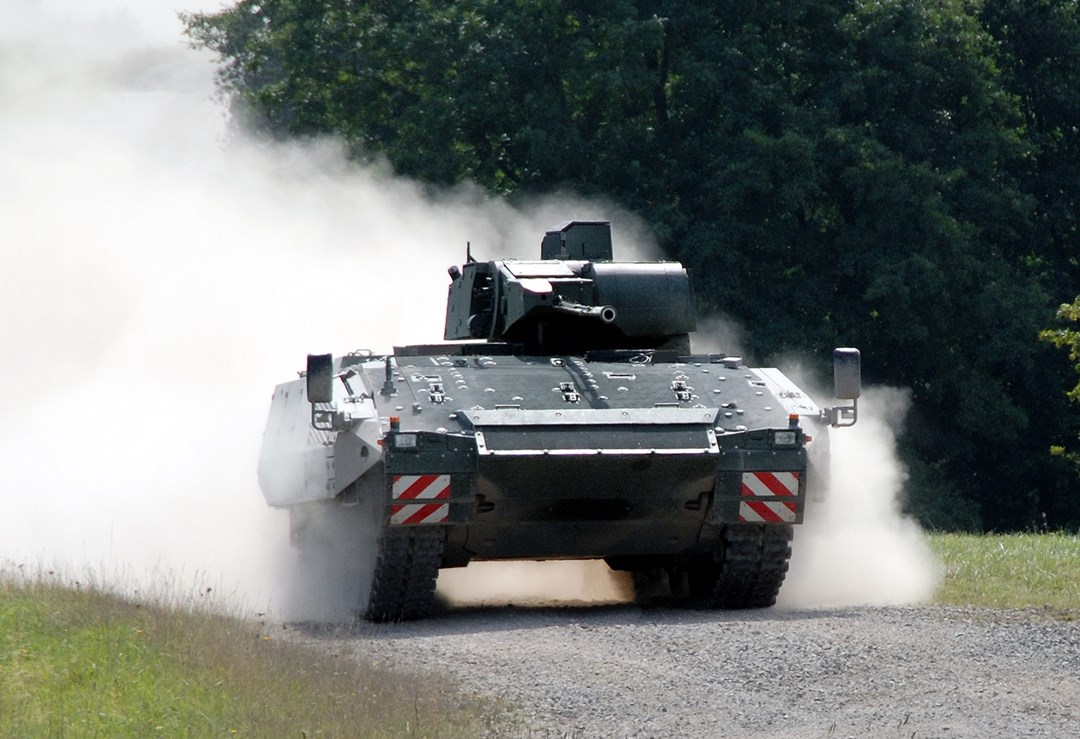
The Puma is a German infantry fighting vehicle (Schützenpanzer or short SPz) designed to replace the aging Marder IFVs currently in service with the German Army. Production of the first batch of 350 vehicles began in 2010 and is scheduled for completion by August 2020. A second batch of 210 Pumas has received funding. Mass production began on 6 July 2009. The companies responsible for this project are Krauss-Maffei Wegmann and Rheinmetall Landsysteme, who created a joint venture in the form of Projekt System Management GmbH (PSM). The Puma is one of the world's best-protected IFVs, while still having a high power-to-weight ratio. SAIC offered a derivative of the Puma as its contender in the now cancelled American GCV Infantry Fighting Vehicle program. The Puma, while externally not very different from existing IFVs, incorporates a number of advances and state-of-the-art technologies. The most obvious of these is the incorporated ability to flexibly mount different armour (see below for details). Another feature is the compact, one-piece crew cabin that enables direct crew interaction ("face-to-face"; like replacing the driver or gunner in case of a medical emergency) and minimizes the protected volume. The cabin is air conditioned, NBC-proof with internal nuclear and chemical sensors and has a fire suppressing system using non-toxic agents. The engine compartment has its own fire extinguishing system. The only compromise of the otherwise nearly cuboid cabin is the driver station, located in a protrusion in front of the gunner, in front of the turret. One measure to achieve the one-piece cabin is the use of an unmanned, double-asymmetrical turret (see photo): while slightly off-center turrets are common in IFVs, the Puma's turret is on the left-hand side of the vehicle, while the main cannon is mounted on the right side of the turret and thus on the middle axis of the hull when the turret is in the forward position. The outer hull (minus the turret) is very smooth and low to minimize bullet traps and the general visual signature. The whole combat-ready vehicle in its base configuration will be air transportable in the Airbus A400M tactical airlifter. Its 3+6 persons crew capability is comparable to other vehicles of comparable weight, like the US American M2 Bradley IFV, the same as in the Marder, but smaller than the 3+8 of the CV9030 and CV9035.

Ground Specifications
Engine V-10 Diesel (1073 hp)
NBC Protection Yes
Range 310.0 km
Variants
Command post vehicle This variant retains the 30-mm turret. The rear is modified for the command-post role and fitted with additional communications equipment.
Driver training vehicle Eight of the 350 Pumas ordered by the German army will be in the specialized driver training role. They are not fitted with the 30-mm turret.
System
Alternative Designation Puma
Type Infantry Fighting Vehicle (IFV)
Crew Infantry Fighting Vehicle (IFV) ea
Passengers 6
Dimensions
Length 7.6 m
Width 3.9 m
Height 3.1 m
Track Width 0.5 m
Ground Clearance 450mm
Weight, Maximum Load 43,000 kg
Weight, Air-Transportable 31,450 kg
Weight, Ground-Transport 40,700 kg
Automotive
Engine Name 1 x MTU 10V 892
Engine Type 10-cyl high-power density diesel
Engine Power 1,073 hp (800 kW) at 4,250 rpm
Speed, Forward 38 mph (70 km/h)
Speed, Reverse 22 mph (40 km/h)
Range 310 mi (500 km)
Vertical Obstacle 2 ft 7 in (0.80 m)
Trench 8 ft 2 in (2.50 m)
Fording without Preparation 3 ft 11 in (1.20 m)
Main Gun
System
Name Mauser MK30-2
Type 30 mm Rifled Gun
Quantity 1 x Mauser MK30-2
Caliber 30 mm
Length 3780 mm
Weight 198 kg
Rate of Fire 200 rounds per minute
Traverse 360 deg
Elevation -10 deg to 45 deg
Range 9,840 ft (3,000 m)
Notes dual ammunition feeding allows varied alternate shots
Ammunition
Type APFSDS-T and KETF (ABM)
Caliber 30 mm
Basic Load 200 rounds ready to fire, 200 rounds in storage
Coaxial Weapon System
System
Name Heckler and Koch MG4 (also known as the HK123)
Type Light machine gun
Manufacturer Heckler & Koch
Proliferation Albania: Standard light support weapon of Albanian Land Forces Brazil: Limited use on the Brazilian Army Estonia: Used by ESTSOF. Germany: Standard platoon-level support weapon of the German Army, adopted in 2005. Malaysia: Used by PASKAL special operations force tactical of the Royal Malaysian Navy, adopted in 2006. Portugal Spain: Ordered 1,800–2,000 MG4E machine guns in 2007 with deliveries expected to continue over the next four years. Standard LMG for the Spanish Army, usually fitted with an ACOG sight. Turkey Air Force MAK SF
In Service 2005-present
Length 1,030 mm (40.6 in) stock extended / 830 mm (32.7 in) stock folded (MG4, MG4E) 950 mm (37.4 in) stock extended / 750 mm (29.5 in) stock folded (MG4KE)
Barrel Length 450 mm (17.7 in) (MG4, MG4E) 370 mm (14.6 in) (MG4KE)
Width 90 mm (3.5 in)
Height 250 mm (9.8 in)
Weight 8.15 kg (17.97 lb) (MG4) 7.90 kg (17.4 lb) (MG4E) 7.70 kg (17.0 lb) (MG4KE)
Action Gas-operated, rotating bolt
Rate of Fire 890 (± 60) RPM (MG4) 775 (± 50) RPM (MG4E, MG4K)
Effective Firing Range Approx. 1,000 m (MG4, MG4E) Approx. 900 m (MG4KE)
Feed System M27 linked disintegrating belt
Sights Iron sights; MIL-STD-1913 rail provided for optics, German Army models are equipped with telescopic sights with 3× magnification.
Ammunition
Type Rifle
Caliber 5.56 mm
Cartridge 5.56 x 45mm NATO
Basic Load 1,000 rounds ready to fire, 1,000 rounds in storage
Anti-Tank Guided Missile System
System
Name Spike
Type fire-and-forget anti-tank guided missile and anti-personnel missile
Length 1,200 mm (3 ft 11 in)
Diameter 130 mm (5.1 in)
Weight Spike-ER from helicopter: • Missile in canister: 34 kg (74 lb 15 oz) • Launcher: 55 kg (121 lb 4 oz) • Launcher + 4 missiles: 187 kg (412 lb 4 oz) Spike-MR/LR from ground: • Missile round: 14 kg (30 lb 14 oz) • Command & launch unit (CLU): 5 kg (11 lb 0 oz) • Tripod: 2.8 kg (6 lb 3 oz) • Battery: 1 kg (2 lb 3 oz) • Thermal sight: 4 kg (8 lb 13 oz)
Rate of Fire Ready to launch in 30 seconds, reload in 15 seconds
Effective Firing Range 200–2,500 m (220–2,730 yd)
Sights 10× optical sight
Warhead Tandem-charge HEAT warhead
Detonation Mechanism Piezoelectric trigger
Engine Solid-propellant rocket
Guided System Infrared homing – Electro Optical (CCD, Imaging Infrared (IIR) or Dual CCD/IIR), Passive CCD or dual CCD/IIR seeker
Fire Control
Name INA
Computerized FCS INA
Main Gun Stabilization INA
Note #1 The Puma offers improvements in situational awareness. The fully stabilized 360° periscope (PERI) with six different zoom stages offers a direct glass optic link to either the commander or the gunner. Since this is an optical line, it had to be placed in the turret center, one of the reasons why the main cannon is mounted off-center on the turret. Via an additional CCD camera the picture from this line can also be fed into the on-board computer network and displayed on all electronic displays within the vehicle. Besides that, the periscope offers an optronic thermal vision mode and a wide-angle camera with three zoom stages to assist the driver, as well as a laser range finder. The whole array is hunter-killer capable; the commander also has 5 vision blocks. The gunner optics, which can be completely protected with a slide hatch, are mounted coaxially to the main gun. The gunner has a thermal vision camera and laser range finder (identical to those on the PERI) and an optronic day sight, rounded off with a vision- and a glass block. The driver has three of them, as well as an image intensifier and one display for optronic image feeds. Even the passenger cabin has a hatch and three vision blocks on the rear right side of the vehicle, one of them in a rotary mount. The rear cabin also has two electronic displays. All in all, the Puma has an additional five external cameras at its rear in swing-mounts for protection while not in use. Apart from the glass optic periscope view directly accessible only by the commander and gunner (but indirectly via the CCD camera), all optronic picture feeds can be displayed on every electronic display within the vehicle. The provisions for the rear cabin enable the passengers to be more active than previously in assisting the vehicle crew either directly through the vision blocks and hatches, or by observing one or more optronic feeds. The whole crew has access to the on board intercom.
Note #2 The gunner's control unit enables him to optimize the type of ammunition for a particular target. Options include tanks, armored infantry fighting vehicle, armored personnel carrier, helicopter, line of skirmishers, soldiers in a covered position and a squad column.
Protection
Hull Armor The Puma incorporates protection against mines to NATO Standard Agreement (STANAG) 4569 requirements, shaped charges and kinetic energy ammunition as well as nuclear, biological and chemical weapons. The vehicle features passive, reactive and active armor elements. The hull is of all-welded steel armor with applique passive armor for higher levels of ballistic protection. The Puma has two levels of protection. It is air-transportable at protection level A, which includes full mine protection and ballistic protection from machine guns up to 14.5-mm in caliber through 360 degrees. Add-on armor brings the Puma to protection level C. This defends against hand-held anti-tank weapons, medium-caliber weapons, artillery fragments and bomblets. Mine protection is effective against heavy blast mines and explosively formed projectiles (EFP). The belly provides protection against anti-tank mines containing 22 lb (10 kg) of explosive as well as explosively formed penetrators (EFPs).
Turret Armor The hull and turret roof are protected against bomblets. The rear of the Puma has been strengthened to withstand the impact of another vehicle in case of collision.
Applique Armor The modular passive armor package allows the vehicle to be rapidly upgraded with new technology or for changing threats.
Explosive Reactive Armor INA
Active Protection System INA
Mine Clearing INA
Self-Entrenching Blade INA
NBC Protection Yes
Smoke Equipment INA
Details
Country of Origin Germany
Category Land
Land
Filter Label
P
Classification
Domain
Ground
Equipment Status
Active
Dimensions
Length
7.6 m
Width
3.9 m
Height
3.1 m
Weight
43000 kg
Operators (1)
Germany
Something went wrong. Please reload the page. Reload