L70 Swedish 40mm Towed Anti-Aircraft Autocannon
L70
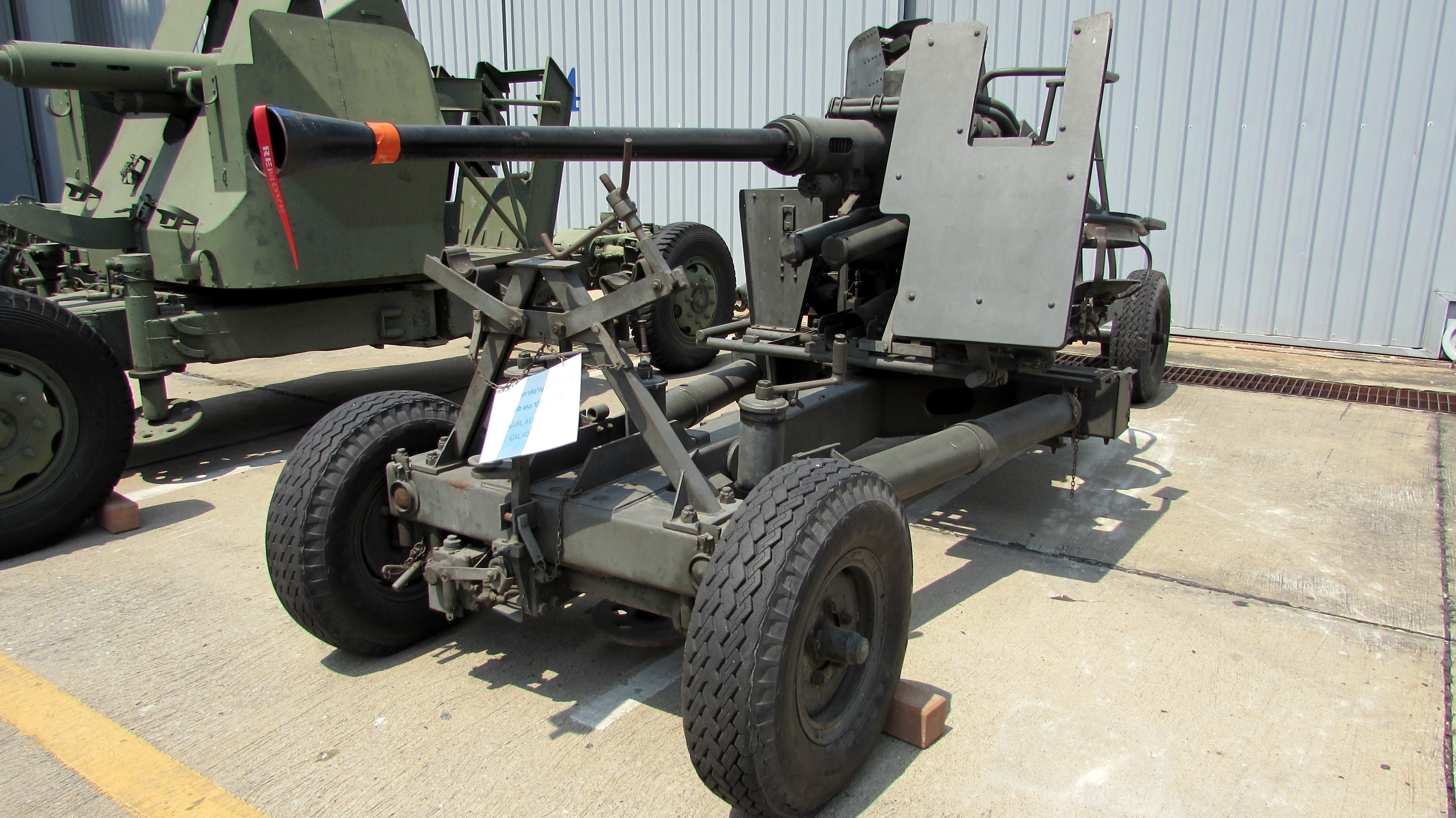
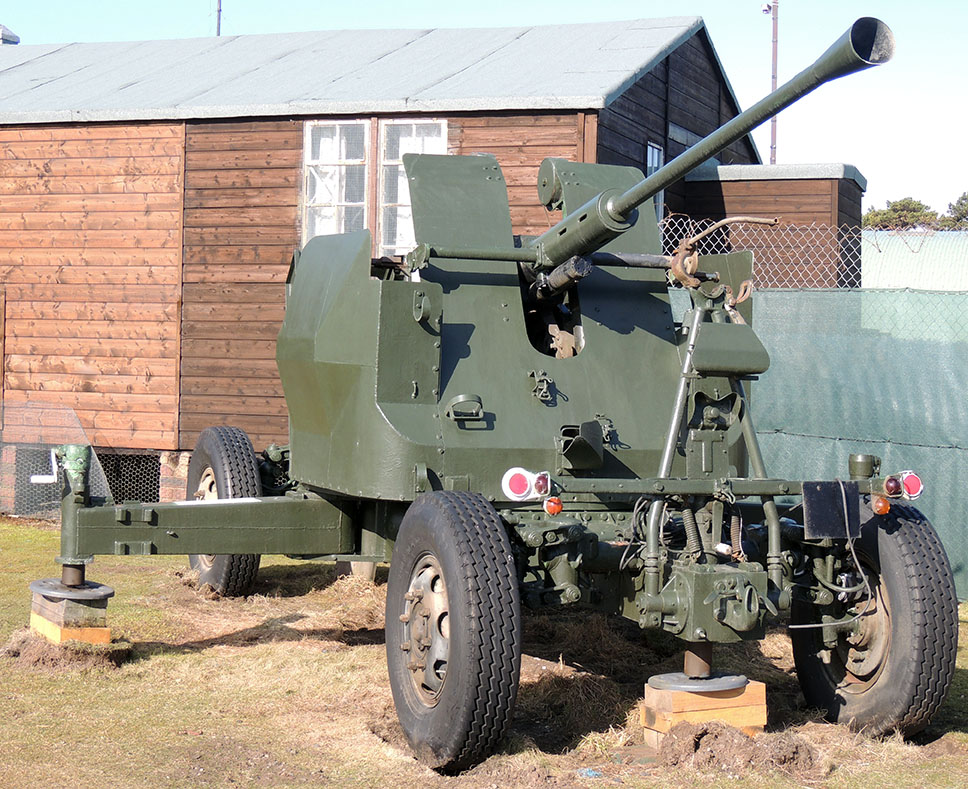
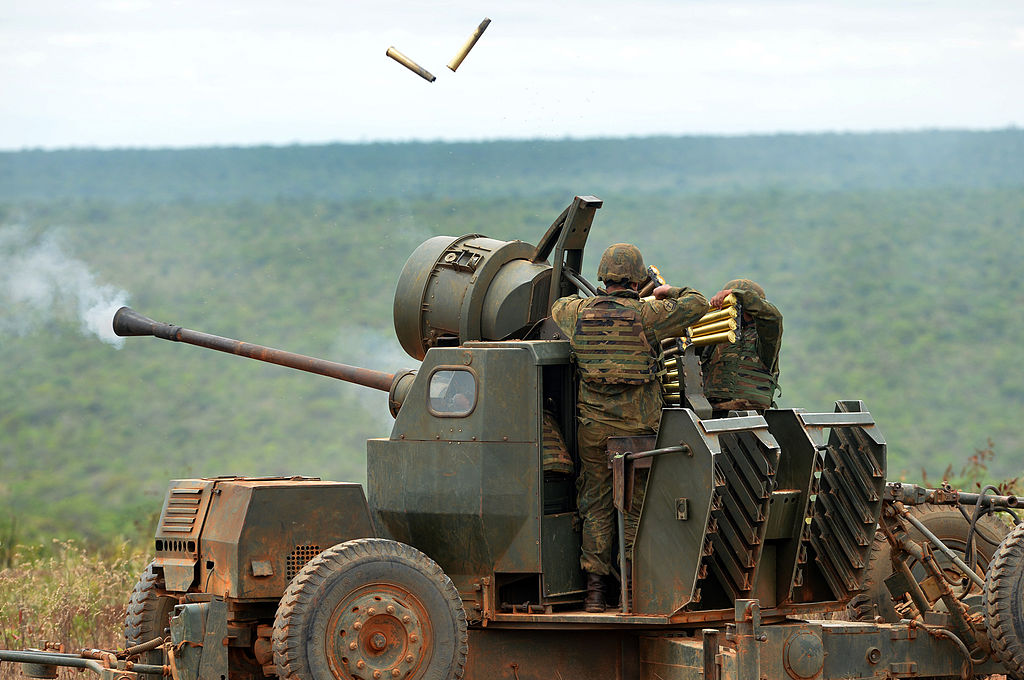
L70 Swedish 40mm Anti-Aircraft Autocannon By the end of World War II, jet aircraft had so increased the speed of attack that the Bofors simply could not get enough rounds into the air to counter the aircraft before it had already flown out of range. In order to effectively engage these threats, the gun would have to have longer range and a higher rate of fire, thereby increasing the number of rounds fired over the period of an engagement. Bofors considered either updating the 40 mm, or alternately making a much more powerful 57 mm design. In the end they did both. The new 40 mm design used a larger 40×365R round firing a slightly lighter 870 g shell at a much higher 1,030 m/s (3,379 fps) muzzle velocity. The rate of fire was increased to 240 rounds per minute[1] (4.0 rounds per second), similar to the German Flak 43. Additionally, the carriage was modified to be power-laid, the power being supplied by a generator placed on the front of the carriage. The first version was produced in 1947, accepted in 1948 as the "40 mm lvakan m/48", and entered Swedish service in 1951. Additional changes over the years have improved the firing rate first to 300 rpm (5.0 rounds per second), and later to 330 rpm (5.5 rps). Foreign sales started, as they had in the past, with the Netherlands and the United Kingdom. In November 1953 it was accepted as the NATO standard anti-aircraft gun, and was soon produced in the thousands. The L/70 was also used as the basis for a number of SPAAGs, including the U.S. Army's failed M247 Sergeant York. The UK's RAF Regiment adopted the L70 to replace its L60 guns in 1957, retiring its last examples in 1977 and replacing them with the Rapier system. In 1970s Zastava Arms acquired from Bofors license to produce L/70 version together with laser-computer group. Ammunition 40mm for L/70 is locally produced for domestic use and export in Sloboda Čačak. In 1979 the Royal Netherlands Air Force acquired 25 KL/MSS-6720 Flycatcher radar system and upgraded 75 of their 40L70s to create 25 firing units for static air base defence. The improved guns had an increased rate of fire (300 rounds/min) and the loading mechanism was provided with extended guides so that it could hold 22 cartridges. A 220 V diesel generator was mounted onto the undercarriage. This generator was powered by a Volkswagen diesel engine. In 1989 the Royal Netherlands Army acquired 30 Flycatcher systems. Each Flycatcher was fielded with two modified Bofors 40L70G guns. The 'G' stands for 'Gemodificeerd', which is the Dutch word meaning 'modified'. In the 40L70G version the loading mechanism was further improved and could be recognized by open rear guides. The 40L70G guns were also provided with muzzle velocity radars. Early in the 1990s the Royal Netherlands Air Force 40L70s were upgraded to the 'G' version. In some versions of the Swedish Army Combat Vehicle 90 there is a cartridge fed, automatic version of the L/70 autocannon installed. In order to fit inside the vehicle, the gun is mounted upside down. New armour piercing and programmable ammunition have also been developed. Germany has used L/70 guns on its Class 352, Class 333 and Class 332 mine hunting vessels, although these will be replaced by Rheinmetall MLG 27 remote-controlled gun systems until 2008. Until the early 80s L/70 guns guided by D7B radars were in widespread use in the anti-aircraft role in the German Navy and German Air Force until replaced by Roland SAMs. The L/70 is also used by the Indian Abhay IFV which carries 210 APFSDS and high explosive rounds.