Wing Loong II Chinese Medium-Altitude Long Endurance (MALE) Unmanned Aerial Vehicle (UAV)
Wing Loong II
Reconnaissance & Strike Drones
Spotted an error? Sign in to suggest an edit.

Other


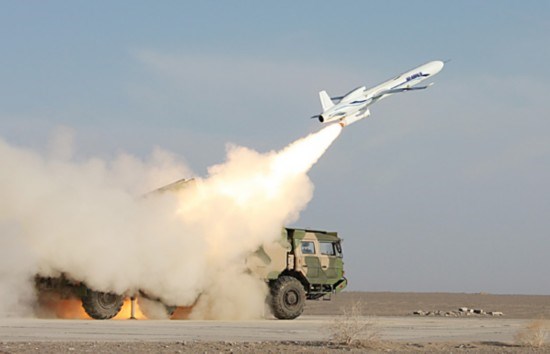

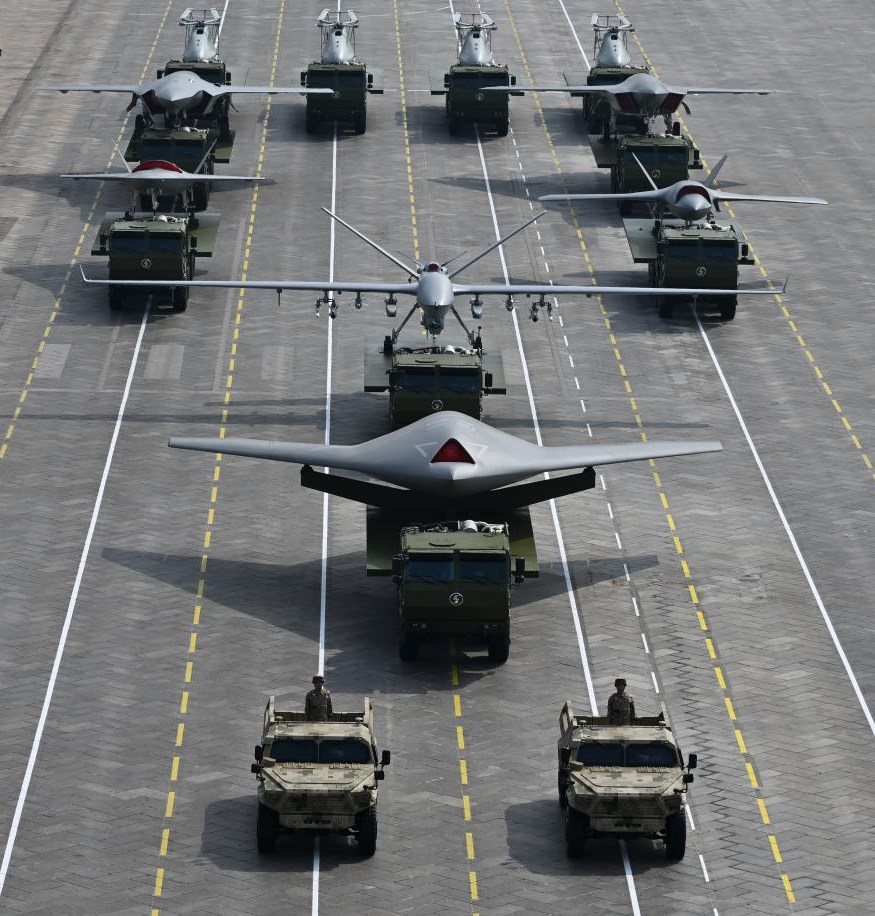

Basic Information
Name
Wing Loong II Chinese Medium-Altitude Long Endurance (MALE) Unmanned Aerial Vehicle (UAV)
Designation
Wing Loong II
Alternate Designation
—
Equipment Type
Reconnaissance & Strike Drones
Manufacturer
Chengdu Aircraft Industrial Group (CAIG)
Date of Introduction
2017
Description
The Wing Loong II is a medium-altitude, long-endurance unmanned aerial vehicle based on the Wing Loong (Pterodactyl). It is larger and more capable -- with significantly greater payload -- than its predecessor. The Wing Loong II has been described as being in the same class as the U.S. MQ-9 Reaper. The Wing Loong II can conduct intelligence, surveillance, and reconnaissance; electronic warfare; search-and-rescue; strike; peacekeeping; and border patrol missions. The air vehicle features six hard points, compared to two on the Wing Loong, with four that can carry double payloads. As a result, the Wing Loong II can carry up to 10 air-to-ground bombs and missiles.
Air & Air Defense Specifications
Engine
Four-Stroke, Four-Cylinder, Horizontally Opposed Aircraft Engine (100 hp)
Max Speed
370.1 km/h
Range
200.0 km
Endurance
32.00 hrs
Service Ceiling
9144 m
Wingspan
20.50 m
Variants
Pterosaur I
First member of Wing Loong series, with program of Wing Loong begun in May 2005. Maiden flight was completed in October 2007 and payload evaluation flight was completed a year later in October 2008. This first model of Wing Loong series lacked the bulge at the nose tip of the fuselage due to the lack of a satellite antenna, and while the English name used by the developer differed from later models, the Chinese name remains the same, and so is the name Wing Loong for the entire series.The lack of satellite antenna results in cheaper cost, with the reduction of the maximum control range around to 200 km. This model is no longer actively marketed when Pterodactyl I appeared, but is still available as a cheaper alternative up on potential customers’ request.
Pterodactyl I:
The second member of Wing Loong series is distinguished from the earlier Pterosaur I in that there is a bulge at the nose tip of the fuselage to house a satellite antenna, and this is the version most widely publicized and actively marketed as a surveillance platform. United Arab Emirates and Uzbekistan were reported to be the first two foreign customers of Pterodactyl I.
Sky Saker:
Sky Saker is a derivative of Wing Loong developed by Norinco mainly intended for export. The Chinese name is Rui Ying, meaning Sharp Eagle, but the English name adopted by the developer is Sky Saker. Sky Saker / Rui Ying carries both a miniature synthetic aperture radar and an electro-optical pod to perform reconnaissance in both the visible light and radar spectra. The capability of Sky Saker / Rui Ying has been exaggerated by many Chinese internet sources claiming that it has both scout and strike capabilities at the same time, but this has been proven to the contrary. According to all info released by Norinco itself (as of 2015), the UAV can employ only a single capability at a time: when the UAV carries the reconnaissance payload, no weaponry is carried. Similarly, when weaponry is carried, the reconnaissance payload is absent.
WJ1
The first land attack version of Pterodactyl I, which is a weapon platform without the reconnaissance/targeting pod under the chin. The designation WJ stands for Wu-Zhuang Wu-Ren-Ji, meaning armed UAV. WJ-1 UAV made its public debut in November 2014 at the 10th Zhuhai Airshow along with its cousin GJ-1.
GJ-1
Another land attack version of Pterodactyl I that combines the capabilities of both Pterodactyl I and WJ-1 so that it can identify and engage targets on its own. GJ-1 can be distinguished from both Pterodactyl I and WJ-1 in that GJ-1 has both the reconnaissance/targeting pod under the chin as well as hardpoints to carry weapons. The designation GJ stands for Gong-Ji Wu-Ren-Ji, meaning "attack UAV." GJ-1 UAV made its public debut in November 2014 at the 10th Zhuhai Airshow along with its cousin WJ-1.
Wing Loong ID:
Upgraded variant of the Wing Loong I, with improved aerodynamics and engine enabling greater takeoff weight, service ceiling, and endurance. Other upgrades include both internal and external stores, as well as communications equipment. The variant launched in 2018 with Egypt being the first buyer of 32 systems.The variant achieved its first flight on 23 December 2018
Wing Loong II SIGINT Variant
Wing Loong II SIGNT Variant, which "shows a GJ-2
featuring several rod-shaped antennas configured in a circular array fitted underneath
The fuselage that could serve as a communications band-direction-finding array capable
of not only intercepting communication signals but also providing a bearing of the
transmitter.
Systems
Alternative Designation
Known in PLAAF service as the Gongji-2 ('Attack 2' or GJ-2), also dubbed the "Air Sniper"
Type UAV
Medium-Altitude Long-Endurance (MALE)
Expected out of Service Date
2037
Manufacturer
Chengdu Aircraft Industrial Group
(CAIG)
Cost
INA
Primary Function
The Wing Loong II can conduct intelligence, surveillance and reconnaissance; electronic warfare; search-and-rescue; strike; peacekeeping; and border patrol missions.
Flight Control Method
Wireless Communication or by Pilot on the ground
Day/Night Capable
Yes
All Weather Capable
INA
Takeoff or Landing Limitations
1 km Runway needed for Launch
Operator
1 ea
Complete Ground Crew System Includes
A complete Wing Loong II system includes air vehicles, a ground-control station, mission payload and an integrated logistics system.
Ceiling, Maximum
9,000 m
Ceiling, Minimum
INA m
Line of Sight Range
200 km
Satellite Communication Link Range
2,000 km
Endurance
32 hours
Location Positioning System
BeiDou Navigation Satellite System (BDS)
Guidance Tracking
GP
Propeller
3 Blade Design
Wing type
Low-Wing Monoplane Design
Wing Sweep
10 deg
Number of Hard Points
6 (3 on each wing)
Launch System
Runway,(1 km Runway needed for Launch)
Takeoff Roll
600 m
Manned-Unmanned Teaming (MUM-T) Capable
INA
Automatic Landing and Takeoff Capability
Yes
Recovery System
Runway
Landing Gear
The landing gear consists of two main wheels under the fuselage and one single wheel under the nose, facilitates safe take-off and landing.
Note
The Wing Loong II has been described as being in the same class as the U.S. MQ-9 Reaper.
Dimensions
Length
11 m
Height
4.1 m
Width (Wing Span)
20.5 m
Gross Weight
4,200 kg
Weight, Maximum Takeoff
4,200 kg
Weight, Payload
480 kg
Automotive
Engine Name
Rotax 914 Turbocharged Engine
Engine Type
Four-Stroke, Four-Cylinder, Horizontally Opposed Aircraft Engine
Engine Power
100 hp
Number of Engines
1 ea
Propellers Type
3 Bladed Design
Engine Location
Top of the Airframe
Speed, Maximum
370.4 km/h
Maximum Range
200 km
Operational Range Radius
1,500 km
Endurance
32 hour
Payload
400 kg
Communications
Radio
Satellite Communication System
Encrypted Data Link
Yes
Armament & Ammunition
Payload Types
EO/IR, SAR, laser-guided missiles
Air to Air Missiles
INA
Air to Ground Missiles
Yes
Rockets
Yes
Missile Type
YJ-9E Anti-Ship Missiles, AR-1/HJ-10 Anti-Tank Missiles
Bomb Type
T-9/50 50kg bomb, GB3 250 kg laser-guided bomb, TL-10 bomb, Lan Jian 7 (Blue Arrow 7) laser-guided air-to-surface missiles, TG100 laser/INS/GPS-guided bombs
Armament Weight Total
400 kg
Air to Ground Bombs/Missiles Total Capacity
10 ea
Fire Control
Fire Control System Type
INA
Fire Control Radar
INA
Radar Type
Synthetic Aperture Radar
Radar Designator
Yes
Laser Rangefinder
Yes
Laser Designator
Yes
Full-Motion Video
Yes
Forward-Looking Infrared (FLIR) Camera
Yes
Still Camera
Yes
Thermal Imaging Sensors
Yes
Electro Optical Pod
Yes, Loong Eye LE380 electro-optical sensor pod
Protection
Fuselage
Slender Design, with a Chine, used to control Radar Reflections
Stealth Properties
No
Heat Signature Reduction
INA
Add on Armor
No
EW Counter Measures / CCM
Yes
Counter Measures (Chaffs/Flares)
INA
Details
Country of Origin
China
Category
UAVs
Air > UAVs
Filter Label
W
Sources
deagel.com: https://www.deagel.com/x/x/a003240
Classification
Domain
Air & Air Defense
Equipment Status
Active
Dimensions
Length
11 m
Width
20.5 m
Height
4.1 m
Weight
4200 kg
Operators (7)
China
Pakistan
Algeria
Egypt
Morocco
Saudi Arabia
United Arab Emirates
Something went wrong. Please reload the page.
Reload