ARMSNET
Military Equipment Database
Initializing 0%

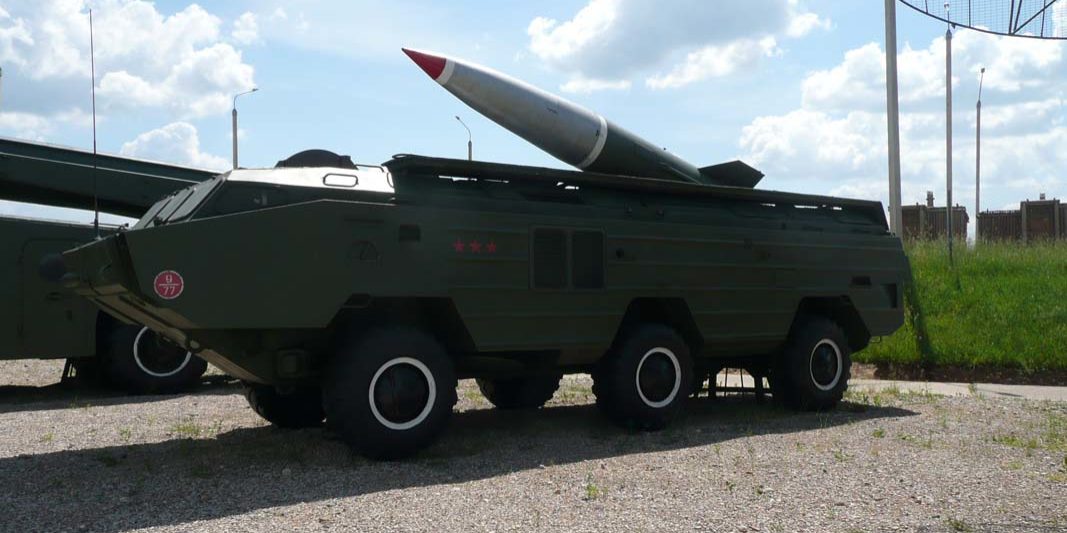
OTR-21 Tochka (SS-21 Scarab) Russian Close-Range Ballistic Missile

OTR-21 Tockka
Surface to Surface Ballistic Missile / Long-Range Artillery Rocket
Spotted an error? Sign in to suggest an edit.
Basic Information
Name
OTR-21 Tochka (SS-21 Scarab) Russian Close-Range Ballistic Missile
Designation
OTR-21 Tockka
Alternate Designation
OTR-21 Tockka; SS-21SS-21 Scarab; Scarab, Tochka, OTR-21, 9K79 Missile System
Equipment Type
Surface to Surface Ballistic Missile / Long-Range Artillery Rocket
Manufacturer
KBM
Date of Introduction
1976
Description

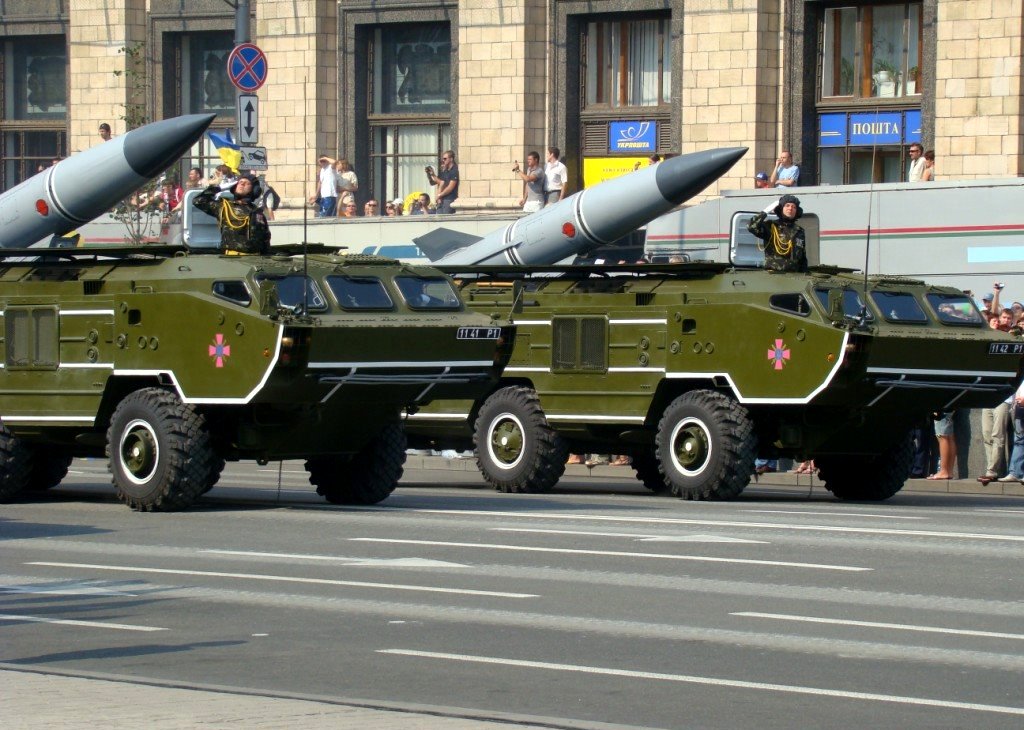
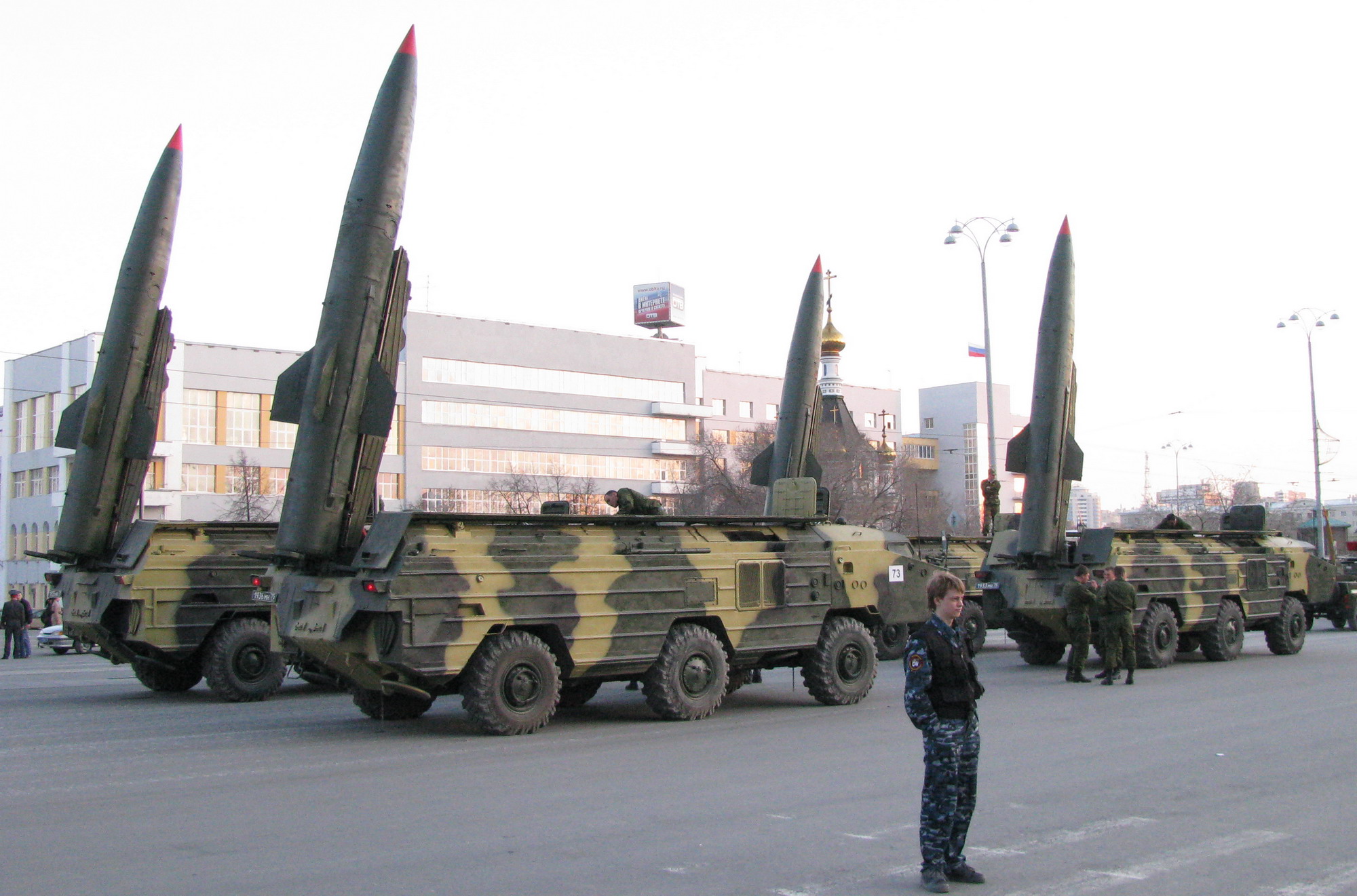
First operationalized in 1975, the road-mobile Scarab-A variant was designed to be deployed alongside conventional forces, maintain flexibility on the battlefield, and attack tactical targets such as bridges, storage facilities, troop concentrations, and airfields. It is a single-stage, single warhead, solid-fueled battlefield short-range ballistic missile (BSRBM) with a range of 70 km and inertial guidance to achieve an accuracy of 150 m Circular Error Probable (CEP). It has a 482 kg warhead that can be equipped with conventional, chemical, or nuclear munitions; the nuclear warhead is believed to have a selectable yield of 10 or 100 kT. If fitted with fragmentation or submunition conventional warheads, the Scarab’s blast radius is increased increasing its lethality against military units and troop concentrations. The missile can also be fitted with an Electromagnetic Pulse (EMP) warhead that can be calibrated for air burst to maximize effectiveness. The Scarab-B (also known as the Tochka-U), with an extended range of 120 km, was developed in the mid-1980s and began replacing the A variant in 1989. While the B variant employs inertial guidance for targeting, it also utilizes GPS and radar—or optical terminal correlation system—to increase its accuracy to 95 m CEP. Like the Scarab-A, the Scarab-B is also capable of being tipped with conventional and nuclear payloads, however, increased in-flight maneuverability allows the B version to better avoid missile defenses. All versions use a road-mobile Transporter-Erector-Launcher (TEL) which makes them highly mobile and able to quickly redeploy after launch. The Scarab is gradually being phased out by the more capable Iskander SRBM, which has a longer range, improved accuracy, and can carry multiple warheads. The missile has been proliferated to numerous Warsaw Pact countries and former Soviet allies. According to the Russian RIA news agency, the conventionally-equipped Scarab has been employed a total of 60 times in combat. Ukraine is believed to possess around 500 Scarab missiles and has purportedly exported the Russian BSRBM to countries such as Syria and Yemen. Reports speculate that Syria received around 40 Scarab BSRBMs and 12 corresponding TEL vehicles from Ukraine. In the mid-1990s, Syria provided North Korea with a Scarab-A prototype, which the Koreans reverse engineered and domestically produced and deployed as the KN-02 BSRBM. Yemen was also a recipient of the Scarab, obtaining an estimated 40 missiles from Ukraine. In December 2015, Houthi rebels in Yemen used the Scarab to carry out devastating strikes on the Arab coalition operating within the country, killing hundreds. Armenia, Belarus, and Kazakhstan are also believed to be in possession of the Scarab.

Air & Air Defense Specifications
Crew 3
Engine Diesel (300 hp)
Max Speed 6545.0 km/h
Range 70.0 km
Variants
Tochka-U (SS-21 Scarab-B), Improved variant of the Tochka with a maximum range of 120 km. and improved CEP. It entered service in 1989.
SS-21 Scarab-C Its Russian designation is unknown. This missile system was developed in the 1990s. Range was increased to 185 km and CEP was further improved.
Oka (SS-23 Spider), Essentially a longer version of the Tochka, with a maximum range of 480 km. The SS-23 Spider was eliminated due to the 1987 Intermediate-Range Nuclear Forces Treaty (or INF treaty) during the late 1980s.
KN-02, North Korean reversed-engineered and upgraded version of the Scarab-A, with a longer range and improved CEP.
System
Alternative Designation OTR-21 Tockka; SS-21SS-21 Scarab; Scarab, Tochka, OTR-21, 9K79 Missile System
Family OTR-21
Type Tactical Ballistic Missile
Manufacturer KBM (Kolomna)
Class Short-range Ballistic Missile (SRBM)
In Service 1976-Present
Chassis BAZ-5921 6x6 mobile launcher vehicle
Crew 3 ea
Displacement Time 1.5 minutes
Emplacement Time Less than 20 Min
Target Altitude Maximum INA
Target Altitude Minimum INA
Fire on the Move INA
Probability of Kill INA
Note #1 The main targets for this missile are airfields, command posts, support facilities, radars and air defense batteries, bridges and concentrations or troops and armored vehicles.
Note #2 The Tochka can carry conventional, nuclear or chemical warheads.
Dimensions
Length 9.48 m
Width 2.78 m
Height 2.35 m
Weight, Combat 18.15 tons
Ground Pressure INA
Automotive
Engine Name 5D20B-300
Engine Type Diesel
Engine Power 300 hp
Cruising Range 650 km
Speed, Maximum Road 60 km/h
Speed, Average Cross 40 km/h
Speed Maximum Swim 8 km/h
Gradient 60 %
Side Slope 40 %
Vertical Step 0.5 m
Trench 1.2 m
Fording Depth Amphibious
Missile System (Transporter/Erector/Launcher)
Name BAZ-5921 Mobile TEL Launch Platform
Launcher Unit 9P129: Launcher unit
Transporter Loader 9T218: transporter loader (TL)
Transport Vehicle 9T222 (9T238): transport vehicle
Maintenance Vehicle 9V844: maintenance vehicle
Max Rate of Fire INA
Elevation INA
Traverse INA
Note The SS-21 Scarab can carry a number of tactical warhead types such as: 9N123F HE-fragmentation type, AA60 tactical nuclear, 9N123K carrier with 'smart' sub-munitions, and chemical, 9M79K with the 9N123K cluster warhead.
Missile
Type 9M79 Tactical Ballistic Missile
Missile Length 6.4 m
Missile Diameter 0.65 m
Missile Weight 2,000 kg
Warhead Weight 480 kg
Engine Type Single-stage Solid-fuel rocket 96kN
Warhead Type conventional, chemical, nuclear
Guidance System inertial guidance system
Fuse Type INA
Missile Velocity Mach 5.3 (6545 km/h)
Maximum Effective Range 70 km
Minimum Effective Range INA
Accuracy 150 m
Circular Error Probable (CEP) 160 m
Fire Control
Fire Control System
Name INA
Computerized FCS Yes
Direct Fire INA
Indirect Fire Yes
Fire Control Sensors Yes
IADS Integration Yes
Protection
Hull Armor INA
Turret Armor No
Applique Armor No
Explosive Reactive Armor No
Active Protection System INA
Mine Clearing No
Self-Entrenching Blade No
NBC Protection Yes
Smoke Equipment INA
Details
Country of Origin Russia
Category Ground-Launched Ballistic Missiles (GLBM) (50 km - 300 km)
Air > Ground-Launched Ballistic Missiles (GLBM) (50 km - 300 km)
Filter Label
O
Classification
Domain
Air & Air Defense
Equipment Status
Active
Dimensions
Length
9.48 m
Width
2.78 m
Height
2.35 m
Weight
18150 kg
Operators (10)
Russia
Ukraine
North Korea
Belarus
Armenia
Azerbaijan
Bulgaria
Kazakhstan
Syria
Yemen
Something went wrong. Please reload the page. Reload