MiG-23ML (Flogger-G) Russian Fighter Aircraft
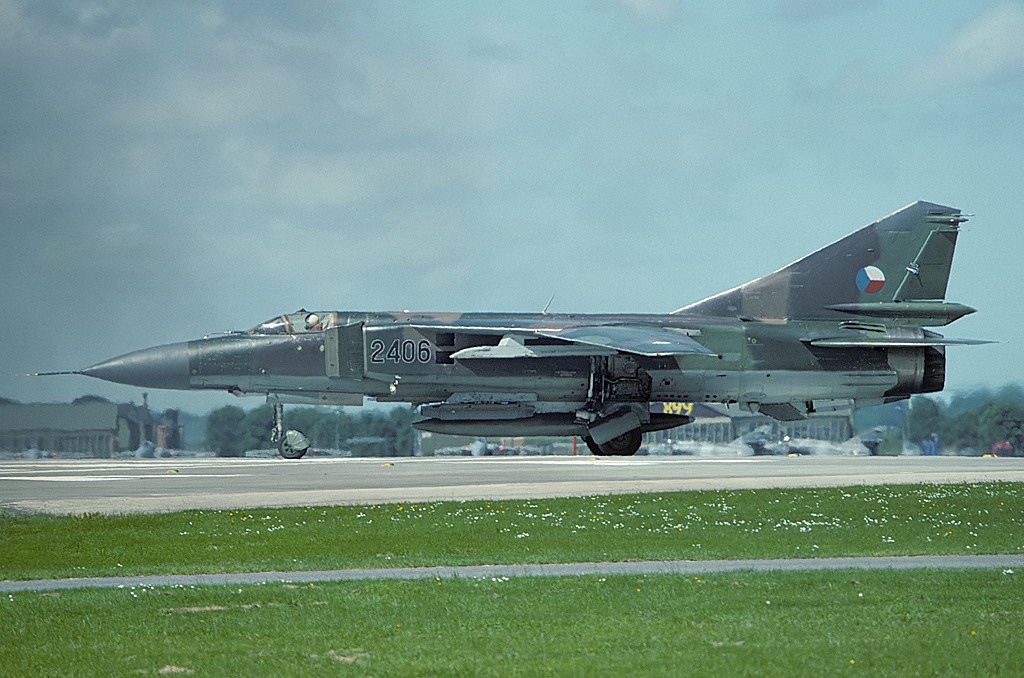
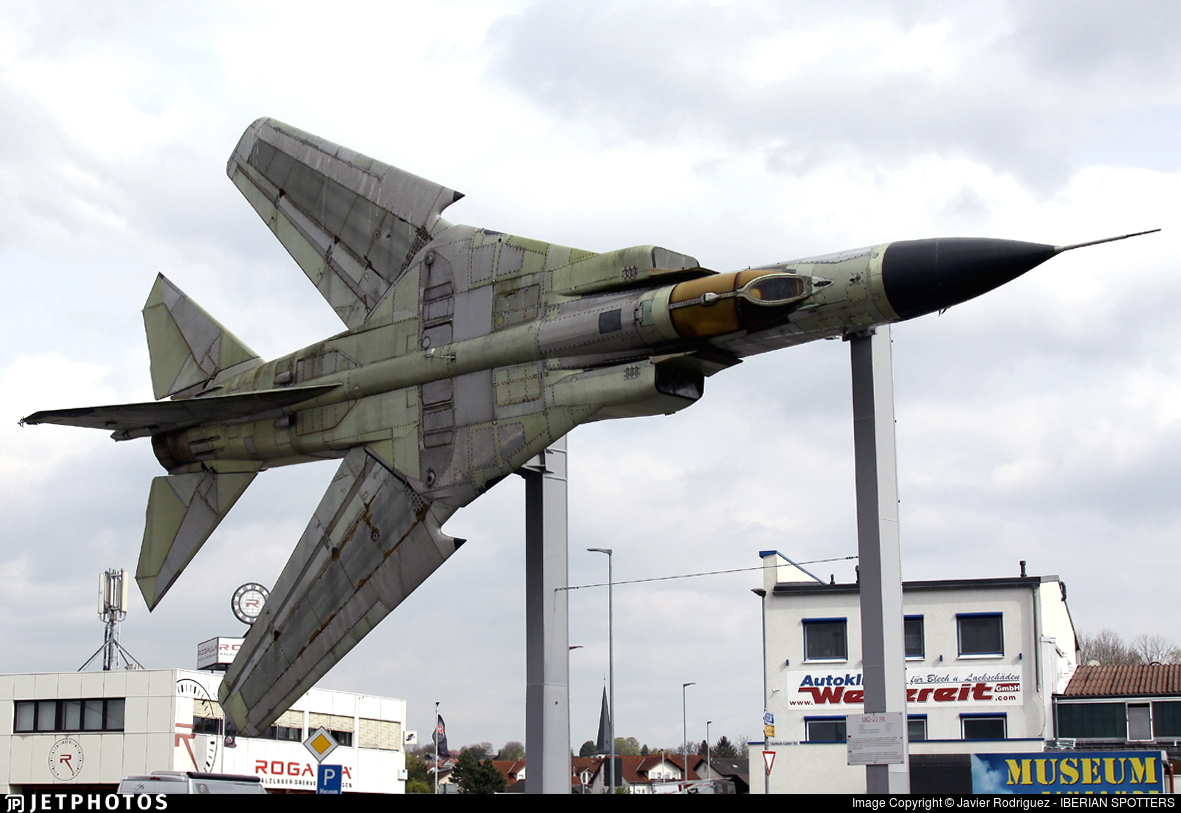

MiG-23ML The early "Flogger" variants were intended to be used in high-speed missile attacks, but it was soon noticed that fighters often had to engage in more stressful close-in combat. Early production aircraft had actually suffered cracks in the fuselage during their service career. Maneuverability of the aircraft was also criticized. A considerable redesign of the airframe was performed, resulting in the MiG-23ML (L – lightweight), which made it in some ways a new aircraft. Empty weight was reduced by 1250 kg, which was achieved partly by removing a rear fuselage fuel tank. Aerodynamics were refined for less drag. The dorsal fin extension was removed. The lighter weight of the airframe resulted in a different sit on the ground, with the aircraft appearing more level when at rest compared to the nose-high appearance of earlier variants. This has led to a belief that the undercarriage was redesigned for the ML variant, but it is identical to earlier variants. The airframe was now rated for a g-limit of 8.5, compared to 8 g for the early generation MiG-23M/MF "Flogger-B". A new engine model, the R-35F-300, now provided a maximum dry thrust of 84 kN (18,800 lbf), and 127 kN (28,700 lb) with afterburner. This led to a considerable improvement in maneuverability and thrust-to-weight ratio. The avionics set was considerably improved as well. The S-23ML standard included Sapfir-23ML radar and TP-23ML IRST. The new radar was more reliable and a had maximum detection range of about 65 km against a fighter-sized target (25 km in look-down mode). The navigation suite received a new, much improved autopilot. New radio and datalink systems were also installed. The prototype of this variant first flew in 1976 and production began 1978.