ARMSNET
Military Equipment Database
Initializing 0%

Alpar Turkish Tracked Unmanned Ground Vehicle (UGV)

Alpar
Unmanned Ground Vehicle (UGV)
Spotted an error? Sign in to suggest an edit.
Basic Information
Name
Alpar Turkish Tracked Unmanned Ground Vehicle (UGV)
Designation
Alpar
Alternate Designation
Alpar
Equipment Type
Unmanned Ground Vehicle (UGV)
Manufacturer
Otokar
Date of Introduction
2023
Description

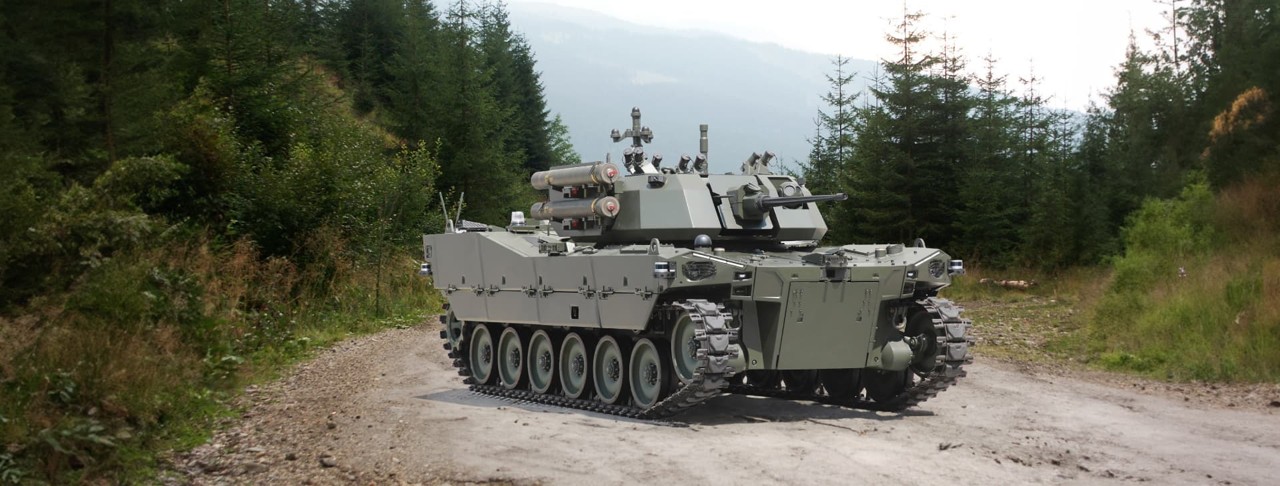
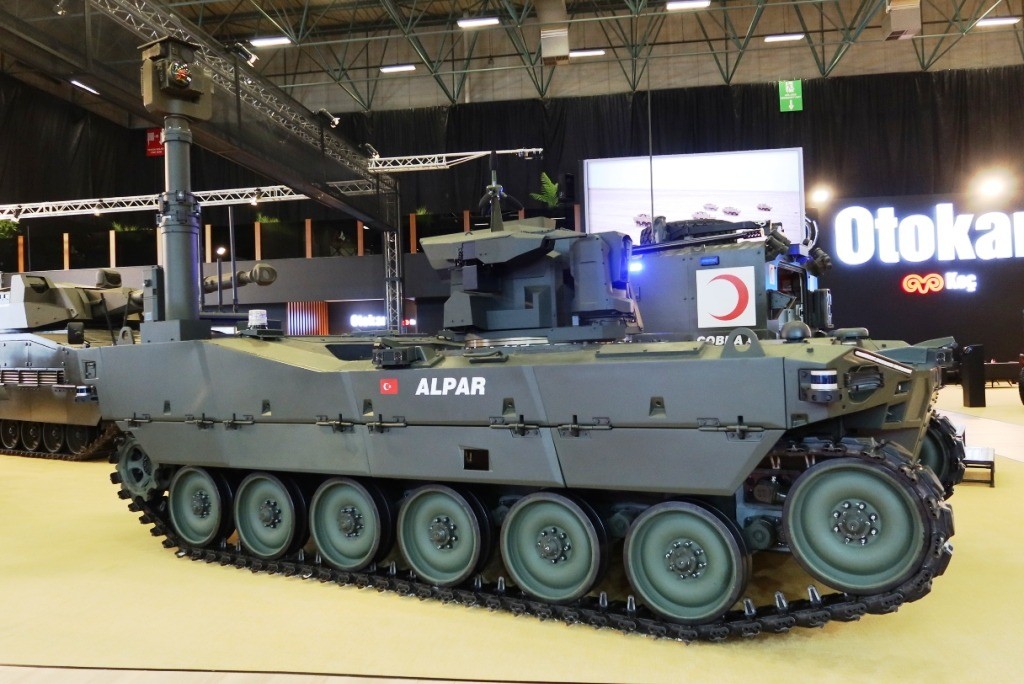
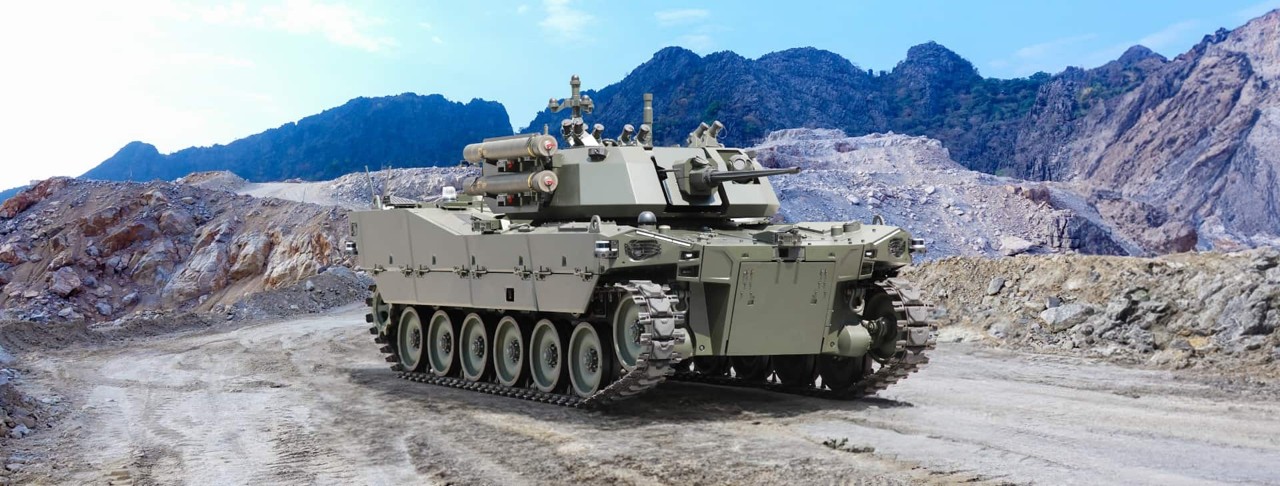
The Alpar Turkish Tracked Unmanned Ground Vehicle (UGV) consolidates domestically-developed autonomous algorithms, hybrid-electric propulsion, and modular weaponry into a 15 ton platform positioned to reduce battlefield personnel risk while delivering equivalent firepower to manned infantry fighting vehicles. The vehicle represents Turkey's strategic intent to extend its proven UAV export success into the ground robotics domain, with advanced autonomy, multi-mission modularity, and low acoustic/thermal signatures designed for 21st-century asymmetric and conventional warfare scenarios. ALPAR currently operates at autonomous Level 2 capability, characterized by partial autonomy with human operator oversight across primary tactical decisions. The vehicle executes autonomous navigation between waypoints, performs autonomous patrol missions within 5-kilometer communication range, and maintains formation control in convoy configurations. However, weapons employment, engagement authority, and tactical mission decisions remain under explicit human operator control. Otokar's roadmap targets Level 3 autonomy achievement, defined as conditional autonomy requiring human intervention for tactical-level decisions but executing tactical-level behaviors autonomously within operator-defined constraints. Level 3 would enable the platform to execute sophisticated tactics (coordinated multi-vehicle maneuvers, dynamic targeting decision-making, adaptive formation control) while maintaining human command authority over lethal engagement and strategic decisions.

Ground Specifications
Mobility Type Tracked
Engine Hybrid-electric
Max Speed 70.0 km/h
Range 500.0 km
Variants
Reconnaissance and Surveillance Equipped with advanced sensor suites (electro-optical/infrared targeting pods, SIGINT receivers, or ground-penetrating radar payloads) operating in autonomous patrol modes, generating persistent area surveillance without personnel exposure.
Logistics and Re-supply Configured for autonomous ammunition and supply transport along established routes, reducing supply convoy vulnerability and expanding sustainment reach in denied environments.
Air Defense Equipped with radar-directed gun systems or short-range air defense missile platforms, providing counter-UAS and counter-helicopter capability while maintaining ground-based integration with manned air defense systems.
Relay and Communications Operating autonomous repeater functions for line-of-sight radio extension, enabling organic communication architecture redundancy across dispersed formations.
Loitering Munition Carrier Transporting unmanned aerial systems or emerging loitering munition platforms, establishing command-and-control infrastructure while minimizing platform exposure.
Electronic Warfare Configured with jamming, spoofing, or signal intelligence payloads for electronic warfare support and intelligence collection missions.
System
Alternative Designation Alpar
Type Unmanned Ground Vehicle (UGV)
Manufacturer Otokar
Configuration Track
Crew Unmanned
Sensor Suite ALPAR integrates four 3D LIDAR sensors positioned at each chassis corner, providing 360-degree environmental awareness with simultaneous localization and mapping (SLAM) capability. The LIDAR arrays create both 2D and 3D environmental maps enabling obstacle detection, re-routing, and spatial reasoning without reliance on Global Navigation Satellite System (GNSS) signals—a critical capability for GPS-denied operational environments and underground/urban canyon scenarios.
Perception Suite Complementing the LIDAR perception suite, ALPAR incorporates dual radars (front and rear mounted) providing velocity and trajectory estimation for moving obstacle avoidance and dynamic target tracking. This multi-modal sensor architecture creates redundancy and cross-validation opportunities, critical for autonomous platforms operating in high-consequence environments where sensor failure carries tactical implications.
Communication ALPAR features MIMO (multiple-input multiple-output) radio communication extending to 5 kilometers in line-of-sight and non-line-of-sight modes, supporting both encrypted point-to-point remote operation and multi-vehicle formation control. The platform incorporates AES-128/256 military-grade encryption protecting command and telemetry channels against adversarial interception.
Control Advanced remote control connectivity includes satellite communication (beyond line-of-sight) capability, enabling operators to maintain command authority over platforms operating beyond immediate line-of-sight ranges during deep reconnaissance or multi-day autonomous missions.
Autonomous Driving Capabilities ALPAR's autonomous driving stack incorporates domestically developed environmental detection and decision-making algorithms that operate within Otokar's Adaptive Driving Support Systems framework. The current capability set includes waypoint navigation with autonomous patrol from point A to point B, platooning and follow-me functions for convoy integration with manned vehicles, and autonomous return-home functionality triggered by loss of signal or mission completion. The vehicle performs route planning in GNSS-denied environments, navigates terrain with obstacle avoidance, and executes identification friend-or-foe (IFF) protocols for force protection integration. As of November 2025, Otokar indicated progression toward Level 3 autonomy designation, characterized by high-level operator control with human-robot interaction and low-level tactical behavior automation. This roadmap reflects iterative development alongside operational testing, with the company maintaining flexibility to enhance autonomy levels as technological maturation and military requirements validation progress.
Dimensions
Length 6.25 m
Width 2.75 m
Height 1.5 m
Weight, Combat 15,000 kg
Automotive
Engine Name INA
Engine Type Hybrid-electric
Engine Power INA
Battery The system comprises a 750 VDC lithium-ion high-voltage battery bank paired with a diesel generator for range extension, supplemented by a 24 VDC auxiliary AGM battery for low-voltage systems. This architecture enables silent electric operation for stealth missions while maintaining extended-range capability for logistics and deep reconnaissance tasks. Unlike parallel hybrid systems common in wheeled vehicles, the series configuration decouples power generation from propulsion demand, allowing the diesel engine to operate at optimal efficiency points regardless of vehicle speed—a critical advantage for the variable-speed autonomous navigation scenarios ALPAR targets.
Maximum Range 500 km
Maximum Speed 70 km/h
Amphibious No
Gradient 60%
Side Slope 30%
Vertical Step 700 mm
Trench 1,800 mm
Fording INA
Ground Clearance 450 mm
Main Weapon System
Primary Weapon System ALPAR carries the MIZRAK 30-millimeter automatic cannon turret system, a domestically-developed Otokar platform capable of multi-caliber integration and sustained fire rates equivalent to standard infantry fighting vehicle armament. The turret incorporates stabilization systems enabling effective fire while the vehicle maneuvers, a critical capability distinguishing remotely-operated platforms from conventional tele-operated systems. The 30-millimeter round provides effective suppression against light armor, soft-skin vehicles, and area targets across the 2,000+ meter effective range band.
Note Beyond the production-standard MIZRAK configuration, ALPAR's modular turret architecture accommodates various medium-caliber gun systems and ancillary weapons payloads. This flexibility enables rapid reconfiguration for specific mission requirements—counter-UAS roles utilizing specialized ammunition, fire support configurations with enhanced ammunition stowage, or air defense variants with radar-directed turrets. The modular design philosophy reflects understanding that unmanned platforms must serve diverse operational roles across strategic customer bases with divergent threat environments and doctrine.
Anti-Tank Guided Missile (ATGM)
Anti-Armor Capability In a significant Turkish defense industry achievement, ALPAR integrates two Roketsan OMTAS (Uzun Menzilli Tanksavar Sistemi) long-range laser-guided anti-tank missile launchers into the 30-millimeter turret—the first integration of anti-tank missiles on a 30-millimeter turret system developed in Turkey. The OMTAS missile provides stand-off anti-tank capability extending 5+ kilometers, enabling direct fire support and anti-armor operations at ranges where vehicle-mounted cannon prove insufficient. This dual-mode firepower package (area suppression via cannon plus precision anti-armor via ATGM) delivers mission flexibility approaching manned infantry fighting vehicle capabilities while maintaining unmanned platform risk reduction.
Protection
Armor INA
Applique Armor INA
NBC Protection No
Smoke Equipment No
Details
Country of Origin Turkey
Category Unmanned Ground Vehicles (UGV)
Land > Unmanned Ground Vehicles (UGV)
Filter Label
A
Classification
Domain
Ground
Equipment Status
Active
Dimensions
Length
6.25 m
Width
2.75 m
Height
1.5 m
Weight
15000 kg
Operators (1)
Turkey
Something went wrong. Please reload the page. Reload