ARMSNET
Military Equipment Database
Initializing 0%

Mi-6 (Hook A) Russian Heavy Transport Helicopter

Mil Mi-6
Spotted an error? Sign in to suggest an edit.
Basic Information
Name
Mi-6 (Hook A) Russian Heavy Transport Helicopter
Designation
Mil Mi-6
Alternate Designation
Mil Mi-6; Hook A
Equipment Type
Manufacturer
Mil
Date of Introduction
1957
Description

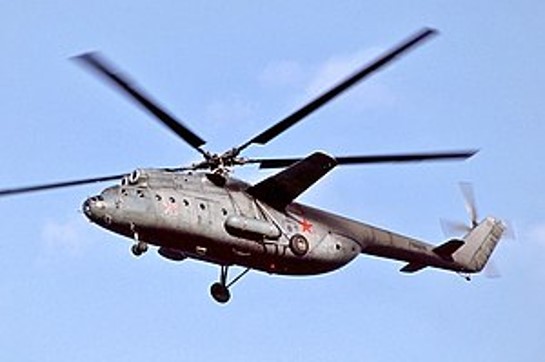
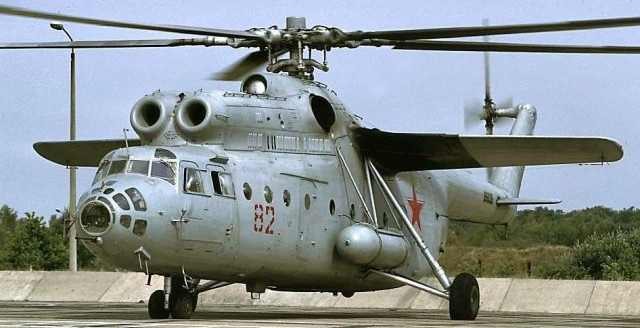
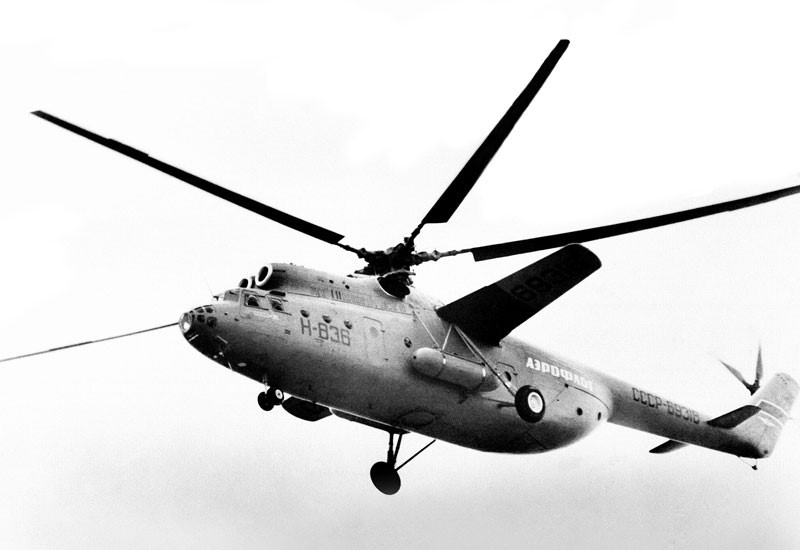
The Mi-6 (Hook A) Russian Heavy Transport Helicopter was first flown in 1957. This thing is a monster. It is huge. You feel tiny when you stand beside it. It looks far too big to be able to hover. It was a Soviet heavy transport helicopter built in large numbers for both military and civil roles. It had a crew of 6; pilot, co-pilot, navigator, flight engineer, radio operator, and technician. It had a top speed of 186 mph (300km/h) with a range of 385 miles (620 km). The Mil Mi-6 is famous for what it could carry: 90 passengers or 70 airborne troops or 41 stretcher cases with 2 medical personnel or up to 12,000 kg (26,400 lb) of internal cargo. It had a service ceiling of 14,750 ft (4,500 m). More than 800 of these heavy-lift helicopters were built before production ended in 1981. It was replaced by the Mil Mi-26 in the 1990s The Mil-6 Hook heavy transport helicopter was built for the Soviet Air forces and Aeroflot. The helicopter was designed to meet the needs for a machine able to transport heavy trucks, tracked vehicles, oil installations, and other cumbersome loads, as well as for the teams of geologists working in Siberia. Getting this giant of a helicopter in the air is not an easy design task. The Mi-6 Hook has an enormous gearbox, heavier than its engines, and often uses short wings to relieve the load on the rotor in cruise. The Mi-6 was powered by twin Soloviev D-25V (TB-2BM) turboshaft engines with 4,100 kW (5,500 SHP) each. It held the record for being the largest and fastest helicopter for a number of years. The large, five-blade main rotor is centered over the fuselage midsection. The fuselage is long and bus-like, with a round, stepped-up cockpit and round, glassed-in nose section and fixed landing gear. Bulged windows were mounted on the pilot's and copilot's doors to provide visibility down and to the rear. Standard avionics provided day-night, all-weather flight capability. Military variants included an "identification friend or foe (IFF)" transponder and a radar warning receiver (RWR) system.

Air & Air Defense Specifications
Crew 5
Max Speed 300.0 km/h
Range 620.0 km
Endurance 2.00 hrs
Variants
V-6 (Zavod No.329 Moscow) First prototype series.
Mi-6 (NATO – Hook-A) Heavy-lift civil and military transport helicopter.
Mi-6A Troopships and commercial transport helicopters built to a new baseline standard with improvements in reliability and new avionics.
Mi-6AYa (NATO – Hook-D) OKB designation for the Mi-6VzPU and Mi-22 airborne command posts, with SLAR.
Mi-6APS (PS - poiskovo-spasahtel'nyy - search and rescue) A limited number of search and rescue helicopters converted from Mi-6A standard aircraft.
Mi-6ATZ (TZ - toplivoza-pravshchik - fuel tanker) Fuel transport helicopter variant of the Mi-6A.
Mi-6 Boorlak (boorlak - barge hauler) Prototype ASW/MCM helicopters, used for research into ASW equipment when delays to the mission equipment forced cancellation.
Mi-6BUS (NATO – Hook-C) (Also Mi-6AYa and Mi-22) airborne command post helicopter of 1975.
Mi-6L (Also Mi-6LL: Letayushchaya laboratoriya) Flying laboratory variant with D-25VF engines used for flight improvements of the Mi-6 and testbed for the powerplant of the Mi-12.
Mi-6M (M - morskoy - maritime) Anti-submarine variant armed with four aerial torpedoes and ASW rockets, and equipped with various experimental ASW systems. First built in 1963 and modified in 1965 for the "Barge Hauler" program.
Mi-6M (M - modifit-seerovannyy - modified) A projected redesign of the Mi-6 to carry 11 to 22 t (11,000 to 22,000 kg; 24,000 to 49,000 lb) over 800 km (500 mi), cancelled due to the limitations of the five-bladed rotor specified.
Mi-6P (P - passazheerskiy - passenger) Passenger transport helicopter, with accommodation for 80 passengers. One prototype was converted from a stock Mi-6.
Mi-6PP (PP - postanovshchik pomekh - ECM aircraft) A prototype Counter-ELINT aircraft to protect air-defense radars from enemy ECM and/or ELINT activities .
Mi-6PR (Protivodeystviya Radiorazvedke) Development in 1962 for jammer/electronic warfare variant.
Mi-6PRTBV (podvizhnaya raketno-tekhnicheskaya baza vertlyotnovo tipa) A few modified as mobile missile maintenance technical bases and missile transporters.
Mi-6PS (PS - poiskovo-spasahtel'nyy - search and rescue) Search and rescue (SAR) helicopter developed in 1966 for pick-up of the landed Vostok and Soyuz space modules.
Mi-6PSA Alternative designation, used in some sources, for the Mi-6APS.
Mi-6PZh (PZh - pozharnyy - fire fighting) Fire fighting variant, with a 12,000 l (2,639.63 imp gal; 3,170.06 US gal) tank in the cabin and six 1,500 l (329.95 imp gal; 396.26 US gal) bags suspended from the fuselage. The sole prototype crashed in France fighting a fire, soon after display at the 27th Paris Air Show.
Mi-6PZh2 A second firefighting helicopter prototype and several conversions with a steerable water cannon in the nose.
Mi-6R (R - Retranslyator - ) Specialised radio communications relay variant developed in 1974, prototype conversions only.
Mi-6RVK (RVK - raketno-vertolyotny kompleks - heliborne missile system) Tested in 1965 loaded with 9K53, 9K73, 9M21 Luna-MV or 8K114 mobile missile systems.
Mi-6S Medical evacuation helicopter, which can carry 41 litters.
Mi-6T (NATO – Hook-A) Military transport helicopter, which can seat up to 70 people on tip-up seats along the cabin sides, with additional seat along the center-line.
Mi-6TP Convertible freight/passenger helicopter.
Mi-6TZ (TZ - toplivoza-pravshchik - fuel tanker) Fuel transport helicopter to refuel vehicles and helicopters on the ground.
Mi-6TZ-SV (TZ-SV - toplivoza-pravshchik - sookhoputnyye voyska - fuel tanker-ground forces) Fuel transport helicopter to refuel vehicles on the ground.
Mi-6VR (VR - Vodoley - Aquarius) A water spraying research helicopter to test helicopter anti-icing systems.
Mi-6VKP (NATO – Hook-B) (VKP - vozdooshnnyy poonkt - airborne command post) Command post transport helicopter to deploy comms and war room on the ground, not usable in flight.
Mi-6VUS (NATO – Hook-D) airborne command post with SLAR.
Mi-6VzPU (NATO – Hook-D) Service designation of the Mi-6AYa airborne command post with SLAR, entered service as the Mi-22.
Mi-22 VVS designation of the Mi-6AYa/VzPU airborne command post helicopters.
System
Alternative Designation Mil Mi-6; Hook A
Primary Function Heavy Transport Helicopter
Manufacturer Mil Moscow Helicopter Plant
In Service 1957-2002 Russia 1957-Present Other Nations
Missions Missions include heavy-lift cargo operations, medical evacuation, troop transport and civil operations such as fire-fighting.
Crew 5 (pilot, co-pilot, navigator, flight engineer, radio operator)
Passengers + 70 troops; or 41 litters + 2 attendants; or 26,450 lb (12,000) cargo
Blades, Main Rotor 5 ea
Blades, Tail Rotor 4 ea
Number of Engines 2 ea
Day/Night Capable Yes
All Weather Capable INA
Number of Hard Points INA
Landing Gear The helicopter has a tricycle landing gear with oleo pneumatic shock-absorbers
Dimensions
Length 33.18 m
Height 9.86 m
Main Rotor Diameter 35.0 m
Disc Area 962 sq m m
Cabin Length 12.0 m
Cabin Width 2.65 m
Cabin Height, Front 2.01 m
Cabin Height, Rear 2.50 m
Cabin Volume 80 cu m
Weight, Empty 27,240 kg
Weight, Maximum Takeoff 42,500 kg
Payload, Internal 12,000 kg
Cargo Capacity + 70 troops; or 41 litters + 2 attendants; or 26,450 lb (12,000) cargo
Payload, Sling Load 8,000 kg
Wing Area 35 m2 (380 sq ft) auxiliary wing (when fitted)
Airfoil, Root TsAGI P-35 (15%)
Airfoil, Tip TsAGI P-35 (12%) [
Automotive
Engine Name 2 x Soloviev D-25V (TV-2BM) turboshaft
Engine Type INA
Engine Power 5,500 shaft hp each hp
Speed, Maximum 300 km/h
Speed, Cruise 250 km/h
Range, with 8,000 kg Payload 620 km
Range, Fitted w/External Tanks 1,000 km
Range, Fitted w/External and Cabin Ferry Tanks 1,450 km
Ceiling 4,500 m
Fuel Capacity 8,250 l (2,180 US gal; 1,810 imp gal) (6,315 kg (13,922 lb)) in 11 fuselage tanks + 4,500 l (1,200 US gal; 990 imp gal) in two external tanks + optional 4,500 l (1,200 US gal; 990 imp gal) in auxiliary cabin tanks
Maximum Fuel Capacity 17,250 l (4,560 US gal; 3,790 imp gal)
Endurance 2 hours 51 minutes at 140–160 km/h (87–99 mph; 76–86 kn) at 1,000 m (3,281 ft) and 40,500 kg (89,287 lb) TOW
Time to altitude at 40,500 kg (89,287 lb) TOW 3,000 m (9,843 ft) in 9 minutes 42 seconds 4,500 m (14,764 ft) in 20 minutes 42 seconds
Main Weapons System
System
Name 1 x Afanasev A-12.7
Type 12.7mm Heavy Machine Gun
Manufacturer Tulamashzavod Tula Izhmash Izhevsk Kovrov KMZ
In Service 1949-Present
Length 1,423 mm
Barrel length 1,005 mm
Width 153 mm
Height 154.5 mm
Weight 25.5 kg
Barrels 1 ea
Action Gas operation
Rate of Fire 800–1,100 rpm
Ammunition
Type Rifle
Caliber 12.7 mm
Cartrdidge 12.7×108mm
Muzzle Velocity 818 m/s
Basic Load 270 Rounds
Fire Control
Fire Control System Type INA
Fire Control Radar INA
Digital or Analog Cockpit Analog
Direct Fire Control INA
Laser Designator INA
Automated Helmet INA
Position Location System Yes
Protection
Fuselage The fuselage has a stepped front with a heavily framed and glazed "navigator" nose
Cockpit Glass INA
Stealth Properties No
Heat Signature Reduction INA
Add on Armor INA
NBC Protection Yes
EW INA
EW Counter Measures/CCM INA
Counter Measures (Chaff/Flares) INA
Details
Country of Origin Russia
Category Transport Helicopter
Air > Transport Helicopter
Filter Label
M
Classification
Domain
Air & Air Defense
Equipment Status
Active
Dimensions
Length
33.18 m
Width
Height
9.86 m
Weight
42500 kg
Operators (18)
Russia
China
Ukraine
Poland
Belarus
Algeria
Bulgaria
Egypt
Ethiopia
Indonesia
Iraq
Kazakhstan
Laos
Peru
Syria
Uzbekistan
Vietnam
Zimbabwe
Something went wrong. Please reload the page. Reload