ARMSNET
Military Equipment Database
Initializing 0%

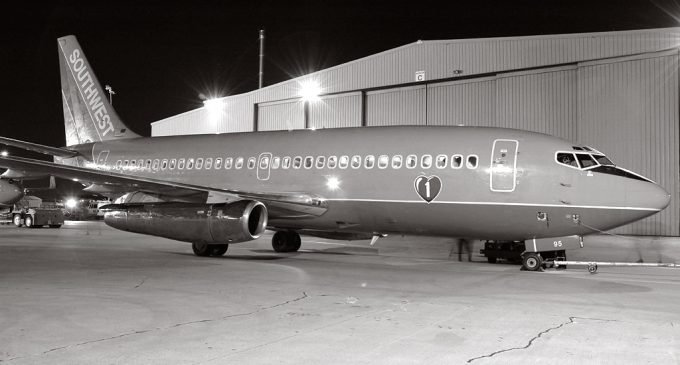
B737-200 (Boeing 737-200) American Cargo Transport Aircraft

B737-200
Spotted an error? Sign in to suggest an edit.
Basic Information
Name
B737-200 (Boeing 737-200) American Cargo Transport Aircraft
Designation
B737-200
Alternate Designation
Equipment Type
Manufacturer
Boeing
Date of Introduction
1968
Description

The 737-200 had its maiden flight on August 8, 1967. It was certified by the FAA on December 21, 1967, and the inaugural flight for United was on April 28, 1968, from Chicago to Grand Rapids, Michigan. The lengthened -200 was widely preferred over the -100 by airlines. The 737-200 was a 737-100 with an extended fuselage, launched by an order from United Airlines in 1965. The -200 was rolled out on June 29, 1967, and entered service with United in April 1968. The 737-200 Advanced is an improved version of the -200, introduced into service by All Nippon Airways on May 20, 1971. The -200 Advanced has improved aerodynamics, automatic wheel brakes, more powerful engines, more fuel capacity, and longer range than the -100.[35] Boeing also provided the 737-200C (Combi), which allowed for conversion between passenger and cargo use and the 737-200QC (Quick Change), which facilitated a rapid conversion between roles. The 1,095th and last delivery of a -200 series aircraft was in August 1988 to Xiamen Airlines. With a gravel kit modification (features preventing foreign object damage), the 737-200 can use unimproved or unpaved landing strips, such as gravel runways, that other similarly-sized jet aircraft cannot. Gravel-kitted 737-200 Combis are currently used by Canadian North, First Air, Air Inuit, Nolinor, and Air North in northern Canada where gravel runways are common. For many years, Alaska Airlines made use of gravel-kitted 737-200s to serve Alaska's many unimproved runways across the state. Nineteen 737-200s, designated T-43, were used to train aircraft navigators for the U.S. Air Force. Some were modified into CT-43s, which are used to transport passengers, and one was modified as the NT-43A Radar Test Bed. The first was delivered on July 31, 1973 and the last on July 19, 1974. The Indonesian Air Force ordered three modified 737-200s, designated Boeing 737-2x9 Surveiller. They were used as Maritime reconnaissance (MPA)/transport aircraft, fitted with SLAMMAR (Side-looking Multi-mission Airborne Radar). The aircraft were delivered between May 1982 and October 1983. Many 737-200s have been phased out or replaced by newer 737 versions. After 40 years, in March 2008, the final 737-200 aircraft in the U.S. flying scheduled passenger service were phased out, with the last flights of Aloha Airlines. The variant still sees regular service through North American charter operators such as Sierra Pacific. In July 2019, there were a combined 46 Boeing 737-200s in service, mostly with "second and third tier" airlines, and those of developing nations. In 1970, Boeing received only 37 orders. Facing financial difficulties, Boeing considered closing the 737 production-line and selling the design to Japanese aviation companies.[15] After the cancellation of the Boeing Supersonic Transport, and scaling back of 747 production, enough funds were freed up to continue the project. In a bid to increase sales by offering a variety of options, Boeing offered a 737C (Convertible) model in both -100 and -200 lengths. This model featured a 134 in × 87 in (340 cm × 221 cm) freight door just behind the cockpit, and a strengthened floor with rollers, which allowed for palletized cargo. A 737QC (Quick Change) version with palletized seating allowed for faster configuration changes between cargo and passenger flights. With the improved short-field capabilities of the 737, Boeing offered the option on the -200 of the gravel kit, which enables this aircraft to operate on remote, unpaved runways. Until retiring its -200 fleet in 2007, Alaska Airlines used this option for some of its combi aircraft rural operations in Alaska. Northern Canadian operators Air Inuit, Air North, Canadian North, First Air and Nolinor Aviation still operate the gravel kit aircraft in Northern Canada, where gravel runways are common. In 1988, the initial production run of the -200 model ended after producing 1,114 aircraft. The last one was delivered to Xiamen Airlines on August 8, 1988.

Air & Air Defense Specifications
Crew 2
Engine Turbofan (15500 hp)
Variants
B737-100 This is the initial production civil airliner version, with a 94-ft (28.65-m) long fuselage and a maximum passenger capacity of 115. First flight took place on April 9, 1967. Only 30 were built, all of which entered commercial service. One was later acquired by the Mexican air force as a VIP transport.
B737-200 This version features a 6-ft (1.82-m) fuselage stretch and more powerful JT8D engines. There were 1,095 aircraft built.
B737-2X9 Surveiller This version is a 737-200 with 14 first-class and 88 coach passenger seats as well as a Motorola side-looking airborne modular multi-mission radar (SLAMMR) -- a variant of the AN/APS-131/135 radar -- and two associated 16-ft (5-m) long slotted waveguide antennas on the upper rear fuselage sides. At 30,000 ft (9,144 m), the detection range for small ships is 100 nm (115 mi; 185 km). Three improved Surveillers are in service in Indonesia. Modifications to the Indonesian versions include enhanced side-looking airborne modular radar; a new nose-mounted IR-detection system; as well as radar and GPS. Also installed on the improved version is the Boeing-developed data processing and display system (DPDS).
B737-300 The B737-300 is the extended-range version with stretched fuselage and quieter, more fuel-efficient CFM56-3-B engines. First flight occurred on Aug. 24, 1984; it entered service on Dec. 7, 1984. More than 850 were ordered. One each has been in VIP service with the South Korean and Thai air forces.
B737-400 This variant is similar to the B737-30, but with additional 10-ft (3.05-m) stretch to fuselage, 168-passenger capacity and higher rated engines. First flight occurred on Feb. 19, 1988; the first was delivered on Sept. 15, 1988. More than 170 were ordered.
B737-500 The B737-500 is a short-fuselage (101 ft 9 in/31.01 m) version of the B737-300 with a passenger capacity of 132. First flight took place on June 30, 1989. More than 165 were ordered.
B737-600 The B737-600 was known as the 737-500X prior to 1995. It accommodates 108-140 passengers. It is part of the Next Generation series -- the smallest model. The wings have increased chord and span lending more fuel capacity, better fuel efficiency and a longer range.
B737-700 Launched in November 1993, this was the first of the Next Generation series to enter service. It accommodates 128-149 passengers. The aircraft is similar to the B737-600, though the wings have increased chord and span, lending more fuel capacity, better fuel efficiency and a longer range.
B737-700 Increased Gross Weight Quick Change This variant was chosen by the U.S. Navy to replace the C-98s in the Reserves. Its features include continuous double-slotted flaps, new leading-edge slats and a large cargo door fitted to the front fuselage. Two were ordered for delivery by the end of 2001. A commercial version has not been made available.
B737-800 The B737-800 was launched on Sept. 5, 1994. It is the longest variant of this series; it has a seating accommodation of 162-189 passengers.
B737-900 This is a stretched version that can accommodate 18 more passengers than the 737-800. At least 10 orders have been placed for this aircraft. The eyebrow windows located above the cockpit windscreen were removed in January 2005. Kits are available to remove the eyebrow windows from earlier 737-900s. An increased range version, the 737-900ER, was launched on July 18, 2005. Its maximum takeoff weight rose to 187,800 lb (85,185 kg); maximum zero-fuel weight, 149,500 lb (67,812 kg); maximum landing weight, 157,400 lb (71,395 kg); and range, 3,200 nautical miles (3,682 mi, 5,926 km) with 180 passengers.
Boeing Business Jet The business jet was launched on July 2, 1996, as a joint venture between Boeing and General Electric. It is a corporate version of the 737-700. While between eight and 63 passengers will be typically accommodated, the plane can be configured to seat as many as 100. There is an integrated GPS and SATCOM. The range is 6,200 nautical mile (nm) (7,139 mi, 4,437 km). Three auxiliary tanks offer an increase in range of 4,830 nm (5,562 mi, 3,456 km).
System
Alternate Designation(s) B737-200; Boeing 737-200
Primary Function / Type Cargo/Passenger Aircraft
Manufacturer Boeing Commercial Airplanes
Crew 2 (pilot, co-pilot)
Passengers 130 passengers
Number of Engines 2
Number of Hard Points INA
Dimensions
Length 30.53 m
Width (Wing Span) 28.35 m
Wing Area 102.0 sq m
Height 11.28 m
Cabin Length 20.88 m
Cabin Width 3.53 m
Cabin Height 2.13 m
Cabin Volume 131.28 cu m
Empty Weight 27,445 kg
Maximum Payload 15,558 kg
Maximum Takeoff Weight 52,390 kg
Automotive
Engine Name 2 x Pratt & Whitney JT8D-15A
Number of Engines 2
Engine Type Turbofan
Engine Power 15,500 lb (7,031 kg) static thrust each
Standard Internal Fuel Capacity 19,532 liters
Maximum Internal Fuel Capacity 22,596 liters
Maximum Normal Operating Speed 555 knots (639 mph, 1,027 km/h)
Maximum Cruise Speed 485 knots (558 mph, 899 km/h)
Economical Cruise Speed 412 knots (474 mph, 763 km/h)
Long Range Cruise Speed 420 knots (484 mph, 778 km/h)
Takeoff Safety Speed at Max Takeoff Weight 147 knots (169 mph, 272 km/h)
Speed at Threshold at Maximum Landing Weight 131 knots (151 mph, 243 km/h)
Climb Rate at 100,000 lb (43,359 kg) 3,760 ft/min (1,146 m/min)
Maximum Range at Economical Cruise Speed 1,550 nm (1,785 mi, 2,872 km)
Maximum Fuel at Long-Range Cruise Speed w/20,400-lb (9,277-kg) payload 2,890 nm (3,328 mi, 5,355 km)
Fire Control / Avionics
FCS Name INA
Computerized FCS No
Navigation Radar INA
Protection
Stealth Properties No
Heat Signature Reduction No
Add on Armor No
NBC Protection INA
EW Counter Measures INA
Chaffs/Flares INA
Details
Country of Origin United States
Category Fixed Wing Aircraft
Air > Fixed Wing Aircraft
Filter Label
B
Classification
Domain
Air & Air Defense
Equipment Status
Active
Dimensions
Length
30.53 m
Width
28.35 m
Height
11.28 m
Weight
52390 kg
Operators (7)
China
United States
Japan
Canada
Indonesia
Kuwait
Niger
Something went wrong. Please reload the page. Reload