ARMSNET
Military Equipment Database
Initializing 0%

II-18 (Coot) Russian Cargo Transport Aircraft

II-18
Spotted an error? Sign in to suggest an edit.
Basic Information
Name
II-18 (Coot) Russian Cargo Transport Aircraft
Designation
II-18
Alternate Designation
Equipment Type
Manufacturer
Ilyushin
Date of Introduction
1957
Description

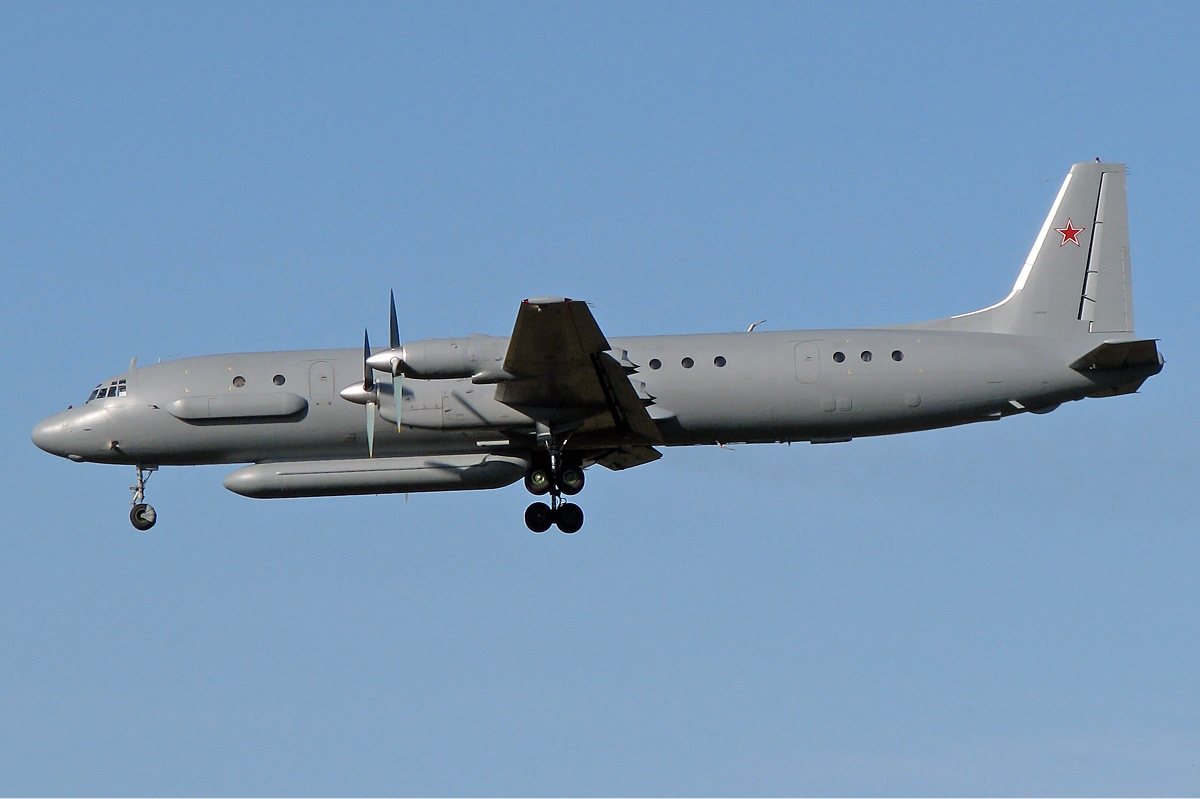
II-18 (Coot) Russian Cargo Transport Aircraft is a large turboprop airliner that first flew in 1957 and became one of the best known and durable Soviet aircraft of its era. The Il-18 was one of the world's principal airliners for several decades and was widely exported. Due to the aircraft's airframe durability, many examples achieved over 45,000 flight hours and the type remains operational in both military and (to a lesser extent) civilian capacities. The Il-18's successor was the long-range Il-62 jet airliner. Two Soviet aircraft shared the designation Ilyushin Il-18. The first Il-18 was a propeller-driven airliner of 1946 but after a year of test flights that program was abandoned. In the early 1950s with a need to replace older designs and increase the size of the Soviet civil transport fleet, a Soviet Council of Minister's directive was issued on 30 December 1955 to the chief designers Kuznetsov and Ivchenko to develop new turboprop engines and to Ilyushin and Antonov to design an aircraft to use these engines. The two aircraft designs were developed as the Ilyushin Il-18 and the Antonov An-10 and the engine chosen was the Kuznetsov NK-4 rather than the Ivchenko AI-20. The Il-18 design had started in 1954 before the directive was issued and experience with the piston-engined Il-18 was used although the aircraft was a new design. The design was for a four-engined low-wing monoplane with a circular pressurized fuselage and a conventional tail. The forward retracting tricycle landing gear had four wheels fitted on the main leg bogies, the main legs bogies rotated 90 degrees and retracted into the rear of the inboard engines. A new feature at the time was the fitting of a weather radar in the nose and it was the first Soviet airliner to have an automatic approach system. The aircraft has two entry doors on the port-side before and after the wing and two overwing emergency exits on each side. The prototype SSSR-L5811 was rolled out in June 1957 and after ground-testing it began taxi test and high-speed runs on 1 July 1957. On 4 July 1957, the prototype first flew from Khodynka. On 10 July 1957 the aircraft was flown to Moscow-Vnukovo Airport to be presented to a Soviet government commission; also present was the prototype Antonov An-10 and the Tupolev Tu-114. The Il-18 type was formally named Moskva and this was painted on the fuselage, although the name was not used when the aircraft entered production. The Moscow Machinery Plant No. 30 located at Khodynka, near where the Ilyushin design office and the prototype had been built, was chosen to manufacture the aircraft. During 1957 the plant began to reduce its production of the Ilyushin Il-14 and prepare to build the production aircraft designated IL-18A. The Il-18A was only different from the prototype in minor details, mainly internal configuration to increase the seating from 75 to 89. Malev Il-18 in Sweden, 1972 The first production aircraft were powered by the Kuznetsov NK-4 but the engines were plagued with problems so the Council of Ministers decreed in July 1958 that all production from November 1958 would use the Ivchenko AI-20 and earlier production would be re-engined. Only 20 IL-18As were built before production changed to the improved Il-18B, this new variant had a higher gross weight and the nose was redesigned with a larger radome which increased the length by 20 cm. The first Il-18B flew on 30 September 1958 powered by the AI-20; a VIP variant was also built as the IL-18S for the Soviet Air Force. From April 1961 a TG-18 Auxiliary Power Unit was fitted for ground starting rather than the bank of lead-acid batteries. Some aircraft were modified to allow the APU to be run in flight. With the experience of the earlier aircraft, a further improvement was the Il-18V variant. The Il-18V was structurally the same but the interior was re-designed including moving the galley and some minor system changes. The first Il-18V appeared in December 1959 and was to continue into production until 1965 after 334 had been built. Specialized variants of the aircraft also appeared, including aircraft modified for flight calibration and a long-range polar variant. Military variants also appeared including the anti-submarine Ilyushin Il-38.

Air & Air Defense Specifications
Crew 5
Engine Turboprop (4250 hp)
Max Speed 675.0 km/h
Wingspan 37.40 m
Variants
Il-18 Designation of the sole prototype of the Il-18 family.
Il-18A The original production model, equivalent to pre-production, powered by either Kuznetsov NK-4 or Ivchenko AI-20 turboprop engines. Circa 20 built.
Il-18B First major production model, a medium-haul airliner that could seat 84 passengers.
Il-18D Similar to Il-18I, but equipped with an extra center section fuel tank for increased range. The Il-18D is fitted with four 3,169 kW (4,250 shp) Ivchenko AI-20M turboprop engines.
Il-18D communications relay Three aircraft modified to provide communications relay between VIP aircraft and Government bodies.
Il-18D Pomor A single Il-18D converted to a fisheries reconnaissance aircraft (Pomor = person who lives by the sea).
Il-18D Salon VIP version of the Il-18D.
Il-18DORR Two Il-18Ds modified as fishery reconnaissance aircraft for the Polar Institute of Oceanic Fishery and Oceanography, the modification mainly involved the fitment of specialized mission equipment. First flown in 1985 they were later modified back as standard Il-18Ds.
Il-18E Similar to the Il-18I, but without the increased fuel capacity.
Il-18Gr Aircraft converted to cargo configuration, (Gr - Gruzovoy - cargo).
Il-18GrM Several Il-18 aircraft modified to Gr standard with the addition of a pressurised side cargo door.
Il-18I Equipped with more powerful Ivchenko AI-20M turboprop engines, producing 3,169 kW (4,250 shp). Seating increased to 122 passengers in an enlarged cabin gained by moving the aft pressure bulkhead rearwards by 1.64 m (5 ft).
Il-18LL (Letayuschchaya Laboratoriya - flying laboratory), one aircraft modified from an Il-18A to be an anti-icing test-bed and an Il-18V used by the Czechoslovak flight test center as an engine testbed.
Il-18RT Two Il-18Vs were modified as Telemetry Relay Aircraft to rocket and unmanned air vehicle trials.
Il-18RTL Prototype for Il-20RT, converted from Il-18A c/n 188000401.
Il-18S VIP variant of Il-18B
Il-18SL Designation of a number of different test and research aircraft, normally had a letter suffix like SL-18D for avionics trials.
Il-18T This designation was given to civil and military cargo transport aircraft converted from Il-18A/B/V aircraft.
Il-18TD One Il-18T was modified as a military transport variant to take either 69 stretcher cases or 118 paratroopers. Not wanted by the military it was converted to Il-18D standard.
Il-18USh One Il-18V was modified as a navigator trainer including two dorsal astro-sextant windows. Although it was tested and found acceptable the Soviet Air Force used a variant of the twin-jet Tupolev Tu-124 instead.
Il-18V Standard Aeroflot version, which entered service in 1961. The Il-18V was powered by four Ivchenko AI-20K turboprop engines, seating 90-100 passengers.
Il-18V Salon VIP version of the Il-18V.
Il-18V/polar a single Il-18V modified for Polyarnaya Aviatsiya - Polar Aviation use.
Il-18V-26A a single Il-18V modified for Polyarnaya Aviatsiya - Polar Aviation use with an auxiliary fuel tank in the cabin, revised window layout and enlarged oil tanks on the engines, covered by protruding fairings on the engine nacelles (sometimes referred to as the Il-18D, before the real D model emerged).
Il-18V calibrator a single Il-18V operated by Interflug for navaid calibration.
Il-20M (NATO reporting name: Coot-A) COMINT/ELINT reconnaissance airplane version.
Il-20RT Four Telemetry aircraft used to support the Soviet space activities, later replaced by a variant of the Il-76.
Il-22 (NATO reporting name: Coot-B) Airborne command post version. (Not to be confused with 1947 prototype Soviet jet-engined bomber Il-22.)
Il-22M Same as the Il-22 but had new mission equipment.
Il-22PP Electronic warfare and reconnaissance aircraft.
Il-24N Two Il-18Ds modified for ice reconnaissance similar to the Il-20M but with civilian reconnaissance equipment, both later modified back to standard configuration and sold.
Il-38 Maritime reconnaissance, anti-submarine warfare version.
Il-118 A proposed upgrade powered by two Lotarev D-236-T propfan engines.
System
Alternate Designation(s) II-18; NATO: Coot
Primary Function / Type Turboprop Airliner
Manufacturer Ilyushin
Crew 5 ea
Passengers 122 passengers or 20 ELINT operators
Number of Engines 4 ea
Number of Hard Points INA
Dimensions
Length 35.90 m
Height 10.17 m
Wingspan 37.40 m
Wing Area 140 sq m
Cabin Length 24.00 m
Cabin Width 3.23 m
Cabin Height 2.00 m
Volume, Main Cabin 238.0 cu m
Volume, Additional Cargo Holds 29.3 cu m
Weight, Empty 35,000 kg
Weight, Maximum Takeoff 34,610 kg
Payload 13,500 kg
Automotive
Engine Name 4 x Ivchenko AI-20M
Engine Type Turboprop
Engine Power 4,250 equivalent hp each
Internal Fuel Capacity 30,000 liters
Maximum Speed 675 km/h
Economy Speed 625 km/h
Ceiling 10,000 m
Range, Maximum payload 4,000 km
Takeoff Run 1,300 m
Landing Run 850 m
Fire Control / Avionics
Fire Control System Type No
Fire Control Radar No
Laser Desingator No
Protection
Stealth Properties None
Heat Signature Reduction No
Add on Armor INA
NBC Protection INA
EW Counter Measures INA
Chaffs/Flares INA
Details
Country of Origin Russia
Category Fixed Wing Aircraft
Air > Fixed Wing Aircraft
Filter Label
I
Classification
Domain
Air & Air Defense
Equipment Status
Active
Dimensions
Length
35.9 m
Width
Height
10.17 m
Weight
34610 kg
Operators (3)
Russia
China
North Korea
Something went wrong. Please reload the page. Reload