LARC-V American 4x4 Amphibious Cargo Vehicle
LARC-V


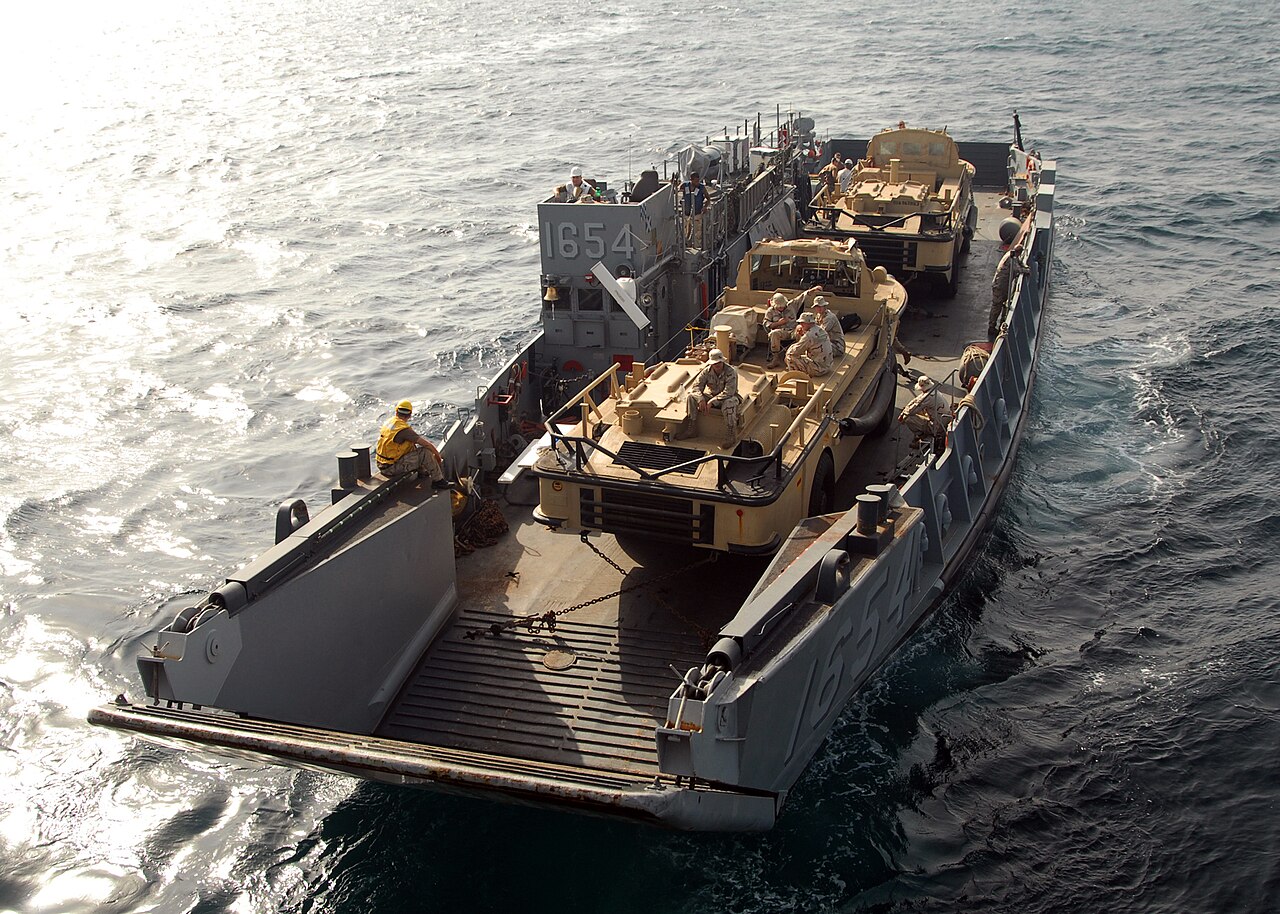

LARC-V (Lighter, Amphibious Resupply, Cargo, 5 ton), is an aluminium-hulled amphibious cargo vehicle capable of transporting 5 tons. It was developed in the United States during the 1950s, and is used in a variety of auxiliary roles to this day. In addition to the United States, LARC-Vs have been used by military forces in Australia, Argentina, Portugal, Philippines, Singapore and Iceland. Approximately 968 were made. About 500 were destroyed, most by scuttling during the American withdrawal from South Vietnam. About 200 have been retained in U.S. military service. Roughly 100 are privately owned and mostly used for tourism. The LARC-V was fielded in 1963 and were used extensively by the U.S. Army for over the beach supply during the Vietnam War. They supported the logistical and manpower build up at the start of and during the Vietnam war. Two units arrived from Ft. Story, VA. in June 1965. The 344th Transportation Company (Light Amphibious) setup harbor operations in Qui Nhon and the 347th Transportation Company in Camh Ranh Bay. The companies had two platoons of 17 LARCVs each and a separate 3rd echelon maintenance detachment. About December 1965, one of the 344th's platoons moved to Da Nang and was attached to the Air Force wing. There it ran 24-hour/day operations hauling bombs from ships in the harbor to the flight line. Their operation was so crucial to the USAF that if at least 15 LARCS were not operational, any needed parts were flown in by Nonoperational Ready Supply Grounded (NORSG) aircraft from St Louis. 458th Transportation, LARC-V Company, arrived in Cam Ranh Bay Oct 1967. For 458th Sea Tigers details see our on line site "458th Sea Tigers", or book Serving with the 458th by Ted Faurbo. 101st Airborne Division in 1967 and later the 1st Cavalry Division in 1968. LARC-Vs were used by the Argentine Marines during the 1982 invasion of the Falkland Islands. In January 2011, during the 2010–11 Queensland floods in Australia, it was reported that C-17 aircraft of the Royal Australian Air Force were to carry two LARC-V vehicles for use in Operation Flood Assist. The vehicles were deployed from Townsville to RAAF Base Amberley. The United States Naval Facilities Engineering Command (NAVFAC) has directed the Sealift Support Program Office (SSPO) to supervise a Service Life Extension Program (SLEP) on the LARC Vs used by the Navy. This SLEP involved changing from a mechanical to a hydraulic transmission, updating the electrical system, and improving other on-board systems. These reworked LARCs began delivery in June 2006 for use by U.S. Navy Beach Master Units, Underwater Construction Teams and the Maritime Prepositioned Force ships. A total of 42 LARCs are currently funded to transition through the SLEP process. Towing capacity on land was improved to approximately 29,000 lb and bollard pull in water was doubled to 7,600 lb. The vehicle operates in all-wheel drive while in land or tow modes. The craft is powered by a 375-horsepower John Deere turbo-charged Diesel engine that is Tier 2 certified. Engine speed is constant, with a hydraulic transmission modifying speed. Design and manufacture of the SLEP LARC-Vs was carried out by Power Dynamics, LLC of Stennis Space Center, Mississippi.