ARMSNET
Military Equipment Database
Initializing 0%

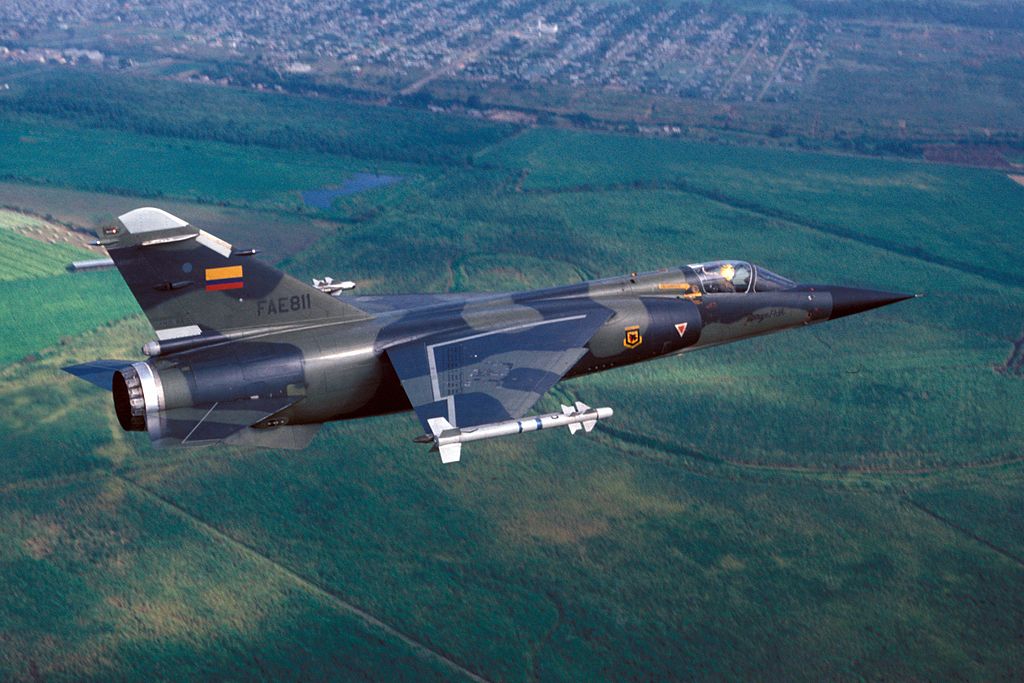
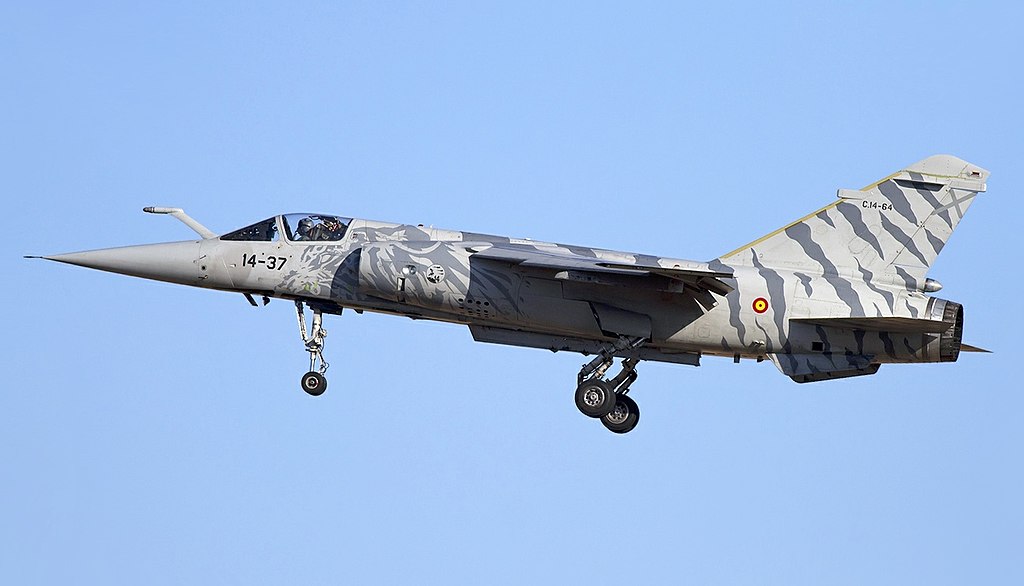
Mirage F1 French Fighter Aircraft
Spotted an error? Sign in to suggest an edit.
Basic Information
Name
Mirage F1 French Fighter Aircraft
Designation
Alternate Designation
Equipment Type
Manufacturer
Dassault Aviation
Date of Introduction
1973
Description

The Dassault Mirage F1 is a French fighter and attack aircraft designed and manufactured by Dassault Aviation. It was developed as a successor to the popular Mirage III family. During the 1960s, Dassault commenced development of what would become the Mirage F1 as a private venture, alongside the larger Mirage F2. Work on the F1 eventually took precedence over the more costly F2, which was cancelled during the late 1960s. The French Air Force (Armée de l'Air) took interest in the fledgling fighter to meet its requirement for an all-weather interceptor aircraft. Accordingly, initial production units were equipped with the Thomson-CSF Cyrano IV monopulse radar. During the latter half of 1974, the Mirage F1 entered service in the French Air Force. Shortly thereafter, the type was deployed as the main interceptor of the French Air Force, a capacity which it continued to serve in until the arrival of the Mirage 2000. It later transitioned to an aerial reconnaissance role. During June 2014, the last French Mirage F1s was retired from service. Powered by a single SNECMA Atar 9K-50 turbojet engine, which provided about 7 tonnes-force (69 kN; 15,000 lbf) of thrust, and armed with an array of French and American-sourced armaments, the Mirage F1 has been operated as a light multipurpose fighter and has been exported to around a dozen nations. The type has seen action in a large number of armed conflicts involving several of its operators, including the Western Sahara War, the Paquisha War, the Cenepa War, the Iran–Iraq War, the Gulf War, the South African Border War, the War in Afghanistan, the Chadian–Libyan conflict, the 2011 military intervention in Libya, and the Northern Mali conflict. More than 720 Mirage F1s were manufactured between 1966 and 1992. It was succeeded in production by the Dassault Mirage 2000. The Dassault Mirage F1 was a single-engine fighter aircraft, designed to function as both an interceptor aircraft and as a capable ground attack platform. While officially developed for the French Air Force as a capable air defense aircraft, Dassault had placed considerable emphasis on developing the Mirage F1 for ground attack duties as a secondary role during its early design. Developed by the company to function as a successor to the successful Mirage III and Mirage 5 families, it drew heavily upon its predecessors as well, sharing the same fuselage as the Mirage III, while adopting a considerably different wing configuration. The Mirage F1 used a shoulder-mounted swept wing, instead of the Delta wing of the Mirage III, which resulted in a more than 50% reduction in required runway lengths and increased internal fuel tankage for 40% greater combat range. The approach speed prior to landing is 25% less than the preceding Mirage IIIE. According to Dassault, the negative performance impact associated with the increased thickness of the Mirage F1's wing over the Mirage III's counterpart had been offset by improvements made to the propulsion system.The wing is fitted with both double-slotted trailing edge flaps and full-span leading edge slats, the latter being automatically operated to reduce the aircraft's turn radius during combat. A key area of advancement on the Mirage F1 over its predecessors was in its onboard avionics. The Thomson-CSF Cyrano IV monopulse radar system, developed from the Cyrano II unit installed on the Mirage IIIE, serves as the main sensor; it operates in three different modes: air-target acquisition and tracking, ground mapping, and terrain avoidance. The later Cyrano IV-1 model also provided for a limited look-down capability. According to aerospace publication Flight International, the Cyrano IV radar was capable of detecting aerial targets at double the range of earlier models. The standard production Mirage F1 was furnished with an Instrument Landing System (ILS), radar altimeter, UHF/VHF radio sets, Tactical Air Navigation system (TACAN) and aground data link. Other avionics include an autopilot and yaw damper. The Mirage F1 was powered by a single SNECMA Atar 9K-50 turbojet engine, which was capable of providing roughly 7 tonnes-force (69 kN; 15,000 lbf) of thrust, giving the aircraft a maximum speed of 1,453 MPH and an altitude ceiling of 65,615 feet. Flight International described the Atar engine as being "unexpectedly simple", despite the adoption of an afterburner. An improved engine, initially known as the Super Atar and later as the Snecma M53, was intended to be eventually adopted on production Mirage F1 aircraft, as well as for successor aircraft. The initial armament of the Mirage F1 was a pair of internal 30 mm cannons, and a single Matra R530 medium-range air-to-air missile, which was carried under the fuselage. It could carry a total combined payload of 13,889lb of bombs and missiles, all of which would be carried externally. After 1979, the medium-range R530 was replaced by the improved Matra Super 530 F missile as the latter came into service in quantity with the French Air Force. In 1977, the R550 Magic was released; the Mirage F1 has these missiles mounted on rails on the wingtips. Around the same time, the American AIM-9 Sidewinder was also introduced to the Mirage F1's armament; both the Spanish and Hellenic Air Forces had requested the integration of the Sidewinder upon their own Mirage F1CE and Mirage F1CG fighters.

Air & Air Defense Specifications
Crew 1
Variants
Mirage F1A Single-seat ground-attack fighter aircraft, with limited daylight-only air-to-air capability. Fitted with lightweight EMD AIDA 2 ranging radar instead of Cyrano IV of other variants, with laser rangefinder under nose, retractable refueling probe and more fuel.
Mirage F1B The French Air Force also ordered 20 Mirage F1Bs, a two-seat operational conversion trainer; these were delivered between October 1980 and March 1983. The extra seat and controls added only 30 cm (12 in) to the length of the fuselage, but at the cost of less internal fuel capacity and the loss of the internal cannon
Mirage F1C INA
Mirage F1D Two-seat training version, based on the Mirage F1E multi-role fighter, ground-attack aircraft.
Mirage F1E Single-seat all-weather multi-role fighter and ground-attack aircraft.
Mirage F1CG Greece operated 40 Dassault Mirage F1CG single seat aircraft. F1CG was first ordered in 1974 and entered service with the Hellenic Air Force in 1975 The aircraft were used by 334 Squadron and 342 Squadron. Mirage F1CG was armed with the Sidewinder AIM-9P missile, rather than the most commonly used Matra Magic II, and it could carry four AIM-9Ps, rather than just two.
Mirage F1CR When it became clear that the Mirage F1 was becoming a successful production aircraft, Dassault began investigating the possibility of a dedicated reconnaissance version for its most important client, the French Air Force. However, the escalating cost of fighter aircraft meant that add-on pods for this purpose were a more economical alternative.
Mirage F1CT The Mirage F1CT is a ground attack version of the Mirage F1C-200. Following their replacement in the air defense role by the Mirage 2000, the French Air Force had a number of surplus Mirage F1C-200s, and in 1988 it launched a conversion programme to turn these aircraft into interim ground attack aircraft to replace elderly Mirage IIIEs and Mirage Vs.
Mirage F1AZ and F1CZ The South African Air Force (SAAF) flew both the Mirage F1AZ ground-attack version as well as the radar-equipped Mirage F1CZ fighter. The first two examples of the first order (48 aircraft, comprising 32 F1AZ and 16 F1CZ) were delivered on 5 April 1975. In July of the same year, the remainder of the F1CZs were delivered and 3 Squadron was recommissioned to operate the aircraft from AFB Waterkloof. In 1975 the F1CZs also appeared at a South African airshow, the public were not informed that it was already in service. The SAAF retired the F1CZs in 1992, followed by the F1AZs in 1997.
Mirage F1 M-53 Developed for the participation in the "European" NATO fighter competition of early seventies, seeking to replace the F-104G. It was equipped with a more powerful engine, the SNECMA M-53, and other improvements. Failed to succeed, the contest was eventually won by the General Dynamics F-16. The Mirage F.1 came in second place.
Mirage F1M The F1M upgrade (unrelated to the M-53 prototype) was applied to 48 Spanish F1CE/EE and four F1EDA trainers under a FFr700 million (US$96m) contract awarded to Thomson-CSF in October 1996. The prototype F1M flew in April 1998, and CASA delivered the remainder between March 1999 and 15 March 2001. The project included a revised cockpit with color LCDs and a Smart HUD from Sextant Avionique, a Sextant inertial navigation system with GPS interface; NATO-compatible Have Quick 2 secure communications; Mode 4 digital IFF; a defensive aids suite; and flight recorders.
System
Alternate Designation(s) Mirage F1
Primary Function / Type Fighter Aircraft
Manufacturer Dassault Aviation
Total Built Total: 720 Gabon Gabonese Air Force received 6 F1AZ aircraft from South Africa, with two more to be delivered. Iran Iranian Air Force Mirage F1BQ Islamic Republic of Iran Air Force seized 24 F1BQs and F1EQs flown over from Iraq, during the 1991 Persian Gulf War. Libya Libyan Air Force received 16 F1AD, 6 F1BD & 16 F1ED aircraft. All were grounded but, twelve were contracted for refurbishment, of which only four were returned to service. Of these twelve, two were taken to Malta when their pilots defected France will renovate Libya's small fleet of Mirage F1s and train its personnel as part of a defence co-operation agreement signed in 2012. Morocco Royal Moroccan Air Force received 30 F1CHs, 14 F1EHs & 6 F1EH-200s. 23 are still operational and 27 have been upgraded to ASTRAC. South Africa Paramount Aerospace Systems acquired four former French Air Force Mirage F1B. United States Draken International has acquired 20 former Spanish Air Force Mirage F1Ms and 2 F1B aircraft for use in the Adversary Air role providing support to the United States Air Force. Textron subsidiary Airborne Tactical Advantage Company acquired 63 former French Air Force Mirage F1B, F1CT, and F1CR for dissimilar air combat training and aggressor squadron purposes for the US Air Force
In Service 1973-Present
Crew 1
Number of Engines 1
Day/Night Capable Yes
Number of Hard Points 1 centreline pylon, four underwing and two wingtip pylons with a capacity of 6,300 kg.
Dimensions
Length 15.30 m
Wingspan, Clean 8.40 m
Wingspan, with Missiles 9.32 m
Height 4.50 m
Wing Area 25.00 sq. m
Weight, Empty 7,400 kg
Weight, Maximum Weapons Load 4,000 kg
Weight, Maximum External Load including Drop Tanks 6,300 kg
Weight, Takeoff Normal 10,900 kg
Weight, Takeoff Maximum 16,200 kg
Automotive
Engine Name 1 x SNECMA Atar 9K-50 turbojet
Number of Engines 1
Max Power, Dry 5,000 kg, static thrust
Max Power with Afterburner 7,200 kg, static thrust
Internal Fuel Capacity 4,200 liters
Speed at Sea Level 1,471 km/h, Mach 1.2
Speed at 12,000 Meters 2,334 km/h, Mach 2.2
Speed, Landing 230 km/h
Climb Rate 12,780 m/min
Ceiling 20,000 m
Communications
Radio INA
Armament
Number of Pylons 1 centreline pylon, four underwing and two wingtip pylons
Capacity Centerline Fuselage 2,100 kg
Capacity Inboard Wing Pylons 1,300 kg
Capacity Outer Wing Pylon 550-kg, including 1 x 2,200 Liter External Fuel Tank
Armament Options 2 x Super R530 AAM or one Armat anti-radar missile; or 1 or 2 x AM 39 Exocet anti-ship missiles; or 1 to 2 x AS 30L air-to-ground missiles; or 2 x 30-mm DEFA gun pods, or 880-lb (400-kg), or 2,200-lb (1,000-kg) laser-guided bombs and ATLIS laser-designation pod; or 14 x 550-lb (250-kg) bombs; or BAP 100, BAT-100; or Durandal anti-runway bombs; or Belouga cluster bombs; or 8 x 18-round 68-mm rocket pods; or Remora or Caiman countermeasures pods OMERA camera pods and two 330-lb (150-kg) capacity wingtip missile rails for R550 Magic or AIM-9 Sidewinder AAM
Cannon Weapon System
Name 2 x integral DEFA 553 30-mm cannon
Type Autocannon
Caliber 30 mm
Length 1.66 m
Weight 85 kg
Barrels 1
Action Five-chamber revolver
Rate of Fire 1,300 rpm
Muzzle Velocity 815 m/s
Cannon Ammunition
Type Rifle, Cannon
Caliber 30 mm
Cartridge 30 × 113 mm
Basic Load 135
Missile (Option 1)
Name Super 530
Type Short to medium-range air-to-air missile.
Manufacturer France
Basic Load 2
Proliferation Widely Proliferated
Length Super 530F: 3.54 m Super 530D: 3.80 m
Diameter 263 mm
Weight Super 530F: 245 kg Super 530D: 270 kg
Warhead Type High-explosive fragmentation
Warhead Weight 30 kg
Detonation Mechansim Super 530F: RF Super 530D: Active Radar
Engine Solid-fuel rocket motor
Wingspan Super 530F: 0.88 m Super 530D: 0.62 m
Operational Range Super 530F: 25 km Super 530D: 40 km
Speed Super 530F: Mach 4.5 Super 530D: Mach <5.0
Guidance System Semi-active radar homing (SARH)
Missile (Option 2)
Name Matra R.530
Type Short-range air-to-air missile
Basic Load 2
Proliferation Widely Proliferated
Manufacturer Matra
In Service 1962-Present
Length 3.28 m
Diameter 263 mm
Weight 192 kg
Engine two stage solid rocket, Hotchkiss-Brandt/SNPE Antoinette rocket 83.3 kN for 2.7 s + 6.5 s cruise
Wingspan 1.1 m
Operational Range 1.5 to 20 km
Speed Mach 2.7
Guidance System Semi active radar homing and Infrared homing
Launch Platform Dassault Mirage F1 Dassault Mirage III F-8 Crusader
Bomb (Option 1)
Name BL755
Type Cluster Bomb
Basic Load INA
Manufacturer Hunting Engineering, Ltd.
Proliferation Widely Proliferated
In Service 1972-Present
Proliferation As of January 1, 1996, 60,598 bombs and 8,925,906 submunitions
Length 2,451 mm
Diameter 419 mm
Weight 264 kg
Warhead Shaped charge HEAT warhead
Fragments 1,400 anti-personnel fragments
Fire Control / Avionics
Fire Control System Type INA
Fire Control Radar 1 x Thomson-CSF Cyrano IV fire-control radar
Laser Desingator INA
Protection
Stealth Properties INA
Heat Signature Reduction INA
Add on Armor INA
NBC Protection Yes
EW Counter Measures INA
Chaffs/Flares Remora or Caiman countermeasures pods
Details
Country of Origin France
Category Fixed Wing Aircraft
Air > Fixed Wing Aircraft
Filter Label
M
Classification
Domain
Air & Air Defense
Equipment Status
Active
Dimensions
Length
15.3 m
Width
Height
4.5 m
Weight
4000 kg
Operators (4)
United States
Iran
Gabon
Morocco
Something went wrong. Please reload the page. Reload